Gilang Muhammad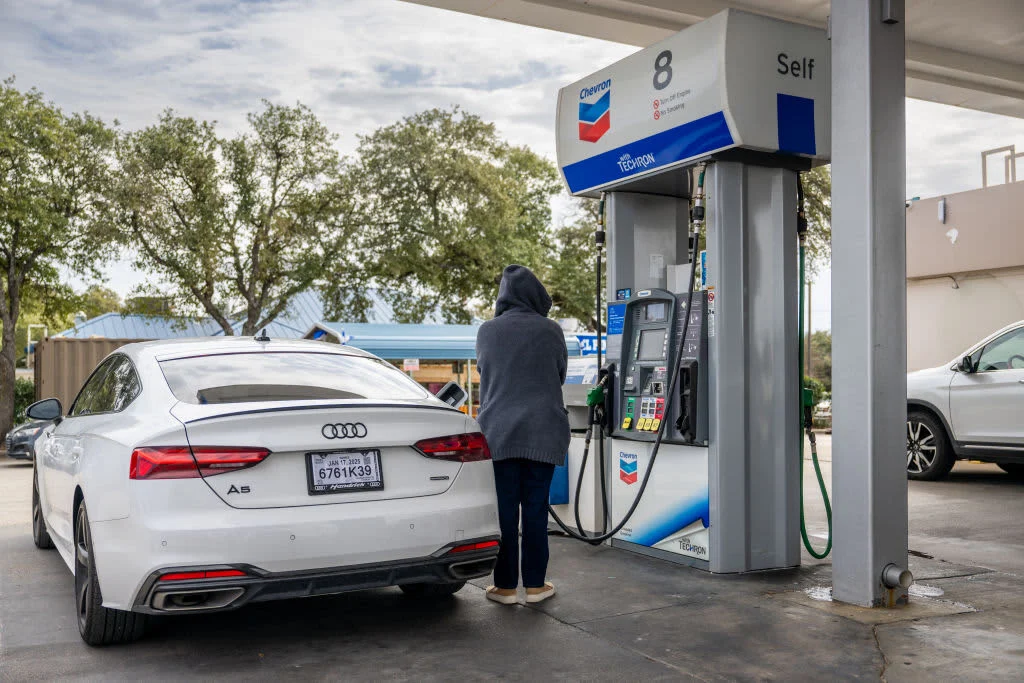
The financial stability of millions of American gig economy workers is teetering on the brink as gas prices surge to levels not seen in years, triggered by escalating geopolitical tensions. What began as a rapid, seemingly overnight spike in pump prices following U.S.-Israeli strikes on Iran in early March 2026 has quickly evolved into a critical challenge for those who rely on their vehicles for income, from rideshare drivers to food couriers and independent truckers. The ripple effects are poised to extend far beyond individual wallets, threatening to inflate consumer costs across the nation.
An Unprecedented Surge and Its Immediate Fallout
For Alvaro Bolainez, a veteran rideshare driver navigating the sprawling streets of Los Angeles for over a decade, the current volatility at the pump is unlike anything he has witnessed. "It’s changing so quick," Bolainez, who drives for platforms like Uber, told CNBC. "It’s insane." The U.S.-Israeli military actions against Iran have sent shockwaves through global oil markets, leading to an immediate and dramatic increase in fuel costs. In Bolainez’s experience, prices at the pump have "skyrocketed overnight," forcing him to strategically avoid shorter rides to preserve profitability. He actively shares tips and strategies within a Facebook group, a digital lifeline for fellow drivers grappling with this sudden economic shift.
Bolainez is just one among a vast network of millions of Americans providing services like ride-hailing and deliveries, forming the backbone of the modern gig economy. These roles, almost universally requiring a personal vehicle, make their earners acutely vulnerable to rapid fluctuations in oil prices. "We have no choice," Bolainez emphasized, highlighting the stark reality for many. "If we don’t drive, we won’t be able to afford to pay rent or pay bills." This sentiment underscores the inherent precarity built into a system where independent contractors bear the full brunt of operational costs.
The data paints a grim picture: the average price of unleaded gas nationally jumped by a staggering 22% over the last month, reaching approximately $3.59 per gallon by Thursday, according to AAA. This marks the highest national average since May 2024. The velocity of this increase is particularly alarming; prices last week recorded their biggest three-day surge since Hurricane Katrina devastated New Orleans more than two decades ago, as reported by Bespoke Investment Group. Kevin Gordon of the Schwab Center for Financial Research noted that this month has seen the steepest 10-day spike on record for gas prices. Elizabeth Renter, a senior economist at NerdWallet, succinctly captured the sentiment: "For a segment of gig workers, increasing gas prices are not only immediately painful, but also can sort of inject some fear in their day to day."
The Geopolitical Crucible: Iran and Global Oil Dynamics
The immediate catalyst for this dramatic price hike is directly linked to the U.S.-Israeli strikes on Iran, a significant geopolitical event that has destabilized a region crucial to global oil supply. While the precise details and long-term implications of these military actions are still unfolding, their immediate effect was to inject severe uncertainty into the energy markets. Iran, a major oil producer and a key player in the Middle East, holds considerable sway over global crude oil prices. Any military engagement involving the nation, or even the perception of potential disruptions to its oil production or shipping routes through the Strait of Hormuz, can trigger speculative buying and push prices upward.
Beyond the immediate conflict, several underlying factors contribute to the current market volatility. Global demand for oil has been steadily recovering, particularly in key economic regions. Simultaneously, OPEC+ nations have maintained a disciplined approach to supply, aiming to stabilize prices, which means there’s less immediate spare capacity to offset sudden disruptions. Strategic petroleum reserves, while available, are typically deployed in major crises and their release can offer temporary relief but doesn’t address fundamental supply-demand imbalances or geopolitical risks. The interconnectedness of global energy markets means that even localized conflicts can have worldwide repercussions, rapidly translating into higher costs at the pump for consumers everywhere.
Adapting to the New Reality: Strategies on the Road and Beyond
The sharp ascent of fuel costs is forcing gig workers across various sectors to rapidly adapt their operational strategies. Adrian Mussio, who works as a food courier for platforms like DoorDash and Uber Eats in Pennsylvania, is meticulously performing mental calculations for each trip to maximize profit margins. She actively reminds her friends about the increased importance of tips, a direct lifeline for drivers facing dwindling net incomes. Mussio has also begun exploring online gig opportunities that do not require a car, seeking financial buffers should elevated fuel prices persist. In her personal life, she prioritizes walking over driving for short errands, a small but necessary adjustment. When filling up her tank, Mussio diligently uses apps like Gasbuddy to locate the lowest prices and leverages grocery store loyalty points for fuel credits whenever possible. "I believe we’re in this for a good while," Mussio observed. "We have to adjust."
The surge in user activity on fuel-saving apps underscores the widespread anxiety. Patrick De Haan, head of petroleum analysis at Gasbuddy, reported that the app’s daily active user count more than doubled in the past week and a half, with users spending over 30% more time on the platform. This increased engagement, De Haan noted, is a clear indicator that consumers are intensely focused on fuel prices.
Unfortunately, immediate relief appears unlikely. Crude oil markets remain highly volatile as the U.S.-Iran conflict brews, adding a layer of unpredictable risk. Furthermore, the upcoming busy spring break travel period traditionally sees an uptick in fuel demand. Coupled with the annual switch from cheaper winter-blend to costlier summer-blend oil – which is more environmentally friendly but more expensive to produce – all signs point to continued upward pressure on prices. Gasbuddy’s De Haan recently told CNBC there is a roughly 55% chance that the national average price per gallon will reach $4 in the near future.
Industry Responses and Advocacy for Change

The sustained period of high gas prices is intensifying calls for significant policy changes from gig economy companies. Alvaro Bolainez, also serving as vice president of the advocacy group Rideshare Drivers United, is pushing for platforms to reintroduce an additional gas surcharge. Such surcharges were implemented by several companies, including Uber and Lyft, in 2022 when gas prices soared past $5 per gallon following Russia’s invasion of Ukraine. This historical precedent highlights the industry’s capacity for such measures in times of crisis, adding weight to current calls for action.
A DoorDash spokesperson informed CNBC that the food delivery platform offers a suite of discounts for its drivers, a measure aimed at mitigating rising costs. However, major players like Uber, Lyft, Instacart, and GrubHub did not respond to CNBC’s inquiries regarding resources or potential policy adjustments for their drivers, indicating a cautious or unforthcoming stance on the issue. This silence leaves many drivers feeling unsupported and underscores the power imbalance between platforms and their independent contractors.
Beyond the major platforms, individual gig workers are also taking matters into their own hands. Ashley Manka, a 33-year-old Texan who operates a one-person wash-and-fold laundry business, spends up to two hours daily driving for pickups and deliveries. She is actively considering adding a $5 fee to longer-distance pickups to offset her elevated fuel expenses. "Everybody wants to keep costs low," Manka stated, articulating the frustration of many entrepreneurs. "Whenever it’s out of your control, it just gets really frustrating."
The Broader Gig Economy: Instability and Vulnerability
The impact of rising gas prices is particularly acute for the gig economy, a sector characterized by its unique employment structure and demographic profile. Estimates vary, but Goldman Sachs suggests that between 2% and 4% of the U.S. population holds app-based gig roles, a workforce that has been growing annually by 5% to 8% in recent years. This segment of the labor market plays a crucial role in providing flexible income opportunities, yet it also exposes workers to significant economic vulnerabilities.
Data from ADP in 2024 revealed that temporary workers and independent contractors generally earn less per month than traditional employees, partly due to lower average hour counts. Furthermore, a 2021 Pew Research Center survey found that gig platform workers are disproportionately people of color, lower-income individuals, and those under 30 years old. For these demographics, who often rely on gig work to supplement income or as their primary livelihood, every cent increase at the pump directly translates to a reduction in disposable income, or worse, a struggle to meet basic living expenses.
This latest challenge compounds a rocky few years for gig workers. As NerdWallet’s Elizabeth Renter pointed out, auto insurance prices and labor costs for vehicle repairs have surged since the pandemic. Car parts themselves may also be more expensive due to President Donald Trump’s tariff policies on many imports, further eroding drivers’ net earnings. Compared to the gas shock of 2022, when the labor market was tighter, gig drivers today might find it harder to pivot to other employment opportunities, given the relatively tighter labor market conditions in early 2026.
Lindsey Cameron, an assistant professor of management at the University of Pennsylvania who studies the gig economy, succinctly captures the systemic issue: "This type of work is deeply unstable." She notes that unlike other contractors, drivers using apps for work lack the individual ability to unilaterally raise their rates when costs increase, leaving them at the mercy of platform algorithms and market forces. Rising gas prices, Cameron concludes, "exacerbates their precarity."
Beyond Rideshare: Trucking and the National Supply Chain
The ramifications of surging fuel prices extend far beyond rideshare and food delivery, threatening the entire national supply chain. Shannon Hillock, a freight dispatcher for owner-operators in South Dakota, sees the challenges faced by truckers as a harbinger of broader economic distress for the country. From her vantage point, helping independent truckers negotiate jobs, the financial calculus has dramatically shifted. Diesel prices have skyrocketed even more sharply than unleaded gas, surging by over 35% in 2026, compared to unleaded gas’ 26% increase over the same period, according to a CNBC analysis of AAA data.
"High fuel prices are one of the most detrimental parts of the equation," said Hillock, whose family includes several truck drivers. "Your profits are being just sucked away at the fuel pump." Truckers, who often operate on razor-thin margins, will be compelled to hike their rates to absorb these escalating fuel costs. Gasbuddy’s De Haan predicts a 70% chance of diesel hitting $5 per gallon, signaling a persistent challenge.
The consequences of this will inevitably be passed down to consumers. Hillock anticipates that these increased transportation costs will translate directly into higher price tags at grocery stores and in retail aisles across the country. "Truck drivers are facing the brunt of it," Hillock, 39, explained. "But it is something that they are not going to shoulder alone. Every American is going to feel this." The intricate web of the modern economy means that the strain on one sector quickly propagates, leading to inflationary pressures that affect every household.
The current crisis highlights the delicate balance of the global energy market and the profound impact of geopolitical events on everyday economic realities. For the millions of Americans in the gig economy, the road ahead appears increasingly challenging, marked by financial uncertainty and the urgent need for adaptive strategies, both personal and systemic. The question remains how long this volatility will persist and what lasting changes it will imprint on the gig economy and the broader consumer landscape.