Ena Muazin
Frankfurt – The German real estate market is experiencing a palpable increase in nervousness as rising interest rates and broader economic uncertainties continue to dampen the upward trend observed in the second quarter of this year. Property prices for sale saw an overall average increase of 1.3 percent compared to the previous year, but experienced a slight decline of 0.1 percent from the preceding quarter. This marks a significant deceleration from the 2.2 percent year-on-year growth recorded in the first quarter.
These findings are based on transaction data compiled by the Association of German Pfandbrief Banks (VDP) and encompass information from over 700 German banks, including major institutions like Sparkassen, Deutsche Bank, and Commerzbank. The VDP’s comprehensive analysis categorizes the market’s performance across residential properties, major metropolitan areas, rental markets, and commercial real estate.

Residential Property Market Shows Signs of Slowing Momentum
Within the residential property sector, the VDP reports that while prices are still on an upward trajectory, the pace of growth has moderated. Jens Tolckmitt, Chief Executive Officer of the VDP, observed that the market is exhibiting a less dynamic increase than in previous quarters. He attributes this shift to the confluence of geopolitical developments, heightened inflation expectations, and the resulting interest rate environment. This economic recalibration is leading to a situation where advertised asking prices are being adjusted downwards more frequently, a sentiment echoed by Jonas Zdrzalek of the Kiel Institute for the World Economy (IfW).
The VDP’s analysis further breaks down the performance by property type. Single-family homes have emerged as particularly sought after, with their prices increasing by 2.6 percent compared to the same quarter last year and showing a 0.4 percent rise from the previous quarter. In contrast, condominium prices saw a slightly more modest annual growth of 2.0 percent, with a 0.5 percent increase quarter-on-quarter.
Metropolitan Areas: Hamburg Leads in Price Appreciation
While Munich continues to hold its position as the most expensive market with an average asking price of €8,346 per square meter, according to data from the portal Immoscout24, its year-on-year price growth has been outpaced. The VDP data reveals that Hamburg experienced the most significant price increase among major German cities, with a 3.8 percent rise compared to the previous year. Cologne followed closely with a 2.5 percent increase.
Stuttgart, however, recorded the weakest growth among the top seven metropolitan areas, with a modest 0.7 percent increase over the same period. The differing performance across these urban centers highlights a complex interplay of local economic factors, housing demand, and development trends.
Rental Market Sees Slower Upward Trend
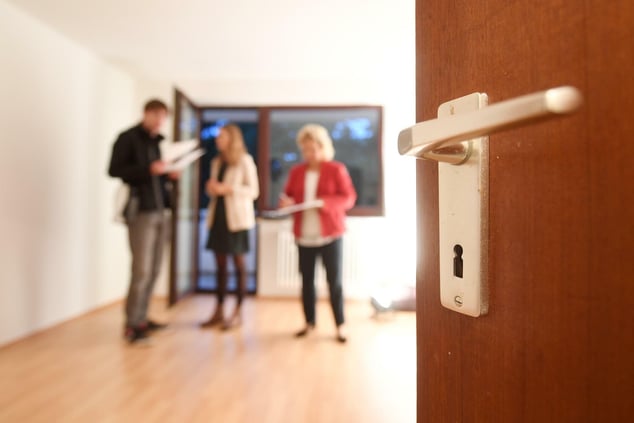
The rental market, which has seen considerable price increases in recent times, is also exhibiting signs of a more gradual ascent. While specific figures for the rental market were not detailed in the initial release, the VDP’s overall commentary suggests a cooling effect across various segments. The accompanying image, depicting a property viewing, underscores the ongoing demand for housing, but the broader economic context points towards a potential stabilization or slower growth in rental prices moving forward.
Commercial Real Estate Faces Renewed Price Declines
In contrast to the residential sector, the commercial real estate market continues to exhibit weakness, lagging behind the housing sector for an extended period. This trend persisted into the second quarter. After a period of apparent recovery, office property prices have again seen a decline in the second quarter. This segment experienced a 1.2 percent price decrease compared to the second quarter of 2023.

Retail properties, however, showed greater resilience, recording a smaller decline of 0.2 percent. This divergence in performance between different commercial property types marks a significant shift. VDP Chief Executive Tolckmitt noted that, "For the first time in a year and a half, prices in the different property classes are moving unevenly." This indicates a market undergoing significant restructuring, influenced by evolving consumer habits, the rise of e-commerce, and the ongoing debate around the future of office spaces in a post-pandemic world.
Context and Broader Economic Factors
The current state of the German real estate market is intrinsically linked to a broader economic landscape marked by persistent inflation and a series of interest rate hikes by the European Central Bank (ECB). These monetary policy adjustments, aimed at curbing inflation, have directly impacted mortgage rates, making property acquisition more expensive for potential buyers. The average mortgage interest rate in Germany has risen significantly over the past year, making it more challenging for individuals and investors to secure financing.
Furthermore, the ongoing geopolitical uncertainties, including the conflict in Ukraine and its ripple effects on energy prices and supply chains, have contributed to a general sense of economic caution. This has translated into reduced consumer confidence and a more conservative approach to major investment decisions, including property purchases.

The VDP’s data, derived from a wide array of financial institutions, provides a robust snapshot of actual transaction volumes and price movements, offering a more grounded perspective than mere advertised prices. The inclusion of data from major banks like Deutsche Bank and Commerzbank lends significant weight to the findings, representing a substantial portion of the German financial sector’s engagement with the property market.
Implications and Future Outlook
The cooling of the German real estate market has several significant implications. For homeowners, it may signal a slowdown or even a reversal of the rapid price appreciation seen in recent years, potentially impacting their wealth accumulation and investment strategies. For prospective buyers, while increased affordability due to potentially stabilizing or declining prices could be an advantage, higher borrowing costs remain a significant hurdle.
For investors, the diverging performance between residential and commercial properties suggests a need for careful market segmentation and risk assessment. The challenges faced by the office and retail sectors may lead to increased opportunities for distressed asset investors or those focused on niche markets.

The VDP’s analysis suggests a market transitioning from a period of strong growth to one of consolidation and potential recalibration. The interplay of interest rates, economic growth, and consumer sentiment will be critical factors to watch in the coming quarters. While the overall trend indicates a slowdown, the specific performance of different property types and metropolitan areas highlights the nuanced nature of the German real estate landscape. The coming months will likely reveal whether this cooling trend represents a temporary pause or the beginning of a more sustained market adjustment. The VDP, as a key industry body, will continue to monitor these developments closely, providing crucial data and analysis to navigate this evolving market.