Ella Zulfa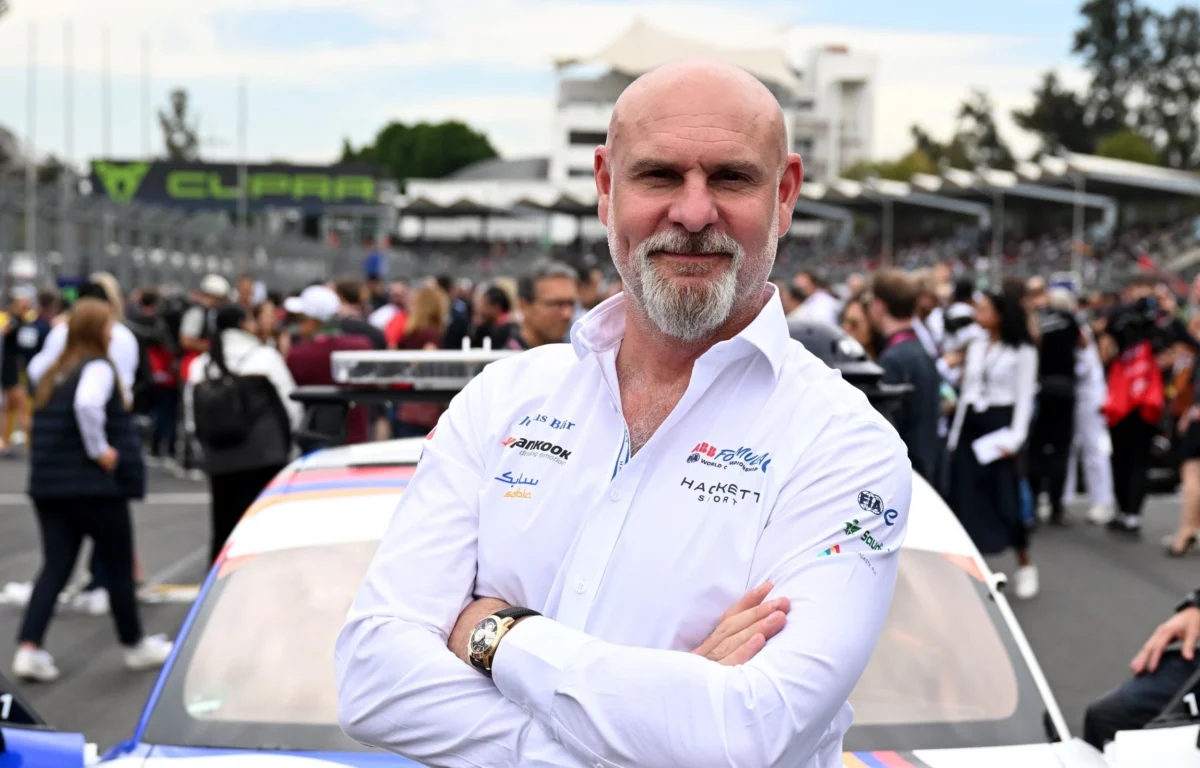
The notion of an all-electric racing championship once resided firmly in the realm of science fiction. In its nascent stages, Formula E’s vehicles required a mid-race car swap simply to complete the distance to the checkered flag. Today, however, this pioneering series stands as a testament to technological evolution and a driving force in the global shift towards electrification.
"Twelve years ago, if someone had told you we were going to create an all-electric racing championship, people might have thought you were absolutely crazy," reflects Jeff Dodds, CEO of Formula E. At that time, worldwide electric vehicle (EV) sales barely grazed 300,000 units annually, and according to Dodds, "they weren’t very good." He vividly recalls the early days: "In our first season, we needed to have two cars to finish a race because the battery wouldn’t last long enough." This stark contrast underscores the dramatic advancements in EV technology that have since transpired. Projections indicate that approximately 22 million EVs are expected to be sold globally this year, with BloombergNEF forecasting this figure to surge to between 35 and 40 million units per annum by 2030. This accelerated transition is reshaping markets worldwide, and Formula E has strategically positioned itself at the forefront of this seismic shift.
Altering the Formula: A Vision for Electrified Racing
Jeff Dodds’ journey into the world of Formula E is deeply rooted in a comprehensive understanding of the automotive and motorsport landscapes. Prior to his leadership role in the electric racing series, Dodds spent significant years within the traditional automotive sector, holding positions at prominent manufacturers like Volvo and later Honda. His tenure at these companies provided him with an intimate exposure to a wide spectrum of motorsport disciplines, including Formula One, MotoGP, British Superbikes, and touring cars. This extensive background informs his perspective on the relationship between Formula E and its more established combustion-engine counterpart.
"Believe it or not, whilst I was an F1 fan, I also followed Formula E before I came to work here," Dodds admits. "I have a good appreciation for the journey that Formula One’s been on. We’re similar, and then we’re very different." While both Formula E and Formula One feature open-wheel, single-seater racing cars, their fundamental divergence lies in their power sources. Formula E’s commitment to an all-electric powertrain not only drastically reduces its carbon footprint but also fundamentally alters the racing dynamic. The inherent limitation of energy reserves necessitates a strategic approach from the drivers, transforming each race into a calculated balance between energy conservation and aggressive performance. Dodds aptly likens this strategic dimension to "a game of chess on the racetrack."
This strategic nuance appeals to a different segment of racing enthusiasts compared to Formula One. Dodds articulates his personal sentiment: "F1, for me, is nostalgic. I know the drivers. I know their journeys. I love the locations they race at. Perhaps the bit I like least about it is the actual racing." He often characterizes many Formula One races as a "procession," where the outcome can often be predicted before the race even begins. Formula E, in contrast, prioritizes parity, fostering a more unpredictable and competitive environment. "If you say to me, ‘Who do you think is going to win the London race?’ I legitimately would say it could be anybody," Dodds states. "Everyone has a chance of winning that race. That’s pretty rare in motorsport." The races are meticulously designed to conclude within an hour, incorporating ample overtaking opportunities and the kind of "thrills and spills" that resonate with audiences accustomed to fast-paced entertainment.
This distinct approach has cultivated a unique demographic for Formula E. The fan base tends to be younger, with a nearly equal gender split, and exhibits a keen interest in technology, sustainability, and innovation. This engaged audience has captured the attention of major media conglomerates. On August 11, Formula E, in conjunction with Disney+ and ESPN, announced a significant multi-year agreement that designates Disney+ as the global streaming platform for the ABB FIA Formula E World Championship across 144 territories. Beginning with the 2026/27 season, races in the United States will be available on Disney+ and ESPN+. Dodds candidly expresses his enthusiasm, noting, "I don’t mean to be disparaging because I watch it and enjoy it, but I don’t find F1 anywhere near as exciting as I find us."
Speed Without Sacrifice: Sustainability at the Core
Formula E’s commitment to sustainability is not a recent adaptation to a growing trend but rather an intrinsic element of its identity since its inception. "If you’re a big business that decides you want to become more sustainable, that’s a very worthy thing," Dodds observes. "But you’re trying to reverse-engineer a more sustainable approach into your processes and the way you work. We’ve only ever had it as a core tenet of our business."
The championship was established with three primary objectives: to create an elite global racing series, to expedite the transition from internal combustion engines to electric vehicles, and to become the world’s most sustainable sport. Over a decade later, Dodds asserts that Formula E has a strong claim to achieving the latter goal. The series holds the unique distinction of being the only sport globally certified as a B Corp, a designation recognizing companies that meet rigorous standards for social and environmental performance while demonstrating a commitment to ongoing improvement.
Sustainability is meticulously integrated into every aspect of the race weekend. Events are powered by hydrogenated vegetable oil, single-use plastics are entirely eliminated from the venues, and the cars are recharged using renewable energy sources. Furthermore, Formula E has announced that its forthcoming Gen4 car will be entirely recyclable or reusable. Dodds articulates his belief that "when people hear ‘sustainable,’ they often hear ‘compromise.’ They think the product’s going to be more expensive, or not as good, because you’re trying to do it sustainably. And I think we are a brilliant argument against that, because we produce the fastest-selling race cars in the world and the most exciting racing, while being the most sustainable sport."
The World’s Most Exciting Test Lab: Driving Automotive Innovation
Beyond its thrilling on-track action, Formula E’s significance extends to its profound impact off the track. The championship serves as a crucial testing ground for cutting-edge EV technology, collaborating with some of the world’s leading automakers to develop innovations that will eventually be integrated into consumer vehicles.
Currently, six major manufacturers are represented in the Formula E championship: Porsche, Jaguar, Nissan, Stellantis, Yamaha, and Mahindra. "One of the reasons they’re in is they treat the racetrack like a laboratory for testing technology that can make its way into their road cars," Dodds explains. He highlights specific examples, such as the latest Porsche Cayenne Turbo, which, as the most powerful production Porsche ever released, is entirely electric. "It’s an incredible piece of machinery, and a lot of the technology in that car has been developed through, or come out of, Porsche’s Formula E program."
Dodds also points to Formula E’s collaboration with Jaguar on the I-Pace. Through this partnership, Jaguar pioneered methods for implementing over-the-air software updates for their vehicles, enabling remote updates via an iPhone. "This is where we are in terms of the cutting-edge nature of the technology," Dodds emphasizes. "Things are being developed and discovered on our racetrack that will find their ways into your cars incredibly quickly."
Zero to 100: Unprecedented Growth and Future Ambitions
Jeff Dodds acknowledges the inherent difficulty in projecting the ultimate trajectory of Formula E’s growth. The championship’s first twelve years have already witnessed an expansion that was once considered beyond the realm of possibility. "Twelve years ago, we had zero fans, zero TV audience, and a car. You needed two cars to do a race. The car finished at 130 miles an hour," Dodds recounts. "Ten years on, you’ve got 420 million fans, over half a billion TV audience, and you’ve got a car that accelerates to 100 kilometers in 1.6 seconds and races well over 200 miles an hour. It’s inconceivable how far we’ve come."
Given this meteoric rise, Dodds remains hesitant to set rigid, long-term growth targets. In an industry as dynamic as electric vehicles, he believes that defining objectives too far into the future can prove more restrictive than beneficial. "I definitely have an ambition, but I wouldn’t want to constrain that by tethering us to a set of targets that are too low," he states. The remarkable pace of their initial acceleration from "zero to 100" suggests that forecasting their future growth rate is an inherently challenging, yet exciting, endeavor.