Ena Muazin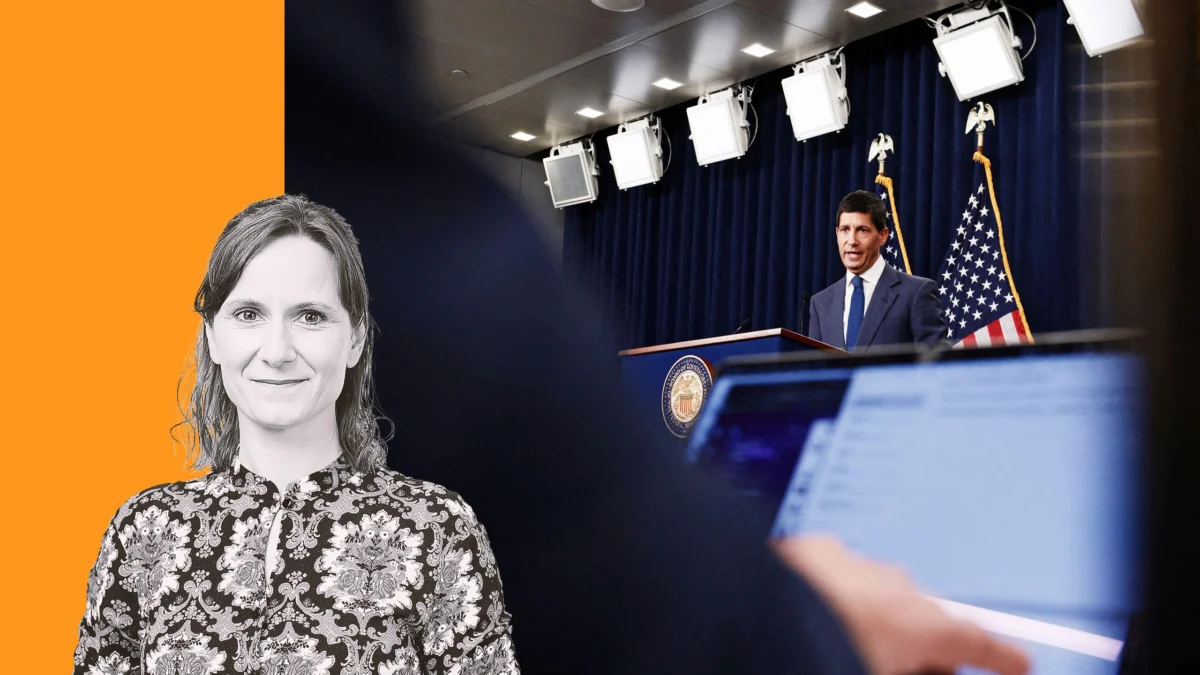
With his demand for lower interest rates, Trump is also putting pressure on Powell’s successor. No matter how the next decision turns out: Warsh only has bad options, believes Astrid Dörmer.
The period of grace is over. For the first time, US President Donald Trump is explicitly demanding interest rate cuts from Fed Chair Kevin Warsh – precisely what he had demanded from his predecessor Jerome Powell. Simultaneously, Trump is threatening the US central bank. If it doesn’t lower interest rates, he intends to halt trade with all countries with which the USA has a trade deficit. According to the analysis firm Kobeissi, this would encompass nearly half of all trading partners, including Mexico, China, and Taiwan.

This dramatic ultimatum, issued amidst escalating trade tensions and a fluctuating global economic outlook, places the Federal Reserve and its appointed leaders in an unenviable position. The Fed, tasked with maintaining price stability and maximum employment, is caught between the President’s demands for stimulus and the economic realities that may necessitate a different course of action.
Background: The Fed’s Dual Mandate and Presidential Pressure
The Federal Reserve operates under a dual mandate from Congress: to promote maximum employment and stable prices. This delicate balancing act requires independent decision-making, free from undue political influence. However, the history of the Fed has seen periods of significant presidential pressure regarding monetary policy.

Donald Trump, throughout his presidency and in subsequent public statements, has consistently advocated for lower interest rates to stimulate economic growth and boost asset prices. He has frequently criticized Jerome Powell, his own appointee as Fed Chair, for what he perceived as overly restrictive monetary policy. The shift in focus to Kevin Warsh, a former Fed governor and a figure who has previously shown a willingness to question established norms, signifies a strategic move by the President to exert influence over the central bank’s direction.
Warsh’s current role, while not explicitly defined as "Fed-Chef" in the same way as the Chairman, is significant. As a prominent economist and former policymaker, his opinions and potential influence carry weight within financial circles and among those observing the Fed’s internal deliberations. The article suggests that Trump is leveraging Warsh’s position to amplify his calls for interest rate reductions, effectively creating a public proxy for his policy desires.
Trump’s Trade Ultimatum: A Potential Economic Shockwave
Trump’s threat to halt trade with countries exhibiting a trade deficit is a bold and potentially destabilizing move. The analysis by Kobeissi, suggesting this could impact nearly half of the US’s trading partners, highlights the far-reaching consequences of such a policy. Countries like Mexico, China, and Taiwan are deeply integrated into global supply chains, and a sudden disruption in trade with them could trigger significant economic repercussions.
Potential Economic Impacts of Trade Suspension:

- Supply Chain Disruptions: The immediate effect would be a severe disruption of global supply chains. Companies relying on components or finished goods from these nations would face shortages, leading to production halts and increased costs.
- Inflationary Pressures: Reduced imports, coupled with potential retaliatory measures from affected countries, could lead to higher prices for a wide range of goods and services in the US. This directly contradicts the Fed’s mandate of price stability and could necessitate interest rate increases rather than decreases.
- Reduced Consumer Spending: Higher prices and economic uncertainty can lead to a decrease in consumer confidence and spending, negatively impacting economic growth.
- Currency Fluctuations: Such a policy could lead to significant volatility in currency markets, further complicating international trade and investment.
- Geopolitical Ramifications: Beyond economics, this move would have significant geopolitical implications, potentially straining diplomatic relations and altering global trade alliances.
The analysis presented by the article points out a critical paradox: Trump’s trade actions, aimed at addressing trade imbalances, could inadvertently create the very inflationary pressures that would compel the Fed to raise interest rates. This creates a direct conflict between the President’s objectives and the Fed’s mandate.
The Fed’s Dilemma: Navigating Conflicting Pressures
Kevin Warsh, and by extension the Federal Reserve, faces a complex set of challenges. The article frames his situation as one where he has "no good options." This stems from the conflicting pressures he is experiencing:

- Presidential Pressure for Rate Cuts: Donald Trump’s explicit demand for lower interest rates to stimulate the economy is a powerful political force. Rate cuts are typically seen as a tool to boost borrowing, investment, and consumer spending.
- Economic Data Suggesting Caution: Recent strong labor market data, as mentioned in the article, provides the Fed with grounds to maintain or even consider raising interest rates to prevent overheating and control inflation. Robust job growth often correlates with increased demand, which can fuel inflation.
- Risk of Inflation from Trade Policy: As discussed, Trump’s trade threats could directly lead to inflationary pressures, negating the benefits of rate cuts and potentially forcing the Fed into a hawkish stance.
Warsh’s "Bad Options" Elaborated:
- Cutting Interest Rates: If Warsh and the Fed were to comply with Trump’s demand for rate cuts, it could be interpreted as succumbing to political pressure. More critically, it could exacerbate inflationary trends, especially if coupled with the trade disruptions. This would undermine the Fed’s credibility and its mandate for price stability.
- Keeping Interest Rates Unchanged: Maintaining current interest rates, while potentially aligning with the Fed’s assessment of economic conditions and labor market strength, risks provoking Trump’s retaliatory trade measures. The article highlights that this could also lead to rising inflation due to disrupted supply chains.
- Raising Interest Rates: While strong labor data might technically support a rate hike, this would be a direct defiance of the President’s explicit wishes and could trigger the very trade war Trump is threatening. Such a move would be politically explosive and could further destabilize the economic and political landscape.
Timeline of Pressure and Shifting Economic Landscape
The current situation did not emerge overnight. It is the culmination of several trends and events:

- Previous Fed Policy: Under Jerome Powell, the Fed had been gradually increasing interest rates in the preceding years to normalize monetary policy and guard against inflation. However, concerns about economic slowdown and trade wars led to a pause and even some rate cuts in 2019.
- Trump’s Persistent Criticism: President Trump has been vocal about his desire for lower rates for an extended period, often expressing his views publicly and directly criticizing Fed officials.
- Recent Strong Economic Data: The release of robust labor market figures in the period leading up to this article provides a conflicting signal to the Fed. Strong job growth suggests an economy that may not require immediate stimulus through lower rates.
- Escalating Trade Tensions: Trump’s trade policies, including tariffs and threats of further trade restrictions, have created ongoing uncertainty and volatility in global markets.
The timing of Trump’s ultimatum is significant. It appears to be a strategic maneuver designed to exert maximum pressure on the Fed at a time when economic data offers the central bank a potential rationale for resisting rate cuts. This creates a high-stakes game of economic and political chess.
Broader Implications for the US Economy and Global Markets
The actions and potential responses surrounding the Fed’s monetary policy have far-reaching implications:

- Credibility of the Federal Reserve: The Fed’s ability to maintain its independence and make decisions based on economic data, rather than political pressure, is crucial for its long-term credibility. Any perceived capitulation to presidential demands could erode public and market confidence in the institution.
- Investment and Business Confidence: Uncertainty surrounding monetary policy and trade relations can significantly impact business investment and consumer confidence. If businesses are unsure about future interest rates or the stability of trade, they may postpone or cancel investment plans, hindering economic growth.
- Global Economic Stability: As the world’s largest economy and issuer of the primary reserve currency, US monetary policy has a profound impact on global markets. A disruptive trade war or a Fed perceived as politically compromised could trigger significant volatility and instability worldwide.
- Inflationary Outlook: The interplay between monetary policy and trade policy is critical for the inflation outlook. If both forces push towards higher prices, the Fed could face a challenging battle to maintain price stability, potentially requiring aggressive and painful measures.
Conclusion: A Tightrope Walk for Warsh and the Fed
The article’s central thesis is that Kevin Warsh, and by extension the Federal Reserve, is in a precarious position. President Trump’s dual pressure – demanding lower interest rates while simultaneously threatening trade disruptions that could fuel inflation – creates a no-win scenario.
The economic data, particularly concerning the labor market, provides the Fed with a technical basis for resisting immediate rate cuts. However, the political pressure from the White House is immense. Warsh’s challenge is to navigate this complex landscape, uphold the Fed’s mandate for price stability and maximum employment, and maintain the institution’s independence in the face of unprecedented political interference. The coming decisions will not only shape the US economy but also serve as a critical test of the Federal Reserve’s autonomy and its ability to withstand political pressure. The outcome will undoubtedly have ripple effects across global financial markets.