Ena Muazin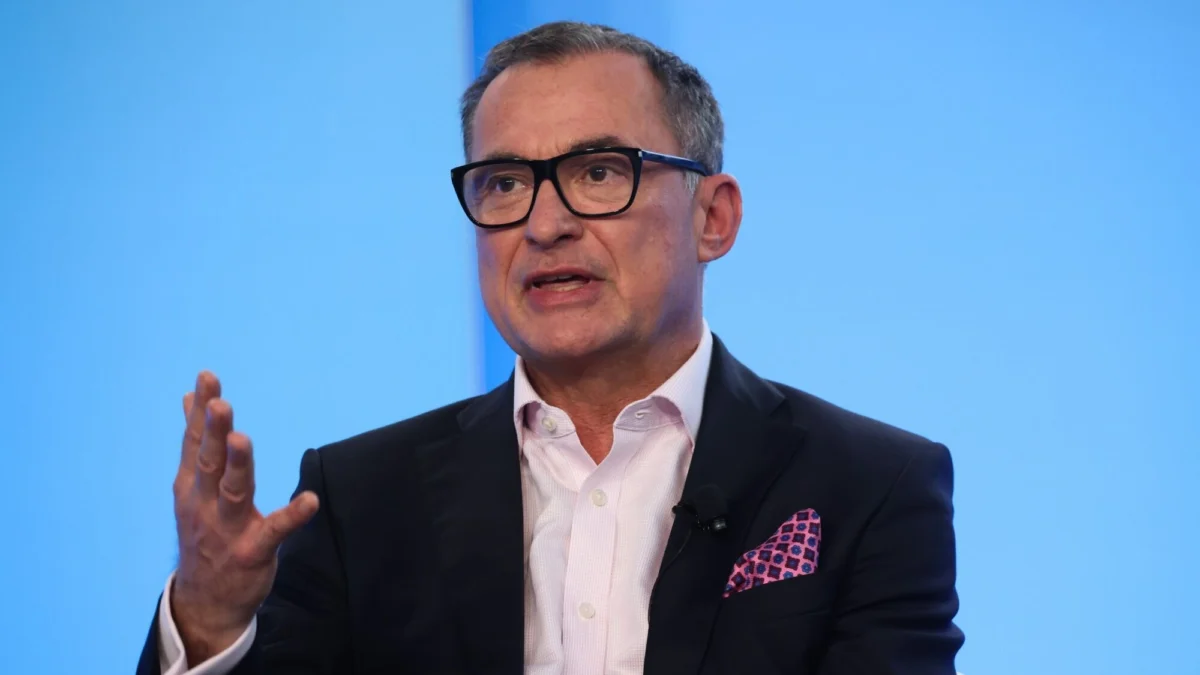
The European Central Bank (ECB) Governing Council, comprising national central bank governors and executive board members, has maintained its key interest rates at their current levels, signaling a cautious approach in the face of lingering inflationary concerns and a highly uncertain economic outlook. This decision, made on Thursday, marks a continuation of the ECB’s strategy to observe the impact of its previous monetary tightening measures before considering any potential policy shifts. François Villeroy de Galhau, the Governor of the Banque de France and a prominent member of the ECB’s Governing Council, underscored the institution’s readiness to act decisively if necessary, while simultaneously acknowledging the significant level of uncertainty that pervades the economic landscape. His remarks, echoing sentiments expressed by other central bankers and policymakers within the Eurozone, highlight a delicate balancing act: to curb inflation without unduly stifling economic growth.
The Decision: Holding Steady on Interest Rates
The Governing Council’s decision to keep the main refinancing operations rate at 2.0 percent, the deposit facility rate at 2.5 percent, and the marginal lending facility rate at 2.75 percent, was widely anticipated by financial markets. This "interest rate pause" signifies a period of observation and assessment. The ECB has been engaged in an aggressive monetary tightening cycle since July 2022, a campaign aimed at bringing inflation back to its 2% medium-term target. The cumulative effect of these rate hikes has been substantial, and policymakers are now keen to understand their full impact on the Eurozone economy.
Background: The Inflationary Battle and the ECB’s Response
The Eurozone, like much of the global economy, has grappled with elevated inflation rates that surged in 2021 and 2022. This surge was driven by a confluence of factors, including supply chain disruptions exacerbated by the COVID-19 pandemic, a rebound in consumer demand, and the energy price shock stemming from Russia’s invasion of Ukraine. In response, the ECB embarked on a series of interest rate increases, moving from negative territory to a restrictive stance.
The ECB’s mandate is price stability, defined as inflation at 2% over the medium term. While headline inflation has shown signs of moderation, core inflation – which excludes volatile energy and food prices – has proven more persistent, raising concerns among policymakers. This stickiness in core inflation suggests that inflationary pressures may be more deeply entrenched in the economy, potentially driven by wage growth and profit margins.
Timeline and Key Developments Leading to the Decision
- Early 2022: Inflation begins to accelerate significantly across the Eurozone, initially attributed to post-pandemic demand and supply chain issues.
- February 2022: Russia’s invasion of Ukraine triggers a severe energy price shock, further fueling inflation.
- July 2022: The ECB raises interest rates for the first time in over a decade, signaling the start of its tightening cycle.
- September 2022 – September 2023: A series of consecutive interest rate hikes follow, with the Governing Council progressively increasing the key policy rates.
- October 2023: The ECB signals a potential end to its rate-hiking cycle, emphasizing a data-dependent approach and the need to assess the impact of previous hikes.
- December 2023: The Governing Council decides to hold interest rates steady for the second consecutive meeting, citing persistent inflation and economic uncertainty.
Supporting Data: Inflation Trends and Economic Indicators
Recent data provides a complex picture for the Eurozone economy. While headline inflation has eased from its peak, it remains above the ECB’s target. For instance, the Harmonised Index of Consumer Prices (HICP) for the Eurozone in November 2023 stood at 2.4% year-on-year, down from 2.9% in October. However, core inflation, a key focus for the ECB, remained at 3.6% in November, a slight decrease from 3.9% in October but still elevated.
Economic growth figures also paint a picture of subdued activity. The Eurozone economy experienced very modest growth in the third quarter of 2023, with preliminary estimates suggesting a potential contraction in the fourth quarter. Manufacturing PMIs have consistently indicated contractionary territory, while services have shown more resilience, though signs of slowing momentum are emerging. Unemployment rates, a lagging indicator, have remained relatively low, hovering around 6.4% in October 2023, a testament to the resilience of the labor market but also a factor that can contribute to wage pressures.
Official Responses and Statements
François Villeroy de Galhau’s emphasis on readiness to act highlights the ECB’s commitment to its price stability mandate. He stated, "We are ready to adjust all of our instruments as appropriate to ensure inflation returns to our medium-term target in a timely manner." This phrasing suggests that while the current pause is in effect, the door remains open for further rate hikes should inflation prove more stubborn than anticipated.
Christine Lagarde, President of the ECB, has consistently preached patience and a data-dependent approach. In recent communications, she has stressed that "the Governing Council’s decisions will be data-dependent and will be taken on a meeting-by-meeting basis." This approach underscores the ECB’s commitment to avoiding premature policy pivots that could either reignite inflation or unnecessarily choke off economic recovery.
Other members of the Governing Council have echoed these sentiments. Joachim Nagel, President of the Deutsche Bundesbank, has also emphasized the need for vigilance against inflation, particularly in light of ongoing geopolitical uncertainties and their potential impact on energy and commodity prices. The collective voice of the Governing Council, despite the diverse economic landscapes of the member states, points towards a unified commitment to price stability.
Broader Impact and Implications
The ECB’s decision to maintain interest rates at current levels has several significant implications for the Eurozone economy and beyond.
For Consumers and Businesses:
- Borrowing Costs: Higher interest rates continue to translate into more expensive borrowing for both households and businesses. Mortgages, car loans, and corporate debt servicing costs remain elevated, potentially dampening consumer spending and business investment.
- Savings: Savers, on the other hand, benefit from higher returns on their deposits, though the real return after inflation may still be negative for some.
- Economic Activity: The sustained period of higher interest rates is designed to cool demand, which can lead to slower economic growth. Businesses may postpone expansion plans, and consumers might become more cautious with their spending.
For Financial Markets:
- Bond Yields: The decision to hold rates steady generally leads to stability in government and corporate bond yields, though market expectations about future rate movements play a significant role. Investors are closely watching for any signals that might indicate a shift in the ECB’s stance.
- Equity Markets: Higher borrowing costs can put pressure on corporate profits, potentially impacting equity valuations. However, if the ECB successfully navigates the economy towards a soft landing, equity markets might find support.
- Exchange Rates: Interest rate differentials between the Eurozone and other major economies can influence the value of the euro. A prolonged period of steady rates in the Eurozone, while other central banks might begin cutting, could lead to euro depreciation.
For Policymakers:
- The "Last Mile" of Inflation: The ECB’s current stance acknowledges that the final push to bring inflation down to the 2% target might be the most challenging. This "last mile" could involve a period of slower economic growth and potentially higher unemployment.
- Fiscal Policy Coordination: The effectiveness of monetary policy can be influenced by fiscal policies. Governments are facing pressure to manage their own budgets while supporting their economies, creating a complex interplay between monetary and fiscal authorities.
- Risk of Overtightening: A primary concern for the ECB is the risk of overtightening monetary policy, which could trigger a more severe economic downturn than intended. The current pause is partly a measure to avoid this pitfall.
- Risk of Premature Easing: Conversely, easing policy too soon could allow inflation to re-accelerate, forcing the ECB to resume its tightening cycle later, which would be more disruptive.
Analysis: Navigating the Path to Price Stability
The ECB’s current strategy reflects a mature understanding of the complexities of modern monetary policy. The era of persistently low inflation and near-zero interest rates has given way to a period of greater volatility and uncertainty. The decision to pause rather than cut or hike is a pragmatic response to this environment. It allows the Governing Council to gather more data on the impact of its past actions, assess the evolving inflation outlook, and gauge the resilience of the Eurozone economy.
The emphasis on "readiness to act" is a crucial signal to markets and the public. It reassures stakeholders that the ECB remains committed to its inflation target and will not hesitate to deploy its full toolkit if circumstances warrant. However, the inherent uncertainty means that predicting the future path of interest rates remains a challenging endeavor. The economic outlook is subject to a multitude of factors, including geopolitical developments, global commodity prices, and the trajectory of wage negotiations within member states.
The coming months will be critical. The ECB will be closely scrutinizing incoming inflation data, labor market developments, and business and consumer sentiment surveys. The performance of the Eurozone economy in the face of higher borrowing costs will also be a key determinant of future policy decisions. The Governing Council’s commitment to patience and data-dependency suggests that any significant shift in policy is unlikely to be immediate, but rather a carefully calibrated response to demonstrable changes in the economic landscape. The ultimate goal remains clear: to steer the Eurozone economy towards sustainable price stability without triggering a severe recession, a delicate balancing act that defines the current challenge for the European Central Bank.