Gilang Muhammad
PARIS, FRANCE – As record-breaking high temperatures grip the European continent, driving unprecedented demand for cooling solutions, Europe finds itself in a perplexing dilemma. The severe heatwave, particularly notable in June 2026, has led to a surge in imports of Chinese-made air conditioners, inadvertently exacerbating the very trade imbalance the European Union is desperately trying to narrow with Beijing. This paradoxical situation underscores the formidable challenges Brussels faces in rebalancing its economic relationship with China, even as a critical October deadline for "tangible results" looms.
The Paradox of the Heatwave: A Continent Aflame
June 2026 witnessed a historic and brutal heatwave sweep across Europe, shattering temperature records from Paris to Berlin. In the French capital, pedestrians sought refuge under umbrellas, a stark visual of the extreme conditions. The intensity and duration of this heatwave surpassed many previous events, pushing national meteorological services to issue unprecedented red alerts and health warnings. Cities, traditionally unprepared for such sustained high temperatures, saw infrastructure strain and a palpable shift in public sentiment towards personal cooling. This wasn’t merely a fleeting summer discomfort; it represented a significant climate event with immediate and profound economic ripple effects, particularly on consumer behaviour.
Historically, Europe has resisted widespread adoption of air conditioning. Concerns over its noise, aesthetic impact on historic architectural facades, and the perception of it being an unnecessary luxury for relatively short-lived summer heat, coupled with deep-seated fears about its energy-hungry nature undermining climate change efforts, kept penetration rates low. However, the escalating frequency and intensity of heatwaves, directly linked to global climate change, are rapidly altering this calculus. What was once considered optional is quickly becoming a necessity for public health and comfort, creating a vast, untapped market ripe for rapid expansion.
Brussels’ Urgent Trade Dialogue with Beijing
Against this backdrop of sweltering temperatures and surging consumer demand, the European Union and China engaged in high-stakes trade talks in Brussels. On Monday, June 22, 2026, the two economic giants released a rare joint statement, signaling a concerted, albeit fraught, effort to address their significant trade imbalances and persistent market access issues. European trade chief Maros Sefcovic, following his meeting with China’s Commerce Minister Wang Wentao, stressed the imperative for "tangible results" by October. He warned reporters that the current trajectory, where Chinese exports to the EU "keep rising, while our market share in China keeps shrinking," is simply "not sustainable."
The urgency expressed by Sefcovic reflects a growing apprehension within the EU regarding the structural nature of the deficit and its potential long-term implications for European industries and strategic autonomy. The two sides agreed to establish a bilateral working group specifically tasked with monitoring trade flows, a mechanism designed to foster greater transparency and accountability. Crucially, Beijing offered "reassurance" that its existing export controls on critical raw materials such as rare earths and permanent magnets would not disrupt EU supply chains. This commitment, while welcomed, is viewed with cautious optimism given past geopolitical tensions surrounding these strategic resources.
However, the path to rebalancing is fraught with difficulties. Beijing has consistently communicated its firm stance against any new trade curbs perceived as targeting its industrial overcapacity, making it clear that it would "not hesitate to retaliate." This threat hangs heavy over the negotiations, underscoring the delicate balancing act required of European policymakers who must address genuine concerns about fair competition without triggering a full-blown trade war.
Europe’s Unprecedented Demand for Cooling: A Market Opportunity for China
The timing of these critical trade discussions could not have been more awkward. While EU officials pressed for greater market reciprocity, millions of Europeans were simultaneously rushing to purchase air conditioners, a market overwhelmingly dominated by Chinese manufacturers. The International Energy Agency (IEA) reports that air-conditioning ownership in Europe stands at approximately 20% of households, a stark contrast to the nearly 90% penetration rate seen in the United States. This substantial gap represents an enormous growth opportunity, and Asian home appliance giants, particularly from China, are at the forefront of capitalizing on it.
Companies like Midea Group have reported extraordinary surges in orders. As of Monday, June 22, 2026, Midea reportedly saw orders for its innovative PortaSplit unit exceed 200,000 this year, double the pace of 2025. This portable split system, specifically engineered to navigate Western Europe’s fragmented and often restrictive building regulations, exemplifies the strategic product development by Chinese firms. Its outdoor unit clips onto a window bracket, requiring no drilling, and is ingeniously classified as furniture rather than a permanent fixture, thereby sidestepping common facade-modification bans prevalent in cities like Paris. Furthermore, its refrigerant charge is precisely capped at 1.99 kilograms, just below France’s 2-kilogram limit, demonstrating a meticulous understanding of local regulatory nuances.
The sheer demand has led to widespread stock shortages. Adrian Kübel, a German software developer, created a website to track real-time inventory of Midea units across Germany. The site, which quickly went viral on social media, consistently showed these air conditioners as largely out of stock, illustrating the immense, unfulfilled consumer need across the continent. This burgeoning market, driven by climate change, directly funnels billions of Euros into Chinese manufacturing, further widening the very trade gap the EU seeks to close.
Chinese Dominance in the AC Market and Europe’s Industrial Gap
The European air conditioning market is a clear illustration of the industrial gap that EU leaders are increasingly concerned about. Of Europe’s five best-selling air conditioner brands, none are owned by EU-headquartered companies. Chinese powerhouses Haier Group, Gree Electric Appliances Inc. of Zhuhai, and Midea Group Co. collectively held approximately 32% of the European market by retail volume in 2025, according to Euromonitor International. The remaining top five spots are rounded out by Turkey’s Beko Corp. and Japan’s Daikin Industries Ltd. This absence of a significant homegrown European player in such a rapidly expanding and critical sector underscores a broader vulnerability.

Denis Depoux, global managing director at consultancy Roland Berger, highlighted the alarming shift in trade patterns. "Half of the EU’s imports from China are technology products, from cars to sophisticated machinery," Depoux stated, describing this as an "inversion of the past decades" that is "scary for European industries, and can be a financial systemic problem for the Union." While acknowledging the joint statement as positive progress—being "the first one in several years"—Depoux’s assessment points to deep structural issues that extend far beyond a single product category. The influx of technologically advanced, often cheaper, Chinese goods challenges European manufacturers across a spectrum of critical sectors, raising questions about industrial competitiveness and long-term economic resilience.
The Broader Landscape of EU-China Trade Imbalance
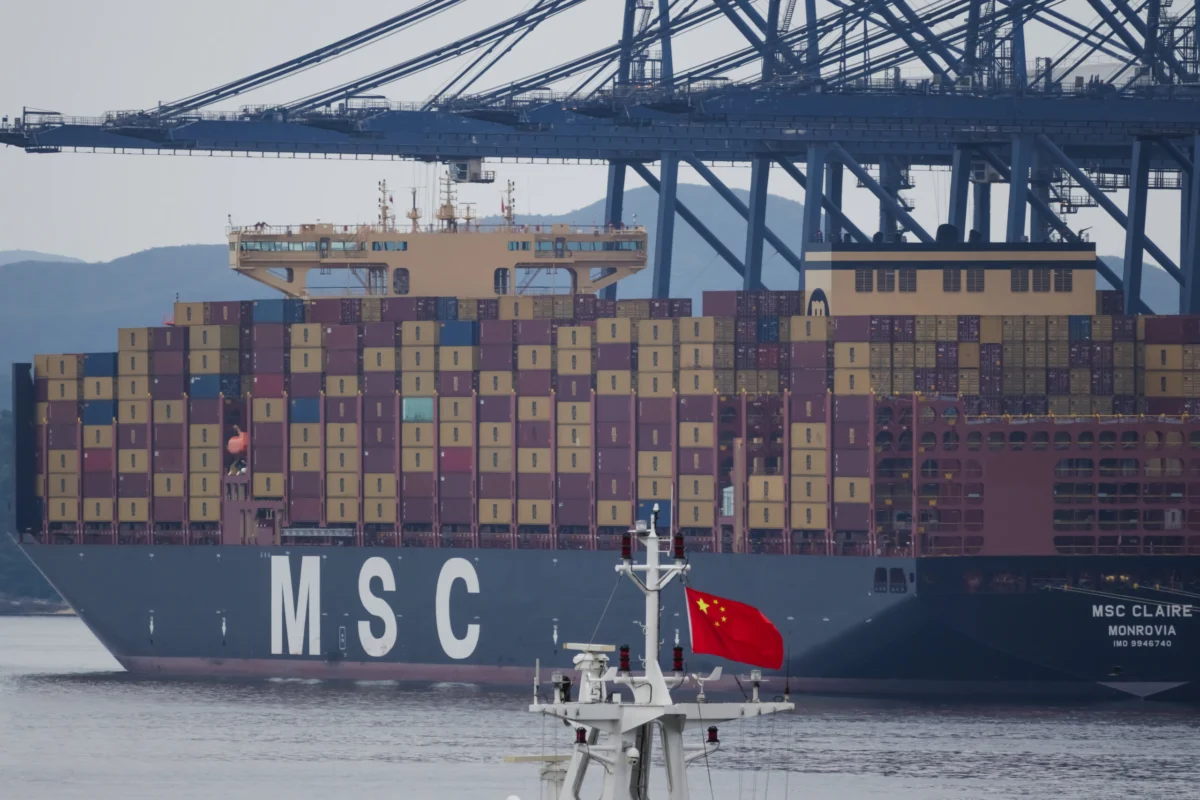
The current surge in air conditioner imports is merely a symptom of a much larger, systemic issue. The EU’s goods deficit with China has been on a steep upward trajectory, growing by 15% to a staggering €360 billion ($410 billion) last year. This shortfall affected all 27 member states, reaching an unprecedented €98 billion in the first quarter of the current year, marking the highest level since 2022. Electrical equipment and machinery consistently rank among the most imported goods, forming a significant chunk of this deficit.
This escalating imbalance is not just a statistical anomaly; it represents a fundamental challenge to the EU’s economic strategy and its aspiration for "strategic autonomy." European policymakers are increasingly vocal about what they perceive as unfair trade practices, including excessive state subsidies provided by Beijing to its domestic companies, leading to overcapacity and the dumping of cheap goods onto the European market. The intellectual property rights framework and market access restrictions for European firms operating in China further complicate the picture, creating an uneven playing field.
Gabriel Wildau, managing director at consultancy Teneo, observed that "the sense of urgency over [China’s] threat to European industry appears to have reached a tipping point." Yet, he noted, China’s leadership has shown "little appetite for placating Europe," and there is "no sign of policy action forceful enough to materially reduce the trade surplus with Europe." This sentiment highlights the deep-seated skepticism among analysts regarding Beijing’s willingness to make substantive concessions that would fundamentally alter the trade dynamics.
Brussels’ Balancing Act: Strategic Autonomy vs. Consumer Needs
European leaders find themselves in a complex balancing act. On one hand, they must respond to the legitimate concerns of European industries struggling against what they view as unfair Chinese competition, protect critical industrial sectors, and safeguard employment. On the other hand, they must acknowledge consumers’ desire for cheaper, high-quality household goods, such as the now-essential air conditioners, especially during periods of economic strain and extreme weather.
The European Commission has intensified its scrutiny of Chinese companies operating in Europe. Recent actions include restricting funding for solar projects utilizing Chinese-made components, a move designed to bolster domestic European manufacturing in a strategically vital renewable energy sector. Furthermore, the bloc has moved to end a tax exemption for low-value parcels, a measure that directly impacts e-commerce giants like Temu and Shein, which have leveraged this loophole to flood the European market with inexpensive goods. These targeted measures reflect a broader shift in EU policy, moving beyond rhetoric to concrete action.
Andrew Small, director at the European Council on Foreign Relations, emphasized the targeted nature of these potential interventions. "Any measures would be targeted in areas where either Chinese competition risks causing serious harm to critical industrial sectors, or where there is a major dependency risk that China may weaponize," Small explained, specifically citing rare earths, chemicals, autos, and heavy machinery as areas of particular focus. He clarified that "there is no discussion about across-the-board tariffs," indicating a preference for precision over broad protectionism, aiming to de-risk rather than decouple entirely.
However, Alicia García Herrero, chief economist at French investment bank Natixis, offered a more cynical view of the recent joint statement. She suggested that "China has made no real commitment in setting an actual [import] quota or actual implementation mechanism," dismissing the progress as merely "smoke" from China designed to deter Europe from launching more protectionist measures. This perspective underscores the deep distrust that permeates parts of the economic relationship and the perceived lack of concrete concessions from Beijing.
Expert Perspectives and Future Trajectories
The future trajectory of EU-China trade relations is poised at a critical juncture. The immediate challenge of the trade deficit is compounded by broader geopolitical shifts and the imperative of climate action. As Europe grapples with more frequent and intense heatwaves, the reliance on affordable, imported cooling technology is set to grow, creating an enduring contradiction in its trade policy.
For European businesses, the outcome of these trade negotiations carries existential consequences. Depoux warned that "Europe, too, needs a common understanding to avoid escalation of tit-for-tat responses." He proposed "delayed reciprocity" as a guiding concept, one that could eventually foster collaboration rather than confrontation. This approach envisions a future where Chinese and European firms might merge or partner to compete globally, pooling resources and expertise, rather than clashing over market share within their respective blocs. Such a vision, however, requires a significant shift in political will and economic strategy from both sides.
The October deadline looms as a critical barometer of progress. While Sefcovic acknowledged that "not everything will be solved, not everything will be fixed," the expectation for "sufficient time to deliver the tangible results" highlights the pressure on the newly formed working groups. The stakes are high: failure to make meaningful headway could prompt Europe to adopt more assertive trade defense instruments, risking further escalation.
Ultimately, the summer of 2026, marked by scorching temperatures and a scramble for air conditioners, serves as a poignant illustration of the complex interplay between climate change, consumer demand, and global trade dynamics. Europe’s ambition to rebalance its trade relationship with China is a monumental task, made even more intricate by the very forces of nature it seeks to combat, yet simultaneously relies upon Chinese ingenuity to alleviate. The long-term implications for European industry, consumer welfare, and the global trade architecture will depend heavily on the ability of both the EU and China to navigate these competing pressures with strategic foresight and genuine commitment to fair and balanced economic engagement.