Ena Muazin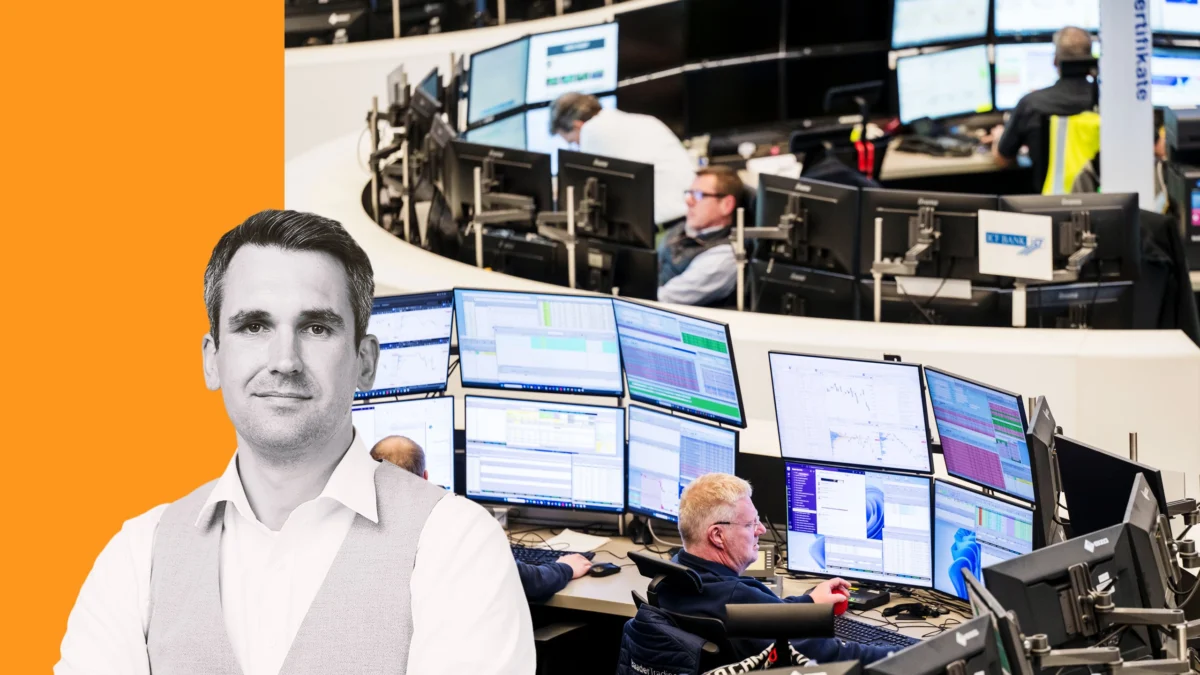
The German stock market’s leading index, the DAX, has shown resilience in recent trading sessions, managing to curtail its losses despite ongoing volatility. However, this apparent stability is underpinned by several factors that may not be sustainable in the medium to long term, raising concerns among investors about the potential for a multi-stage downturn. While the index has managed to avoid a significant collapse, the underlying risks suggest a period of increased caution is warranted.
DAX Navigates Choppy Waters
The DAX, a benchmark index representing the 40 largest and most liquid companies listed on the Frankfurt Stock Exchange, has been a focal point for market watchers. In the most recent week of trading, the index concluded at 24,831 points, having failed to decisively break through the 25,000-point mark. This level had been a significant psychological barrier, with the index oscillating around it for seven consecutive trading days. Over the course of that week, the DAX recorded a decline of 0.9 percent. This represents a more than four percent drop from its record high, which was achieved at the beginning of the month.
The resilience displayed by the DAX in limiting its losses can be attributed to a confluence of factors. These include the ongoing efforts by central banks to manage inflation and stimulate economic growth, as well as the strategic maneuvers of institutional investors seeking to rebalance their portfolios. Furthermore, certain sectors within the German economy have demonstrated robust performance, providing a degree of insulation against broader market pressures.

However, this perceived stability is delicate. The underlying economic landscape remains complex, characterized by geopolitical uncertainties, persistent inflationary pressures, and evolving monetary policy stances. These elements introduce a degree of unpredictability that could challenge the current support structures for the German stock market.
Underlying Strengths and Emerging Weaknesses
The German economy, a powerhouse within the European Union, has historically been a significant driver of European market performance. The DAX, as its primary stock market barometer, reflects the health and sentiment surrounding its constituent companies. These companies, spanning various sectors from automotive and chemicals to banking and technology, are deeply integrated into global supply chains and are sensitive to both domestic and international economic trends.
Recent data has painted a mixed picture. While some indicators suggest a degree of economic recovery, others point to persistent headwinds. For instance, industrial production figures have shown fluctuations, and export demand, a traditional strength of the German economy, has faced challenges due to global economic slowdowns and trade tensions.

The resilience of the DAX in the face of these challenges has been aided by several key developments:
- Monetary Policy Support: Central banks, including the European Central Bank (ECB), have continued to signal a commitment to maintaining supportive monetary policies. While the era of ultra-low interest rates may be nearing an end, the pace of tightening has been carefully managed to avoid undue shock to the financial system. This has provided a degree of liquidity and investor confidence.
- Corporate Earnings: Despite the challenging economic environment, many German blue-chip companies have managed to report solid earnings. This suggests that many businesses have been successful in adapting to changing market conditions, optimizing costs, and maintaining profitability. However, future earnings outlooks are being closely scrutinized for signs of strain.
- Sectoral Performance: Certain sectors have outperformed the broader market. For example, companies in the renewable energy and technology sectors have seen increased investor interest, driven by long-term growth trends and government support initiatives. This has helped to offset some of the weaker performances in more cyclical industries.
Despite these positive undercurrents, significant risks remain. The persistent inflation that has plagued economies worldwide continues to exert pressure on consumer spending and corporate margins. While central banks are working to control inflation, the path to price stability is often fraught with uncertainty, and aggressive interest rate hikes could dampen economic activity.
A Potential Multi-Stage Downturn
The current market sentiment suggests that investors are anticipating a period of increased volatility rather than an immediate, sharp decline. This outlook is shaped by the belief that the support mechanisms in place, while effective in the short term, may not be sufficient to counteract a more profound economic contraction.
One of the primary concerns is the potential for a "stagflationary" environment, characterized by slow economic growth coupled with high inflation. In such a scenario, central banks face a difficult dilemma: raising interest rates to combat inflation could further stifle economic growth, while maintaining accommodative policies could exacerbate inflationary pressures.
The implications of such a scenario for the stock market are significant. Higher interest rates generally make fixed-income investments more attractive relative to equities, potentially leading to a reallocation of capital away from stocks. Furthermore, slower economic growth translates into reduced corporate earnings, which in turn can depress stock valuations.
The possibility of a multi-stage downturn means that the market might not experience a single, dramatic collapse. Instead, it could unfold in a series of declines, punctuated by brief periods of recovery or stabilization. This pattern can be particularly challenging for investors to navigate, as it can lead to a false sense of security followed by renewed downturns.

Historical Context and Investor Sentiment
The German stock market has a history of both impressive rallies and significant corrections. Understanding these historical patterns can provide valuable context for current market behavior. The DAX, for example, has demonstrated its ability to recover from major downturns, such as the global financial crisis of 2008-2009 and the initial shock of the COVID-19 pandemic in 2020.
However, the current economic climate presents a unique set of challenges. The confluence of geopolitical instability, persistent inflation, and the ongoing transition to a greener economy creates a complex web of risks that are difficult to fully model.
Investor sentiment, a key driver of market movements, has become increasingly cautious. While there is no widespread panic, a sense of apprehension pervades the market. This is reflected in the increased demand for defensive assets and a greater emphasis on risk management strategies.

Expert Analysis and Outlook
Financial analysts and market strategists are closely monitoring the economic data and corporate earnings reports for further clues about the future direction of the DAX. Many are advising a cautious approach, emphasizing the importance of diversification and a long-term investment horizon.
"We are in a period of significant uncertainty," commented Dr. Anna Schmidt, Chief Economist at a prominent German financial institution. "While the German economy has shown resilience, the combination of global inflationary pressures and geopolitical risks creates a challenging environment. Investors should be prepared for continued volatility."
The implications of a sustained downturn could extend beyond the stock market, impacting consumer confidence, business investment, and the broader economic outlook for Germany and the Eurozone. A significant decline in the DAX could also affect pension funds and other institutional investors that rely on equity market performance.

Looking Ahead: Key Factors to Watch
The trajectory of the DAX in the coming months will likely be shaped by several key factors:
- Inflationary Trends: The effectiveness of central banks in bringing inflation under control will be paramount. A sustained decline in inflation could pave the way for a more stable economic environment.
- Geopolitical Developments: The ongoing geopolitical landscape, particularly the conflict in Ukraine and its ripple effects on energy markets and supply chains, will continue to be a significant source of uncertainty.
- Corporate Earnings: The ability of German companies to maintain profitability and adapt to changing economic conditions will be crucial. Any widespread deterioration in earnings could trigger a more significant market correction.
- Monetary Policy Decisions: Future interest rate decisions by the ECB and other major central banks will heavily influence investor sentiment and the cost of capital.
- Government Policy: Fiscal policies implemented by the German government and other EU member states will also play a role in shaping the economic outlook. Initiatives aimed at supporting key industries, promoting energy security, and managing the transition to a sustainable economy could have a material impact.
The DAX’s recent ability to limit losses suggests a degree of underlying strength within the German economy and its leading companies. However, the complex interplay of global economic forces, persistent inflation, and geopolitical uncertainties means that the current "safety net" may prove to be a temporary buffer. Investors and market observers will be closely watching for signs that the fundamental drivers of economic growth and stability are shifting, which could signal the onset of a more prolonged period of market adjustment. The coming weeks and months will be critical in determining whether the DAX can sustain its current level or if it will succumb to the mounting pressures, potentially leading to a more substantial correction in multiple stages.