Clara Shinta
The cryptocurrency industry, a sector constantly battling sophisticated cyber threats that put billions of dollars at stake, finds itself grappling with a new and critical challenge: highly uneven access to the most powerful new Artificial Intelligence (AI) models. These advanced AI tools are increasingly seen as indispensable for bolstering code against attacks and identifying vulnerabilities, yet only a select few major players have managed to secure access, creating a potential security chasm within the digital asset ecosystem.
The Genesis of a New Divide: AI’s Role in Crypto Security
The rapid evolution of AI, particularly large language models (LLMs), has opened a dual-edged sword for cybersecurity. On one hand, these models possess an unparalleled ability to analyze vast swathes of code, identify complex patterns, and even generate potential exploits, making them formidable tools in the hands of malicious actors. On the other, they offer equally potent defensive capabilities: detecting subtle bugs, strengthening cryptographic protocols, simulating attack scenarios, and rapidly patching vulnerabilities. For the cryptocurrency space, where smart contracts manage immense wealth and an exploit can lead to irreversible losses, the stakes are arguably higher than in traditional finance. The immutability of blockchain transactions means that once a vulnerability is exploited, recovery is often impossible, underscoring the critical need for the most advanced defensive tools available.
Major AI developers like Anthropic and OpenAI have recognized the immense power and potential for misuse of their most advanced models, leading them to implement restrictive access policies. Their "frontier" models, those with the most sophisticated cybersecurity capabilities, are not generally available to the public. Instead, they are often gated, offered only to verified entities under specific conditions, ostensibly to prevent them from falling into the wrong hands and being weaponized. This policy, while understandable from a risk management perspective, has inadvertently created a new stratification within the crypto industry, where a handful of privileged firms possess superior defensive capabilities while others struggle to keep pace with an increasingly AI-empowered threat landscape.
Unequal Access: A Deep Dive into Key Players and Their Fortunes
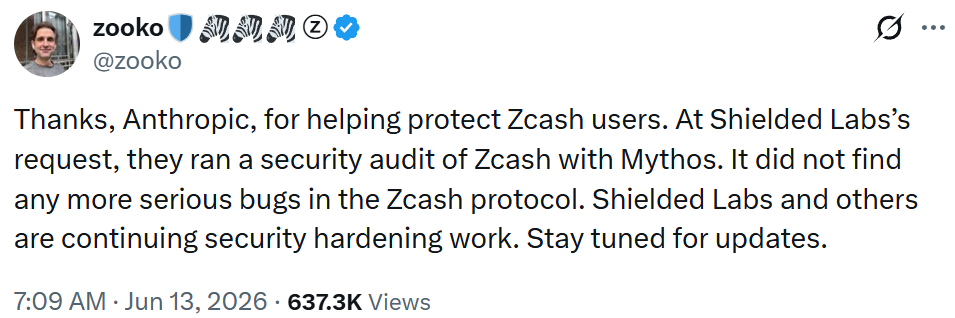
The disparity in access is stark and has become a significant point of concern for industry leaders. In June, leading U.S. crypto exchange Coinbase publicly announced that it had successfully secured access to Anthropic’s restricted Mythos model. This revelation was quickly followed by an update from Zooko Wilcox, the founder of Zcash, who stated that Anthropic had utilized the Mythos model to conduct an audit of the Zcash protocol at the behest of Shielded Labs. This practical application highlighted the immediate value of such advanced AI for critical infrastructure security in crypto, offering a glimpse into the potential for proactive vulnerability detection and code hardening.
Conversely, other industry titans have found themselves on the outside looking in. Binance, the world’s largest cryptocurrency exchange by daily trading volume, with a staggering $137.8 billion in assets under management according to DefiLlama, has openly admitted its struggles to gain entry. Jimmy Su, Binance’s chief security officer, conveyed to Cointelegraph the company’s persistent efforts: "That’s one advanced frontier model that hasn’t been made available to crypto just yet. We have been trying to make inroads there. We also talked to other crypto exchanges and our own investors to try to make some progress. But we haven’t gotten the most frontier AI model, like Mythos." This statement from a firm of Binance’s stature underscores the depth of the access problem, suggesting that even immense market presence and significant security needs do not guarantee a seat at the table.

The frustration extends beyond Binance. Crypto custodian Fireblocks, responsible for securing trillions of dollars in assets annually, was reported in April to be seeking access to Mythos, while at the time only employing Anthropic’s publicly available model for penetration testing. Hayden Adams, the founder of Uniswap, a leading decentralized exchange, publicly criticized the safeguards present in Anthropic’s more accessible Fable 5 model, which restricts prompts related to cybersecurity. These sentiments reflect a widespread desire within the crypto community for more robust and unrestricted AI tools to defend against burgeoning threats. Even the Ethereum Foundation, a cornerstone of the decentralized web, announced in July that it was deploying "coordinated AI agents" to identify bugs across its vast systems, though it refrained from disclosing the specific models in use, fueling speculation about their access levels.
Interestingly, some companies adjacent to the core crypto industry have managed to gain preferential access. FIS, a financial technology giant that provides services to banks and partnered with Circle to enable USDC payments, became a participant in Project Glasswing last month. Project Glasswing is Anthropic’s exclusive program designed to provide vetted cyber defenders and organizations managing critical software infrastructure with early access to its restricted Mythos models. Similarly, HackerOne, a prominent bug-bounty and security testing service provider that works with major crypto exchanges, also joined Project Glasswing. While HackerOne’s testing is confined to its own infrastructure, not directly its customers’ programs, its inclusion highlights a strategic prioritization by AI developers towards entities involved in broader critical infrastructure and cybersecurity services, even if not directly managing crypto assets.
The Rationale Behind Restriction: Balancing Innovation and Risk
The restrictive approach adopted by AI developers like Anthropic and OpenAI is rooted in a complex assessment of risk and responsibility. Anthropic, for instance, states that its Mythos 5 model shares the same underlying architecture as its publicly available Fable 5 but crucially operates without the safeguards that typically restrict sensitive cybersecurity-related work. OpenAI employs a similar tiered system, offering verified defenders "Trusted Access for Cyber" to GPT-5.5, while reserving its even more permissive GPT-5.5-Cyber model for a smaller, highly vetted group engaged in authorized penetration testing.
The primary justification for these guardrails, as articulated by AI developers, is to prevent the misuse of these powerful tools. There’s a legitimate concern that if frontier AI models, capable of generating sophisticated exploits and identifying zero-day vulnerabilities, were widely available, they could be weaponized by malicious actors, leading to an unprecedented surge in cyberattacks across all sectors. Jimmy Su of Binance acknowledged this perspective, suggesting that Anthropic’s controlled rollout could be a responsible approach. "If it enhances the attacker much faster than the defender, then it actually is harming the ecosystem," he noted, adding that a limited testing period could significantly reduce the potential "blast radius" of any unforeseen negative consequences.
However, this rationale is increasingly being challenged by crypto security executives, who, while understanding the initial need for caution, argue that continued gating becomes harder to justify as publicly available models rapidly approach similar capabilities. Michael Coates, Chief Information Security Officer at the Solana Foundation, a prominent blockchain ecosystem, emphasized the need for a faster, more streamlined verification process: "I fully understand guardrails for advanced models, but we need to streamline the verification programs, the acceptance programs, to give these models to legitimate defenders. We need to make sure that the best models we can get are in the hands of defenders because attackers will have something capable enough."
Sean Cheetham of Blockchain Capital echoed this sentiment, arguing that broader availability could ultimately favor defenders. He posited that legitimate security researchers and white-hat hackers significantly outnumber the smaller groups engaged in sophisticated attacks. "If good people can multiply their defense scale… you’re much better off just opening it up and allowing them to defend themselves," he contended, suggesting that the collective defensive power unleashed by wider access could outweigh the risks of potential misuse. This perspective highlights a fundamental tension: the desire for controlled innovation versus the imperative to equip defenders in an escalating cyber arms race.
The Escalating Threat Landscape: AI-Assisted Attacks on the Rise
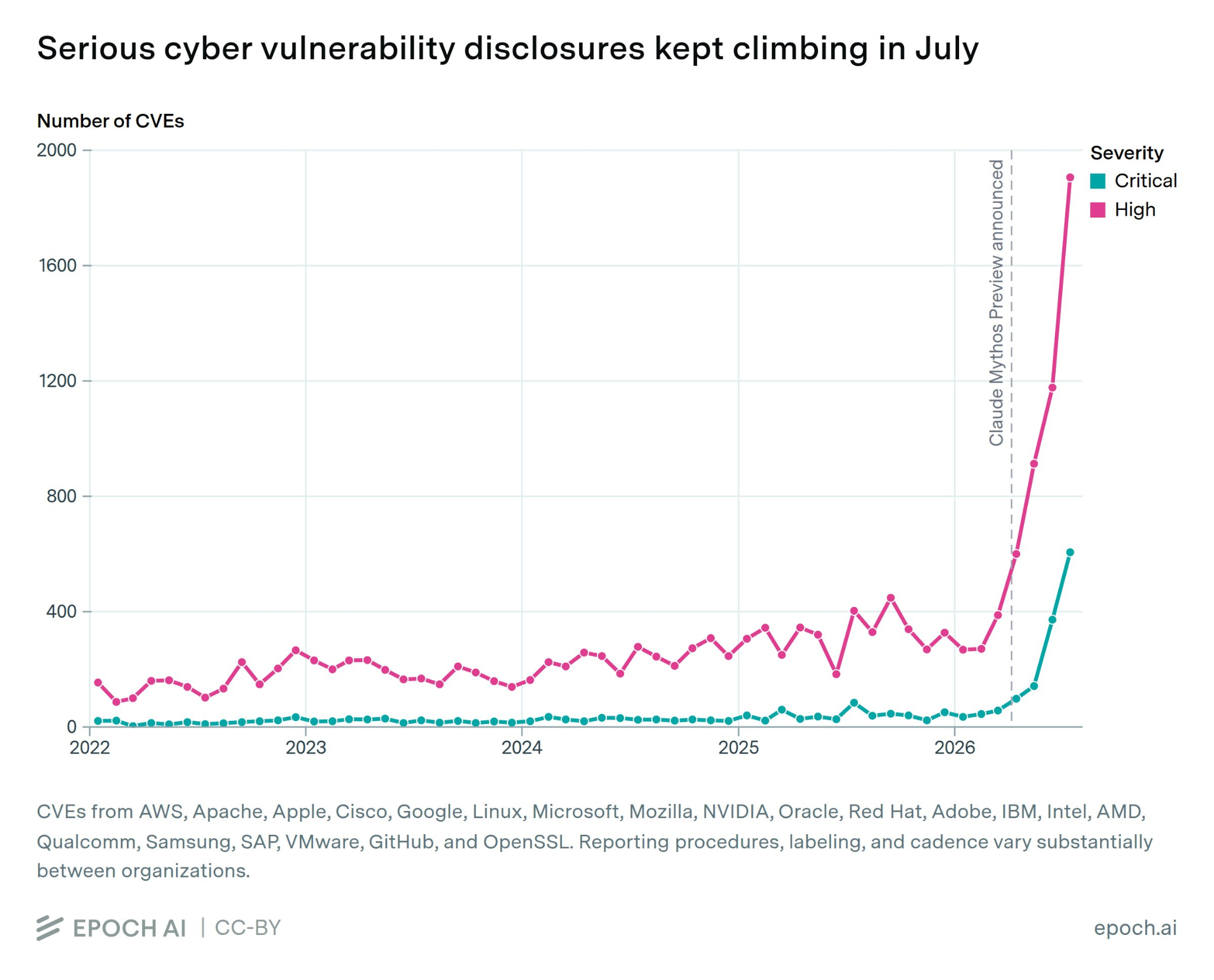
The debate over AI access is not merely theoretical; it is playing out against a backdrop of a rapidly intensifying threat landscape characterized by increasingly sophisticated, AI-assisted hacking attempts. Data suggests an upward trend in critical-severity Common Vulnerabilities and Exposures (CVEs), with some analyses indicating a climb after the launch of models like Claude Mythos Preview, though direct causation remains a subject of ongoing research. What is undeniable, however, is the anecdotal evidence and direct reports from crypto firms facing new generations of exploits.
Just recently, Bitcoin swap service Boltz made the drastic decision to halt its non-custodial bridge after observing a "steady rise in AI-assisted exploits" over the past few months. Their candid assessment painted a grim picture: "The pattern is clear: attackers now iterate faster than a team our size can find and patch." This statement is a stark warning, indicating that human-led security teams are being outpaced by automated, AI-driven offensive capabilities. The ability of AI to rapidly generate new attack vectors, refine existing ones, and learn from past failures significantly compresses the time defenders have to react and patch.
Another alarming incident involved Bitcoin hardware wallet company Coinkite. Last week, a number of its Coldcard devices were exploited due to a flaw in its wallet seed generation, which proved to be less random than anticipated. Coinkite speculated that the attacker had likely employed AI to meticulously review previous versions of the firmware to identify and exploit this subtle flaw. This incident is particularly revealing as Coinkite itself had utilized "one of the best available AI models" to review its code just weeks prior to the exploit. This scenario vividly illustrates the escalating AI arms race: even when defenders leverage advanced AI, attackers may possess superior models or more sophisticated deployment strategies, or simply find weaknesses that even defensive AI initially misses.
These incidents underscore the urgent need for crypto firms to access the most cutting-edge defensive AI tools. Without them, the industry risks becoming a prime target for AI-powered adversaries who can iterate at speeds and scales previously unimaginable. The "Fears of AI-driven DeFi hack epidemic overstated for now – but not for long" sentiment, as explored in recent industry analysis, is quickly transitioning from a hypothetical concern to a tangible reality.
Broader Implications and the Future Outlook
The uneven distribution of frontier AI models is set to have profound implications for the cryptocurrency industry, shaping its security posture, market dynamics, and regulatory landscape.
Exacerbated Security Divide: The most immediate impact is the deepening of a security divide. Firms with access to these advanced AI tools will possess a significant advantage in identifying and mitigating vulnerabilities, potentially leading to a safer, more resilient infrastructure. Conversely, those without access will be at a structural disadvantage, making them more susceptible to sophisticated attacks and potentially undermining trust in their platforms. This could inadvertently centralize risk, as users may flock to platforms perceived as having superior defenses, or it could lead to catastrophic failures at less-equipped entities.
Market Concentration and Competition: Such a security advantage could also translate into market concentration. Exchanges and protocols that can demonstrably offer superior AI-enhanced security might attract more users and capital, further solidifying their market position at the expense of competitors. This creates a challenging environment for smaller, innovative projects that may lack the resources or connections to gain access to these critical tools, potentially stifling competition and innovation in the long run.
Regulatory Scrutiny: As AI-assisted attacks become more prevalent and impactful, regulators globally are likely to increase their scrutiny of cybersecurity practices within the crypto industry. The lack of access to state-of-the-art defensive AI could be viewed as a systemic risk, potentially leading to mandates for specific security standards or technologies. This could further complicate the operational environment for crypto firms and might even pressure AI developers to liberalize access under certain regulatory frameworks.
The Open-Source Counter-Movement: The restrictions on frontier AI models are simultaneously fueling the development and adoption of increasingly powerful open-source alternatives. While these open-source models may not yet match the capabilities of the most advanced gated systems, their rapid progress and unrestricted availability mean that they will eventually offer sophisticated defensive capabilities to a broader range of firms. This dynamic might ultimately force AI developers like Anthropic and OpenAI to reconsider their restrictive policies, as the competitive landscape shifts and the argument for controlled access weakens when similar capabilities become widely available anyway. As Jimmy Su noted, "As other more powerful models are being released, the pressure will be on Anthropic to make it more widely available." The crucial question then becomes whether defenders can deploy these models as effectively as attackers once they are generally accessible.
The Perpetual Arms Race: The integration of AI into both offensive and defensive cybersecurity strategies solidifies the notion of a perpetual technological arms race. Both sides will continuously leverage AI to innovate, adapt, and counter the other. The challenge for the crypto industry will be to ensure that defensive innovation keeps pace with, if not outpaces, offensive capabilities. This requires not only access to the best tools but also a deep understanding of how to effectively integrate and utilize AI within complex security architectures.
A Call for Collaboration and Streamlined Access: Ultimately, the ongoing saga of AI access highlights a critical need for enhanced collaboration between cutting-edge AI developers and the high-stakes crypto industry. Establishing clear, streamlined pathways for legitimate, vetted defenders to access these powerful models is paramount. This could involve developing more robust verification programs, fostering partnerships, or even creating industry-specific AI security consortia. The goal must be to empower the good actors with the best available technology, thereby enhancing the overall security and resilience of an industry that underpins a significant portion of the global digital economy.
In conclusion, the emergence of powerful, restricted AI models has presented the cryptocurrency industry with a dual challenge: to harness these tools for defense while navigating the ethical and practical complexities of their controlled distribution. While AI developers strive for responsible deployment, the escalating threat from AI-assisted attacks demands a more equitable and efficient means for legitimate defenders to access these critical technologies. The future security of the multi-trillion-dollar digital asset space hinges on bridging this access gap and ensuring that the most formidable AI tools are squarely in the hands of those protecting the ecosystem.