Clara Shinta
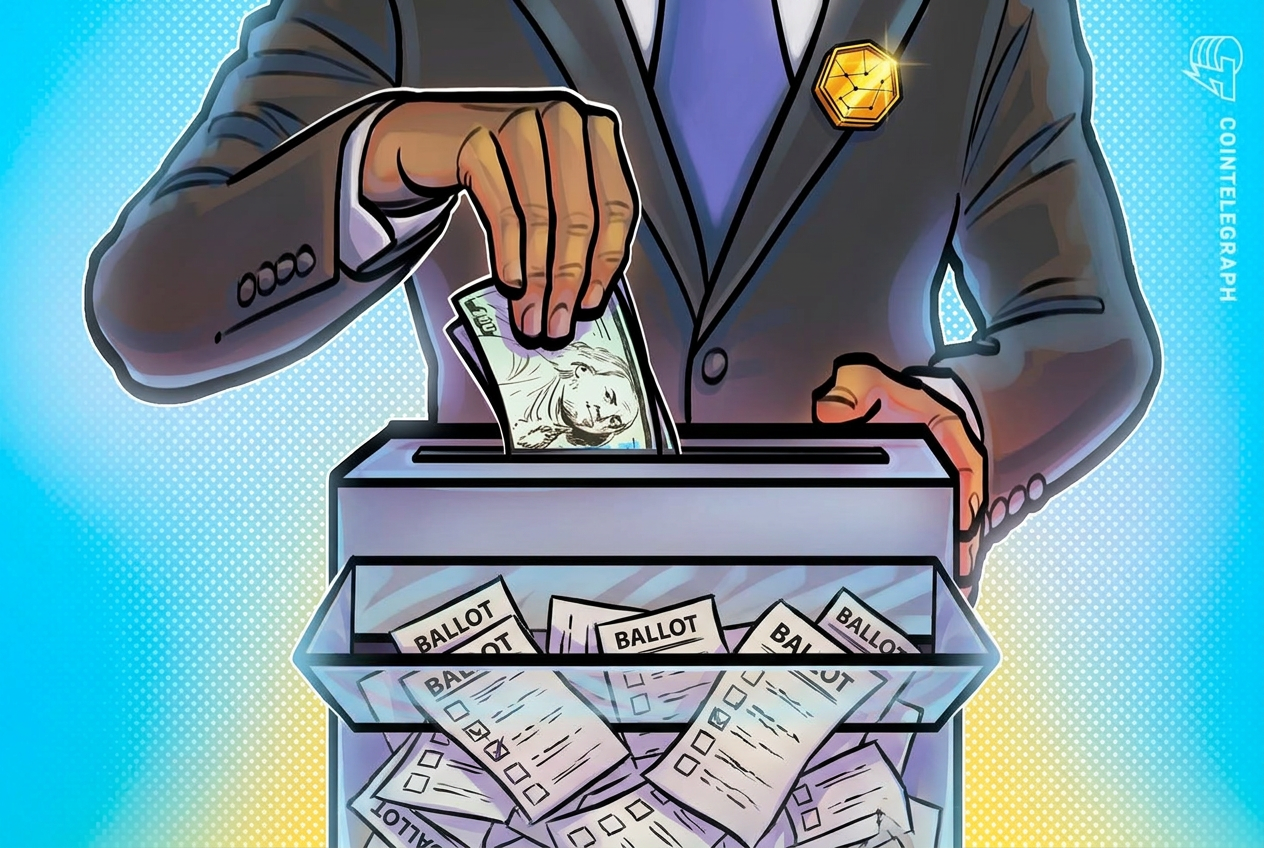
An affiliate of a powerful political action committee (PAC), substantially funded by major cryptocurrency firms like Ripple Labs and Coinbase, has significantly escalated its financial contributions to advertising campaigns targeting next week’s pivotal primary race in Michigan’s 13th Congressional District. This surge in spending underscores the burgeoning influence of the digital asset industry in American politics, as it strategically backs candidates aligned with its legislative priorities.
The Protect Progress PAC, the entity in question, has now channeled more than a combined $2 million into media efforts to bolster Michigan Representative Shri Thanedar, a Democrat, and oppose his Democratic challenger, Donavan McKinney. Federal Election Commission (FEC) filings, updated as of Thursday, reveal this substantial outlay. The most recent disclosures effectively doubled the PAC’s previously reported expenditures from just a week prior, adding an additional $884,240 to support Thanedar’s candidacy and over $150,000 to undermine McKinney’s campaign. With the Michigan 13th Congressional District primary scheduled for Tuesday, this eleventh-hour influx of funds is poised to have a particularly impactful effect on voter perception and turnout. Despite outreach from Cointelegraph, campaigns for both Thanedar and McKinney had not provided immediate comments on these significant PAC expenditures, leaving the immediate political ramifications to unfold in the final days before the vote.
The Architects of Influence: Crypto PACs and Their Funding
The rapid ascent of crypto-funded political action committees represents a significant development in the landscape of American campaign finance. A PAC is a type of organization that pools campaign contributions from members and donates those funds to campaigns for or against candidates, ballot initiatives, or legislation. The entities most active in the cryptocurrency space often operate as "super PACs," officially known as independent expenditure-only committees. These organizations can raise and spend unlimited amounts of money to overtly advocate for or against political candidates, provided they do not coordinate directly with the campaigns they support. This legal distinction allows for massive, independent spending that can profoundly influence election outcomes.
The emergence and rapid growth of PACs dedicated to the cryptocurrency and blockchain industry is a relatively recent phenomenon, reflecting the sector’s maturation and its increasing recognition of the imperative to shape regulatory frameworks through direct political engagement. This proactive stance is a strategic response to the complex and often uncertain regulatory environment for digital assets in the United States.
Protect Progress is an affiliate of the larger Fairshake PAC, which has quickly emerged as a titan in the 2024 U.S. election cycle. Fairshake has been responsible for deploying over $170 million in media expenditures to support candidates perceived as favoring crypto industry-aligned policies. This figure alone positions Fairshake as one of the most well-funded super PACs in recent memory, signifying the collective determination of the crypto industry to establish a firm foothold in Washington.
Fairshake’s formidable financial power stems from substantial backing by industry giants. While the original article specifically names Ripple Labs and Coinbase, other prominent venture capital firms and crypto entities, often including Andreessen Horowitz, Gemini, and Kraken, have also been significant contributors to such industry-focused PACs. This consolidated financial power allows Fairshake and its affiliates to exert considerable influence across numerous congressional races, targeting candidates who can advance their legislative agenda.
The scale of this spending is unprecedented for a relatively nascent industry. Public Citizen, a respected U.S. consumer advocacy group known for monitoring corporate influence in politics, reported in June that Fairshake and its affiliates alone accounted for more than $82 million of the roughly $189 million spent by crypto companies in the ongoing 2026 election cycle. This demonstrates a strategic, long-term investment in shaping future legislative bodies. As of January, Fairshake reportedly commanded an impressive $193 million war chest, signaling its sustained commitment to shaping the political landscape for years to come. With millions already earmarked for 2026 races in states like Texas and Illinois, this level of spending firmly establishes the crypto lobby as a significant and growing force in contemporary American political finance, rivaling the influence of established industries such as pharmaceuticals, fossil fuels, or finance.
Legislative Landscape and Thanedar’s Record
The substantial financial backing for Representative Shri Thanedar is directly linked to his voting record and legislative actions, which align closely with the crypto industry’s priorities. The digital asset sector is intensely focused on establishing clear, favorable regulatory frameworks in the United States, viewing such legislation as crucial for fostering innovation, ensuring market stability, and enhancing global competitiveness. The industry seeks to avoid stifling regulations that could push innovation offshore, while also aiming for consumer protection measures that build trust.
Representative Thanedar has demonstrated a consistent legislative stance favorable to the cryptocurrency industry, making him a strategic recipient of PAC support. His key legislative actions include:
- The GENIUS Act: Thanedar notably voted in favor of the stablecoin-focused GENIUS Act legislation. Stablecoins, digital currencies pegged to a stable asset like the U.S. dollar, are considered a crucial bridge between traditional finance and the decentralized digital economy. For the crypto industry, predictable and clear regulatory rules for stablecoins are essential. Such a framework would facilitate cross-border transactions, promote financial innovation by enabling new payment systems, and integrate digital assets into mainstream finance without the extreme volatility often associated with other cryptocurrencies like Bitcoin or Ethereum. The GENIUS Act aims to provide this much-needed clarity, potentially designating a primary regulator and outlining requirements for reserves and audits.
- The Digital Asset Market Clarity (CLARITY) Act: He also supported the CLARITY Act, a crypto market structure bill currently under consideration in the Senate. This legislation seeks to provide definitive clarity on how various digital assets are classified under existing law—specifically, whether they should be treated as securities, commodities, or a new category of digital assets. The current regulatory ambiguity, with different agencies like the Securities and Exchange Commission (SEC) and the Commodity Futures Trading Commission (CFTC) often asserting overlapping jurisdiction, has been a major source of frustration and legal risk for crypto companies. The CLARITY Act aims to resolve this by establishing clear definitions and assigning specific regulatory oversight, thereby reducing uncertainty that stifles development, investment, and market participation.
- The Promoting Innovation in Blockchain Development Act: Furthermore, Thanedar co-sponsored the Promoting Innovation in Blockchain Development Act. This initiative is designed to protect developers working on blockchain technologies. It aims to address concerns about potential liabilities faced by developers who contribute to decentralized protocols, ensuring that they are not held responsible for the actions of users on the networks they build. By fostering an environment conducive to technological advancement in the decentralized space, this act seeks to encourage continued innovation without unduly burdening the foundational architects of the crypto ecosystem.
Thanedar’s voting record reflects a broader, increasingly bipartisan movement within Congress to address the unique challenges and opportunities presented by cryptocurrencies. Lawmakers across the political spectrum are grappling with how to balance consumer protection, financial stability, national security concerns, and technological innovation in this rapidly evolving sector. The crypto industry’s strategic support for politicians like Thanedar highlights its sophisticated efforts to cultivate allies who not only understand but also actively champion its specific policy needs, pushing for legislation that enables growth rather than hindering it.
The Political Crossfire: McKinney’s Allegations and the Trump Connection
Donavan McKinney, Representative Thanedar’s Democratic primary opponent, has not shied away from directly confronting the influence of crypto PAC money in the Michigan 13th Congressional District race. In a sharp July 21 statement regarding the PAC spending, McKinney asserted that "the crypto lobby is paying my opponent back for helping Trump make over $1 billion since taking office." This accusation attempts to link Thanedar’s pro-crypto legislative actions directly to the financial interests of a broader, politically charged narrative surrounding former President Donald Trump.
McKinney’s statement likely refers to former U.S. President Donald Trump’s reported significant earnings from cryptocurrency investments. Filings from 2025 indicated that Trump earned more than $1.4 billion from crypto assets, a figure that reportedly surpassed his income from traditional real estate ventures in that period. This substantial sum included proceeds from his memecoin, Official Trump (TRUMP), and through his family’s business, World Liberty Financial. The emergence of political figures, particularly those with presidential influence, directly profiting from volatile digital assets they might indirectly influence through policy, has become a significant point of contention.
The connection drawn by McKinney touches upon a sensitive area of political ethics: the potential for elected officials to personally profit from industries that they regulate or legislate. Many Democrats, including McKinney, have voiced concerns that Trump utilized his presidential position to enrich himself through policies and laws, such as those impacting the crypto sector like the GENIUS Act. The insinuation is that legislative support for the crypto industry is being rewarded with financial backing for political campaigns, or that politicians are personally gaining from an industry they promote, raising questions about potential conflicts of interest. This narrative suggests a transactional relationship, where political actions are directly tied to financial benefits, whether for the politician personally or for their political allies.
The controversy surrounding politicians’ financial ties to industries they influence raises critical questions about transparency, conflicts of interest, and the erosion of public trust in government. As cryptocurrency gains more mainstream attention and becomes a larger economic force, the scrutiny over its political lobbying efforts and the financial dealings of politicians involved in the sector is likely to intensify. Voters and advocacy groups increasingly demand clarity on how elected officials manage their personal investments, especially when those investments are in sectors subject to their legislative oversight. The "crypto lobby" narrative, as framed by McKinney, suggests a powerful, well-funded group seeking to influence policy for its own gain, a perception that can be damaging to both the politicians involved and the industry itself.
A National Footprint: Beyond Michigan
The substantial investment in Michigan’s primary race is not an isolated incident but rather a strategic component of a broader, nationwide effort by Fairshake and its affiliates to cultivate political support for the cryptocurrency industry. These PACs are demonstrating a willingness to engage in primary races across the political spectrum, strategically supporting candidates who are ideologically aligned with their objectives, regardless of their party affiliation. This pragmatic approach highlights a focus on policy outcomes rather than strict partisan loyalty.
Washington State Engagements: In Washington State, which also holds primaries on the same day as Michigan, the Fairshake affiliate Defend American Jobs PAC has invested more than $65,000 in media campaigns. This spending supports a Republican candidate vying for a seat in Washington’s 4th congressional district. The decision to back a Republican in a different state underscores the crypto lobby’s bipartisan strategy, aiming to build a coalition of supporters who champion digital asset innovation, regardless of their party’s broader platform. This approach suggests a sophisticated understanding of the need for cross-aisle alliances to achieve legislative goals in a divided Congress.
Alabama’s High-Stakes Primary: Alabama, with its primaries slated for August 11, has similarly attracted significant attention from Fairshake’s network. FEC filings show that Defend American Jobs PAC spent over $511,000 on media to back Jerry Carl Jr., a Republican. Carl previously represented the state’s 1st congressional district from 2021 to 2025. This substantial financial commitment for a former lawmaker indicates a targeted investment in experienced politicians.
Notably, Jerry Carl Jr. was one of the wealthiest members of Alabama’s House delegation during his tenure, with a reported net worth of up to $15 million in 2023. The support for a candidate of Carl’s financial standing and political experience suggests that crypto PACs are not only targeting underdog candidates who might be more easily swayed by significant financial input but also investing in established figures who can effectively champion their cause within the legislative arena. This strategy indicates a sophisticated understanding of political power dynamics, aiming to reinforce existing pro-crypto voices or bring influential, well-connected figures into the fold. The ability to support candidates who may not necessarily "need" the money, but whose influence is deemed valuable, showcases the depth of the PACs’ strategic planning.
Long-Term Vision and Geographic Strategy: The PACs’ early and substantial engagement in 2026 races across states like Texas, Illinois, and others further illustrates a long-term, sustained commitment to shaping the regulatory environment for digital assets. This proactive approach suggests that the crypto industry views political influence as a foundational element for its future growth and legitimacy within the U.S. Rather than waiting for critical legislation to emerge and then reacting, these PACs are strategically building a base of support in advance, identifying potential allies early in the election cycle and providing them with significant resources. This geographic spread and multi-cycle planning highlight a comprehensive strategy to embed pro-crypto sentiment deeply within the U.S. political system, ensuring a sustained legislative push for favorable regulation.
Broader Implications and Analysis
The escalating financial involvement of crypto-backed PACs carries significant broader implications for American politics, the future of digital asset regulation, and public trust in the electoral process.
Impact on Election Outcomes: The significant influx of independent expenditures from crypto PACs, particularly in primary elections, can profoundly influence outcomes. In races where local campaigns often operate with limited budgets, a multi-million-dollar ad blitz can dramatically alter voter awareness, shape public perception of candidates, and ultimately propel preferred candidates to victory or significantly cripple opponents. This raises critical questions about fair competition and the ability of grassroots campaigns, which often rely on smaller donations and volunteer efforts, to contend with well-funded, industry-backed efforts. The power of such spending in primary races is particularly acute, as voter turnout is typically lower, making each dollar spent potentially more impactful.
Shaping the Regulatory Future: The primary objective of this political spending is clear: to secure a favorable regulatory landscape for the cryptocurrency industry. By supporting candidates who vote for legislation like the GENIUS Act (stablecoins) and the CLARITY Act (market structure), these PACs aim to foster an environment characterized by regulatory certainty, innovation-friendly policies, and reduced operational hurdles for crypto businesses. The success of these efforts could determine whether the U.S. becomes a global leader or a laggard in the rapidly evolving digital asset economy. A fragmented or overly restrictive regulatory framework could push innovation and talent to more welcoming jurisdictions, while clear, balanced rules could solidify America’s position at the forefront of the blockchain revolution.
Transparency and Campaign Finance Debate: The scale of spending by crypto PACs inevitably reignites enduring