Clara Shinta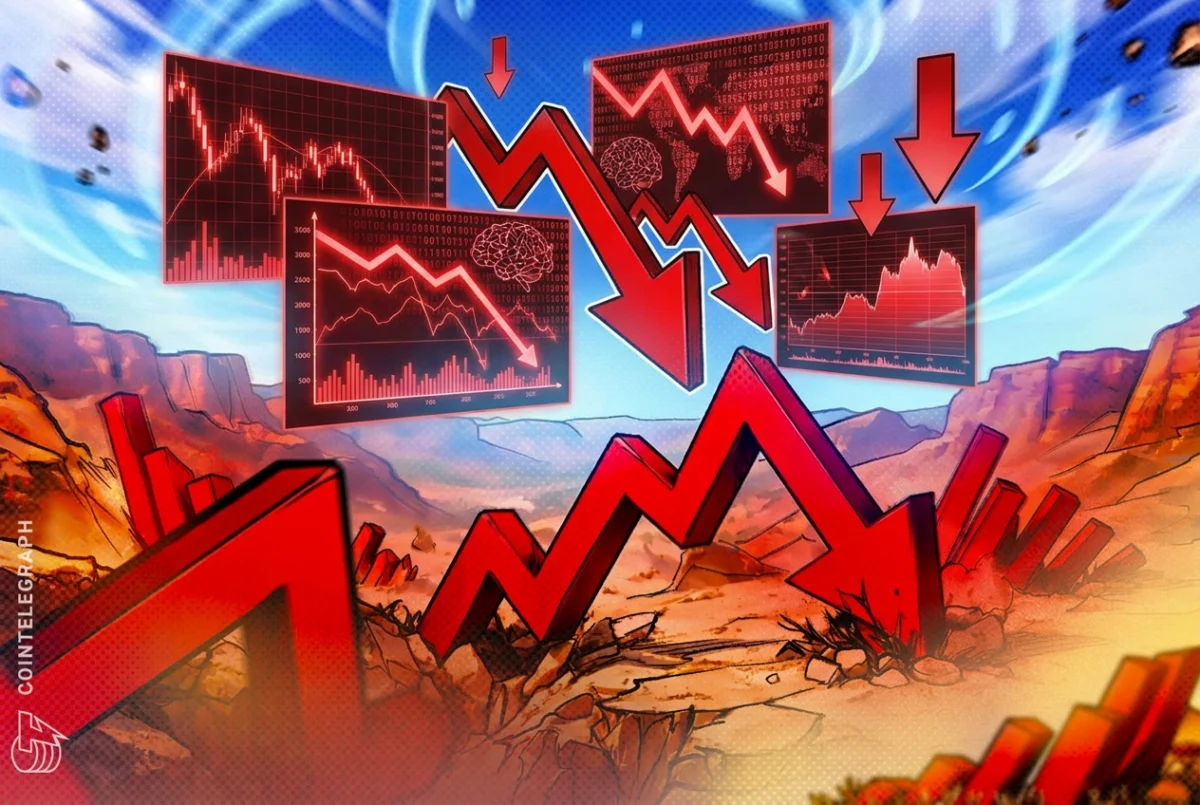
Ken Griffin’s Citadel, one of the world’s most prominent hedge funds, has reportedly acquired a substantial portion of the public stock portfolio held by Situational Awareness, the investment firm founded by former OpenAI researcher Leopold Aschenbrenner. This significant transaction follows a period of intense volatility and substantial losses experienced by Aschenbrenner’s fund during July’s artificial intelligence (AI) stock market rout, highlighting the inherent risks and rapid shifts within the burgeoning AI investment landscape.
The Financial Times was the first to report the acquisition on Thursday, detailing that Citadel stepped in to purchase the holdings after Situational Awareness faced considerable financial pressure. This move by Citadel, known for its vast trading operations and opportunistic investments, underscores the dynamic nature of capital markets, where periods of distress for one entity can present strategic opportunities for another. The transaction involved a significant portion of Situational Awareness’s public equities, though the exact composition of the sold assets and the total value of the deal remain undisclosed.
The Unraveling of a High-Flyer: Situational Awareness’s Rapid Ascent and Swift Reversal
Situational Awareness, established less than two years ago by Leopold Aschenbrenner, had quickly become a notable player in the hedge fund arena, largely due to its concentrated bets on companies poised to benefit from the anticipated explosion in artificial general intelligence (AGI). The fund’s strategy, heavily influenced by Aschenbrenner’s own optimistic projections for AGI development, saw its assets under management (AUM) swell to approximately $24 billion at its peak. This rapid growth was accompanied by extraordinary returns; the fund was reportedly up an astounding 439% through June, a performance that captivated investors and analysts alike, showcasing the immense potential – and volatility – of the AI sector.
However, July brought a dramatic reversal of fortune. According to The Wall Street Journal, citing a person with direct knowledge of a letter sent to investors, Situational Awareness experienced a precipitous decline of approximately 67% during the month. This sharp downturn was directly attributed to a widespread sell-off in AI-related stocks, which had previously enjoyed a parabolic ascent. Despite the severe monthly loss, the fund reportedly remained up about 80% for the year, a testament to its exceptional performance in the preceding months but also a stark reminder of how quickly fortunes can change in highly speculative markets. The magnitude of the July losses, however, triggered a cascade of financial challenges for the fund, leading to urgent efforts to shore up its capital position.
The Architect of Situational Awareness: Leopold Aschenbrenner’s Vision
Leopold Aschenbrenner, the visionary behind Situational Awareness, gained prominence through his work at OpenAI, a leading AI research and deployment company. His investment philosophy is deeply rooted in his published essay series, "Situational Awareness: The Decade Ahead," which posits that artificial general intelligence could emerge as early as 2027. Aschenbrenner’s thesis argues that the advent of AGI would unleash unprecedented demand for computing power and electricity, thereby creating immense investment opportunities in companies providing the foundational infrastructure for this technological revolution.
Before his tenure at OpenAI and the launch of Situational Awareness, Aschenbrenner was also a member of the FTX Future Fund, a philanthropic initiative associated with the now-defunct cryptocurrency exchange FTX. He was among the five-person team who signed the resignation notice in November 2022 as FTX collapsed, an event that further underscored the high-stakes and sometimes tumultuous nature of cutting-edge technological and financial ventures. His background reflects a consistent engagement with frontier technologies and high-impact projects, lending a certain gravitas to his ambitious investment strategy, even amidst its recent setbacks.
The July AI Market Rout: A Broader Context
The significant losses incurred by Situational Awareness in July were not an isolated incident but rather indicative of a broader market correction within the AI sector. After a period of explosive growth fueled by investor enthusiasm for generative AI, many AI-related stocks had reached valuations that some analysts deemed unsustainable. The "AI stock market rout" in July saw investors taking profits and re-evaluating risk, leading to sharp declines across the board for companies heavily involved in AI infrastructure, software, and hardware.
Factors contributing to this market adjustment included rising interest rates, which make future growth prospects less attractive, and concerns about the pace of AI monetization and competition. While the long-term outlook for AI remains robust, the July downturn served as a necessary recalibration, reminding investors that even transformative technologies are subject to market cycles and periods of consolidation. The cost to insure AI-related debt had also reportedly reached new all-time highs during this period, signaling increased market anxiety and a more cautious sentiment among institutional investors.
Specific Portfolio Holdings and Their Performance
Situational Awareness’s portfolio was characterized by concentrated positions in companies believed to be foundational to the AI revolution. Public filings with the US Securities and Exchange Commission (SEC) as of March 31 showed direct share positions in several key companies. Among these, Sandisk (NASDAQ: SNDK), a major player in data storage solutions critical for AI infrastructure, experienced a particularly sharp decline, remaining down approximately 44% for the month even after a modest rebound on Thursday. CoreWeave (CRWV), a specialized cloud provider known for its high-performance computing capabilities essential for AI workloads, saw its stock fall nearly 26% in July. Similarly, Bloom Energy (NYSE: BE), a company focused on clean energy solutions, which could be crucial for powering energy-intensive AI data centers, was down around 32% in July, according to Yahoo Finance data.
These specific stock performances illustrate the direct impact of the market rout on Situational Awareness’s holdings. The fund’s strategy of identifying and investing in foundational components of the AI ecosystem meant that when the sector experienced a broad correction, its concentrated positions amplified the losses. The scale of these individual stock declines directly contributed to the fund’s overall 67% reduction in value for the month.
The Scramble for Capital: Margin Calls and Failed Deals
The substantial losses in July placed immense pressure on Situational Awareness, particularly given its leveraged portfolio structure. Funds employing leverage borrow money to amplify their investment positions, which can magnify returns during bull markets but also accelerate losses during downturns. As the value of its holdings plummeted, Situational Awareness reportedly faced margin calls from its lenders. A margin call occurs when the value of an investor’s margin account falls below the broker’s required minimum, necessitating the deposit of additional funds or the liquidation of assets to meet the minimum.
To address this liquidity crisis and meet its obligations, Situational Awareness reportedly approached existing investors and lenders for fresh capital. The Wall Street Journal reported that the fund had also offered some investors the option to buy portfolio assets directly. In a dramatic turn of events, the fund reportedly agreed late Wednesday to sell $3.5 billion worth of shares in Anthropic, a prominent AI safety and research company, to a group led by Greenoaks and Sequoia Capital. However, this deal was subsequently withdrawn on Thursday morning, further complicating the fund’s efforts to stabilize its finances. Reuters separately reported on the leveraged nature of the portfolio but indicated it could not definitively determine whether formal margin calls had been issued prior to the sale to Citadel. This sequence of events highlights the urgent and rapidly evolving nature of the fund’s financial predicament.
Citadel’s Strategic Intervention: An Opportunistic Play
Citadel’s acquisition of a significant portion of Situational Awareness’s public stock portfolio is a move characteristic of the multi-strategy hedge fund giant. Founded by Ken Griffin, Citadel is renowned for its sophisticated trading strategies, extensive market intelligence, and substantial capital reserves. The firm frequently acts as a market maker and opportunistic investor, capable of deploying capital quickly to acquire assets at distressed prices during periods of market dislocation.
For Citadel, this acquisition likely represents an opportunity to acquire a basket of AI-related stocks, potentially at a discount, that aligns with its own analytical views on the long-term prospects of the AI sector. By stepping in to purchase these assets from a fund facing liquidity challenges, Citadel can potentially gain exposure to high-growth areas of the market without having to build these positions from scratch, and possibly at a more favorable entry point. This type of transaction underscores Citadel’s role as a powerful and influential force in financial markets, often providing liquidity and seizing strategic advantages during times of stress. While the specific stocks involved in the transaction remain unclear, market observers suggest Citadel’s move signals confidence in the underlying value of these AI infrastructure companies, despite their recent volatility.
The Intersection of AI and Crypto Mining Infrastructure
An interesting dimension of Situational Awareness’s investment strategy was its significant exposure to Bitcoin (BTC) mining companies. The SEC filing from March 31 revealed approximately $1.11 billion in shares across seven Bitcoin mining firms, including Iren, Core Scientific, Riot Platforms, and CleanSpark. Cointelegraph had previously reported that these positions provided Situational Awareness with exposure to miners that were increasingly expanding into AI and high-performance computing.
This strategy capitalized on the growing synergy between cryptocurrency mining and AI infrastructure. Bitcoin miners possess substantial computing power, large-scale data center operations, and access to significant electricity, which can be repurposed for AI workloads that also demand intensive computational resources and energy. For instance, Bitcoin miner Core Scientific has been noted for its shift towards AI, with plans for a 1.5-gigawatt data center push to support AI clients. This diversification strategy by miners offered Situational Awareness a unique play on the convergence of these two high-growth technological sectors. It remains unclear whether any of these Bitcoin miner positions were part of the portfolio acquired by Citadel, or if Situational Awareness has retained these holdings as part of its remaining assets, which Reuters indicated still include roughly $10 billion in stocks and private investments, including Anthropic.
Broader Implications for the AI Investment Landscape
The events surrounding Situational Awareness and Citadel’s intervention carry several broader implications for the AI investment landscape. Firstly, it serves as a powerful cautionary tale about the risks associated with highly concentrated and leveraged bets in rapidly evolving, speculative sectors. While the allure of exponential returns in AI is strong, the market can be unforgiving, and even funds with brilliant minds at the helm are susceptible to severe drawdowns.
Secondly, Citadel’s acquisition highlights the resilience and opportunistic nature of major financial institutions. While smaller, specialized funds may struggle during market corrections, well-capitalized firms like Citadel are often positioned to capitalize on distressed assets, potentially leading to further consolidation within the investment space focused on emerging technologies.
Thirdly, the incident may prompt a re-evaluation of valuations within the AI sector. The July rout, followed by this high-profile fund distress, could usher in a period of more sober assessment of AI company fundamentals, moving beyond pure speculative enthusiasm. Investors may become more discerning, seeking clearer paths to profitability and sustainable growth rather than solely relying on future potential.
Finally, the focus on AI infrastructure, including the role of repurposed Bitcoin mining facilities, suggests that the underlying demand for computing power and energy remains robust, even if market sentiment fluctuates. This foundational aspect of the AI thesis, championed by Aschenbrenner, continues to hold validity, even as the path to realizing investment returns proves challenging and volatile.
Looking Ahead: The Future of Situational Awareness and AI Investing
The future trajectory of Situational Awareness under Leopold Aschenbrenner remains uncertain following these significant events. While the fund reportedly still maintains a substantial portfolio of private investments and some public stocks, the sale to Citadel marks a critical restructuring. It will be crucial to observe how Aschenbrenner adapts his strategy and manages the fund moving forward, particularly given the volatility inherent in his AGI-centric investment thesis.
For the broader AI investment ecosystem, the incident underscores that even in the midst of a technological revolution, market principles of risk management, liquidity, and valuation remain paramount. The rapid ascent and equally rapid correction experienced by Situational Awareness serve as a vivid reminder that innovation, while promising, does not exempt investments from the cyclical nature of capital markets. The AI sector will undoubtedly continue to attract immense capital and talent, but investors will likely approach it with a renewed sense of caution and a deeper appreciation for the complex interplay of technological vision and financial prudence.
Cointelegraph contacted Situational Awareness and Citadel for comment regarding the transaction and the fund’s current status but had not received a response by publication time.
This article is produced in accordance with Cointelegraph’s Editorial Policy and is intended for informational purposes only. It does not constitute investment advice or recommendations. All investments and trades carry risk; readers are encouraged to conduct independent research.