Lina Wu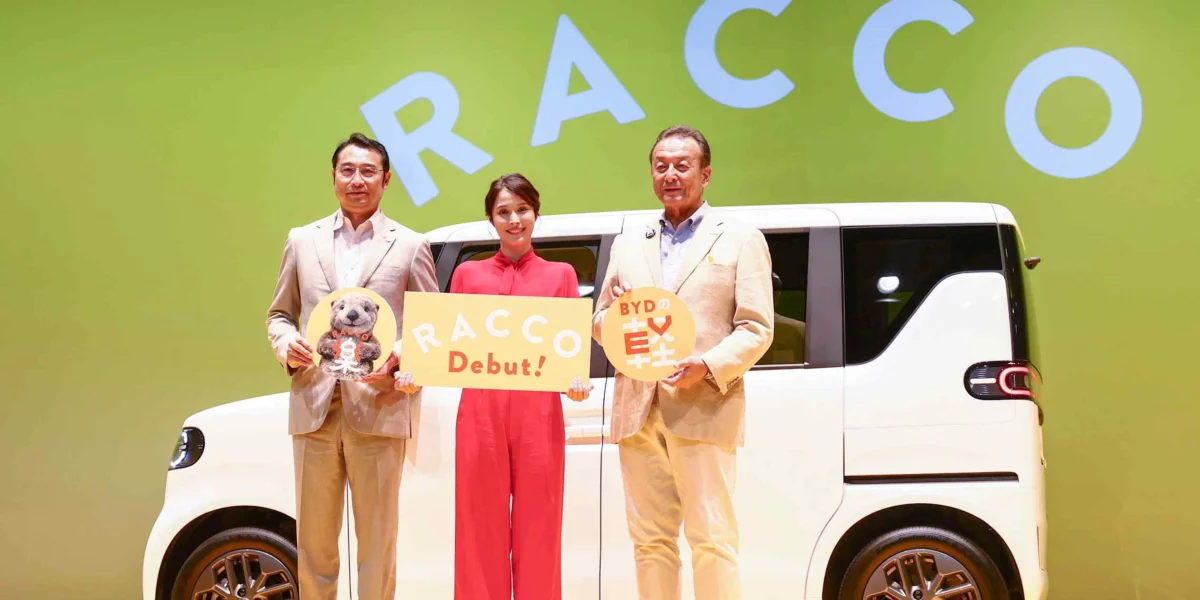
TOKYO – Chinese automaker BYD officially launched its all-electric kei minicar, the Racco, in the Japanese market on Tuesday, July 28, 2026. This pivotal entry marks a significant moment for Japan’s uniquely segmented automotive industry, long the exclusive domain of domestic manufacturers. The Racco’s debut signals a new era of international competition within the kei car segment, a class of vehicle that has historically defined urban mobility and personal transportation for a vast swathe of the Japanese population. The launch event, held in Tokyo, featured key BYD executives, including Liu Xueliang, BYD vice president and president of BYD Japan, and Atsuki Tofukuji, president of BYD Auto Japan, underscoring the company’s strategic commitment to this crucial market.
The Kei Car Segment: A Unique Japanese Ecosystem
The kei car, or keijidōsha, is a category of small vehicles that adhere to strict Japanese government regulations regarding dimensions, engine displacement, and power output. These regulations, first introduced in 1949, were designed to provide affordable and practical transportation for a nation rebuilding its economy. Over the decades, kei cars have evolved into a sophisticated and diverse segment, offering a range of models from compact hatchbacks and minivans to small trucks and even sports cars. Their appeal lies in their affordability, fuel efficiency, maneuverability in congested urban environments, and the tax and insurance benefits they enjoy.
Historically, the kei car market has been overwhelmingly dominated by Japanese manufacturers such as Suzuki, Daihatsu (a subsidiary of Toyota), Honda, and Mitsubishi. These companies have cultivated deep understanding of consumer preferences, regulatory nuances, and the intricate supply chains required to serve this specialized segment. For years, the idea of a major foreign automaker successfully penetrating this market was considered highly improbable, akin to a foreign player challenging established giants in their home turf.
BYD’s Strategic Entry and the Racco’s Proposition
BYD’s Racco enters this fiercely competitive landscape with a clear proposition: an all-electric alternative in a segment where electrification is still in its nascent stages. While Japanese automakers have been developing and introducing hybrid and electric vehicles, their kei car offerings have been slower to fully embrace battery-electric powertrains. This provides BYD with a potential first-mover advantage in the all-electric kei space.
The Racco is designed to meet the specific needs of Japanese consumers, emphasizing compact dimensions, ease of parking, and cost-effectiveness. While specific pricing and detailed specifications for the Japanese market were not fully disclosed at the launch, BYD has a global reputation for offering competitive pricing and advanced battery technology. The company’s expertise in battery manufacturing, through its BYD Blade Battery technology, is likely to be a key selling point, promising safety, longevity, and respectable range for urban commuting.
The Racco’s introduction is part of BYD’s broader global expansion strategy, which has seen the company rapidly gain market share in electric vehicles across various continents. Japan, with its advanced technological infrastructure, environmentally conscious consumer base, and a substantial kei car market that accounts for approximately 40% of new car sales annually, represents a strategically vital territory for BYD.
A Timeline of Anticipation and Preparation
BYD’s foray into the Japanese market has been a carefully orchestrated, multi-year endeavor. While the Racco’s launch marks the official retail debut of an electric kei car, the company’s presence and preparations have been building for some time.
- Early 2020s: BYD begins exploring the Japanese market, conducting extensive market research into consumer preferences, regulatory frameworks, and competitive landscapes, particularly within the kei car segment.
- 2022-2023: BYD officially establishes BYD Auto Japan, a dedicated subsidiary tasked with navigating the complexities of the Japanese automotive market. This move signals a serious commitment beyond mere sales and distribution.
- Late 2023 – Early 2024: Initial import and testing of BYD vehicles, including potential kei car prototypes, are rumored to have taken place. The company begins building its dealer network and service infrastructure.
- Mid-2024: BYD begins showcasing its vehicles at Japanese auto shows and events, generating early buzz and gathering consumer feedback. The focus on electrification and innovative technology becomes apparent.
- Early 2025: BYD Japan announces its intention to launch an electric kei car, creating significant anticipation among industry observers and consumers alike. This announcement directly challenges the established order.
- Late 2025 – Early 2026: BYD accelerates its dealer network expansion, recruits and trains service personnel, and finalizes the Racco’s specifications and pricing for the Japanese market. Marketing campaigns begin to build awareness.
- July 28, 2026: The Racco is officially launched and becomes available for purchase across Japan.
This phased approach demonstrates BYD’s understanding that entering the Japanese market, especially a segment as entrenched as kei cars, requires more than just a competitive product; it demands meticulous planning, localized strategy, and significant investment in infrastructure and brand building.
Supporting Data and Market Context
The kei car market in Japan is substantial. In 2025, for instance, kei cars accounted for approximately 1.7 million units sold, representing roughly 40% of the total new passenger car market. This segment is characterized by:
- Affordability: Kei cars are typically priced lower than standard-sized vehicles, making them accessible to a wider demographic, including young drivers, the elderly, and those on tighter budgets.
- Urban Suitability: Their compact size allows for easier navigation and parking in Japan’s densely populated cities and narrow streets.
- Tax Incentives: Kei cars benefit from lower annual taxes and insurance premiums compared to larger vehicles, further enhancing their cost-effectiveness.
- Diverse Needs: While often associated with basic transportation, the segment has evolved to include more feature-rich and stylish options.
BYD’s entry with an all-electric model taps into growing global and domestic demand for sustainable transportation. Japan has set ambitious targets for carbon neutrality, and while progress in vehicle electrification has been gradual, there is increasing consumer interest and government support for greener mobility solutions. The availability of an electric kei car, if priced competitively, could accelerate this transition within the segment.
Official Responses and Industry Reactions
The launch of the Racco has naturally elicited reactions from Japan’s established automotive giants and industry observers. While official statements from major Japanese automakers have been measured, the underlying competitive pressure is palpable.
Inferred Statements from Related Parties:
- Japanese Automakers (e.g., Suzuki, Daihatsu, Honda): While not issuing direct criticisms, executives from these companies are likely to be closely monitoring the Racco’s performance. They may emphasize their own ongoing electrification strategies, proprietary technologies, and deep-rooted customer loyalty built over decades. A likely response would be to accelerate their own EV development timelines for kei cars and to highlight the unique engineering and quality standards that Japanese consumers have come to expect. There might also be increased marketing efforts focusing on the perceived advantages of their established brands and service networks.
- Government Officials: Japanese government bodies responsible for promoting electric vehicles and sustainable transport are likely to view BYD’s entry as a positive development. Increased competition can drive innovation, potentially lower prices, and accelerate the adoption of EVs. They may reiterate their commitment to supporting the transition to electric mobility for all vehicle segments.
- Industry Analysts: Analysts are likely to be keenly observing BYD’s sales figures, customer reception, and pricing strategy. They will be assessing whether BYD can overcome the significant brand loyalty and established dealer networks of Japanese automakers. Key metrics will include market share gains, customer satisfaction ratings, and the Racco’s impact on the overall kei car market dynamics.
Potential Analyst Commentary:
"BYD’s entry into the kei car segment is a bold move that could fundamentally alter the competitive landscape. For decades, this market has been protected by a confluence of regulatory, cultural, and economic factors. The Racco represents the first serious challenge from a non-Japanese manufacturer. Its success will hinge on its ability to offer a compelling combination of price, performance, reliability, and a seamless ownership experience that matches or exceeds consumer expectations set by domestic brands. If BYD can achieve this, it could pave the way for other international players to consider similar strategies in other niche automotive markets."
Broader Impact and Implications
BYD’s Racco launch carries significant implications beyond the immediate sales figures:
- Catalyst for Electrification: The Racco’s presence is expected to intensify the push for electrification within the kei car segment. Japanese automakers may feel compelled to accelerate their own EV development and introduce more compelling electric kei car models sooner than planned to counter BYD’s offering and retain market share.
- Price Competition: BYD’s competitive pricing, a hallmark of its global strategy, could lead to downward pressure on kei car prices overall, making electric mobility more accessible to a wider range of Japanese consumers.
- Shifting Consumer Perceptions: The success of the Racco could challenge the perception that only Japanese brands can effectively cater to the unique demands of the kei car market. It may open doors for other international automakers to explore similar strategies.
- Technological Innovation: Increased competition could spur further innovation in battery technology, charging infrastructure, and the development of affordable, practical EVs tailored for urban environments.
- BYD’s Brand Establishment: A successful entry into the Japanese market would significantly bolster BYD’s global brand image and credibility, showcasing its ability to compete and thrive in some of the world’s most challenging automotive markets.
The Racco’s debut is not just about a new car entering the market; it is a strategic gambit that could redefine the future of Japan’s beloved kei car segment. The coming months and years will reveal whether BYD can successfully navigate the deeply entrenched loyalties and unique demands of Japanese consumers, potentially ushering in a new, electrified chapter for one of the world’s most distinctive automotive categories. The competition has officially arrived, and the implications for the entire Japanese automotive industry are profound.