Gilang Muhammad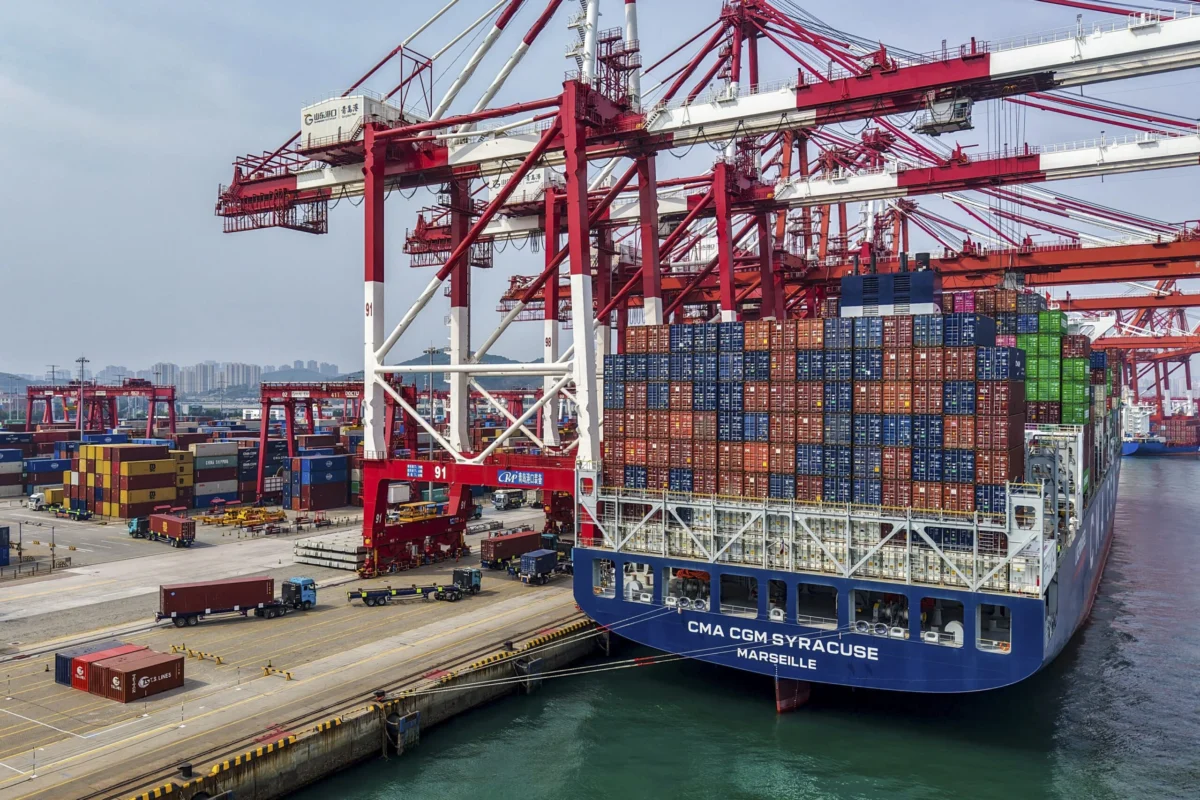
China’s economic landscape in June 2026 presented a nuanced picture, characterized by a persistent divergence between tepid domestic demand and a resilient, export-driven manufacturing sector. Official data released by the National Bureau of Statistics on Thursday indicated that consumer price inflation decelerated more than anticipated, underscoring ongoing weakness in household spending, even as producer price inflation accelerated, fueled by elevated energy costs and a burgeoning global demand for advanced technology. This "two-speed" growth dynamic, marked by robust external trade juxtaposed against subdued internal consumption and a struggling property market, appears to be solidifying as a defining feature of the world’s second-largest economy.
Consumer Prices Underwhelm as Domestic Demand Falters
In June, China’s Consumer Price Index (CPI) registered a modest 1% increase year-on-year, falling short of economists’ consensus forecast of 1.1% growth compiled in a Reuters poll. This figure marked a further deceleration from the 1.2% rise recorded in May, signaling a continued struggle to ignite robust consumer spending. The core CPI, which meticulously excludes the often-volatile categories of food and energy prices to provide a clearer measure of underlying inflation trends, also saw a 1% year-on-year increase in June, marginally dipping from its 1.1% ascent in May. This consistent softening across both headline and core inflation metrics points to deep-seated challenges in stimulating domestic consumption, a long-stated goal for Beijing’s economic rebalancing efforts.
A key contributor to the subdued consumer inflation was the continued decline in food prices, which fell by 1.6% from a year earlier. While this represented a slight moderation from the 1.7% fall observed in May, it highlights ample supply and potentially weak demand in staple categories. Pork prices, a significant component of China’s food basket, have seen fluctuations but generally remain under pressure, while vegetable prices have also experienced seasonal declines and stable supply. Energy costs, despite their impact on wholesale prices, have not translated into significant upward pressure on consumer-facing goods, further illustrating the disconnect between production costs and retail pricing power. The persistent weakness in consumer prices is particularly noteworthy given that the People’s Bank of China (PBOC) typically aims for an annual inflation rate closer to 3%, suggesting that there remains considerable slack in the economy.
Producer Prices Accelerate Amid Energy and Tech Surges
Conversely, the Producer Price Index (PPI), a gauge of wholesale inflation, demonstrated accelerated growth in June, jumping 4.1% from a year earlier. This figure aligned with economists’ forecasts and marked an acceleration from May’s 3.9% increase, representing the strongest growth recorded since July 2022, according to data from LSEG. This upward trajectory in producer prices reflects the increasing cost pressures faced by Chinese factories, largely attributable to elevated global energy prices and a surging demand for specific industrial inputs. However, a closer look at the month-on-month data reveals a more complex picture, with PPI declining by 0.3% from May to June, according to official statistics. This month-on-month contraction suggests that while the year-on-year growth is significant due to comparison with a low base, the immediate momentum in price increases might be moderating.
Tianchen Xu, a senior economist at the Economist Intelligence Unit, attributed the year-on-year strength in PPI largely to the "low-base effect." This refers to the comparison with exceptionally low prices from the previous year. Indeed, producer prices experienced their worst decline in almost two years in June 2025, plummeting 3.6% from the prior year amidst a deepening price war that reverberated throughout the industrial economy. The return to positive PPI growth in March 2026, ending one of China’s longest deflationary streaks in decades, was largely propelled by rising input costs linked to geopolitical tensions, particularly the Middle East conflict, which disrupted global energy supplies and commodity markets. Beyond conventional commodity price hikes, a burgeoning global appetite for artificial intelligence (AI) computing power has also played a crucial role. This surge in AI demand has driven up prices for high-tech equipment and semiconductors, components critical to China’s advanced manufacturing sector, further contributing to the upward pressure on wholesale costs.
The "Two-Speed" Economy: Exports Powering Growth, Consumption Lagging
The divergent trends in consumer and producer inflation underscore what many investors and analysts are increasingly identifying as a defining long-term characteristic of the Chinese economy: a "two-speed" growth model. This model is characterized by robust external demand and a thriving manufacturing sector, particularly in high-tech and export-oriented industries, contrasting sharply with persistently weak domestic consumption and a protracted downturn in the housing market.

China’s manufacturing activity expanded faster than expected in June, with official Purchasing Managers’ Index (PMI) data indicating a healthy trajectory. Experts point to strong external demand, especially for AI-related technology, as a primary driver of this momentum. Chinese factories have proven adept at capitalizing on global shifts, becoming key suppliers in emerging technology sectors. This export-led resilience is providing significant impetus to overall economic growth, shielding it from some of the domestic headwinds. Neo Wang, China strategist at Evercore ISI, emphasizes that this dual dynamic – strong exports versus weak consumption and housing – is not merely a transient phase but a structural feature of China’s current economic paradigm.
Underlying Headwinds: Housing Downturn and Consumer Sentiment
Despite the manufacturing bright spots, underlying economic challenges persist, particularly concerning consumer sentiment. Households continue to grapple with the negative wealth effect stemming from the prolonged housing downturn. The property sector, once a major engine of growth and a primary store of household wealth, has been mired in a crisis since 2020, marked by developer defaults, stalled construction projects, and falling property values. This erosion of wealth, combined with broader uncertainties about job security and future income prospects, has made consumers more cautious, leading to higher savings rates and a reluctance to spend on discretionary items. The impact of elevated energy costs, while primarily affecting producers, also indirectly squeezes household budgets through higher prices for goods and services, even if not fully reflected in headline CPI due to intense competition among retailers.
This entrenched weakness in domestic demand creates a challenging environment for businesses. As Tianchen Xu of the EIU noted, "Factories can’t fully pass on cost increases to downstream clients." This inability to transfer rising input costs to consumers squeezes profit margins for manufacturers and retailers, further dampening investment and hiring intentions within the domestic-facing sectors of the economy.
Policy Stance and Future Outlook
The observable economic resilience stemming from exports and manufacturing is widely expected to reinforce Beijing’s current policy inclination, which appears to be a reluctance to roll out large-scale, broad-based stimulus packages specifically aimed at reviving tepid consumer demand. Policymakers seem to prioritize stability and targeted support for strategic industries, rather than risking inflation or exacerbating debt issues with a consumer spending spree. Gabriel Wildau, managing director at Teneo, suggests that "policymakers are likely to refrain from major new stimulus unless the slowdown persists beyond the conflict." He points to a top policy meeting by the 24-member Politburo of the Communist Party in late July as "the next opportunity to escalate policy stimulus," should the leadership deem it necessary. However, given the current "two-speed" narrative, any potential stimulus might be more geared towards industrial upgrades or infrastructure, rather than direct household handouts.
The International Monetary Fund (IMF) recently echoed this cautiously optimistic view regarding China’s overall economic performance. On Wednesday, the IMF revised its growth forecast for China, raising it to 4.6% for the current year, up from its previous projection of 4.4%. This stands in stark contrast to the IMF’s trimmed global economic expansion forecast of a sluggish 3%. The IMF attributed its more optimistic outlook for China primarily to the nation’s robust high-tech manufacturing and export performance, alongside frontloaded public infrastructure investments. This aligns with China’s own modest growth target of 4.5%-5% for the year, indicating that the authorities are comfortable with a growth model that leverages industrial strength and external trade.
Broader Implications and Global Context
The ongoing "two-speed" growth in China carries significant implications both domestically and globally. For China, it raises questions about the long-term sustainability of an economy heavily reliant on external demand, especially amidst rising geopolitical tensions and potential shifts in global supply chains. It also highlights the persistent challenge of rebalancing the economy towards a more consumption-driven model, a goal that has remained elusive despite repeated policy pronouncements. The negative wealth effect from the housing crisis, coupled with a cautious consumer base, suggests that this rebalancing will require more profound structural reforms than incremental stimulus measures.
Globally, China’s robust manufacturing and export performance, particularly in high-tech sectors, reinforces its role as a critical component of the global supply chain. However, the relatively weak domestic demand means that China may not be able to fully absorb global excess capacity or serve as a strong engine for global consumption growth, potentially leading to increased export competition in certain sectors. As the world grapples with inflation and supply chain issues, China’s ability to maintain stable production and manage its internal demand dynamics will continue to be a significant factor in the broader international economic landscape. The trajectory of energy prices, geopolitical stability in the Middle East, and the evolution of global AI demand will remain critical external variables influencing China’s economic performance in the months to come.