Lina Wu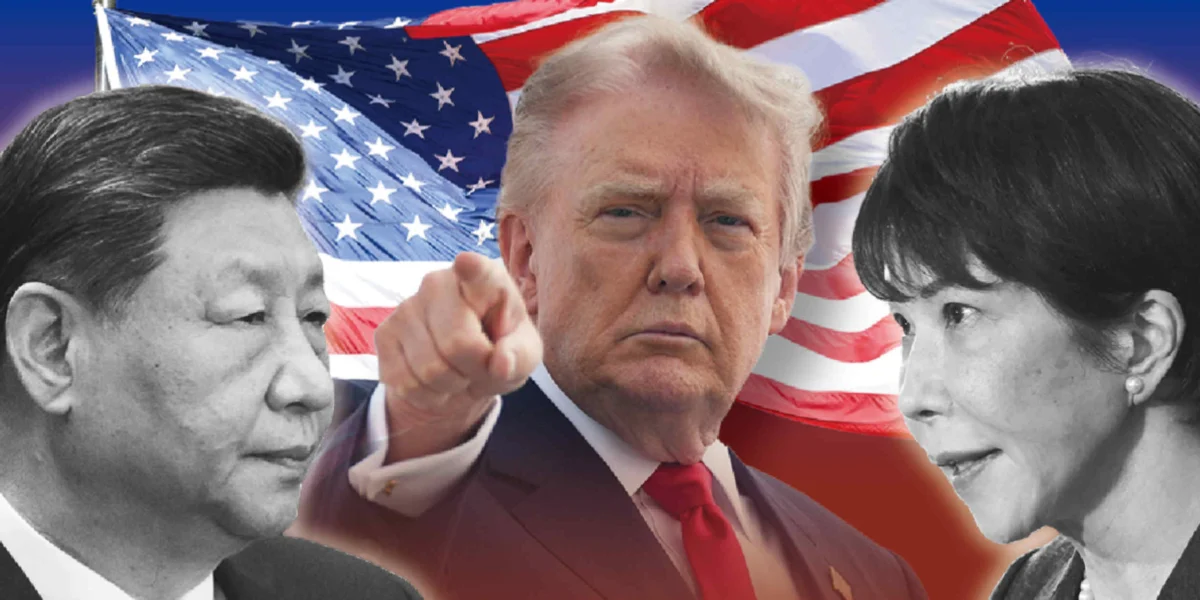
The robust and sustained campaign of criticism directed by Beijing towards Tokyo, colloquially termed "Japan-bashing," shows no indication of abating. This ongoing diplomatic and rhetorical offensive is exerting significant pressure on the intricate relationship between the two East Asian powers, impacting key domains including diplomacy, security, and economic interdependence. At the heart of this escalating friction lie starkly contrasting perspectives on Taiwan, a self-governing democracy that Beijing considers a renegade province to be unified with the mainland, by force if necessary. Recent remarks attributed to Japanese Prime Minister Sanae Takaichi have served as a potent catalyst, igniting a vigorous pushback from the government of Chinese leader Xi Jinping. This Chinese response, however, appears to extend beyond a singular focus on Taiwan, potentially representing a broader strategic maneuver aimed at challenging the existing U.S.-led security and economic order in Asia.
The current diplomatic climate is a stark contrast to periods of more cooperative engagement between Japan and China. For decades, despite historical grievances and territorial disputes, the two nations have maintained a complex but largely functional relationship, underpinned by significant trade volumes and a shared interest in regional stability. However, the geopolitical landscape has shifted dramatically in recent years, exacerbated by China’s assertive foreign policy and its growing military capabilities. Japan, under Prime Minister Takaichi, has increasingly aligned itself with the United States, emphasizing democratic values and a rules-based international order. This alignment, particularly concerning Taiwan, has placed Tokyo directly in Beijing’s crosshairs.
The Spark: Remarks on Taiwan and Beijing’s Immediate Reaction
The specific catalyst for the recent intensification of Chinese rhetoric appears to be statements made by Prime Minister Takaichi concerning Taiwan. While the exact phrasing and context of these remarks are crucial for a complete understanding, the general thrust has been interpreted by Beijing as a departure from Japan’s traditionally cautious stance and a more direct endorsement of Taiwan’s de facto independence or at least its right to self-determination. Such pronouncements are inherently sensitive for China, which views any international recognition or support for Taiwan as a direct challenge to its sovereignty claims.
Beijing’s response was swift and forceful. State-controlled media outlets, official government spokespersons, and even high-ranking diplomats have engaged in a sustained barrage of criticism, employing strong language that echoes historical grievances and portrays Japan as a revisionist power seeking to undermine regional peace. The narrative propagated by Beijing often frames Japan’s actions as a dangerous echo of its wartime past, a tactic designed to evoke strong emotional responses both domestically within China and potentially among other nations in the region wary of Japanese militarism.
The imagery accompanying these reports, such as the photograph juxtaposing Prime Minister Takaichi and President Xi Jinping, visually underscores the heightened tension. The caption itself, "Remarks about Taiwan from Japanese Prime Minister Sanae Takaichi, right, sparked vigorous pushback from the government of Chinese leader Xi Jinping, left, that could also be aimed at the U.S.-led order in Asia," encapsulates the core of the issue and hints at the broader strategic implications.
Background Context: A Shifting Regional Power Dynamic
Understanding the current tensions requires an appreciation of the evolving regional power dynamics. For years, China has been steadily increasing its military spending and asserting its claims in the South China Sea and East China Sea. This has led to increased anxiety among its neighbors, including Japan, South Korea, and Southeast Asian nations. Japan, in particular, has been re-evaluating its post-World War II pacifist constitution and expanding its defense capabilities to meet what it perceives as growing security threats.
The U.S.-Japan alliance remains the cornerstone of regional security, and any perceived shift in Japan’s posture towards Taiwan is seen by Beijing as a direct move to bolster the American-led containment strategy. China’s strategic objective is to deter U.S. military intervention in the event of a Taiwan contingency and to weaken the U.S. alliance network in Asia. By criticizing Japan, Beijing aims to sow discord within these alliances, pressure Japan to adopt a more neutral stance, and project an image of regional dominance.
Timeline of Escalation (Hypothetical Reconstruction Based on Article’s Premise)
While the provided text is a snapshot, a hypothetical timeline leading to the current situation might look like this:
- Late 2025 – Early 2026: Japan, under Prime Minister Takaichi, begins to articulate a more robust stance on regional security, emphasizing the importance of peace and stability across the Taiwan Strait. This may involve increased defense spending, joint military exercises with the U.S. and other allies, and more frequent public statements highlighting shared democratic values.
- Mid-2026 (leading up to August): Prime Minister Takaichi makes specific remarks regarding Taiwan’s security and its right to maintain its democratic system. These remarks are framed by Japan as a matter of regional stability and a defense of democratic principles.
- Early August 2026: Chinese state media and officials begin a concerted campaign of criticism, labeling Takaichi’s remarks as provocative and a violation of international norms. Diplomatic protests are lodged by Beijing with Tokyo.
- August 9, 2026 (Publication Date): The article appears, documenting the ongoing and intensifying "Japan-bashing" and its potential broader implications for the regional order.
Supporting Data and Economic Interdependence
The economic relationship between Japan and China, while strained by political rhetoric, remains deeply intertwined. China is Japan’s largest trading partner, and Japan is a significant investor in China. This economic interdependence creates a complex dynamic, as both countries have a vested interest in maintaining some level of stability to avoid severe economic repercussions.
- Trade Volumes: In 2023, bilateral trade between Japan and China exceeded $300 billion. Any significant disruption to this trade could have substantial negative impacts on both economies.
- Investment: Japanese companies have invested billions of dollars in China, establishing manufacturing bases and supply chains. These investments are vulnerable to political instability and potential retaliatory measures.
- Tourism: Pre-pandemic, Chinese tourists were a significant source of revenue for Japan’s tourism industry. While recovering, this sector remains sensitive to political relations.
Despite this economic interdependence, China has demonstrated a willingness to leverage economic tools for political leverage. Past disputes have seen China restrict imports from certain countries or target specific companies as a form of pressure. The current "Japan-bashing" could be a precursor to such economic measures, or it could be intended to intimidate Japanese businesses into curtailing their engagement with sectors or regions deemed sensitive by Beijing.
Official Responses and Divergent Narratives
The official responses from both Tokyo and Beijing highlight the chasm in their perspectives:
From Beijing:
Official statements from the Chinese Ministry of Foreign Affairs have repeatedly condemned Japan’s stance on Taiwan, accusing Tokyo of "violating international law and basic norms of international relations." They often invoke the Nanjing Massacre and other historical atrocities to paint Japan as an untrustworthy actor. The narrative emphasizes China’s territorial integrity and its right to determine its own destiny, often framing Japan’s actions as interference in its internal affairs. China has also called on Japan to "learn from history" and "earnestly reflect on its past aggression."
From Tokyo (Inferred):
While specific direct rebuttals to the "Japan-bashing" campaign are not detailed in the provided text, Japan’s likely stance would emphasize its commitment to peace, its adherence to international law, and its right to ensure its own security and that of its allies. Statements from Japanese officials would likely stress the importance of a stable Taiwan Strait for regional prosperity and security. They might also highlight Japan’s post-war pacifist constitution and its commitment to a rules-based international order. Japan would likely frame its security posture as defensive and aimed at deterring aggression, not as a provocation.
Broader Impact and Implications for the Regional Order
The intensifying "Japan-bashing" is not merely a bilateral dispute; it carries significant implications for the broader U.S.-led order in Asia.
- Testing Alliance Cohesion: China’s strategy appears to be aimed at testing the resilience of the U.S.-Japan alliance and potentially sowing discord among other U.S. allies in the region. By pressuring Japan, Beijing hopes to create a ripple effect, making other nations question the reliability of U.S. security guarantees or the wisdom of aligning too closely with Washington.
- Shaping Regional Perceptions: The sustained media campaign can influence public opinion within China and potentially in other Asian countries. It seeks to portray China as a rising, rightful power and the U.S. and its allies as disruptive forces seeking to contain China’s legitimate rise.
- Taiwan Strait as a Flashpoint: The heightened rhetoric directly elevates the risk of miscalculation and escalation concerning Taiwan. By framing Japan’s position as a direct threat, China is creating a narrative that could justify more assertive military actions if it perceives its interests to be sufficiently challenged.
- Economic Repercussions: The political tensions could lead to increased economic decoupling or diversification by Japanese companies seeking to mitigate risks associated with operating in China. This could have long-term consequences for global supply chains.
- Erosion of Diplomatic Norms: The aggressive and sustained nature of China’s rhetorical campaign, often employing strong nationalistic sentiments, risks further eroding established diplomatic norms and contributing to a more volatile and unpredictable international environment.
In conclusion, the persistent "Japan-bashing" by China, fueled by differing views on Taiwan, represents a critical juncture in East Asian diplomacy. It signifies Beijing’s willingness to employ aggressive rhetorical tactics to achieve strategic objectives, which include not only asserting its claims over Taiwan but also fundamentally challenging the existing regional security architecture dominated by the United States. The coming months will likely reveal the extent to which this intensified pressure impacts the Japan-China relationship, the cohesion of the U.S. alliance network, and the overall stability of the Indo-Pacific region.