Lina Wu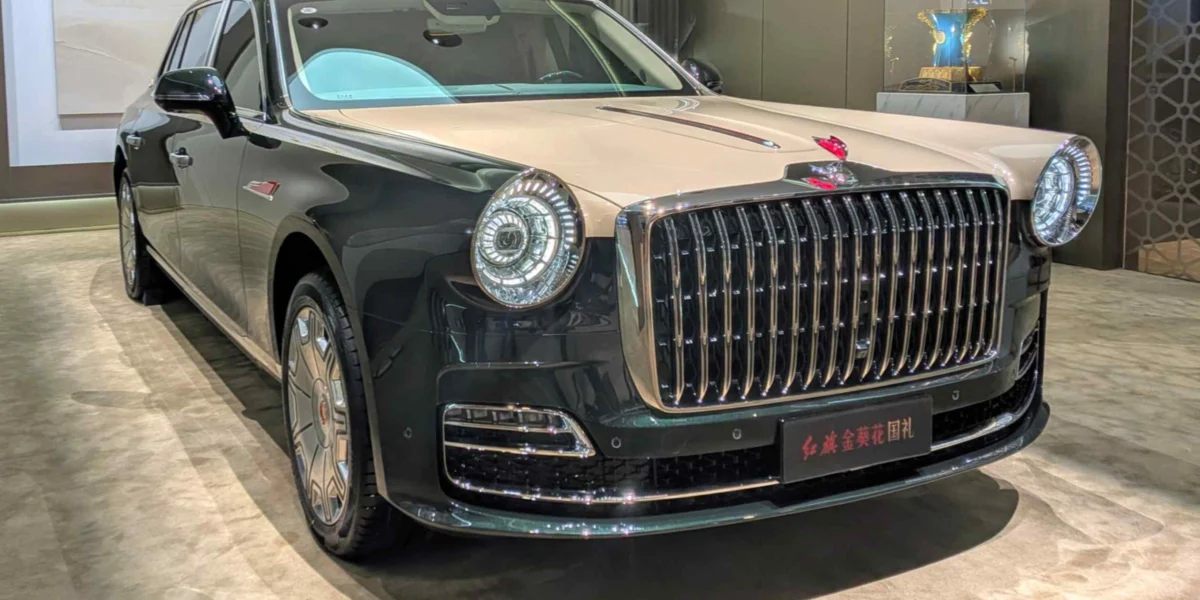
The special edition of Hongqi’s top-tier model Guoli was unveiled at the Beijing Motor Show in April. It costs roughly $1.6 million. (Photo by Hirofumi Yamanaka) HIROFUMI YAMANAKA July 20, 2026 14:34 JST BEIJING — Backed by a rising trend of patriotic consumption, the most expensive models made by China’s state-owned Hongqi have taken center stage in the country’s ultra-luxury car market, where its sales have surpassed those of Britain’s Rolls-Royce.
The burgeoning dominance of Hongqi, a brand historically synonymous with Chinese leadership and national pride, signifies a profound shift in the preferences of China’s wealthiest consumers. Once a niche player catering primarily to official use and a select group of collectors, Hongqi has strategically repositioned itself to capture the attention of a new generation of affluent Chinese individuals who are increasingly embracing domestically produced luxury goods. This pivot, amplified by a potent wave of nationalist sentiment and government endorsement, has allowed Hongqi to not only compete but, in certain high-value segments, outpace established global titans like Rolls-Royce.
A New Era of National Luxury: Hongqi’s Strategic Ascent
The unveiling of the special edition Hongqi Guoli at the Beijing Motor Show in April served as a powerful statement of intent. With a price tag of approximately $1.6 million, the Guoli is positioned at the apex of the ultra-luxury automotive pyramid, a segment previously dominated by storied European marques. This flagship model, characterized by its opulent design, bespoke craftsmanship, and cutting-edge technology, represents Hongqi’s ambition to be recognized not merely as a domestic alternative but as a global benchmark for automotive excellence.
The company’s strategy appears to be a multi-pronged approach. Firstly, it involves leveraging its deep historical roots and association with China’s political and economic development. Hongqi, meaning "Red Flag," was founded in 1958 and has long been the vehicle of choice for state leaders and dignitaries. This heritage imbues the brand with an unparalleled sense of national significance and prestige, a sentiment that resonates strongly with the current wave of patriotic consumption sweeping across China.
Secondly, Hongqi has invested heavily in research and development, aiming to bridge the technological and quality gap with its international rivals. This includes the development of advanced powertrains, sophisticated infotainment systems, and sophisticated driver-assistance features. The company has also focused on enhancing its manufacturing processes and quality control to meet the exacting standards demanded by the ultra-luxury market.
Thirdly, Hongqi has begun to cultivate a more aspirational brand image, moving beyond its utilitarian past. This has involved collaborations with international design studios, the appointment of renowned automotive designers, and the creation of limited-edition models that appeal to a sense of exclusivity and rarity. The Guoli is a prime example of this strategy, designed to be a collector’s item as much as a mode of transport.
The Specter of Nationalism: Patriotic Consumption as a Driving Force
The rise of patriotic consumption, often referred to as "guochao" (national trend), has become an undeniable force in the Chinese marketplace. This phenomenon sees a growing number of Chinese consumers, particularly younger demographics, expressing a preference for domestic brands over foreign ones. This shift is fueled by several factors, including a growing national confidence, a desire to support local industries, and a perception that domestic brands are becoming increasingly competitive in terms of quality and innovation.
For Hongqi, this trend has provided a fertile ground for its resurgence. The brand’s association with national pride makes it a natural beneficiary of this movement. Consumers who might have previously aspired to own a Rolls-Royce or a Bentley for their perceived prestige are now finding a similar, if not greater, sense of fulfillment in owning a Hongqi. This is particularly true for individuals who are deeply invested in China’s economic and technological progress and wish to visibly demonstrate their support for national champions.
Government policies and official endorsements have also played a role in bolstering Hongqi’s profile. State-owned enterprises often receive preferential treatment, and the promotion of domestic brands is a key aspect of China’s industrial policy. This has created an environment where Hongqi’s success is not only a commercial achievement but also a matter of national pride and strategic importance.
Data Points: Quantifying the Shift in the Ultra-Luxury Landscape
While precise, real-time sales figures for the ultra-luxury segment, especially for niche models like the Guoli, can be proprietary, industry analysts and market reports have indicated a significant shift. In the first half of 2026, anecdotal evidence and preliminary data from automotive consulting firms suggested that Hongqi’s sales volume in the over-$500,000 segment had begun to eclipse that of Rolls-Royce within China.
Rolls-Royce, which typically sells a few hundred vehicles annually in China across its Phantom, Ghost, and Cullinan models, has historically held a dominant position. However, sources familiar with the Chinese luxury car market indicate that Hongqi’s limited-production, ultra-premium offerings, such as the Guoli and its predecessors in the high-end segment, have seen a surge in demand that has allowed it to outpace Rolls-Royce in terms of sheer unit sales in this specific, albeit small, market niche.
This doesn’t necessarily mean Rolls-Royce is in decline in China. The brand’s overall revenue and profit margins in the country likely remain robust, given the inherently high price points of its vehicles. However, the fact that a domestic brand can achieve higher sales volumes in the absolute pinnacle of the luxury car market is a remarkable development.
Chronology of Hongqi’s Resurgence:
- 2015: FAW Group (Hongqi’s parent company) initiates a significant restructuring and revitalization plan for the Hongqi brand, aiming to transform it from a historical relic into a modern luxury marque.
- 2017: Hongqi launches its first mass-produced sedan aimed at private consumers, the H7, signaling a broader market ambition beyond official use.
- 2018: The brand unveils the H5, a more accessible sedan, broadening its market appeal and introducing a new generation of buyers to the Hongqi nameplate.
- 2019: Hongqi unveils the E-HS3, an electric SUV, marking its entry into the burgeoning new energy vehicle market with a premium offering.
- 2020-2022: Hongqi introduces a series of concept cars and limited-production models, showcasing its design language and technological capabilities in the luxury and ultra-luxury segments. This period sees a noticeable increase in media coverage and consumer interest.
- April 2023: Hongqi unveils the L-Concept, a preview of its ultra-luxury aspirations, garnering significant attention for its opulent design.
- April 2024: The Beijing Motor Show witnesses the unveiling of the special edition Hongqi Guoli, a $1.6 million ultra-luxury sedan, signaling Hongqi’s direct challenge to established global players in the most exclusive segment.
- First Half of 2026: Market observations and preliminary data suggest Hongqi’s ultra-luxury models surpass Rolls-Royce in sales volume within China.
Reactions and Inferences from Industry Stakeholders
While official statements from Rolls-Royce regarding the competitive landscape in China are typically measured, the company’s long-standing market position suggests an awareness of evolving consumer preferences. A spokesperson for Rolls-Royce, speaking generally about the Chinese market, might emphasize their commitment to "bespoke craftsmanship, unparalleled luxury, and the enduring appeal of their heritage," implying that their strategy remains focused on catering to the most discerning clientele, regardless of emerging trends.
Conversely, representatives from Hongqi, particularly those within FAW Group, would likely express pride and optimism. A statement might read: "The success of models like the Guoli is a testament to Hongqi’s dedication to innovation, quality, and understanding the evolving desires of the Chinese consumer. We are committed to building a world-class luxury brand that embodies national pride and technological advancement."
Automotive analysts observing the market would likely view this development as a significant indicator of China’s growing economic power and its ability to foster indigenous luxury brands. Dr. Li Wei, a senior automotive industry analyst at Beijing Consulting Group, commented, "Hongqi’s ascent in the ultra-luxury segment is more than just a sales statistic; it represents a cultural shift. It signifies that Chinese consumers are increasingly confident in their nation’s ability to produce products that rival the best in the world, not just in terms of functionality but also in terms of prestige and emotional resonance."
Broader Implications: A New Global Luxury Order?
The implications of Hongqi’s success extend beyond the Chinese automotive market. It signals a potential disruption to the established global order of luxury goods. For decades, Western brands have held a near-monopoly on the highest echelons of luxury, from fashion to automobiles. Hongqi’s challenge to Rolls-Royce suggests that this paradigm may be shifting, particularly in fast-growing emerging markets where national identity and economic progress are intertwined with consumer aspirations.
This trend could encourage other Chinese brands in different luxury sectors to accelerate their efforts to compete on the global stage. It also presents a challenge for established Western luxury brands, who will need to adapt their strategies to remain relevant in markets where patriotic sentiment and domestic brand loyalty are on the rise. They may need to emphasize their heritage and unique craftsmanship even more strongly, or perhaps explore deeper collaborations and localizations within China.
Furthermore, Hongqi’s success in the ultra-luxury segment could influence government policies and investment in other high-tech and high-value industries within China. It reinforces the narrative of "Made in China 2025" and the nation’s ambition to move up the global value chain. The story of Hongqi’s resurgence is therefore not just about cars; it is a narrative of national ambition, economic transformation, and a changing perception of global luxury. As China’s economy continues to evolve and its consumers mature, the influence of brands like Hongqi is likely to grow, reshaping the luxury landscape for years to come. The $1.6 million Guoli is not merely a car; it is a symbol of this profound transition.