Gilang Muhammad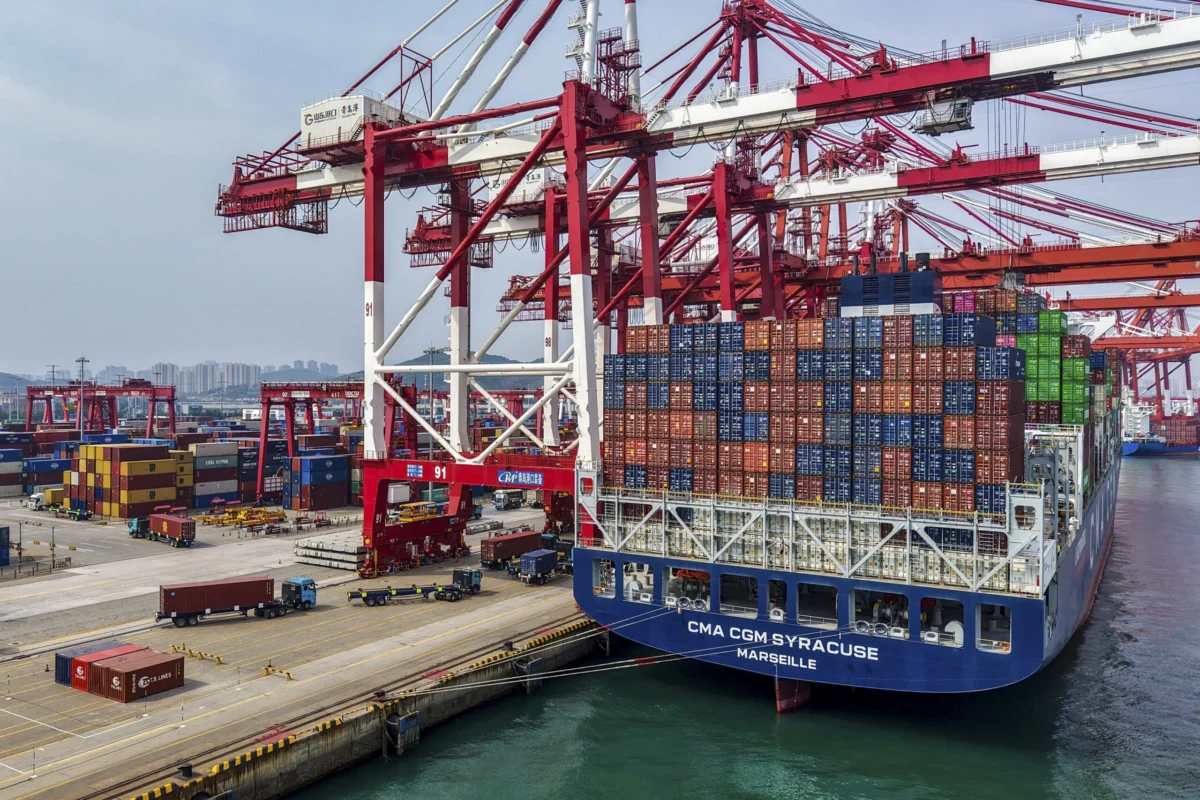
China’s economy presented a complex picture in June 2026, characterized by consumer prices growing slower than anticipated while wholesale inflation accelerated, largely driven by elevated energy costs and a persistent weakness in domestic demand. This divergence highlights the ongoing structural challenges facing Beijing, as robust export performance and high-tech manufacturing continue to outpace a subdued domestic consumption landscape and a struggling housing market.
Diverging Inflationary Pressures: CPI Misses, PPI Surges
Data released by the National Bureau of Statistics on Thursday revealed that consumer prices (CPI) in June 2026 rose a modest 1% from a year ago. This figure fell short of economists’ consensus estimates of 1.1% growth, as polled by Reuters, and marked a further deceleration from the 1.2% increase recorded in May. The muted consumer inflation underscores the fragility of domestic demand, a recurring theme in China’s post-pandemic recovery.
Core CPI, which strips out the volatile categories of food and energy to provide a clearer measure of underlying inflationary trends, also saw a marginal deceleration. It registered a 1% increase in June from a year earlier, slightly down from the 1.1% rise observed in May. This suggests that the broader basket of goods and services, excluding the most fluctuating components, still faced headwinds in price growth, indicative of a cautious consumer base. Food prices, a significant component of the CPI basket, continued their downward trend, declining 1.6% from a year earlier. While this marked a slight easing from the 1.7% fall in May, it contributes to the overall low headline inflation figure and reflects ample supply or weak demand for agricultural products.
In stark contrast to the subdued consumer side, producer prices (PPI) surged, jumping 4.1% from a year earlier. This figure aligned with economists’ forecasts and notably outpaced May’s 3.9% increase. This marked the strongest growth in producer prices since July 2022, according to LSEG data, signaling significant cost pressures at the factory gate. However, a closer look at month-on-month data showed a slight contraction, with PPI declining 0.3% in June from May, an important nuance suggesting that some of the year-on-year strength could be attributed to a base effect rather than accelerating momentum within the month.
The Nuance of Consumer Demand and Persistent Headwinds
The slower-than-expected consumer price growth serves as a critical indicator of the entrenched weakness in domestic demand. For economists and policymakers, a CPI reading of 1% is considerably below the typical comfort zone of 2-3% often targeted by central banks for healthy economic expansion. This suggests that despite various efforts, households remain hesitant to spend, a sentiment deeply intertwined with broader economic anxieties.
A primary driver of this subdued consumer sentiment is the prolonged downturn in China’s housing market. The property sector, once a pillar of economic growth and a significant store of household wealth, has faced immense pressure from developer defaults, unfinished projects, and falling property values. This "negative wealth effect" directly impacts household confidence and discretionary spending, as individuals feel less secure about their financial futures and prioritize savings over consumption.
Neo Wang, China strategist at Evercore ISI, articulated this challenge, stating that consumer sentiment remains subdued as households continue to grapple with the negative wealth effect stemming from the prolonged housing downturn. This economic reality means that even as some sectors of the economy show vitality, the average Chinese consumer is facing a complex and challenging environment, leading to a cautious approach to spending that directly translates into lower inflation.
Wholesale Surge and Supply-Side Dynamics
The acceleration in the Producer Price Index paints a different picture, reflecting significant cost pressures upstream in the supply chain. Several factors contribute to this surge, which marks a significant shift from the deflationary trends observed for much of the preceding period.
Foremost among these drivers are elevated energy costs. Global commodity markets have been significantly impacted by geopolitical developments, particularly the ongoing Middle East conflict. Disruptions to supply chains and heightened risk premiums have pushed up crude oil prices and other energy inputs, which directly feed into the production costs for Chinese manufacturers. As Tianchen Xu, senior economist at Economist Intelligence Unit, noted, "Oil prices are by and large on an easing course, and this will prevent PPI from going higher," but acknowledged that the year-on-year strength was still influenced by the low-base effect.
Beyond traditional energy commodities, the burgeoning global demand for artificial intelligence (AI) computing power has also played a role. This surging demand has driven up prices for crucial tech equipment and semiconductors, components vital for China’s vast manufacturing sector, especially in high-tech industries. As China positions itself as a leader in advanced manufacturing and technology, the costs associated with these strategic inputs directly impact producer prices.
However, a key challenge highlighted by Xu is that "Factories can’t fully pass on cost increases to downstream clients," a direct consequence of the entrenched weakness in domestic demand. This inability to transfer higher input costs to consumers squeezes profit margins for manufacturers, potentially impacting investment and employment decisions, creating a bottleneck in the economic recovery.
A Historical Lens on Deflation and Recovery
The return to growth in producer prices in March 2026, followed by the acceleration in June, marks a significant turning point for the Chinese economy. For an extended period, China had been grappling with one of its longest deflationary streaks in decades, particularly on the producer side. The producer prices recorded their worst decline in almost two years in June last year (June 2025), falling 3.6% from the prior year, as a deepening price war rippled through various industrial sectors.

This period of producer deflation, which began in late 2022, saw factories struggling with overcapacity, intense competition, and weak demand both domestically and internationally. This led to a prolonged decline in factory-gate prices, eroding corporate profitability and raising concerns about the health of China’s industrial base. The turnaround in March, fueled by rising input costs due to global conflicts and increasing demand for specialized tech components, signaled a shift away from this challenging deflationary environment, offering some relief to manufacturers.
China’s "Two-Speed" Economy: A Defining Feature
The June 2026 data starkly illustrates what many investors and analysts are now calling China’s "two-speed" economy. This phenomenon is characterized by robust export performance and a thriving high-tech manufacturing sector on one hand, contrasting sharply with weak domestic consumption and a struggling housing market on the other.
China’s manufacturing activity, for instance, expanded faster than expected in June, with experts attributing this momentum to strong external demand, particularly for AI-related technology. This export-driven growth provides a crucial counterbalance to the internal challenges, allowing the economy to maintain a certain level of resilience. Chinese factories are benefiting from global demand for advanced electronics, renewable energy components, and other high-value manufactured goods.
Neo Wang of Evercore ISI emphasized that many investors increasingly view this two-speed growth as a defining long-term feature of the Chinese economy. While the export engine continues to hum, driven by strategic industrial policies and global market opportunities, the domestic consumer remains a weak link, holding back a more balanced and robust recovery. This structural imbalance presents a complex challenge for policymakers seeking to foster sustainable growth.
Policymakers’ Dilemma and Potential Responses
The divergent economic signals present a significant dilemma for China’s policymakers. The resilience shown by the export and manufacturing sectors, particularly in high-tech areas, is expected to reinforce Beijing’s reluctance to roll out large-scale stimulus packages specifically aimed at reviving tepid consumer demand. From a policy perspective, if one part of the economy is performing strongly, the urgency to inject massive stimulus across the board might be perceived as lower, potentially leading to unintended consequences like asset bubbles or increased debt.
However, the persistent weakness in consumer spending and the housing market cannot be ignored indefinitely. Policymakers are treading a fine line, aiming to support economic stability without exacerbating existing structural issues or over-stimulating an already dynamic export sector. Gabriel Wildau, managing director at Teneo, suggested that "Policymakers are likely to refrain from major new stimulus unless the slowdown persists beyond the conflict." This indicates a wait-and-see approach, with external factors like the Middle East conflict playing a role in the policy calculus.
Wildau further pointed to a top policy meeting by the 24-member Politburo of the Communist Party, scheduled for late July, as "the next opportunity to escalate policy stimulus." This meeting is closely watched by investors and analysts for any signals regarding shifts in economic priorities or the introduction of new measures. Potential policy tools could include further interest rate cuts (though limited by concerns about capital outflows), targeted fiscal spending on social welfare or consumer vouchers, and further easing of property market restrictions. However, the prevailing sentiment suggests a preference for structural adjustments and supply-side reforms over broad-based demand stimulus.
International Perspective: IMF’s Upbeat Assessment
Despite the internal complexities, China’s economic performance continues to draw international attention, often with a more optimistic outlook for its headline growth figures. The International Monetary Fund (IMF) on Wednesday underscored this perspective by forecasting China’s economy to outperform global growth for 2026. The IMF raised its growth forecast for China to 4.6%, an increase from its previous projection of 4.4%, while simultaneously trimming its global economic expansion forecast to a sluggish 3%.
The IMF attributed this relatively optimistic view to China’s robust high-tech manufacturing and strong export performance. These sectors have demonstrated significant resilience and dynamism, leveraging China’s industrial capacity and innovation capabilities to meet global demand. Additionally, the IMF highlighted frontloaded public infrastructure investments as another key driver. Beijing’s strategic focus on investing in modern infrastructure, including digital networks, transportation, and green energy projects, has provided a stable underpinning for economic activity.
China has set a modest growth target of 4.5%-5% for 2026, a figure that the IMF’s revised forecast suggests is achievable, primarily due to the strength of these outward-facing and investment-driven components of the economy. This international perspective acknowledges the significant contributions of China’s industrial might and strategic investments, even as it implicitly recognizes the internal rebalancing act that remains incomplete.
Outlook and Strategic Imperatives
Looking ahead, China’s economic trajectory in the latter half of 2026 will hinge on its ability to navigate these divergent trends. The strength of its export and manufacturing base provides a crucial buffer, but the persistent weakness in domestic consumption poses a long-term challenge to achieving more balanced and sustainable growth.
For policymakers, the strategic imperative will be to foster an environment where the benefits of export success can more effectively trickle down to households, bolstering consumer confidence and spending. This could involve further structural reforms, addressing the root causes of the housing market downturn, strengthening social safety nets, and enhancing income stability. The upcoming Politburo meeting will be a key moment to gauge whether Beijing will maintain its current cautious approach or if the sustained weakness in domestic demand will prompt a more decisive shift towards consumer-centric stimulus.
Ultimately, China’s economic narrative in 2026 is one of resilience driven by its industrial prowess and export dynamism, yet tempered by internal demand-side fragility. The path forward will require a delicate balance of leveraging its strengths while diligently addressing its vulnerabilities to ensure a comprehensive and equitable economic recovery.