Putri Inara
The landscape of digital publishing has undergone a radical transformation over the last two decades, evolving from a medium for personal diaries into a cornerstone of the global creator economy. As of 2024, the debate regarding the financial viability of blogging remains polarized between two extremes: marketing-driven narratives promising overnight millions and skeptical critiques labeling the industry as a saturated relic of the past. However, an analysis of industry data, longitudinal case studies, and practitioner surveys reveals a more nuanced reality. While the potential for significant revenue exists, the path to a sustainable income is characterized by professionalization, long-term commitment, and strategic diversification.
The Evolution of the Digital Publishing Landscape
The genesis of professional blogging can be traced back to the early 2000s, a period when early adopters began to realize that consistent content creation could attract dedicated audiences. Darren Rowse, a prominent figure in the digital publishing space and founder of ProBlogger, began his journey in 2002. At that time, the infrastructure for monetization was rudimentary, primarily consisting of basic display advertising. By the mid-2010s, the industry had matured into a multi-faceted ecosystem where bloggers could leverage affiliate marketing, digital products, and brand partnerships.
Current market valuations suggest that the creator economy—of which blogging is a foundational element—is worth approximately $250 billion, with projections suggesting it could reach $480 billion by 2027. This growth is driven by a shift in consumer behavior, as audiences increasingly seek expert-led, niche-specific information over traditional broad-market media. Despite this growth, the barrier to entry has risen significantly. Modern bloggers must navigate complex search engine optimization (SEO) environments, social media algorithm shifts, and the integration of artificial intelligence in content production.
Statistical Realities: A Survey of Blogging Income
To understand the financial distribution within the industry, it is necessary to examine empirical data rather than anecdotal success stories. A comprehensive survey of over 1,500 digital publishers conducted by ProBlogger provides a statistical snapshot of the earning potential and the challenges faced by those entering the field.
The data indicates that the majority of bloggers do not earn a full-time living. Approximately 63% of respondents reported earning less than $3.50 per day. Furthermore, 10% of those attempting to monetize their platforms reported zero earnings, while 28% earned less than 30 cents per day. These figures underscore the difficulty of the initial growth phase, where traffic and authority have yet to reach a critical mass.
Conversely, the survey identified a significant "top tier" of earners. Roughly 4% of respondents reported monthly earnings exceeding $10,000, placing them in a high-income bracket that surpasses many traditional corporate salaries. An additional 9% reported earnings of over $1,000 per month, indicating a viable part-time or supplemental income. This "long tail" distribution suggests that while the "middle class" of blogging is growing, the industry remains top-heavy, rewarding those who can achieve scale and authority.
The Timeline of Monetization: Why Longevity is the Primary Variable
One of the most critical findings in the analysis of high-earning blogs is the correlation between longevity and revenue. In the ProBlogger survey, 85% of those in the top income bracket (earning $10,000+ per month) had been publishing for at least four years. Almost all others in this category had been active for at least three years.

This timeline reflects the "compounding effect" of digital assets. Unlike traditional employment, where income is often linear, blogging income is cumulative. It takes several years to:
- Build a Content Library: A large archive of evergreen content provides multiple entry points for search engine traffic.
- Establish Domain Authority: Search engines like Google prioritize older, established domains with a history of reliable information and quality backlinks.
- Develop Audience Trust: Conversion rates for products and affiliate recommendations are significantly higher among audiences that have followed a creator for years.
- Refine Business Models: Most successful bloggers spend the first two years experimenting with different revenue streams before finding the "product-market fit" that works for their specific niche.
Diversified Revenue Streams: The "Money Map" Strategy
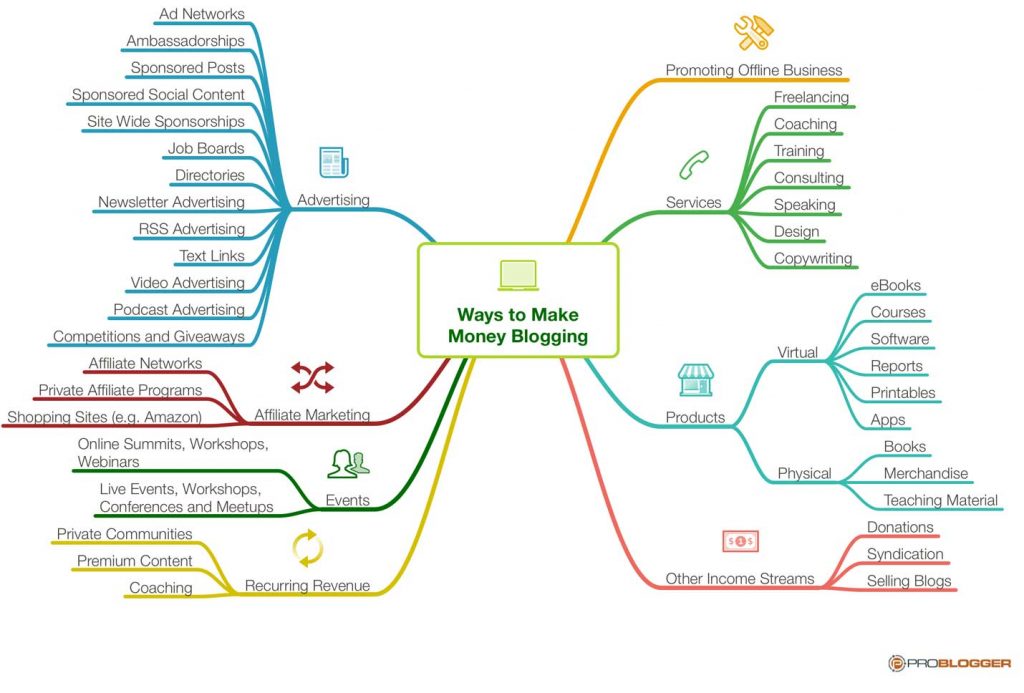
The era of relying solely on a single advertising network, such as Google AdSense, has largely ended for professional publishers. Modern blogging success is predicated on revenue diversification. Analysis of successful Australian and international bloggers—ranging from niches like photography (Digital Photography School) to woodworking (Ana White) and simple living (Tsh Oxenreider)—reveals a common trend: they rarely rely on one source of income.
The "Money Map" for a professional blog typically includes:
- Direct Advertising: Selling space directly to brands within the niche.
- Affiliate Marketing: Earning commissions on third-party products.
- Digital Products: Creating and selling ebooks, online courses, or premium templates.
- Membership Models: Providing exclusive content or community access for a recurring fee.
- Service-Based Income: Using the blog as a portfolio to secure speaking engagements, consulting contracts, or book deals.
This diversification acts as a hedge against market volatility. For instance, if a search engine algorithm update reduces traffic, a blogger with a strong email list and a private membership area can maintain their income levels.
The Myth of Passive Income and the Reality of Labor
A persistent narrative in the "make money online" space is the concept of blogging as a "passive" income stream. However, veteran publishers and industry analysts refute this characterization. Professional blogging requires intensive, ongoing labor across four primary pillars:
1. Content Production
High-quality content is the baseline requirement. This involves not only writing but also photography, videography, and graphic design. As AI-generated content becomes more prevalent, the value of original, experience-backed reporting and unique "voice" has increased.
2. Audience Acquisition
Finding readers requires a sophisticated understanding of SEO, social media marketing, and community outreach. The modern blogger must act as their own PR agent and marketing manager.
3. Community Engagement
Building a loyal readership involves active participation in comments, social media interactions, and email correspondence. Engagement is the metric that drives long-term retention and brand loyalty.
4. Business Operations
The transition from hobbyist to professional involves managing the technical side of the site (hosting, security, speed optimization), legal compliance (disclosures, GDPR, privacy policies), and financial management (bookkeeping, tax obligations).
Implications of Niche Selection
A common misconception is that the only profitable blogs are those that teach others how to make money. Journalistic observation of the market proves otherwise. Some of the most profitable blogs globally operate in "everyday" niches such as health and wellness, home decor, travel, and hobby-specific categories like photography or woodworking.
In many cases, niche-specific blogs are more profitable than general business blogs because they attract a highly targeted audience with specific purchasing intent. For example, a photography blog can sell high-ticket items like cameras or expensive workshops, whereas a general lifestyle blog may struggle to convert a broad audience into buyers.
Broader Impact and Future Outlook
The rise of the professional blogger has democratized the publishing industry, allowing individuals to bypass traditional gatekeepers. However, this democratization has also led to an information surplus. Moving forward, the industry is expected to see a "flight to quality."
As artificial intelligence begins to automate the production of generic information, human-centric blogging—characterized by personal authority, ethics, and community—is likely to become more valuable. The implications for the workforce are significant; blogging provides a model for decentralized, independent work that can supplement or replace traditional employment, provided the individual is willing to treat the endeavor as a long-term business rather than a hobby.
In conclusion, the data confirms that it is entirely possible to make a living from blogging, but it is not a "get-rich-quick" scheme. Success is reserved for those who view it as a professional discipline requiring years of consistent effort, a willingness to adapt to technological shifts, and a commitment to providing genuine value to a specific audience. The "blogging breakthrough" is rarely a single moment of luck; it is the result of thousands of small, strategic actions taken over a multi-year period.