Lina Wu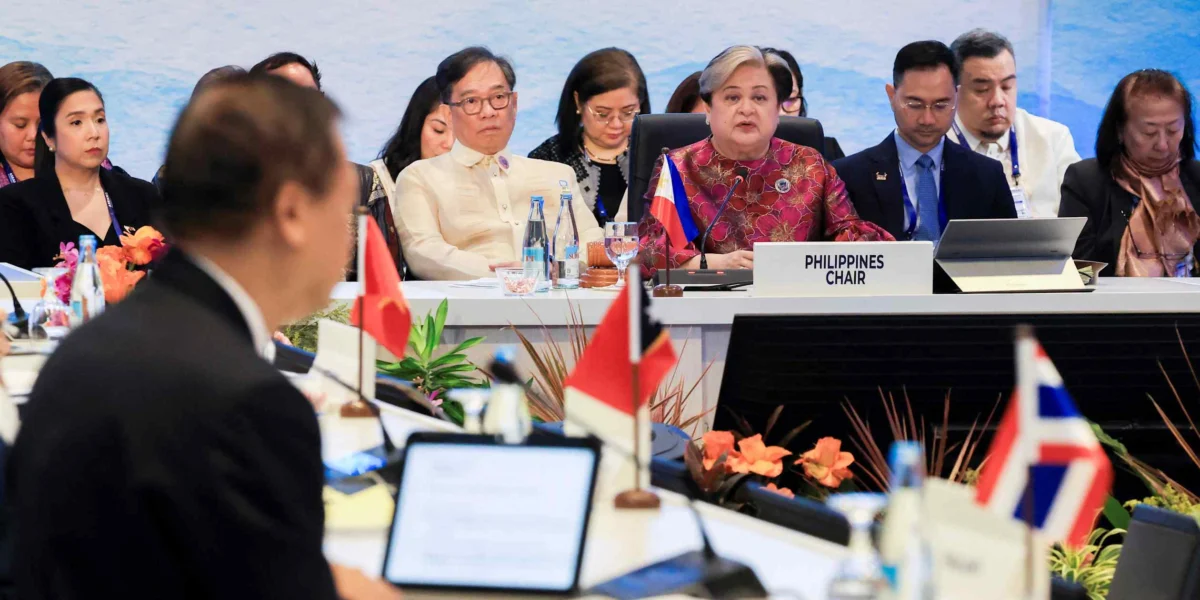
MANILA — Southeast Asian nations must forge a united front to withstand escalating geopolitical conflicts and external pressures that threaten to fracture the region, declared Philippine Foreign Secretary and ASEAN chair Maria Theresa Lazaro on Tuesday. Her stark warning came as top diplomats from the 11-member Association of Southeast Asian Nations convened in the Philippine capital for their annual foreign ministers’ meeting, a critical juncture for charting the bloc’s response to a rapidly evolving global landscape.
The gathering, held against the backdrop of intensifying strategic competition in the Indo-Pacific and persistent territorial disputes in the South China Sea, underscores the immense challenges facing ASEAN in maintaining its centrality and relevance. Secretary Lazaro’s opening remarks at the sprawling complex in Metro Manila signaled a clear intent to prioritize regional cohesion and a unified voice in navigating these complex dynamics. The stakes are particularly high for ASEAN, an organization traditionally built on consensus and non-interference, now finding itself caught between major global powers.
A Region Under Strain: Geopolitical Fault Lines and Economic Interdependence
The ASEAN foreign ministers’ meeting, which runs for several days, is not merely a diplomatic ritual but a crucial forum for addressing pressing regional security and economic issues. This year’s deliberations are heavily influenced by the ongoing strategic rivalry between the United States and China, two dominant global players whose actions have profound implications for Southeast Asia. The region, a vital hub for global trade and a critical transit point for energy supplies, finds itself increasingly on the front lines of this great power competition.
The South China Sea, a waterway through which trillions of dollars of global trade flows annually, remains a persistent flashpoint. Tensions have been exacerbated by assertive actions from various claimants, leading to concerns about freedom of navigation and the potential for miscalculation. The ongoing developments in the East China Sea and the broader implications of the war in Ukraine also cast a long shadow over the discussions, highlighting the interconnectedness of global security challenges.
Beyond security concerns, ASEAN faces the delicate task of balancing its economic ties with major powers. The bloc is deeply integrated into global supply chains, with China being its largest trading partner. However, growing concerns about economic coercion and the need for diversification are also influencing regional policy. The proposed ASEAN Economic Community, aimed at creating a single market and production base, faces ongoing challenges in implementation amidst these complex geopolitical realities.
Chronology of a Crucial Summit: From Opening Salvos to Strategic Roadmaps
The annual ASEAN Foreign Ministers’ Meeting (AMM) is a cornerstone of the bloc’s diplomatic calendar. This year’s summit, hosted by the Philippines as the current ASEAN chair, began on July 21, 2026, with initial plenary sessions where Secretary Lazaro delivered her opening address. The subsequent days are dedicated to a series of working sessions, informal consultations, and bilateral meetings with ASEAN’s dialogue partners, including the United States, China, Japan, South Korea, India, Australia, and the European Union.
The historical context of ASEAN’s founding in 1967, born out of a desire for regional peace and stability amidst Cold War tensions, provides a vital backdrop to the current challenges. For decades, ASEAN has successfully navigated the complexities of great power politics by adhering to its principles of consensus, non-interference, and the centrality of the bloc. However, the current geopolitical environment, characterized by a more assertive China and a more fragmented global order, presents unprecedented tests to this established modus operandi.
The agenda for this year’s meeting is expected to include in-depth discussions on:
- The South China Sea Code of Conduct (CoC): Progress on negotiations for a legally binding CoC has been slow, and ministers are expected to re-emphasize the urgency of concluding these talks to de-escalate tensions and prevent further incidents.
- The Situation in Myanmar: ASEAN’s response to the ongoing political crisis in Myanmar remains a significant point of contention, with differing views among member states on how to effectively implement the Five-Point Consensus.
- Regional Economic Recovery and Resilience: Discussions will likely focus on strategies to bolster post-pandemic economic growth, strengthen supply chain resilience, and address emerging global economic challenges, including inflation and potential recessions.
- Strengthening ASEAN Centrality: A key objective will be to reaffirm ASEAN’s role as the primary driver of regional architecture and to ensure its continued relevance in a multipolar world.
- Emerging Security Threats: This includes cyber security, transnational crime, and the implications of new technologies on regional stability.
Supporting Data: The Economic and Strategic Significance of ASEAN
The economic weight of ASEAN cannot be overstated. The bloc, with a combined population of over 650 million people, represents one of the world’s largest and fastest-growing economic blocs. In 2025, the collective GDP of ASEAN member states was estimated to be over $3.6 trillion, making it the fifth-largest economy globally. Intra-ASEAN trade accounts for a significant portion of its total trade, highlighting the importance of regional economic integration.
The strategic location of ASEAN member states along major maritime trade routes, particularly in the South China Sea and the Strait of Malacca, further amplifies its geopolitical importance. These waterways are crucial for global energy security and the flow of manufactured goods. Any disruption to these routes would have far-reaching global economic consequences.
- Trade Volume: In 2025, total ASEAN trade reached approximately $2.8 trillion, with China accounting for roughly 17% of this figure. The United States and the European Union are also significant trading partners, underscoring the region’s deep economic interdependence with major global powers.
- Foreign Direct Investment (FDI): ASEAN has been a consistent recipient of FDI, attracting billions of dollars annually. This investment fuels economic growth and job creation, but also makes the region susceptible to external economic pressures and trade disputes.
- Maritime Traffic: An estimated one-third of global maritime traffic passes through the South China Sea. This strategic chokepoint is vital for the energy and trade security of many nations, including those in East Asia.
Reactions and Inferences: A Call for Unity Amidst Divergent Views
While Secretary Lazaro’s call for unity resonated, it is widely understood that achieving a monolithic stance within ASEAN is inherently challenging due to the diverse national interests and political systems of its member states. However, the shared commitment to the bloc’s principles and the recognition of mutual interdependence often serve as a unifying force.
Unofficial statements from diplomats attending the meeting, while not directly quoted in the initial report, would likely reflect a spectrum of perspectives. Some nations, particularly those with more direct territorial claims in the South China Sea, would likely emphasize the need for a robust and enforceable Code of Conduct. Others, with stronger economic ties to China, might advocate for a more calibrated approach that prioritizes dialogue and de-escalation.
The presence of ASEAN’s dialogue partners, who are invited to separate meetings following the AMM, provides an opportunity for member states to engage with major powers directly. These engagements are crucial for conveying ASEAN’s collective concerns and for seeking assurances of respect for regional stability and the bloc’s centrality.
The Philippines, as the chair, has the unenviable task of bridging these differences and steering the bloc towards a consensus. Secretary Lazaro’s assertive opening statement suggests a determined effort to galvanize member states into taking a more proactive and unified stance on critical issues.
Broader Impact and Implications: ASEAN’s Role in a Shifting World Order
The outcome of the ASEAN foreign ministers’ meeting will have significant implications not only for regional peace and prosperity but also for the broader global order. ASEAN’s ability to present a united front and to effectively manage the competing interests of major powers will be a key determinant of its continued relevance as a regional architect.
- Maintaining Peace and Stability: A cohesive ASEAN can act as a crucial stabilizing force in the Indo-Pacific, mitigating the risks of escalation in territorial disputes and fostering a more predictable security environment. A fragmented ASEAN, conversely, could embolden external actors and increase the likelihood of conflict.
- Economic Resilience: By strengthening regional economic cooperation and diversification strategies, ASEAN can enhance its resilience to global economic shocks and protect its members from the adverse effects of geopolitical tensions.
- Upholding International Law: ASEAN’s commitment to international law and the principles of peaceful dispute resolution is vital. A strong ASEAN can serve as a bulwark against unilateralism and the erosion of the rules-based international order.
- Centrality in Regional Architecture: The bloc’s continued ability to convene and influence discussions among major powers is essential for maintaining its role as the primary driver of regional security and economic cooperation. Failure to do so could lead to a more fragmented and unstable regional order, dominated by external powers.
Secretary Lazaro’s admonition to ASEAN members serves as a critical reminder of the shared responsibility to safeguard the region’s peace, stability, and economic progress. As the world grapples with an increasingly complex and unpredictable geopolitical landscape, the unity and resolve of Southeast Asian nations will be more important than ever. The decisions made and the path charted in Manila will undoubtedly shape the trajectory of this vital region for years to come.