Ella Zulfa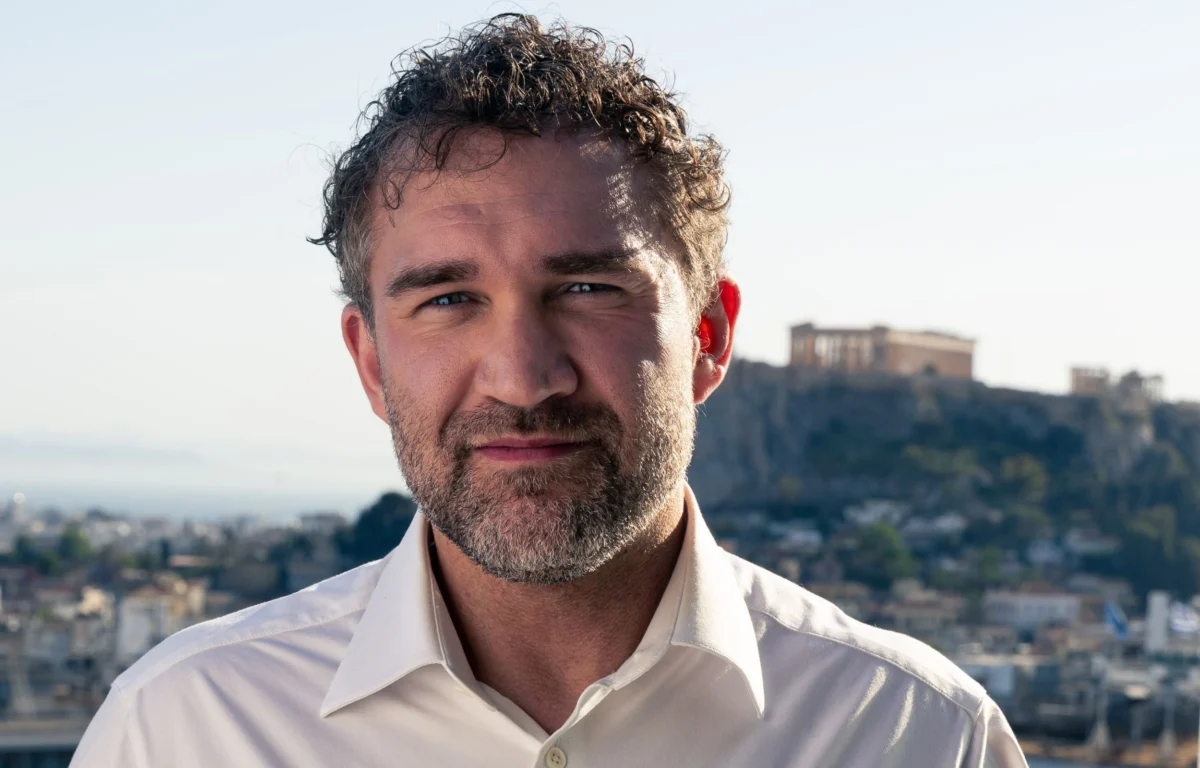
Longtime entrepreneur Alex Tarnava challenges conventional business wisdom, asserting that the question "How do you make money?" is fundamentally flawed. Instead, he advocates for a paradigm shift, urging individuals to identify unmet societal needs and determine how their ventures can genuinely serve others. This philosophy underpins his successful ventures, including a leading method of hydrogen therapy and a groundbreaking medical gas delivery system, all built without the influence of venture capital. Tarnava’s journey, from a challenging upbringing to becoming a prolific inventor and manufacturer, offers a compelling narrative on the power of purpose-driven enterprise and a critique of the potential pitfalls of capital-centric business models.
Tarnava is the inventor, manufacturer, and patent holder of hydrogen water tablets, a product he describes as a vanguard in hydrogen therapy. These tablets are privately labeled by a substantial network of approximately 100 brands, including prominent names like Gary Brecka, Dr. Gundry, Cymbiotika, Sports Research, and The Wellness Company. Collectively, these brands distribute around 40 million doses of Tarnava’s hydrogen tablets monthly, demonstrating significant market penetration and consumer demand.
Beyond his work in hydrogen therapy, Tarnava is also the owner and co-inventor of Inhale H2, a patent-pending system designed for the delivery of medical gases and aerosolized drugs. Launched in December, this innovative device experienced immediate success, selling out its initial inventory twice. With a manufacturer’s suggested retail price (MSRP) of $6,499, the device has already achieved sales of 1,000 units, indicating strong demand for advanced respiratory and drug delivery solutions.
Despite the considerable financial success evident in his ventures, Tarnava maintains that profit was never his primary motivation. This assertion is underscored by his deliberate decision to avoid venture capital funding altogether, choosing instead to bootstrap his businesses from their inception. This approach is particularly noteworthy given his background, having grown up in circumstances below the poverty line.
"A lot of people think if I pull in capital, it helps me achieve my mission, but that’s a trap," Tarnava shared in an exclusive interview with Entrepreneur. "You have to give up on your mission. Because now the mission becomes money and it’s empty." This perspective positions Tarnava as a counter-narrative to the prevalent Silicon Valley ethos, which often prioritizes rapid scaling and exit strategies driven by external investment.
From Philosophical Curiosity to Financial Acumen
Tarnava’s early life was marked by a deep-seated fascination with philosophy and theoretical science. He grappled with the apparent paradox of pursuing intellectual endeavors that seemingly necessitated reliance on external financial support. "How are you going to be a philosopher or a scientist when you have to beg someone else for money?" he questioned, reflecting on his formative years. This fundamental inquiry fueled his drive to find a path that allowed for intellectual exploration without compromising financial independence.
At the age of 17, around 2002, Tarnava began to explore the practical application of his drive by taking on a commission-based door-to-door sales role. This position proved to be remarkably lucrative for a part-time endeavor, enabling him to earn upwards of $35,000 annually – a sum that exceeded his mother’s income at the time. This experience ignited an early and profound interest in the mechanics of money and economic systems.
"It was during an economic boom, and it was 7% compounding interest if I kept my money in the company," he recalled. "I started looking into interest and thinking about it deeply. Then I was looking at inflation, and none of it was making sense. It wasn’t reconciling to me. I’m like, this is not sustainable." This period of observation and analysis led him to a critical realization: the prevailing economic models, as he understood them, lacked inherent long-term sustainability.
This intuitive understanding, coupled with a growing sense of unease, solidified his resolve to pursue entrepreneurship as a means of self-protection and empowerment. "It just sank in my gut like a fear, and so I decided that I needed to go into business to make as much money as I could to protect myself," he stated.
For a period, Tarnava fully immersed himself in the pursuit of wealth, acknowledging a willingness to employ aggressive, even ethically questionable, sales tactics. "Everything sleazy in sales in the world, I became, and I taught that," he admitted. However, this material success came at a significant personal cost. The existential dissonance arising from his work began to manifest as profound anxiety and sleep deprivation. "It just felt so empty and wrong," he remembered, underscoring the emotional toll of his early business endeavors.
In his mid-twenties, Tarnava sought solace from his mounting depression through the use of alcohol, drugs, and fleeting relationships. This period of self-medication eventually led to a personal crisis, prompting him to cease his business operations and return to Vancouver to work alongside his father. It was during this period of introspection and renewed connection with his intellectual interests that he rediscovered his passion for philosophy and science, dedicating significant time each day to reading and contemplation.
A pivotal moment in Tarnava’s life, one that dramatically altered his professional trajectory, was the onset of a global viral pandemic. "It made me stare at my mortality, and the entropy that we all deal with," Tarnava explained. This profound confrontation with his own vulnerability and the universal reality of decay catalyzed a redirection of his focus toward health and wellness. "I redirected into health, and that’s when I started inventing all these technologies."
From Laboratory Experimentation to Market Enterprise
Tarnava’s development of hydrogen capsules was driven by a desire to address a significant challenge in hydrogen therapy: the efficient and practical delivery of therapeutic hydrogen concentrations into the body. His innovative capsules employ a reaction between elemental magnesium and organic acids within water, which generates hydrogen gas. Crucially, the technology ensures that the hydrogen remains suspended within the solution, creating what he terms a supersaturated hydrogen state.
He explains that hydrogen’s limited solubility in water has historically posed a hurdle. Traditional methods often fail to deliver dosages comparable to those used in scientific research without requiring individuals to consume impractically large volumes of water. Tarnava’s proprietary method generates exceptionally small hydrogen nanobubbles, which are effectively suspended in the liquid. This allows his capsules to produce a hydrogen-rich solution with concentrations potentially up to eight times higher than conventional methods.
Tarnava posits that these higher concentrations are significant because hydrogen may activate a biological process known as hormesis. Hormesis occurs when mild stressors, such as exercise, heat, or cold exposure, trigger positive adaptive responses within the body, particularly in cellular structures like mitochondria. He believes that hydrogen, when administered at therapeutic levels, can stimulate the body’s innate resilience mechanisms, offering a potentially safer alternative to other stress-inducing interventions.
The genesis of his hydrogen capsule technology was not rooted in a formal business plan. Tarnava initially pursued hydrogen as a personal, do-it-yourself project. The compelling positive results he observed, however, became too significant to ignore. "At no point did I think, how am I going to make money doing this? How much do I need to charge for it? I didn’t run any of the numbers. I just moved forward until I had an MVP," he stated, referring to a Minimum Viable Product.
Once he had a functional prototype, Tarnava proactively engaged with researchers in the field of hydrogen therapy. He offered samples of his product, alongside placebos, to facilitate clinical trials. Initially, he launched the capsules as a direct-to-consumer brand. However, the market dynamics shifted rapidly when various companies approached him expressing interest in licensing his technology for their own private-label products. This pivot marked the beginning of what Tarnava describes as a "slog."
Operating without external funding and bootstrapping his business required Tarnava to adopt a multifaceted role. "I had to become a jack of all trades," he explained, emphasizing the necessity of gaining sufficient knowledge in each operational area to effectively vet and manage the consultants he hired. This hands-on approach was crucial for ensuring the integrity and competence of external partnerships.
"There’s so much here, and none of it makes sense when combined," Tarnava remarked, referring to the intricate interplay of legal frameworks, regulatory requirements, and technical disciplines involved in bringing a product to market. He elaborated on the complexity: "Basically, you have to learn to play the game and present half-truths in completely different ways depending on what domain it is, and the kind of siloing of all these fields means that nobody can communicate with each other. It’s like fitting a round peg into a square hole." This sentiment highlights the significant administrative and intellectual hurdles inherent in navigating diverse professional domains.
Navigating the Constraints of Capitalism
The option to bring on a venture capital partner, which could have potentially alleviated some of the operational burdens and addressed his knowledge gaps, was never a consideration for Tarnava. His commitment to maintaining complete control over his ventures is unwavering.
Apart from a small allocation of shares held by "very close friends that I didn’t need a prospectus for," Tarnava retains full ownership of his companies. Significantly, even these trusted associates were required to sign ethics and morality agreements, including clauses that waived their rights to shareholder primacy. "I have complete oversight of what the company does," Tarnava asserted. "And I think that’s important because how do you stay mission-based if the legal precedent, the contractual precedent, is towards profit?" This structural decision is central to his ability to maintain his core mission and values.
He continued, articulating a critical perspective on the entrepreneurial landscape: "Entrepreneurs tend to be people who want to do something big, and it’s been perverted to thinking, ‘Oh, doing something big is making a lot of money.’ Well, that’s not necessarily true. We forget people who just had a lot of money. We remember people who did something that changed the world, regardless of how much money they have." This distinction underscores his belief that true impact and legacy are separate from sheer financial accumulation.
The inherent tension between the pursuit of knowledge and the principles of capitalism is a recurring theme in Tarnava’s narrative. What distinguishes his perspective is his continued belief in the efficacy of capitalism, coupled with a strong conviction that the system itself requires rigorous accountability.
"One of my missions is: How do we get back to honest capitalism and honest leadership?" Tarnava stated, outlining his broader societal objective. He illustrates this with a hypothetical scenario of a young, altruistic founder who establishes a health and wellness company with the intention of making a positive impact. As the business achieves success and attracts investor interest, the founder may perceive an opportunity to accelerate growth through external capital. However, Tarnava warns that this often leads to a shift in priorities.
"The data comes in, and actually the highest profit is by shifting this component in a direction that switches the product from really improving people’s health to being either innocuous or parasitic," Tarnava explained. "But it’s maximizing profit." This scenario highlights a critical ethical dilemma faced by many businesses operating under capitalist frameworks.
Under the prevailing principle of shareholder primacy, Tarnava argues that corporate executives are frequently compelled to prioritize profit above all else. "If you discover an avenue to increase profits, your morals or ethics can’t stop you from that, or you’re going to get sued, and lose your company anyway," he stated. "How many founders bring in capital, fight with the investors and the board, and get ousted from their own companies?" This question points to the significant power imbalances that can emerge within corporate structures, often at the expense of original vision and ethical considerations.
Despite his critiques of the existing system, Tarnava remains a proponent of capitalism’s potential to drive positive societal change. In furtherance of this belief, he recently established and funded the Wellness Science Initiative. This non-profit organization is dedicated to providing free educational modules focused on critical thinking, scientific principles, and foundational scientific literacy, including guidance on how to critically evaluate lifestyle interventions.
The Wellness Science Initiative is set to launch its inaugural Olympiad at Udemonia in West Palm Beach, from November 5th to 8th. The event is anticipated to draw approximately 8,000 attendees and will feature substantial prize money totaling $70,000. The Olympiad will include live science competitions, rapid-fire question rounds, and interactive booths where attendees can directly challenge organizations on the scientific validity of their claims.
"The idea is, you can’t have informed consent if you don’t know how to think and don’t have the basic facts," Tarnava emphasized. "If consumers have more information, they know how to ask better questions. They know how to think better. They’re going to choose better companies and avoid shittier companies." This initiative aims to empower consumers with the knowledge and critical faculties necessary to make informed decisions, thereby influencing market demand.
Tarnava’s rationale is rooted in the fundamental dynamic of capitalism: it is a system that responds to consumer demand. By fostering a more informed consumer base, he believes that businesses will be incentivized to adapt their practices and product offerings to align with ethical and scientifically sound principles. This creates a feedback loop where consumer awareness directly influences corporate behavior.
Wealth Redefined: Beyond Monetary Value
Ultimately, Tarnava’s business philosophy transcends a narrow definition of wealth as purely monetary gain. He advocates for a more expansive understanding of wealth, encompassing the essential resources that enable societal functioning: natural resources, human capital, knowledge, creativity, and the capacity for productive labor. In this framework, money serves as a medium of exchange for these fundamental components.
This holistic view of wealth extends to his leadership approach. Instead of demanding excessive work hours for the sole purpose of economic expansion, Tarnava prioritizes fostering environments where employees can pursue work aligned with their passions. He empowers his team members by granting them autonomy within their areas of expertise. "Unless what you’re doing is going against my overall vision, you’re the expert here," he stated. "What can I do to support you?" This managerial style emphasizes collaboration, trust, and individual empowerment.
For Tarnava, the ultimate objective is not merely the creation of a profitable enterprise. Instead, he strives to build organizations where individual knowledge, talents, and ambitions converge to create something of greater value than the sum of its parts—a collective achievement that transcends the limitations of financial metrics alone. This vision positions his work as a testament to the potential for businesses to serve as engines of both innovation and positive societal impact.