Gilang Muhammad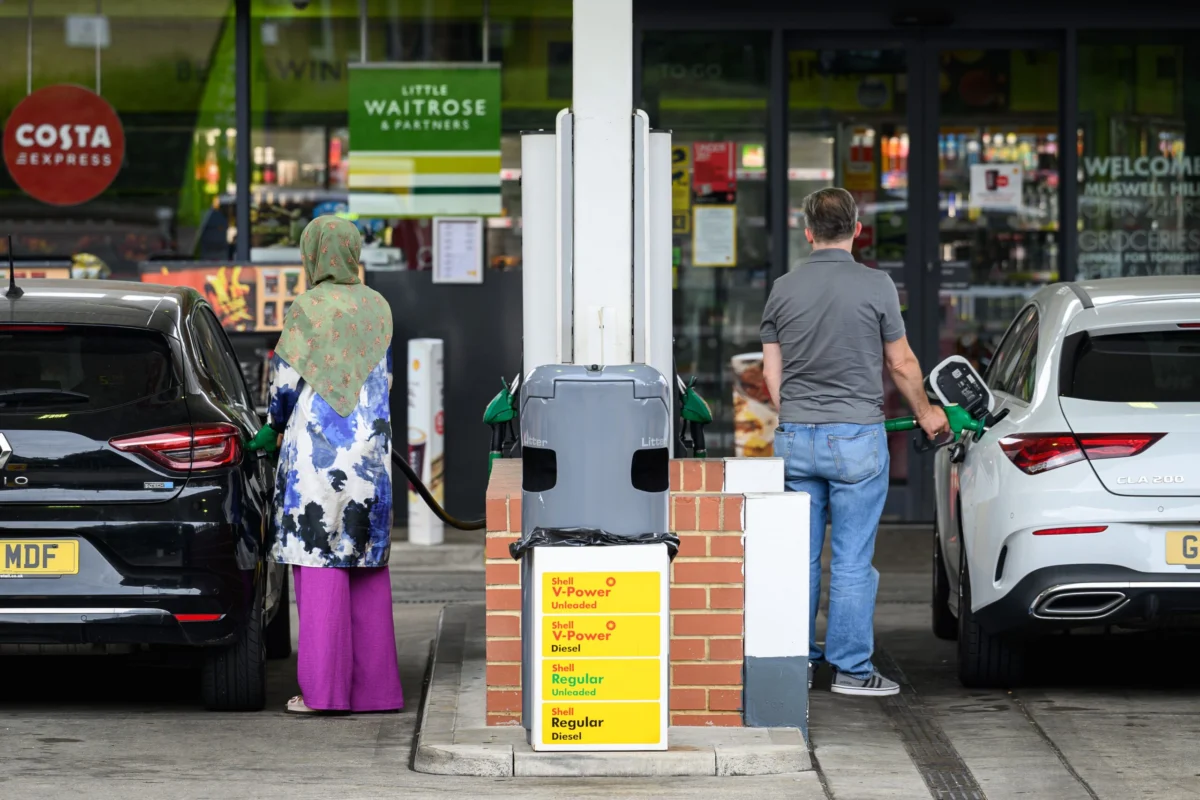
The United Kingdom’s annual inflation rate unexpectedly climbed to 3.1% in August, marking its highest level since March and aligning precisely with economists’ projections. This significant uptick, primarily propelled by a sharp rise in gasoline and diesel prices, intensifies the nation’s ongoing cost-of-living crisis and presents a formidable challenge for policymakers at the Bank of England and the new government led by Prime Minister Andy Burnham.
The Office for National Statistics (ONS) confirmed on Wednesday that the surge was predominantly due to escalating motor fuel costs, which saw a staggering 23% increase year-on-year. This dramatic rise underscores the UK’s vulnerability to global energy market fluctuations, particularly as Brent crude oil prices have been hovering above the critical $100 per barrel mark, a threshold breached on July 23, 2026, for the first time since May, following renewed geopolitical instability in the Middle East.
The Fuel Factor: UK Pump Prices Hit Four-Year Highs
The immediate and most palpable impact of this inflationary pressure has been felt at the petrol pump. According to the ONS, the average price of gasoline soared by 9.1 pence ($0.12) per liter between July and August, pushing average prices to their highest point since November 2022. Diesel prices experienced an even steeper ascent, climbing by 14.2 pence per liter over the same period. Images from London, such as customers refueling their cars at petrol stations, have become potent symbols of this economic squeeze.
The motoring advocacy group RAC highlighted the severity of the situation earlier this week, reporting that petrol and diesel prices had reached levels not seen in four years, attributing this directly to the fallout from the "Iran war." This ongoing conflict has significantly disrupted global oil supplies and heightened anxieties about future energy security, with the Strait of Hormuz, a critical chokepoint for global oil shipments, frequently cited in market analyses. For a country like the UK, which is a net importer of energy, such external shocks rapidly translate into higher domestic costs, impacting everything from daily commutes to the cost of transporting goods.
A Deeper Dive into the Cost-of-Living Crisis: A Chronology of Pressures
The current inflationary spike is not an isolated event but rather the latest chapter in a protracted cost-of-living crisis that has gripped the UK for several years. Its origins can be traced back to the post-pandemic economic rebound, which saw global supply chains strained and demand outstripping supply, leading to initial price increases.
The situation was dramatically exacerbated by Russia’s full-scale invasion of Ukraine in February 2022. This geopolitical earthquake sent shockwaves through global energy markets, particularly impacting natural gas prices, on which much of Europe, including the UK, relied heavily. The subsequent spikes in gas and electricity costs drove UK inflation to multi-decade highs, forcing the government to introduce a regulated price cap on energy costs to shield households from the most severe impacts.
In July 2026, this government-regulated price cap on energy costs was revised sharply upward, directly contributing to the inflation rate of 2.9% recorded that month. The August figures further illustrate the persistent nature of these energy-related pressures, with the cost of electricity, gas, and other household fuels collectively jumping 6% year-on-year. This relentless increase in essential utility costs, coupled with the latest surge in motor fuel prices, leaves households with less disposable income, dampening consumer confidence and retail activity.
Economic Ripple Effects: Beyond the Pump
The impact of soaring fuel prices extends far beyond individual motorists. Businesses, particularly those reliant on transportation and logistics, face significantly higher operational costs. This includes everything from haulage companies delivering goods across the country to local tradespeople commuting to job sites. Many businesses are forced to absorb these increased expenses, thereby compressing their profit margins, or pass them on to consumers through higher prices for goods and services, creating a self-perpetuating cycle of inflation.
Bogdan Toma, a partner at McKinsey & Company, warned in an emailed note that gasoline prices at their highest level in nearly four years could signal "an uncertain ‘golden quarter’ for consumers and retailers." He elaborated, "With households absorbing back-to-school costs and facing the possibility of higher interest rates, demand heading into the fourth quarter may remain subdued. The ‘golden quarter’ is critical to annual profitability for many non-food, and some grocery retailers. This year, competition for fewer and smaller baskets could be particularly intense, pressuring retailer margins from an already challenged starting point." This forecast paints a bleak picture for the upcoming holiday shopping season, a crucial period for the retail sector.
While food and non-alcoholic beverages inflation surprisingly slipped to 1.1% year-on-year in August, according to James Smith, a developed markets economist at ING, the broader picture for food prices remains concerning. Scott Gardner, an investment strategist at J.P. Morgan Personal Investing, noted that "food prices have started to eke upwards after fertilizer costs increased earlier this year." Given that natural gas is a key component in fertilizer production, the elevated energy prices feed directly into agricultural costs, eventually impacting supermarket shelves. This suggests that while some categories might show temporary moderation, the underlying pressures on food costs are likely to persist, further burdening household budgets.
Moreover, the ONS’s analysis of "high" or "very high" energy intensity categories – spanning everything from fruit to airfares and canteens – showed that even stripping out distortions from previous year’s water and car tax hikes, the inflation rate for these sectors had fallen this year. However, this trend showed no sign of changing in August, indicating that the energy shock, while potent, might not be broadening out to all sectors uniformly, offering a glimmer of hope to some analysts.
Monetary Policy and the Bank of England’s Delicate Balancing Act
The latest inflation print landed just a day before the Bank of England’s Monetary Policy Committee (MPC) was scheduled to announce its latest policy update on Thursday. The central bank’s primary mandate is to maintain price stability, targeting an inflation rate of 2%. The persistent above-target inflation puts the MPC in a precarious position.
Markets, according to LSEG data, were pricing in more than an 80% chance of the central bank holding its key interest rate steady at 3.75%. This cautious approach, despite the rising inflation, suggests that policymakers might be weighing the potential for the current energy-driven inflation to be transitory against the risks of stifling economic growth with further rate hikes. Previous rate hikes, including the current 3.75% benchmark, were implemented to cool the economy and bring inflation under control, and their full effects are still propagating through the economy.
However, the markets are also anticipating a hike at the BoE’s next meeting in November, indicating a belief that if inflationary pressures persist or broaden, the central bank will be compelled to act. The MPC’s decision will likely hinge on a detailed assessment of core inflation (which strips out volatile items like energy and food), wage growth figures (which remain muted in the private sector, suggesting less risk of a wage-price spiral), and broader economic indicators. Scott Gardner of J.P. Morgan noted that while the August increase was "unlikely to convince the Bank of England to hike interest rates just yet," it would undoubtedly "raise fresh concerns about the outlook for inflation among policymakers." He also highlighted that "the U.S.-Iran conflict began over six months ago but higher energy costs are still filtering through to business input prices and household spending."
The financial markets reacted to the inflation data with U.K. government bonds, known as gilts, seeing yields fall across the curve. The yield on the 30-year gilt, which had surged to a 28-year high just the day before, was last seen almost 2 basis points lower at 5.907%. Similarly, the benchmark 10-year gilt yield was nearly 3 basis points lower at 5.365%. This decline in yields could signal that bond investors believe the Bank of England will not need to aggressively hike rates in the short term, or perhaps that the higher fuel costs will eventually dampen economic activity, thereby reducing future inflationary pressures. The British pound, however, remained largely flat against both the U.S. dollar and the euro, reflecting the complex interplay of domestic inflation, monetary policy expectations, and global currency dynamics.
Political Pressure and Prime Minister Burnham’s Balancing Act
The escalating cost of living adds significant pressure on the new Prime Minister, Andy Burnham. Having recently taken office, Burnham has publicly pledged to tackle the burden on households and businesses. However, his mandate also includes the critical task of balancing the public books and placating the bond market – a delicate act of fiscal responsibility that became acutely evident during past periods of market volatility.
High inflation, particularly when driven by essential costs like fuel and energy, erodes public trust and can quickly become a potent political issue. The Prime Minister’s government will face intense scrutiny over its strategies to alleviate the pressure, whether through targeted support measures, tax adjustments, or other fiscal interventions. Yet, any significant spending commitments must be carefully weighed against the national debt and the need to maintain confidence among international investors in the UK’s fiscal stability. The Bank of England building in London, often photographed, serves as a symbol of these intertwined economic and political challenges.
Looking Ahead: Risks and Unknowns
The outlook for UK inflation remains highly uncertain, heavily dependent on a confluence of global and domestic factors. Scott Gardner emphasized that his team is closely watching for "potential second and third round effects from higher costs across the economy." These effects refer to the broadening of initial price shocks into wider economic inflation, for example, if higher energy costs lead to widespread wage demands or price increases across a broad range of goods and services.
Another often-overlooked factor, as highlighted by Gardner, is the growing demand for metals, semiconductors, and other supply-chain goods driven by the rapid expansion of Artificial Intelligence (AI). This technological revolution is creating new demand pressures on global commodity markets and manufacturing supply chains, potentially adding another layer of inflationary risk.
Ultimately, much still depends on the duration and intensity of the "war in the Middle East." As Gardner concludes, "For now, it is too early to tell if the energy price spike is evolving into a broader inflation shock but fears will be growing." The UK, like many other nations, finds itself at the mercy of geopolitical events that dictate the flow and price of essential commodities, making the path to price stability a challenging and unpredictable one. The coming months will be critical in determining whether the latest surge in inflation represents a temporary blip or a more entrenched problem that demands more forceful policy responses.