Lina Wu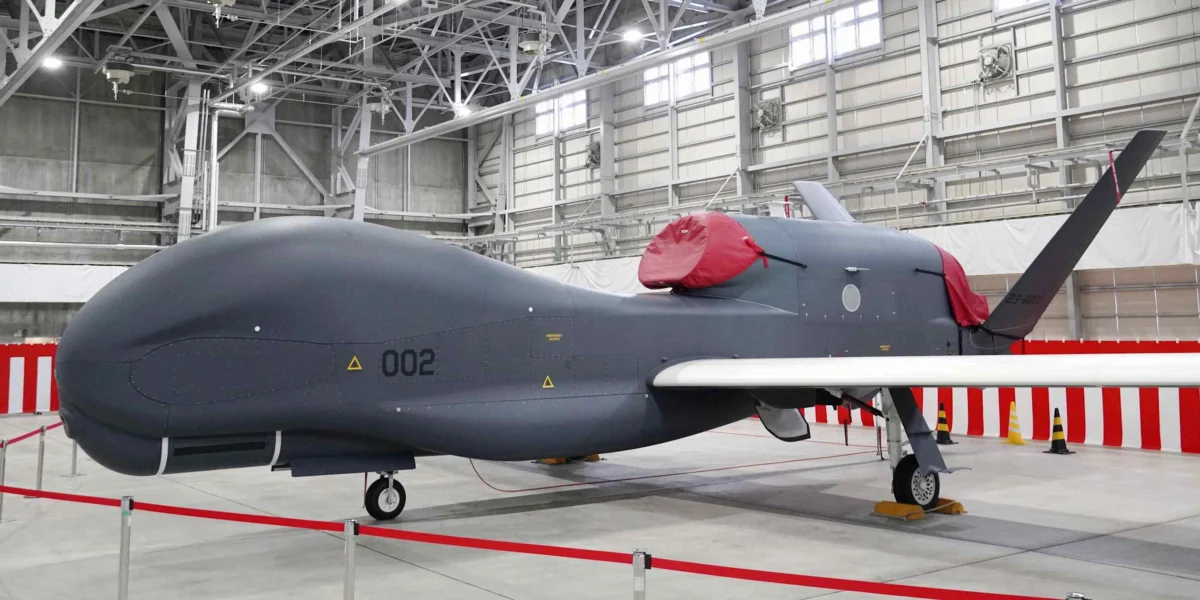
TOKYO – A state-of-the-art unmanned Global Hawk reconnaissance aircraft belonging to the Japan Air Self-Defense Force (JASDF) lost communication and is presumed to have crashed off the coast of Tottori prefecture in western Japan on Tuesday. The incident, which occurred during a routine operational sortie, has triggered an immediate investigation and raised questions about the reliability of advanced aerial surveillance systems. The JASDF confirmed the loss of contact at approximately 4:10 PM Japan Standard Time (JST), with subsequent search efforts underway.
Incident Overview and Initial Response
The missing Global Hawk, identified by its tail number and unit designation (specific details of which have not yet been publicly released by the JASDF), was operating in airspace over the Sea of Japan when communication links were abruptly severed. Officials stated that the loss of contact was unexpected and occurred without any prior indication of system malfunction or distress from the aircraft. Search and rescue operations were immediately initiated, involving maritime patrol aircraft, naval vessels, and coast guard assets. However, as of late Tuesday evening, no debris or definitive signs of the aircraft have been located.
The Global Hawk, a high-altitude, long-endurance (HALE) unmanned aerial vehicle (UAV), is a critical component of Japan’s modern defense infrastructure, designed for intelligence, surveillance, and reconnaissance (ISR) missions. Its operational range and advanced sensor capabilities allow it to monitor vast areas, providing crucial real-time data for national security purposes. The loss of such a sophisticated and expensive asset is a significant event for the JASDF.
Background: The Global Hawk in Japan’s Defense Strategy
Japan acquired the RQ-4B Global Hawk Block 30, a variant equipped with advanced synthetic aperture radar (SAR) and electro-optical/infrared (EO/IR) sensors, to bolster its surveillance capabilities in a region marked by geopolitical complexities. The first Global Hawk unit was formally activated by the JASDF in March 2022 at Misawa Air Base in Aomori Prefecture, northern Japan. The acquisition was driven by a perceived need to enhance Japan’s ability to monitor maritime activity, track ballistic missile launches, and gather intelligence on regional adversaries.
The Global Hawk’s ability to loiter at altitudes exceeding 60,000 feet for over 30 hours allows for persistent surveillance over broad areas, including the East China Sea and the Sea of Japan, territories that are strategically important for Japan. Its advanced radar systems can penetrate cloud cover and darkness, providing detailed imagery and mapping capabilities that are essential for situational awareness. The integration of these UAVs into the JASDF’s operational framework represented a significant leap forward in its technological capacity and strategic reach.
The decision to procure the Global Hawk was part of a broader trend in the Japanese Self-Defense Forces to modernize and expand their capabilities in response to evolving regional security challenges. This includes a growing emphasis on advanced aerial and maritime surveillance, cyber warfare, and missile defense. The loss of a Global Hawk, therefore, not only represents a financial blow but also a potential setback in the execution of Japan’s comprehensive defense strategy.
Timeline of Events (Presumed)
- Early Afternoon, September 15, 2026: The JASDF Global Hawk drone departs from its operational base (likely Misawa Air Base) for a scheduled ISR mission.
- Mid-Afternoon, September 15, 2026: The aircraft is operating in the designated airspace off the coast of Tottori prefecture.
- Approximately 4:10 PM JST: Communication with the Global Hawk is abruptly lost. Ground control stations are unable to re-establish contact.
- Immediately Following Loss of Contact: The JASDF initiates emergency protocols, declaring the aircraft missing and presumed crashed.
- Late Afternoon/Evening, September 15, 2026: A multi-agency search and rescue operation commences, involving JASDF aircraft, Japan Maritime Self-Defense Force (JMSDF) vessels, and Japan Coast Guard assets. The area of operation is the Sea of Japan, in the vicinity of Tottori’s coastline.
- Evening, September 15, 2026: The JASDF officially announces the incident to the public, confirming the loss of communication and the presumption of a crash.
- Ongoing: Search and recovery efforts continue, with focus on locating the aircraft’s wreckage and flight recorders to determine the cause of the incident.
Supporting Data and Context
The Global Hawk RQ-4B is a highly sophisticated and expensive piece of military hardware. Each unit is estimated to cost upwards of $100 million, with the total program cost for Japan including training, maintenance, and support infrastructure running into billions of dollars. This makes the loss of a single aircraft a considerable financial burden.
The operational area, off the coast of Tottori, is characterized by a relatively deep seabed, which could complicate recovery efforts if the aircraft has indeed crashed into the sea. Tottori prefecture is located on the Sea of Japan coast and is a key area for maritime traffic and potential surveillance. The specific nature of the mission the drone was undertaking is not publicly disclosed, but typical ISR missions involve monitoring naval movements, airspace incursions, or geological surveys.
Previous incidents involving Global Hawk operations globally, while rare, have underscored the inherent risks associated with advanced unmanned systems. Mechanical failures, communication disruptions, and environmental factors can all contribute to operational losses. The JASDF has invested heavily in training and maintenance protocols to mitigate such risks, making this incident particularly concerning.
Official Statements and Reactions
While official statements from the JASDF have been concise, focusing on the facts of the incident and the ongoing search, the gravity of the situation is evident. A spokesperson for the Ministry of Defense, speaking on condition of anonymity, stated, "The Japan Air Self-Defense Force is conducting a thorough investigation into the circumstances surrounding the loss of communication. Our priority at this moment is the search and rescue operation and the safe recovery of any potential wreckage."
It is logically inferred that internal reviews are already underway within the JASDF and the Ministry of Defense to assess the operational procedures, maintenance records, and any potential contributing factors leading to the loss of communication. The United States, as the primary supplier of the Global Hawk system, may also be consulted for technical assistance in the investigation.
No official statements have been made by political leaders as of yet, but it is expected that the incident will be a subject of discussion in upcoming parliamentary sessions, particularly concerning defense spending and the operational readiness of advanced military assets.
Broader Impact and Implications
The loss of a Global Hawk drone has several significant implications for Japan’s defense posture and regional security dynamics:
- Impact on ISR Capabilities: The Global Hawk fleet is a cornerstone of Japan’s intelligence, surveillance, and reconnaissance capabilities. The reduction in operational units could temporarily diminish its ability to conduct persistent aerial monitoring, potentially creating temporary gaps in crucial intelligence gathering.
- Technological Reliability Concerns: While advanced, the Global Hawk is a complex system. An unexplained loss of communication could raise questions about the reliability of such high-tech unmanned systems, particularly in challenging operational environments. This could lead to increased scrutiny of maintenance procedures and operational protocols.
- Financial Repercussions: The replacement cost of a Global Hawk is substantial, impacting defense budgets. Any decision to procure replacements will need to be weighed against other defense priorities.
- Geopolitical Signaling: In a region characterized by heightened tensions, the operational readiness of advanced military assets is closely watched. The loss of a key surveillance platform could be interpreted by regional actors, though the JASDF’s operational capacity remains robust with other assets.
- Future Procurement and Development: This incident may influence future procurement decisions for unmanned aerial systems, potentially leading to a greater emphasis on redundant communication systems, advanced self-diagnostic capabilities, and more robust operational redundancies. It could also spur further investment in domestic drone technology development.
The JASDF’s immediate focus remains on locating the missing aircraft and understanding the cause of the communication failure. The outcome of the investigation will be critical in determining the necessary adjustments to operational procedures, maintenance protocols, and potentially future defense acquisition strategies. The incident serves as a stark reminder of the inherent risks and complexities associated with deploying cutting-edge military technology in demanding operational environments.