Lina Wu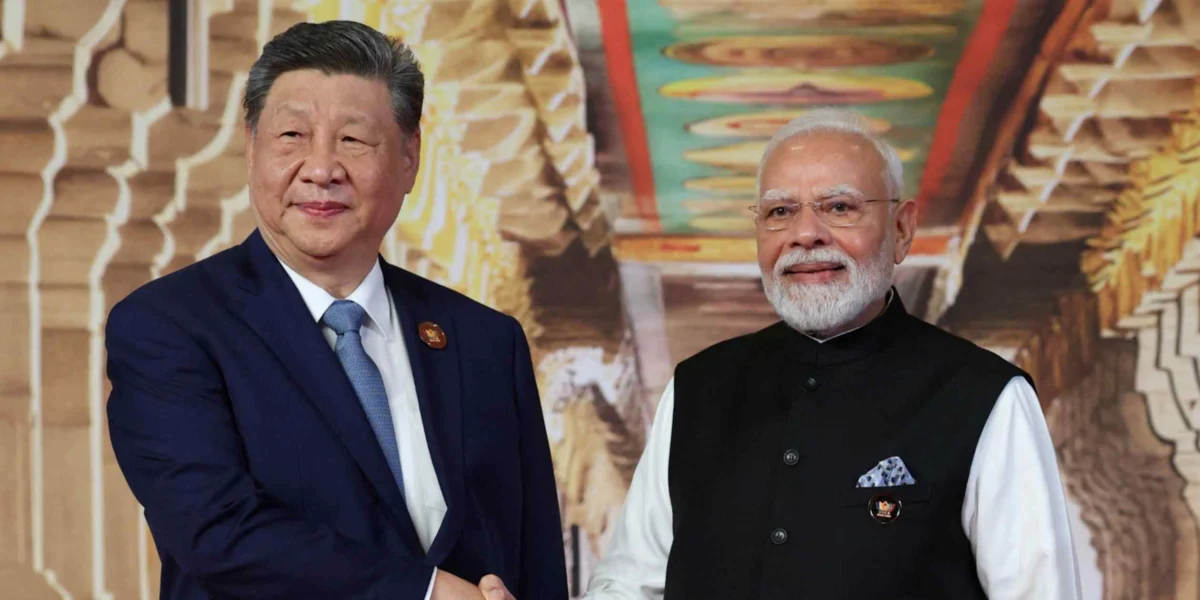
NEW DELHI/TOKYO – Indian Prime Minister Narendra Modi and Chinese President Xi Jinping held a significant bilateral meeting on the sidelines of the 2026 BRICS summit in New Delhi on Saturday, September 12th. The high-level discussions, occurring amidst a complex geopolitical landscape, saw both leaders underscore the importance of managing bilateral differences constructively and addressing mutual concerns regarding trade imbalances and supply chain resilience. This encounter marked a crucial diplomatic moment, signaling a desire from both nuclear-armed neighbors to maintain open channels of communication despite underlying strategic divergences.
The meeting, held at Bharat Mandapam, the sprawling convention center hosting the summit, was brief but carried considerable weight. According to official statements released by the Indian Ministry of External Affairs and China’s Ministry of Foreign Affairs, the two leaders engaged in a candid exchange of views on a range of bilateral and global issues. A key takeaway from the discussions was the shared acknowledgment that "differences should not become disputes," a sentiment aimed at de-escalating potential friction points and fostering a more stable relationship. This phrase, often employed in diplomatic parlance, suggests an understanding that while disagreements are inevitable, they should be managed through dialogue rather than allowed to fester into open conflict.
Background and Context of the BRICS Summit
The 2026 BRICS summit, hosted by India, was particularly significant as it convened at a time of escalating global economic uncertainty, ongoing shifts in international power dynamics, and a growing emphasis on multipolarity. BRICS, an acronym for Brazil, Russia, India, China, and South Africa, has evolved from an economic grouping into a more comprehensive forum for cooperation on a wide array of issues, including economic development, trade, security, and global governance. This year’s summit was characterized by discussions on expanding the bloc’s membership, with several emerging economies expressing interest in joining, and a concerted effort to forge a more equitable international economic order.
India, as the host nation, had prioritized several agenda items, including sustainable development, digital transformation, and enhancing intra-BRICS trade and investment. However, the bilateral engagement between Prime Minister Modi and President Xi inevitably cast a long shadow over these broader discussions, given the intricate and often fraught relationship between India and China. Their last significant public interaction prior to this meeting was at the G20 Summit in Rome in October 2021, followed by a brief, informal exchange at the G20 Summit in Bali in November 2022. The intervening period had been marked by continued border tensions in the Himalayas, particularly along the Line of Actual Control (LAC), which had led to military standoffs and a considerable strain on diplomatic ties.
Addressing Trade and Supply Chain Concerns
A central theme of the Modi-Xi meeting was the imperative to address trade and supply chain issues. India has long harbored concerns over a widening trade deficit with China, with imports significantly outweighing exports. This imbalance has been a persistent point of contention, fueling calls within India for greater market access and a more level playing field for its businesses. The COVID-19 pandemic and subsequent geopolitical disruptions further highlighted the vulnerabilities of global supply chains, prompting nations, including India, to re-evaluate their reliance on single sources and explore diversification strategies.
Prime Minister Modi, known for his focus on "Make in India" and bolstering domestic manufacturing, likely conveyed to President Xi the need for a more balanced trade relationship. This would involve increased Chinese investment in Indian manufacturing and a reduction in trade barriers for Indian goods entering the Chinese market. For China, a key trading partner for most BRICS nations, addressing these concerns is crucial for maintaining its economic influence and ensuring the stability of its extensive global supply networks. President Xi, in turn, would have emphasized China’s commitment to open trade while potentially highlighting its own efforts to streamline import processes and address specific Indian product market access issues.
Chronology of Engagements
The meeting between Prime Minister Modi and President Xi on September 12, 2026, was the culmination of months of diplomatic maneuvering and a deliberate attempt to inject a measure of stability into the bilateral relationship. While the exact timing and duration of their discussions were not fully disclosed, it is understood to have occurred during the official program of the BRICS summit.
- Early 2026: Following prolonged border tensions, diplomatic channels between India and China were cautiously reopened through various official and semi-official engagements. Discussions focused on de-escalation measures along the LAC and maintaining open communication lines.
- Mid-2026: Preparations for the BRICS summit intensified, with India signaling its intent to leverage the platform for constructive dialogue on global economic challenges. The possibility of a bilateral meeting between Modi and Xi was raised as a potential, albeit delicate, component of the summit agenda.
- September 12, 2026: Prime Minister Modi and President Xi meet on the sidelines of the BRICS summit in New Delhi. The meeting focuses on managing bilateral differences and addressing trade and supply chain concerns.
- September 13, 2026: Official statements are released by both countries, confirming the meeting and highlighting key discussion points. The broader BRICS summit continues, with leaders engaging in multilateral discussions.
Supporting Data and Economic Context
The economic interdependence between India and China, despite their political tensions, remains substantial. As of the first half of 2026, China continued to be one of India’s largest trading partners. While India’s trade deficit with China has fluctuated, it has consistently remained in deficit. For instance, in the fiscal year 2025-26, India’s trade deficit with China was estimated to be in the range of USD 50-60 billion, according to preliminary figures from India’s Ministry of Commerce and Industry. This figure underscores the significant volume of goods flowing from China to India.
Regarding supply chains, India has been actively seeking to diversify its import sources and boost domestic production. Government initiatives like the Production Linked Incentive (PLI) schemes aim to encourage manufacturing in sectors such as electronics, pharmaceuticals, and automotive components. The discussion at the BRICS summit on supply chain resilience is therefore highly relevant, as it seeks to foster greater cooperation among member states to mitigate global shocks and build more robust trade networks. China, as a global manufacturing powerhouse, plays a critical role in these supply chains, and any recalibration or diversification efforts will inevitably involve its participation or consideration.
Official Responses and Diplomatic Nuances
The official statements from both New Delhi and Beijing, while measured, provided crucial insights into the tenor of the discussions. India’s Ministry of External Affairs highlighted Prime Minister Modi’s emphasis on "constructive dialogue" and the need to "resolve outstanding issues." The phrasing "differences should not become disputes" was explicitly mentioned, signaling a commitment to preventing minor disagreements from escalating into larger diplomatic crises.
China’s Ministry of Foreign Affairs echoed these sentiments, stating that President Xi underscored the importance of "mutual respect" and "managing differences." The Chinese statement also emphasized the shared interest of both countries in maintaining regional peace and stability. The diplomatic language employed by both sides suggests a strategic decision to project an image of responsible leadership and a willingness to engage, even as underlying challenges persist. The very act of holding a bilateral meeting at a high-profile multilateral event like the BRICS summit signals a diplomatic priority to keep lines of communication open, particularly in the context of ongoing border sensitivities.
Broader Impact and Implications
The Modi-Xi meeting, while not a breakthrough in resolving long-standing issues, carries significant implications for both bilateral relations and the broader regional and global order.
- De-escalation Potential: The commitment to managing differences constructively can contribute to de-escalating tensions along the LAC, reducing the risk of miscalculation and conflict. This, in turn, can foster a more conducive environment for trade and economic cooperation.
- Economic Rebalancing: The focus on trade and supply chain issues signals a recognition from both sides that economic interdependence requires careful management. India’s persistent concern over the trade deficit may lead to further diplomatic engagements aimed at securing greater market access and encouraging Chinese investment in specific sectors. China’s willingness to discuss these issues, even if incrementally, indicates an understanding of India’s concerns and a desire to maintain its economic partnership.
- BRICS Dynamics: The bilateral meeting underscores the complex interplay of national interests within the BRICS framework. While BRICS aims for collective action, individual member states’ bilateral relationships, particularly between major powers like India and China, inevitably influence the bloc’s dynamics and effectiveness. A more stable India-China relationship could potentially strengthen BRICS’s collective bargaining power on the global stage.
- Geopolitical Signaling: The meeting also sends a signal to the international community about the intent of India and China to engage diplomatically. In an era of increasing geopolitical competition, such engagements can be interpreted as an effort to maintain strategic stability and prevent the escalation of regional rivalries.
The discussions between Prime Minister Modi and President Xi at the BRICS summit represent a delicate balancing act. While the immediate outcome may not be transformative, the commitment to dialogue and managing differences is a crucial step in navigating the complex and often challenging relationship between India and China, with potential ramifications for regional stability and global economic governance. The world will be watching to see if these commitments translate into tangible progress in the months and years ahead.