Lina Wu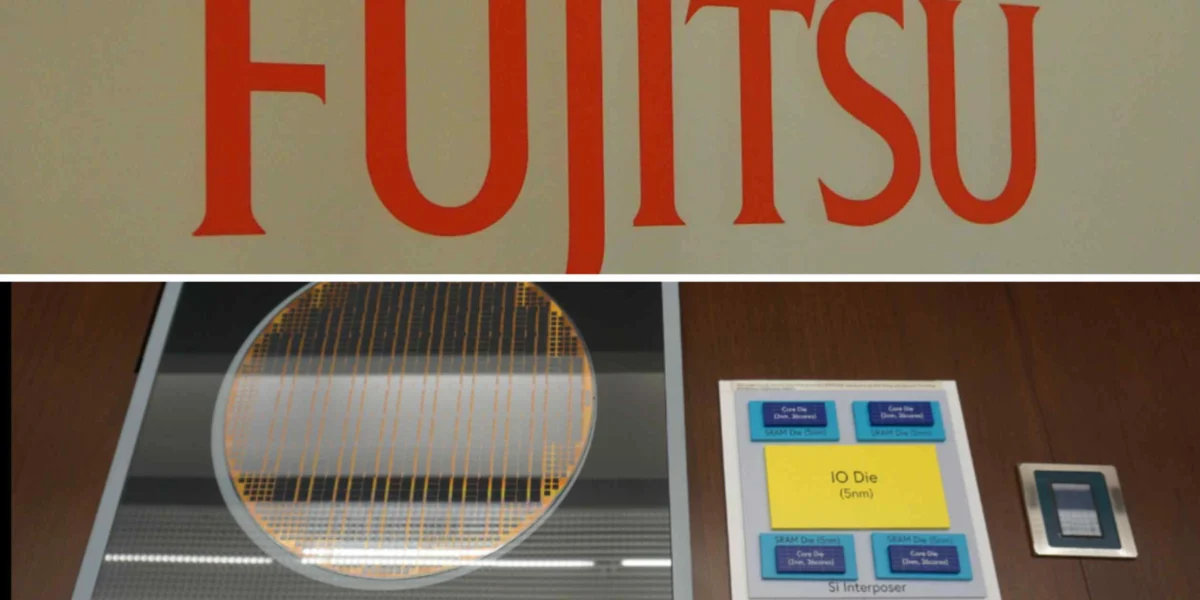
TOKYO – Fujitsu is poised to enter the burgeoning global market for artificial intelligence (AI) semiconductors, with plans to begin exporting its advanced AI chips to the United States and various Asian markets as early as next year. These processors leverage the cutting-edge technology originally developed for Japan’s flagship supercomputer, "Fugaku," signaling a strategic push by the Japanese technology giant to capitalize on the accelerating demand for specialized hardware crucial for AI inference.
Tapping into the AI Inference Boom
The move by Fujitsu comes at a pivotal moment in the semiconductor industry, which is experiencing an unprecedented surge in demand driven by the widespread adoption of AI across virtually every sector. While much of the current focus has been on AI training chips, the capacity to efficiently and rapidly perform AI inference – the process of using trained AI models to make predictions or decisions – is becoming equally critical. This demand is fueled by the proliferation of AI applications in areas such as autonomous driving, smart city infrastructure, advanced robotics, and personalized consumer services.

Fujitsu’s decision to commercialize its AI semiconductor technology, rooted in the innovations behind Fugaku, positions it to address this growing need. Fugaku, a joint development between Fujitsu and RIKEN, held the title of the world’s fastest supercomputer for a period, renowned for its power-efficiency and its advanced architecture. The semiconductor technology that underpinned its performance, particularly in handling complex computational tasks, is now being repurposed and refined for commercial AI inference applications. This includes chips designed to optimize the speed and energy efficiency of AI models running in real-world scenarios, a crucial factor for widespread deployment.
Background and Genesis of Fujitsu’s AI Semiconductor Ambitions
The development of Fujitsu’s AI semiconductors is intrinsically linked to the legacy of the Fugaku supercomputer. Launched in 2020, Fugaku was a monumental achievement in high-performance computing (HPC). Its architecture was designed to excel at a wide range of scientific simulations and data analyses, including those critical for drug discovery, climate modeling, and materials science. A key component of Fugaku’s success was its custom-designed CPU, the A64FX, which featured advanced vector processing capabilities and high memory bandwidth, essential for crunching massive datasets and executing complex algorithms at speed.
The underlying architectural principles and the specific optimizations made for the A64FX CPU have provided a robust foundation for Fujitsu’s subsequent AI semiconductor development. The company has been meticulously refining this technology, focusing on adapting it for the specific demands of AI inference. This involves tailoring the processing units to accelerate common AI operations such as matrix multiplication and convolution, which are fundamental to neural networks, while also emphasizing energy efficiency to enable deployment in diverse environments, from data centers to edge devices.

This strategic pivot from supercomputing to commercial AI chips represents a significant evolution for Fujitsu. Historically a diversified technology conglomerate with strengths in IT services, hardware, and telecommunications, the company has increasingly focused on leveraging its core technological competencies. The semiconductor business, particularly in high-value segments like AI, is seen as a key growth driver. By offering chips that are derived from proven, high-performance technology, Fujitsu aims to differentiate itself in a competitive market dominated by established players and emerging startups.
Strategic Market Entry and Target Audiences
The initial export plan targets the United States and Asia, two of the most dynamic and rapidly growing markets for AI technology. The U.S. is home to a vast ecosystem of AI research institutions, technology giants, and venture-backed startups, all of whom are actively seeking advanced computing solutions. Asia, with its burgeoning digital economies and significant investments in AI across countries like China, South Korea, and Singapore, presents another substantial opportunity.
Fujitsu’s AI semiconductors are particularly suited for applications requiring low-latency inference and high processing throughput with optimized power consumption. This could include:

- Data Centers: Enhancing the efficiency of cloud-based AI services, enabling faster responses for applications like natural language processing and image recognition.
- Edge Computing: Powering AI capabilities directly on devices at the edge of the network, such as in autonomous vehicles, industrial IoT devices, and smart cameras, where real-time processing is paramount and network bandwidth may be limited.
- Robotics and Automation: Enabling robots to perform complex tasks with greater autonomy and precision, by processing sensor data and making rapid decisions.
- Healthcare: Facilitating AI-powered diagnostics and personalized treatment recommendations by processing medical imaging and patient data efficiently.
The company’s strategy appears to be focused on offering a compelling value proposition that combines high performance with energy efficiency, a critical consideration for both operational costs and environmental sustainability.
Supporting Data and Market Context
The global AI semiconductor market is experiencing exponential growth. According to recent industry analyses, the market for AI chips is projected to reach hundreds of billions of dollars in the coming years. Demand for inference chips, in particular, is expected to outpace the growth of training chips due to the sheer volume of AI applications being deployed.
For instance, the market for AI inference chips alone was valued at approximately $20 billion in 2023 and is forecast to grow at a compound annual growth rate (CAGR) of over 30% through 2030. This expansion is driven by the increasing adoption of AI in edge devices, which require specialized processors for efficient on-device inference.

Fujitsu’s entry into this market comes after significant global investment in AI hardware. Companies like NVIDIA have dominated the training market with their GPUs, while Intel, AMD, and a host of specialized AI chip startups are also vying for market share in both training and inference. Fujitsu’s approach, leveraging its supercomputing-derived technology, could offer a unique alternative, particularly for applications that demand a specific balance of performance and power efficiency.
The global semiconductor industry has also seen significant geopolitical and economic shifts, with governments worldwide recognizing the strategic importance of domestic chip manufacturing and design. Japan, in particular, has been actively working to revitalize its semiconductor industry, with initiatives aimed at fostering innovation and attracting investment in chip design and production. Fujitsu’s move aligns with these national objectives, potentially positioning it as a key player in Japan’s renewed push in the global semiconductor landscape.
Potential Reactions and Industry Implications
While official statements from competitors or industry analysts directly commenting on Fujitsu’s specific export plans are yet to be widely disseminated, the broader implications for the AI semiconductor market are significant. Fujitsu’s entry could intensify competition, particularly in the inference chip segment. This increased competition is generally beneficial for end-users, potentially leading to more innovative products, lower prices, and a wider array of choices.

Industry analysts might view Fujitsu’s move as a strategic diversification and a smart leveraging of existing technological assets. The company’s deep experience in supercomputing and HPC provides a credible foundation for its AI semiconductor ambitions. Its established global presence, particularly in Asia, could facilitate a smoother market entry.
However, challenges remain. The AI semiconductor market is characterized by rapid technological evolution, and staying ahead of the curve requires continuous innovation and substantial R&D investment. Fujitsu will need to demonstrate that its inference chips can consistently meet the performance and efficiency benchmarks set by market leaders and emerging challengers. Furthermore, building a robust ecosystem of software tools and developer support will be crucial for widespread adoption.
Future Outlook and Strategic Considerations
The success of Fujitsu’s AI semiconductor exports will depend on several factors. Firstly, the performance and cost-effectiveness of its chips in real-world AI inference scenarios will be paramount. Benchmarking against existing solutions and demonstrating clear advantages will be essential for gaining traction. Secondly, building strong partnerships with key players in the AI ecosystem, including software developers, system integrators, and large enterprise clients, will be critical for market penetration.

The company’s long-term strategy may also involve further development of its AI chip technology, potentially exploring new architectures or specialized designs for specific AI workloads. The experience gained from exporting Fugaku-derived technology will undoubtedly inform future product roadmaps.
In conclusion, Fujitsu’s planned export of AI semiconductors, powered by technology from its renowned Fugaku supercomputer, represents a significant strategic move into a high-growth market. By targeting the burgeoning demand for AI inference capabilities in the U.S. and Asia, Fujitsu aims to leverage its technological heritage to establish a strong foothold in the global semiconductor industry. The coming years will be a critical period for the company as it navigates the competitive landscape and seeks to make its mark in the rapidly evolving world of artificial intelligence hardware.