Ena Muazin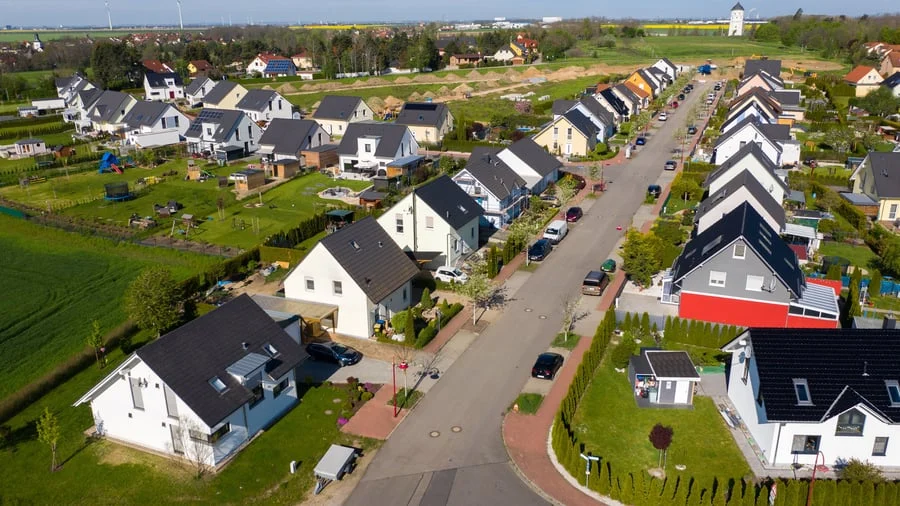
Düsseldorf – The German construction loan market is experiencing a significant shift, with interest rates for standard financing now consistently exceeding the four percent mark, a level not seen since the tail end of the low-interest-rate era. This rise, driven by escalating yields on long-term government bonds, marks a stark contrast to the sub-four percent rates available just months ago. According to FMH-Finanzberatung, a typical construction loan with a ten-year fixed interest rate now stands at an average of 4.29 percent. This figure surpasses the previous peak of 4.24 percent recorded in late October 2023 and is a substantial leap from the rates that began with a "three" in early July. This recalibration of borrowing costs is forcing potential homeowners and developers to re-evaluate their financial strategies.
The Driving Forces Behind Rising Construction Loan Rates
The upward trajectory of construction loan interest rates is intrinsically linked to broader trends in the capital markets, primarily the increasing yields on long-term government bonds. These yields, in turn, are influenced by a complex interplay of macroeconomic factors, including inflation expectations, central bank monetary policy, and geopolitical stability.
The recent surge in energy prices, for instance, has reignited concerns about persistent inflation. When inflation is expected to remain elevated, investors demand higher returns on their investments to compensate for the erosion of purchasing power. This increased demand for higher yields on government bonds directly translates into higher borrowing costs for governments issuing these bonds. Consequently, the benchmark rates that underpin mortgage and construction loan pricing are pushed upwards.
A Shifting Landscape: Expert Projections and Market Sentiment
Industry experts are advising prospective borrowers to brace for a sustained period of higher interest rates. Jörg Utecht, CEO of Interhyp, Germany’s largest construction finance intermediary, stated, "Buyers should prepare for the fact that the level will remain above the four percent mark for the time being." This sentiment is echoed by the broader financial sector, with a recent survey of banks conducted by Interhyp revealing a divided outlook for the immediate future.
The survey indicated that 50 percent of bankers anticipate further interest rate increases in the next one to two months, while the remaining 50 percent expect rates to stabilize at current levels. This divergence in opinion underscores the inherent uncertainty surrounding future economic developments. Looking towards the end of the year, the panel’s sentiment is evenly split, with approximately 33 percent predicting rising rates, 33 percent forecasting stability, and another 33 percent anticipating a decline.
"This disagreement highlights how much the future development depends on external factors such as inflation and geopolitical tensions," Interhyp noted. One anonymous panel participant offered further insight: "The increase in capital market interest rates should push construction financing rates a bit further up in the coming weeks. However, towards the end of the month, the realization should grow that the ECB will carry out at most one more rate hike, as inflation will not lead to too many second-round effects. This should cause long-term interest rates to ease again somewhat."

The Role of the European Central Bank (ECB)
While construction loan rates are not directly dictated by the European Central Bank’s (ECB) base rates, they are significantly influenced by the yields of German federal bonds (Bundesanleihen). These bond yields reflect the general interest rate environment in the capital markets. The ECB’s recent decision to raise its key interest rate to 2.5 percent is a direct response to persistent inflationary pressures.
Oliver Kohnen, managing director of the financing intermediary Baufi24, emphasized that the ECB still has work to do. "The current step is unlikely to be the last," he remarked. If inflationary pressures remain stubborn, the deposit rate could potentially rise towards three percent by 2027. This projection suggests that the initial hope of a swift dissipation of inflation following geopolitical events has not materialized as quickly as some had anticipated.
Implications for Homebuyers and Developers
The current climate of rising interest rates presents a challenging scenario for prospective homeowners and real estate developers. For homebuyers, elevated borrowing costs mean that the dream of homeownership becomes more expensive. A higher interest rate on a mortgage translates to larger monthly payments over the loan’s term, potentially reducing purchasing power or necessitating a larger down payment.
For instance, with current rates hovering around 4.3 percent for ten-year fixed-rate financing, borrowers are facing costs that are nearing historic highs not seen in approximately 15 years, according to Kohnen. This situation is particularly acute for those who financed their properties during the low-interest-rate period and are now approaching the end of their fixed-rate terms.
Real estate developers are also feeling the pinch. Increased financing costs can make new construction projects less viable, potentially leading to a slowdown in new housing supply. This, coupled with already high construction material costs and labor shortages, could exacerbate existing challenges in the housing market.
Francesco Fedele, CEO of BF.direkt, cautioned that financing costs are likely to continue their upward trend if inflation proves to be persistent. "For borrowers, it remains important to prepare for refinancing early and not to bet on interest rates falling significantly again in the short term," he advised property owners.
Strategic Responses and Risk Mitigation
In this evolving financial landscape, experts are urging a proactive and strategic approach to managing borrowing costs. Marco Schöfl of Qualitypool recommends: "Don’t speculate on the perfect moment, but secure your own financing against various scenarios." This advice emphasizes the importance of hedging against potential future rate increases.

For those planning subsequent financing (Anschlussfinanzierung), securing current conditions promptly through instruments like a forward loan (Forward-Darlehen) is a prudent strategy. Longer fixed-interest periods offer additional planning security in an environment of potential volatility.
The Broader Economic Context: Inflation, Bond Yields, and Monetary Policy
The intricate relationship between inflation, central bank policy, and bond yields forms the bedrock of the current interest rate environment. The ECB’s primary mandate is price stability, and its tools are primarily aimed at controlling inflation. When inflation rises above the ECB’s target (typically around 2 percent for the Eurozone), the central bank resorts to tightening monetary policy, which usually involves raising key interest rates.
This tightening cycle has a ripple effect across the financial system. Higher central bank rates make it more expensive for commercial banks to borrow money, and this increased cost is then passed on to consumers and businesses in the form of higher loan rates. Simultaneously, investors in the bond market anticipate future interest rate hikes and demand higher yields on newly issued bonds to compensate for the risk of holding lower-yielding older bonds. This increased demand for higher yields on government bonds directly impacts the pricing of construction loans.
The influence of energy prices on inflation cannot be overstated. Historically, sharp increases in energy costs have often been a precursor to broader inflationary pressures, as energy is a fundamental input for many goods and services. The ongoing geopolitical tensions, including the conflict in Ukraine, have contributed to supply chain disruptions and energy price volatility, further fueling inflation concerns.
Historical Perspective: The End of an Era
The period of historically low interest rates, which characterized much of the past decade, was a unique economic phenomenon driven by a confluence of factors, including the aftermath of the 2008 financial crisis, quantitative easing programs by central banks, and subdued global inflation. This era made borrowing exceptionally cheap, fueling demand for real estate and contributing to asset price inflation.
The current shift marks a return to more normalized interest rate levels, albeit with a rapid ascent that is catching many off guard. The era of "cheap money" appears to be over, at least for the foreseeable future. This transition necessitates a fundamental re-evaluation of financial planning for individuals, businesses, and governments alike.
The Impact on the Real Estate Market
The repercussions of rising construction loan rates extend deeply into the real estate market. For existing homeowners, particularly those with adjustable-rate mortgages or those nearing the end of their fixed-rate terms, the prospect of higher monthly payments can strain household budgets. This can lead to reduced consumer spending in other areas, potentially impacting the broader economy.

For the real estate sector itself, higher financing costs can dampen transaction volumes. Potential buyers may postpone purchases, waiting for interest rates to stabilize or decline, or they may be forced to seek less expensive properties. This can lead to a cooling of the housing market, with potential implications for property values.
Torsten Hollstein, Managing Director of CR Investment Management, highlighted this interconnectedness: "The interest rate hike is exacerbating the already tense situation in the real estate industry. Higher financing costs are meeting significantly lower property values. This reduces the possible proportion of debt financing, and additional equity is required. Especially with upcoming refinancing, negotiations between owners and capital providers will become even more challenging."
Hollstein further stressed the importance of a long-term perspective: "Those who are betting on interest rates falling significantly again in a few quarters are taking a considerable risk." This sentiment suggests that the market is adjusting to a new normal where higher borrowing costs are likely to be a sustained reality, rather than a temporary blip.
Navigating the Future: A Call for Prudence
The current economic climate demands a cautious and informed approach to financial decision-making. For individuals considering a home purchase or refinancing an existing mortgage, understanding the current interest rate environment and its underlying drivers is paramount. Seeking advice from qualified financial intermediaries, exploring various loan products, and carefully considering the long-term implications of different interest rate scenarios are crucial steps.
The shift towards higher interest rates is not merely a technical adjustment in the financial markets; it represents a fundamental recalibration of the cost of capital. This transition, while challenging, also presents an opportunity for a more sustainable and balanced economic environment, where financial decisions are based on sound economic principles rather than the allure of historically low borrowing costs. The coming months will be critical in observing how the market adapts to this new reality and what further measures central banks and governments may implement to navigate the ongoing economic landscape.