Ena Muazin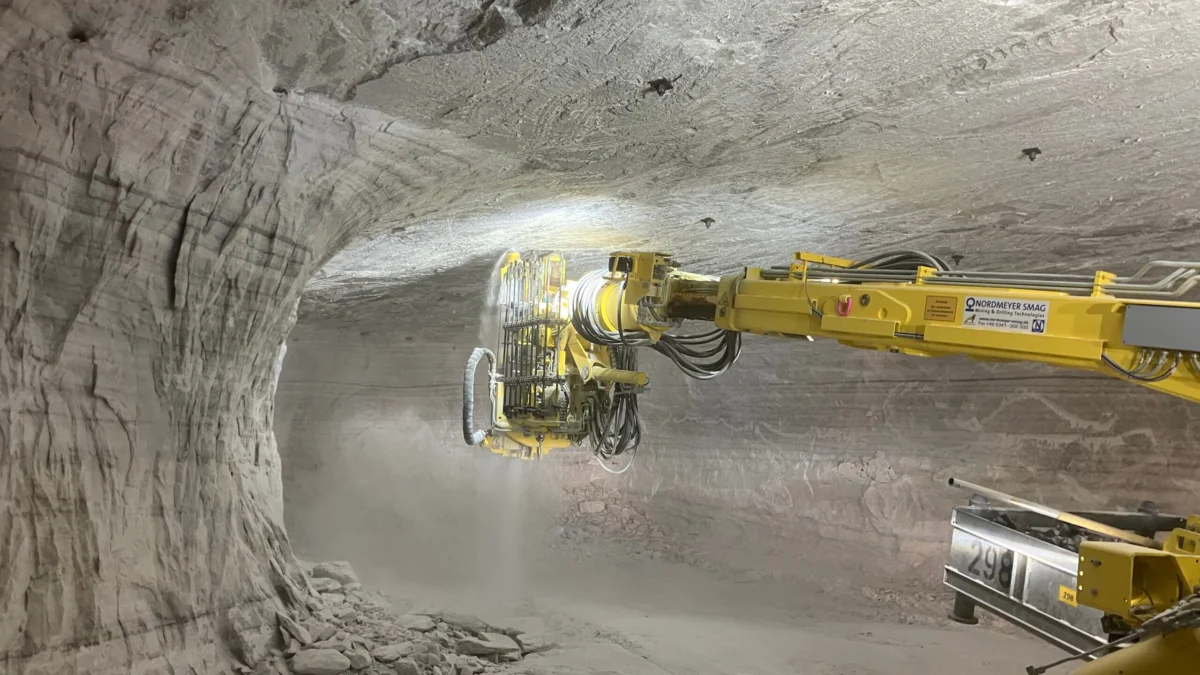
Germany’s strategic ambition to reduce its reliance on foreign powers for critical raw materials, particularly from nations like China, appears to be encountering an unexpected hurdle. A proposed law spearheaded by the Federal Ministry for the Environment, Nature Conservation, and Nuclear Safety (BMU) could significantly complicate the government’s own goal of bolstering domestic resource production. The legislation aims to elevate the importance of nature conservation interests, a move that has sent alarm bells through the raw materials industry. Companies warn that this could jeopardize not only new extraction projects but also the limited number of mining and processing sites currently operating within Germany.
At the heart of the controversy is the proposed "Law to Strengthen Natural Infrastructure" (NatInfG), which seeks to designate approximately five percent of federal land with an "overriding public interest" for nature conservation. Furthermore, areas for nature protection, habitat connectivity, and ecosystem restoration could potentially encompass up to 15 percent of the country’s total land area. While the stated intention is to enhance Germany’s ecological resilience and biodiversity, the industry perceives this as a significant impediment to their operations.
The German raw materials sector, which includes vital industries like potash mining, is already grappling with stringent environmental regulations. However, the NatInfG introduces a new dimension by proposing to grant nature conservation interests a "prevailing public interest" status. This shift, according to industry representatives, could fundamentally alter the existing balance in permitting processes. Currently, environmental protection and resource extraction are weighed against each other on a case-by-case basis, allowing for nuanced decision-making. The proposed legislation, however, is feared to grant conservation concerns a legally superior weight, making it considerably more challenging to secure necessary permits for expansion or new operations.
A Critical Juncture for German Resource Security

Germany holds a unique position in the global market for certain raw materials. For instance, in the production of potash salt, essential for fertilizers, Germany ranks among the top five global producers. While Canada and Russia lead the international market, many Western nations rely on Germany as a stable and high-standard supplier. The potential implications of the NatInfG are therefore far-reaching, threatening to undermine Germany’s role as a reliable provider of these crucial resources.
The specific wording of the legislation, particularly the concept of "prevailing public interest," is a major point of contention. Industry leaders argue that this phrasing moves beyond a balanced consideration of competing interests and establishes a hierarchy that disadvantages resource extraction. This could have a cascading effect, jeopardizing the viability of existing mining sites and discouraging investment in future projects, thereby hindering the government’s stated objective of increasing domestic raw material supply.
The Potash Dilemma: A Case Study
Potash extraction serves as a prime example of the potential impact. Germany boasts significant potash reserves and has a long-standing tradition of mining this vital commodity. The Verband Kali- und Salzindustrie (VKS), the association representing the potash and salt industry, has voiced strong concerns. Gerrit Göddecke, the VKS’s CEO, stated that the proposed law could make it "significantly harder for raw material companies to obtain permits, for example, for necessary expansions."
He further elaborated on the inherent limitations of resource extraction: "A raw material deposit cannot be moved spatially." This emphasizes the immutability of geological deposits, meaning that any land designated for stringent conservation under the new law could effectively render valuable mineral reserves inaccessible. Göddecke pointed out that Germany already adheres to high environmental standards in its mining operations. The fear is that the NatInfG, without addressing specific new EU directives that might necessitate such measures, could lead to the "long-term demise of German raw material extraction." While five percent of federal land might seem a modest figure, its strategic application to areas with known mineral deposits could prove devastating for the industry.

Industry Voices and Expert Concerns
Christian Meyer, CEO of K+S, a prominent German potash producer, echoed these sentiments. He highlighted that the industry already operates under stringent environmental regulations and questioned the necessity of new legislation that could impede domestic production. Meyer suggested that the proposed law could have an unintended negative consequence: if expansion projects are repeatedly thwarted, it could lead to the cessation of domestic raw material extraction altogether. This, he argued, would be "counterproductive for environmental protection," as German mining operations are conducted under some of the world’s highest environmental standards.
The concerns are not limited to industry representatives. The Bundesanstalt für Geowissenschaften und Rohstoffe (BGR), the Federal Institute for Geosciences and Natural Resources, a federal agency, has also expressed significant reservations. In a warning to the government, the BGR stated that the implementation of the law would lead to a "significant endangerment of both raw material security and raw material extraction in Germany." The agency anticipates "extensive impacts on domestic raw material extraction" and concludes that the draft law is "not in conformity with the goal agreed upon in the coalition agreement to strengthen domestic raw material supply."
The BGR’s analysis further notes that while exemptions for critical and strategic raw materials are being discussed, domestically mined resources like potash salt are not currently classified as critical. This leaves them potentially exposed to the full impact of the proposed conservation measures.
A Contradictory Policy Landscape?

The proposed NatInfG appears to stand in contrast to other government initiatives aimed at bolstering infrastructure and domestic production. The legislation is being developed as a counter-proposal to the "Infrastructure Future Act," which is slated for approval by the governing coalition in June. The Infrastructure Future Act aims to accelerate the expansion and renovation of roads, bridges, and railways by granting these projects "overriding public interest" status. This juxtaposition highlights a potential policy conflict, where efforts to fast-track infrastructure development could be inadvertently hindered by measures that restrict access to essential raw materials needed for those very projects.
The BMU has not yet responded to specific inquiries regarding the potential consequences of the NatInfG on the raw materials sector. However, the draft law’s stated purpose is to "contribute to … facilitating and accelerating the implementation of compensation measures in the area of nature conservation impact regulation, particularly for important structural infrastructure projects." The ministry’s explanation for the economic burden, stating that "information on the fulfillment effort for the economy will be provided later," suggests a lack of concrete assessment of the potential repercussions for the raw materials industry at this stage.
Broader Implications and Future Outlook
The debate surrounding the NatInfG underscores a fundamental challenge facing many industrialized nations: balancing environmental protection with the imperative of securing essential resources for economic stability and strategic independence. Germany’s stated goal of reducing foreign dependency is a complex undertaking that requires not only increased domestic extraction but also investment in advanced processing and recycling technologies.
The current legislative proposal, while potentially beneficial for ecological goals, risks undermining the very foundation of Germany’s domestic resource capabilities. The industry’s warnings, supported by a federal geological agency, suggest that the proposed measures could have far-reaching negative consequences, not only for specific sectors like potash mining but also for Germany’s broader ambition of achieving greater resource sovereignty.

As the legislative process unfolds, critical questions remain about the precise impact of the "prevailing public interest" designation and whether adequate provisions will be made to ensure that Germany’s domestic raw material sector can continue to operate and expand. The outcome of this legislative push will be a significant indicator of Germany’s ability to navigate the complex interplay between environmental stewardship and industrial necessity in the 21st century. The industry is watching closely, hoping for a legislative framework that supports both a healthy environment and a robust, independent supply of critical raw materials.