Lina Wu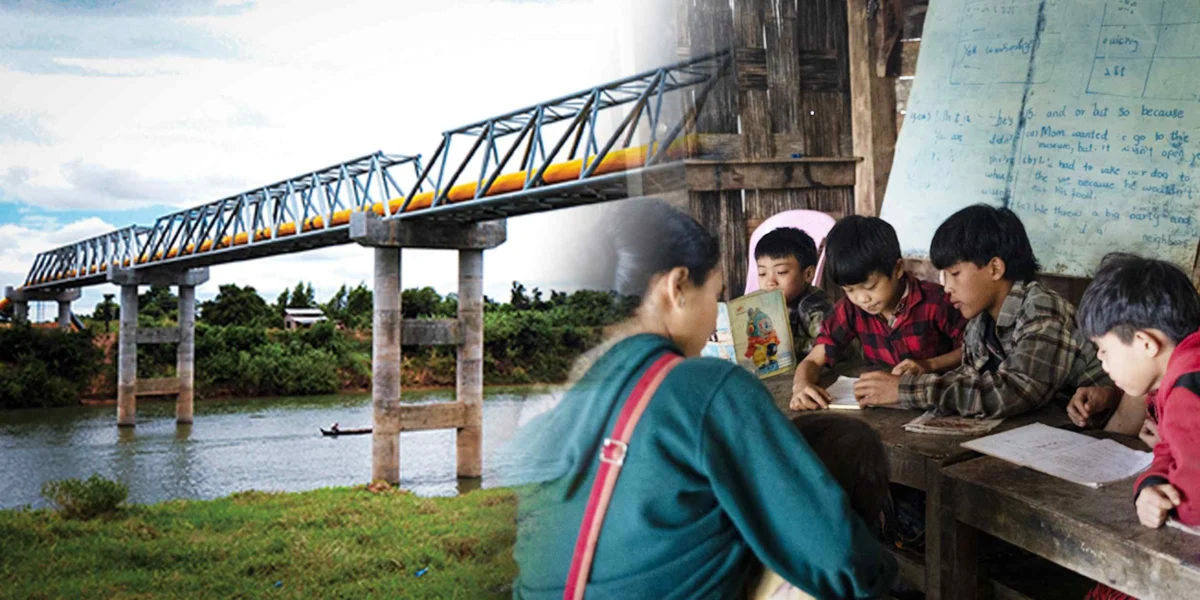
NGAPE, Myanmar — In the Rakhine mountains of western Myanmar, a lonely highway lies under fog. Barely any traffic passes. This desolate scene on a crucial transit route underscores the complex geopolitical currents and the devastating human cost unfolding in Myanmar, a nation grappling with internal conflict that increasingly intersects with the strategic interests of its powerful neighbor, China. The vital China-Myanmar oil and gas pipeline, designed to connect China’s Yunnan province to Myanmar’s Indian Ocean port of Kyaukphyu, stands as a stark symbol of this intertwined reality, juxtaposed against the plight of children displaced by fighting in Rakhine state and Magway Region, seen here studying at a school in a camp for internally displaced people.
The escalating conflict in Myanmar, particularly in the western Rakhine state and other regions like Magway, has thrown a harsh spotlight on the fragility of the nation’s peace and the implications for its international partnerships. The fighting, which has intensified in recent years, not only displaces thousands and creates a humanitarian crisis but also directly impacts infrastructure projects of significant strategic importance, such as the China-Myanmar oil and gas pipeline. This infrastructure, a cornerstone of China’s Belt and Road Initiative (BRI), aims to diversify China’s energy import routes and reduce its reliance on the Strait of Malacca. However, ongoing instability in Myanmar poses a considerable risk to its operational security and China’s long-term energy security objectives.
A History of Strategic Partnership and Growing Tensions
The relationship between China and Myanmar has a long and complex history, marked by periods of close alliance and pragmatic cooperation. China has historically been a significant economic and political partner for Myanmar, particularly during periods of international isolation for the latter. The development of the China-Myanmar oil and gas pipeline, a joint venture involving China National Petroleum Corporation (CNPC) and Myanmar Oil and Gas Enterprise (MOGE), exemplifies this strategic alignment.
The pipeline project, which began construction in 2010 and became fully operational in 2017, was heralded as a major achievement for both nations. The oil pipeline, with a capacity of 22 million tonnes per year, and the gas pipeline, with a capacity of 12 billion cubic meters per year, were designed to transport crude oil and natural gas from the Bay of Bengal to Kunming, the capital of China’s Yunnan province. This route bypasses the Malacca Strait, a vital but strategically vulnerable chokepoint for global shipping and a primary transit route for China’s energy imports. The Kyaukphyu Special Economic Zone (SEZ), encompassing deep-sea ports and an industrial park, was envisioned as a gateway for trade and investment, further solidifying Myanmar’s role in China’s economic outreach.
However, the geopolitical landscape in Myanmar has become increasingly volatile. The 2021 military coup, which overthrew the democratically elected government of Aung San Suu Kyi, plunged the country into widespread civil unrest and armed resistance. Ethnic armed organizations, long engaged in their own struggles for autonomy, have found common cause with newly formed People’s Defence Forces (PDFs) in opposing the ruling junta. This has led to a protracted and bloody civil war, with Rakhine state, historically a site of ethnic tensions and intermittent conflict, becoming a significant flashpoint once again.
The Human Cost of Conflict in Rakhine and Beyond
The imagery of displaced children studying in a camp for internally displaced people (IDPs) serves as a poignant reminder of the severe humanitarian consequences of the ongoing conflict. Rakhine state, in particular, has a history of ethnic cleansing and displacement, most notably the persecution of the Rohingya minority. While the current fighting involves various ethnic armed groups and the Myanmar military (Tatmadaw), the impact on civilian populations remains devastating.
According to reports from the United Nations and various humanitarian organizations, millions of people have been displaced internally across Myanmar since the 2021 coup. These IDPs often live in precarious conditions, lacking adequate shelter, food, water, and healthcare. The conflict disrupts essential services, making it challenging for humanitarian aid to reach those most in need. The plight of children, in particular, is a grave concern, with many facing interrupted education, trauma, and increased vulnerability to disease and exploitation.
The Magway Region, though not as frequently highlighted in international media as Rakhine, has also become a theater of intense fighting. Local resistance forces have engaged the Tatmadaw in this strategically important region, leading to significant displacement and destruction of civilian infrastructure. The interconnectedness of these conflicts, even if localized, contributes to a broader pattern of instability that has far-reaching implications.
Strategic Implications for China and Regional Security
The ongoing conflict in Myanmar presents a complex challenge for China. On one hand, Beijing has maintained its diplomatic ties with the ruling junta, often advocating for stability and non-interference in internal affairs. China’s investments in infrastructure, including the Kyaukphyu pipelines, are substantial, and any disruption to these projects would have significant economic consequences. The security of these vital energy corridors is paramount for China’s energy diversification strategy.
The potential for the conflict to spill over or destabilize the broader region is also a concern for Beijing. China shares a long border with Myanmar and has a vested interest in maintaining peace and stability along its frontiers. The rise of various armed groups, some with ideological leanings that could be perceived as anti-Chinese, adds another layer of complexity to China’s calculus.
Furthermore, the ongoing instability in Myanmar could embolden other regional actors to assert their influence, potentially challenging China’s dominance in the region. The United States and other Western nations have condemned the military coup and imposed sanctions on the junta, while maintaining limited engagement with various opposition groups. This geopolitical competition adds to the intricate web of interests at play in Myanmar.
Analyzing the Interplay of Conflict and Infrastructure
The juxtaposition of the operational oil and gas pipelines with the images of displaced children is not merely symbolic; it highlights a fundamental tension. The infrastructure projects, designed to facilitate economic growth and strategic connectivity, are being developed in a country ravaged by internal conflict. This raises critical questions about the sustainability and security of such ventures in a volatile environment.
Supporting Data:
- Pipeline Capacity: The China-Myanmar oil pipeline has a capacity of 22 million tonnes per year, and the gas pipeline has a capacity of 12 billion cubic meters per year.
- Investment: The total investment in the Kyaukphyu Special Economic Zone and associated pipelines is estimated to be in the billions of dollars, with a significant portion coming from Chinese state-owned enterprises.
- Displacement Figures: As of late 2023/early 2024, estimates from humanitarian agencies suggest that over 2.5 million people have been displaced internally in Myanmar since the 2021 coup.
- Humanitarian Needs: The UN and its partners estimate that over 18 million people in Myanmar require humanitarian assistance, a substantial increase since the coup.
Timeline of Key Developments:
- 2010: Construction of the China-Myanmar oil and gas pipelines begins.
- 2017: Pipelines become fully operational, with the first oil shipment arriving in China.
- February 1, 2021: Myanmar’s military seizes power in a coup, detaining elected leaders.
- Post-2021: Widespread protests and armed resistance emerge across the country, leading to escalating conflict.
- Ongoing: Increased fighting in Rakhine and other regions, causing significant civilian displacement and humanitarian crises. Reports of disruptions or heightened security measures along the pipeline routes emerge intermittently.
Official Responses and Diplomatic Maneuvers
China has consistently called for de-escalation and dialogue in Myanmar, while emphasizing the need to protect its economic interests and investments. Beijing has provided humanitarian assistance and engaged in diplomatic efforts, often behind the scenes, to mediate between various factions. However, its approach has been criticized by some for not applying sufficient pressure on the military junta to restore democracy and address human rights abuses.
The National Unity Government (NUG), an umbrella body of elected representatives and ethnic groups opposing the junta, has expressed concerns about the implications of Chinese infrastructure projects for Myanmar’s sovereignty and has called for greater transparency and accountability in these ventures. Various ethnic armed organizations, while engaged in fighting the junta, also have their own complex relationships with China and its projects.
Myanmar’s military junta, on its part, has reiterated its commitment to national development and has sought to assure foreign investors of the security of their investments. However, the escalating conflict and the widespread international condemnation of its actions undermine these assurances.
Broader Impact and Future Implications
The conflict in Myanmar and its intersection with China’s strategic ambitions have far-reaching implications for regional security and the global energy landscape. The continued instability could lead to:
- Disruption of Energy Supplies: Any prolonged disruption to the China-Myanmar pipelines could impact China’s energy security and potentially lead to price volatility in global energy markets.
- Increased Regional Instability: The conflict could spill over into neighboring countries, exacerbating existing tensions and creating new security challenges.
- Humanitarian Catastrophe: The ongoing displacement and suffering of the Myanmar population represent a significant humanitarian crisis that requires sustained international attention and assistance.
- Shifting Geopolitical Alliances: The complex interplay of interests between China, Myanmar’s neighbors, and global powers could lead to a realignment of regional alliances and increased geopolitical competition.
The lonely highway under fog in the Rakhine mountains serves as a potent metaphor for the current situation in Myanmar: a nation at a crossroads, where the promise of economic development and strategic connectivity is overshadowed by the grim realities of conflict, displacement, and geopolitical maneuvering. The future of Myanmar, and indeed the stability of the broader Indo-Pacific region, hinges on the ability to navigate these complex challenges and find a path towards lasting peace and genuine reconciliation. The children studying in makeshift camps represent the generation that will bear the brunt of these decisions, and their future depends on a resolution that prioritizes human well-being over strategic expediency.