Clara Shinta
A significant cache of Bitcoin, mined in the nascent days of the cryptocurrency’s existence in 2010, recently stirred from its long slumber, triggering a flurry of speculation regarding its potential ties to Bitcoin’s enigmatic creator, Satoshi Nakamoto. However, on-chain analytics swiftly moved to temper these rumors, asserting no direct connection to Nakamoto himself. The movement involved 600 Bitcoin (BTC), valued at approximately $48 million at the time of the transaction, originating from a dozen addresses that had remained inactive for over 16 years.
The Unveiling of Dormant Wealth: A Deep Dive into the Transaction
On a recent Saturday, the cryptocurrency world witnessed the awakening of a substantial block of early Bitcoin. A total of 600 BTC, spread across 12 distinct addresses, was moved after remaining dormant since March 2010. This long period of inactivity, spanning more than a decade and a half, immediately captured the attention of the blockchain community and on-chain analysts. At current market valuations, this cache represents a formidable sum, underscoring the immense appreciation of Bitcoin since its inception. The collective value of these coins, approximately $48 million, highlights the profound wealth generation capabilities of early adoption in the cryptocurrency space.
The transaction was first flagged by platforms specializing in blockchain forensics, such as Cointelegraph’s internal data review and subsequent reports from prominent tracking services. These services meticulously monitor the blockchain for unusual or historically significant movements, particularly those involving "whale" wallets or addresses associated with early mining activities. The sheer duration of the dormancy — over 16 years — is what primarily fueled the initial burst of speculation. Addresses from Bitcoin’s earliest years, especially those from 2010 when Satoshi Nakamoto was still actively involved in the project’s development and community, are often scrutinized for any sign of activity that could potentially shed light on the elusive founder.
Satoshi Speculation and Its Swift Refutation
The immediate association with Satoshi Nakamoto stemmed from the timing of the Bitcoin’s origin. March 2010 falls squarely within the period when Nakamoto was not only mining Bitcoin but also actively communicating with early developers and shaping the foundational aspects of the network. Any movement from addresses dating back to this "Satoshi Era" invariably sparks intense curiosity and conjecture. The anonymous nature of Nakamoto, coupled with the immense value of their estimated 1 million BTC holdings, makes any activity from early wallets a potential clue in one of the greatest technological mysteries of our time.
However, the initial fervor was quickly tempered by detailed research from blockchain transaction tracking platform Whale Alert. After conducting a thorough investigation into the origins of the 600 BTC, Whale Alert definitively stated that the coins could not be linked to Satoshi Nakamoto. A spokesperson for Whale Alert clarified to Cointelegraph, "None of the blocks can be connected to Satoshi based on our research." This statement served to deflate the burgeoning speculation, redirecting the narrative from a potential Satoshi sighting to a more general, albeit still significant, early miner awakening. The distinction is crucial: while the coins were indeed mined during the period of Satoshi’s activity, this does not automatically imply ownership by the creator themselves.
On-Chain Forensics: Tracing the Origins of the 2010 Bitcoins
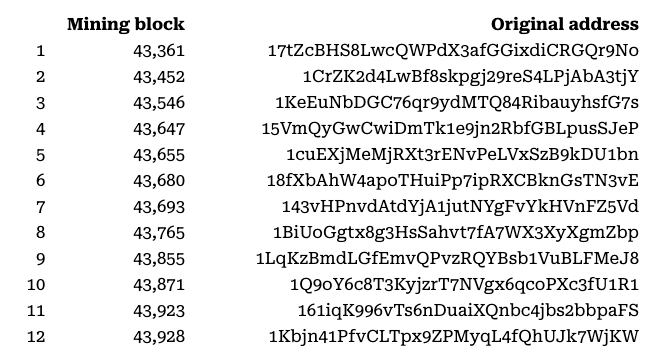
Whale Alert’s research delved into the specifics of the 12 mining block rewards that collectively comprised the 600 BTC. Their analysis confirmed that all 12 rewards originated from Bitcoin blocks mined in March 2010. During this nascent phase of Bitcoin’s existence, the block subsidy – the reward given to a miner for successfully adding a new block to the blockchain – was a generous 50 BTC. This initial reward structure allowed early miners to accumulate significant quantities of Bitcoin with relatively modest computational power compared to today’s highly competitive mining landscape.
The evolution of Bitcoin’s block subsidy is a cornerstone of its monetary policy, designed to introduce new coins into circulation at a progressively slower rate. This process, known as "halving," occurs approximately every four years, or every 210,000 blocks. Since 2010, the block subsidy has been halved four times. The first halving occurred in November 2012, reducing the reward from 50 BTC to 25 BTC. Subsequent halvings in July 2016 (to 12.5 BTC), May 2020 (to 6.25 BTC), and most recently in April 2024 (to 3.125 BTC) have dramatically decreased the per-block reward. This historical context underscores the sheer volume of Bitcoin that early miners, like the owner of these 12 addresses, were able to accumulate. The 50 BTC per block reward of 2010 contrasts sharply with the current 3.125 BTC, illustrating the exponential increase in mining difficulty and the scarcity model embedded within Bitcoin’s protocol.

Whale Alert’s findings expanded upon earlier analyses, including an initial report on X (formerly Twitter) where they identified seven of the rewards as originating from blocks they had previously determined were not mined by Nakamoto. Similarly, Lookonchain, another prominent on-chain analytics platform, had initially identified seven miner wallets that moved 350 BTC after 16.5 years of inactivity, also noting their origins in March 2010. The consistency across multiple analytic platforms reinforces the accuracy of the non-Satoshi attribution for these specific coins.
Intriguingly, Whale Alert also observed a specific pattern in the recent movements: one of the 12 rewards was moved several blocks prior to the others. This behavior is often consistent with a "test transaction," where a small amount is sent first to confirm the wallet’s functionality and the correctness of the destination address before larger, subsequent transfers are initiated. Such a meticulous approach suggests a sophisticated and cautious owner, aware of the significant value being handled.
The "Satoshi Era" vs. Satoshi’s Holdings: Understanding the Nuance
The distinction between Bitcoin mined during the "Satoshi Era" and Bitcoin directly owned by Satoshi Nakamoto is paramount in discussions surrounding early coin movements. The Satoshi Era refers to the period, roughly from 2009 to late 2010, when Bitcoin’s pseudonymous creator was actively involved in its development, mining, and communication with the early community. During this time, numerous individuals and groups were mining Bitcoin, particularly in 2010 when the network was still highly accessible and mining difficulty was exceptionally low.
Satoshi Nakamoto is widely believed to have mined a significant portion of the early blocks, potentially accumulating around 1 million BTC. However, their mining pattern, often referred to as the "Patoshi pattern," is a subject of extensive study by cryptographers and on-chain analysts. This pattern involves specific characteristics in the nonce values of the blocks mined by Satoshi, which can be used to identify (or rule out) their involvement in specific blocks. Crucially, Satoshi also exhibited distinct spending habits, or rather, a lack of spending. The vast majority of coins attributed to Satoshi’s mining efforts have never been moved, leading to the common belief that these coins represent a unique and identifiable set of dormant wealth.
When early coins move, on-chain analysts examine several factors to determine a potential Satoshi link:
- Mining Pattern: Does the block’s metadata match the known Patoshi pattern?
- Spending History: Have coins from this address ever moved before, or is this the first movement after extreme dormancy? Satoshi’s coins are expected to be completely untouched.
- Coinbase Transactions: Satoshi is known to have spent very few of their coinbase rewards directly, often moving them within the same block, or not at all.
- Associated Addresses: Are there any other known Satoshi-linked addresses connected to the transaction?
In the case of the 600 BTC, Whale Alert’s research, by stating "None of the blocks can be connected to Satoshi based on our research," indicates that these specific block rewards did not exhibit the characteristics typically associated with Nakamoto’s mining activities. This forensic approach, leveraging the immutable ledger of the blockchain, allows the community to differentiate between historically significant early coins and those directly attributable to Bitcoin’s creator.
A Historical Context: Bitcoin in 2010
To truly appreciate the significance of these 2010-mined Bitcoins, it’s essential to rewind to the nascent stages of the cryptocurrency’s existence. In March 2010, Bitcoin was a highly niche, experimental technology known only to a small circle of cypherpunks, cryptographers, and tech enthusiasts. Its market value was practically non-existent, often traded for fractions of a cent on obscure forums or gifted between developers. The first recorded real-world transaction, the purchase of two pizzas for 10,000 BTC, would not occur until May 2010.
Mining Bitcoin in 2010 required minimal computational power, often achievable with standard desktop CPUs. The difficulty adjustment algorithm was still in its early phases, and competition was virtually non-existent. Early adopters were motivated more by ideological principles – a belief in decentralized digital currency – than by financial gain. These individuals, who dedicated their computers to securing the network and collecting block rewards, were pioneers, laying the groundwork for what would become a global financial phenomenon. The owner of these 600 BTC was one such visionary, or perhaps simply an early experimenter who stumbled upon a fortune.
Satoshi Nakamoto’s involvement was central during this period. After releasing the Bitcoin whitepaper in October 2008 and launching the network in January 2009, Satoshi remained actively engaged in development, bug fixes, and discussions on forums like Bitcointalk. They communicated frequently with early developers like Hal Finney and Gavin Andresen, guiding the project’s initial trajectory. However, Satoshi’s involvement began to wane towards the end of 2010, with their last known communication dating to April 2011. The movement of these 2010 coins, therefore, represents a tangible link to a pivotal, formative period in Bitcoin’s history, a time when its future was far from certain.
The Mystique of Early Bitcoin Movements
Movements of long-dormant Bitcoin, particularly those from the early years, consistently generate significant attention within the cryptocurrency community and mainstream media. This mystique stems from several factors:
- Scarcity and Historical Value: These coins are finite, irreplaceable artifacts of Bitcoin’s genesis. Their movement is a rare event, a glimpse into the holdings of the network’s earliest participants.
- Anonymity: The identity of early miners, including Satoshi, remains largely unknown. Each movement from a dormant early address presents a fleeting opportunity for a potential revelation or at least a deeper understanding of who held significant amounts of Bitcoin in its infancy.
- Financial Cinderella Stories: The owners of these coins are often sitting on immense, life-changing wealth. The decision to move or sell after such long dormancy prompts questions about their motivations, circumstances, and whether they are finally cashing out on a generational fortune.
- Security and Custody: The successful movement of coins after 16 years also speaks to the remarkable feat of securing private keys over such an extended period, protecting them from loss, theft, or technological obsolescence.
Past instances of dormant Bitcoin moving have similarly ignited speculation. In 2020, a 2009-mined block reward of 50 BTC moved, leading to intense debate about its possible Satoshi connection before analysts ultimately concluded it was not from Nakamoto’s personal stash. These events serve as periodic reminders of the vast, untouched wealth held by Bitcoin’s earliest adopters and the enduring fascination with the network’s origins.
Implications and Broader Market Reactions
While the movement of 600 BTC is significant in monetary terms, its direct impact on the broader Bitcoin market is generally considered minimal. The cryptocurrency market routinely handles far larger daily trading volumes, and $48 million, while substantial, is unlikely to cause a noticeable price fluctuation on its own. However, the news of such a movement can have a psychological effect, often interpreted in several ways:
- Potential Selling Pressure: The most common immediate assumption is that the owner intends to sell the coins, which could contribute to selling pressure if executed on an exchange. However, the coins could also be moved for consolidation, transfer to a custodial service, or for other strategic reasons not involving immediate liquidation.
- Security Validation: The successful movement after 16 years reinforces the robustness of Bitcoin’s protocol and the ability of long-term holders to maintain access to their funds, assuming they have properly secured their private keys.
- Renewed Interest in Early History: Such events invariably spark renewed discussions about Bitcoin’s early days, its founding principles, and the incredible journey it has undertaken.
The role of on-chain analytics platforms like Whale Alert and Lookonchain in these scenarios is indispensable. They act as the public’s eyes on the blockchain, providing transparency and crucial context that helps to quickly verify or debunk rumors. Their ability to trace transactions, identify block origins, and apply historical data allows for rapid, fact-based analysis, preventing misinformation from gaining traction and providing clarity to the community. This continuous monitoring reinforces the transparent nature of public blockchains, where every transaction, no matter how old, leaves an immutable record.
The Enduring Legacy of Satoshi’s Anonymity
The latest movement of 2010 Bitcoin, despite its confirmed dissociation from Satoshi Nakamoto, underscores the enduring legacy of Bitcoin’s anonymous creator. The mystique surrounding Satoshi’s identity, their sudden disappearance, and the vast, untouched fortune they are believed to hold, continues to captivate the imagination of the crypto world and beyond. Every whisper of activity from an early address, every transaction from a long-dormant wallet, reignites the hope or fear that Satoshi has returned or is making a move.
This ongoing fascination is not merely about identifying a person; it’s about understanding the foundational narrative of Bitcoin. Satoshi Nakamoto represents the purest form of decentralized vision, the creator who gifted the world a revolutionary technology and then stepped away, allowing it to flourish autonomously. The unspent Satoshi coins are a symbol of this original ethos, a constant reminder of Bitcoin’s origins and the potential for a truly decentralized financial future. While the recent 600 BTC movement was not a direct message from Satoshi, it serves as a powerful reminder of the deep history embedded within the Bitcoin blockchain and the vigilant community that continues to watch its every heartbeat.
In conclusion, the awakening of 600 BTC from 2010-mined addresses after over 16 years of dormancy was a significant on-chain event, capturing the attention of the cryptocurrency community. While initial speculation regarding a link to Satoshi Nakamoto was swift, comprehensive analysis by platforms like Whale Alert effectively debunked these claims. The incident highlights the extraordinary appreciation of early Bitcoin holdings, the sophisticated capabilities of on-chain forensics, and the enduring fascination with Bitcoin’s genesis era and its anonymous founder. As Bitcoin continues its journey, such movements from its earliest days will undoubtedly remain a subject of keen observation and historical significance.