Lina Wu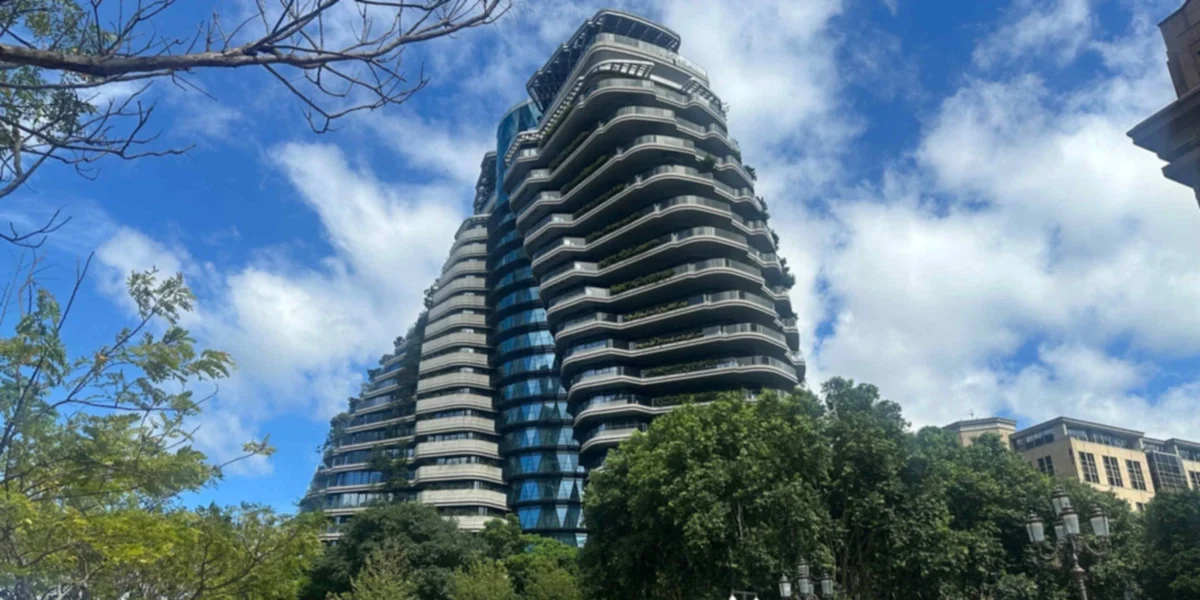
TAIPEI – The stringent mortgage regulations introduced by Taiwan’s central bank to temper its notoriously hot housing market are exhibiting a curious, perhaps unintended, consequence: a surge in cash transactions among affluent buyers, effectively preserving elevated property values while simultaneously extending loan approval timelines and tightening lending criteria for middle-income households. This dual impact is creating a bifurcated market, where the wealthy can sidestep financial hurdles, leaving those reliant on financing increasingly squeezed.
The Evolving Landscape of Taipei’s Real Estate
For years, Taipei has grappled with the challenge of a housing market characterized by escalating prices, driven by a confluence of factors including robust economic growth, limited land supply in prime urban areas, and a cultural inclination towards property ownership. In response, the Central Bank of the Republic of China (Taiwan) has progressively tightened its grip on mortgage lending. These measures, implemented in phases, aimed to curb speculative investment and ensure greater financial stability within the real estate sector.
The initial phase of these regulations, rolled out in late 2020 and reinforced through subsequent adjustments, focused on limiting loan-to-value (LTV) ratios for multiple property owners and for loans on high-priced residential units. These were followed by stricter debt-to-income (DTI) ratio requirements and targeted credit controls for specific buyer segments and property types. The stated objective was to cool down demand, discourage excessive borrowing, and promote a more sustainable housing market.
However, the reality on the ground in Taipei, as of early September 2026, suggests a more complex outcome. While the regulations have undoubtedly made it harder for many to secure mortgages, particularly first-time buyers or those with moderate incomes, they appear to have inadvertently created a more favorable environment for a specific demographic: the cash-rich investor and homeowner.
The Rise of the Cash Buyer: Circumventing Controls
Anecdotal evidence and reports from real estate agencies in Taipei indicate a noticeable uptick in the number of buyers opting for all-cash purchases, especially for high-value properties. This trend is particularly pronounced in affluent districts like Xinyi, Da’an, and Zhongshan, where luxury apartments and premium residences command exorbitant prices. For these buyers, the central bank’s mortgage restrictions are largely irrelevant. They possess the liquidity to bypass the need for external financing altogether, rendering LTV and DTI ratios moot points.
"We are seeing a growing number of our clients, particularly those who have accumulated significant wealth over the years or have benefited from family assets, choosing to pay in full," stated a senior agent from a prominent real estate firm operating in Taipei, who requested anonymity due to the sensitive nature of market dynamics. "For them, the current regulatory environment for mortgages is a non-issue. They can secure their desired property without the complexities, delays, and potential rejections associated with loan applications."
This phenomenon is not merely about convenience. In a market where interest rates, even if relatively stable, still represent a cost, and where the approval process can be protracted and uncertain, an all-cash offer presents a powerful advantage. It signifies a buyer with immediate and unencumbered financial capacity, making their offer more attractive to sellers, especially in competitive bidding situations. This can, in turn, contribute to maintaining or even inflating prices for properties that are already at the upper end of the market spectrum.
The Middle-Income Squeeze: Extended Timelines and Tighter Standards
Conversely, the impact on middle-income households and first-time homebuyers, who typically rely heavily on mortgage financing, is demonstrably different. The central bank’s measures, designed to ensure responsible lending and prevent household debt from spiraling, have translated into a more arduous journey for these individuals.
Loan approval processes are reportedly taking longer, with banks conducting more rigorous due diligence on applicants’ financial standing and repayment capacity. DTI ratios, which cap the proportion of a borrower’s income that can be allocated to debt repayment, are being applied more strictly. This means that individuals with salaries that might have previously qualified them for a certain loan amount may now find themselves eligible for less, or even disqualified altogether.
Data from Taiwan’s Financial Supervisory Commission (FSC), while not always publicly broken down to the granular level of cash transactions versus financed ones, has indicated a general slowdown in new mortgage approvals in recent quarters, a trend consistent with the intended effects of the regulations. However, the shift in buyer demographics is a subtler consequence that is becoming increasingly apparent at the street level.
"It’s becoming significantly harder for young professionals and families to enter the market," commented a mortgage broker based in the Banqiao district. "We’re spending more time explaining the nuances of the regulations, helping clients optimize their financial profiles, and often, having to break the news that their dream home might be just out of reach with current financing options. Some are forced to postpone their purchase, while others are looking at smaller properties or locations further from the city center."
Historical Context: A Cycle of Intervention
The current situation is not entirely unprecedented in Taipei’s property market. The city has a history of boom-and-bust cycles, often punctuated by government interventions aimed at stabilizing prices and curbing speculation. In the past, measures have included increased property taxes, restrictions on pre-sale purchases, and adjustments to mortgage lending policies.
The latest round of interventions, initiated in earnest around 2020, followed a period of significant price appreciation. The COVID-19 pandemic, while disrupting many sectors, paradoxically fueled a surge in property investment in Taiwan, as low interest rates and a strong economic rebound created favorable conditions for buyers. This led to renewed concerns about housing affordability and market overheating, prompting the central bank’s decisive action.
The timeline of these interventions can be traced:
- Late 2020: Initial tightening of LTV ratios for second-home buyers and for properties exceeding a certain price threshold.
- Mid-2021: Further adjustments to LTV ratios and introduction of stricter DTI requirements.
- Early 2022: Expansion of credit controls to cover more buyer segments and specific types of properties.
- Throughout 2023-2024: Continuous monitoring and recalibration of regulations based on market performance and inflation trends.
- 2025-2026: Emergence of the cash buyer phenomenon as a notable market trend, following sustained application of existing regulations.
Economic Implications: A Widening Wealth Gap
The divergence between cash buyers and those reliant on mortgages has broader economic implications.
Firstly, it suggests that the central bank’s goal of significantly cooling the entire market may be partially undermined. While new mortgage-driven demand might be tempered, the sustained purchasing power of the wealthy can keep a segment of the market robust, potentially preventing a broader price correction. This could lead to a situation where high-end properties remain expensive, while the entry-level and mid-tier markets see slower growth or even stagnation due to reduced affordability for the majority.
Secondly, the trend could exacerbate wealth inequality. As cash buyers can acquire assets with relative ease, while those with less capital face increasing barriers, the gap between asset owners and aspiring homeowners widens. This can have long-term effects on social mobility and economic opportunity.
Thirdly, it raises questions about the efficiency of capital allocation. If a significant portion of real estate transactions is driven by readily available cash rather than by careful financial planning and responsible borrowing, it might indicate that investment is driven more by wealth accumulation than by genuine housing needs or sound economic investment principles.
Expert Analysis and Future Outlook
Economists and market analysts are closely observing these developments. Dr. Mei-Ling Chen, a professor of economics at National Taiwan University, commented, "The current situation highlights a common challenge in real estate regulation: the unintended consequences of policy. While the central bank’s intentions are laudable – to ensure financial stability and affordability – the market is dynamic and adaptable. Wealthy individuals and entities often find ways to navigate or circumvent regulations. The real concern is the impact on social equity and the accessibility of housing for the middle class."
Looking ahead, several factors will influence the trajectory of Taipei’s housing market. The central bank will need to continuously assess the effectiveness of its measures and consider whether further adjustments are necessary. This might involve exploring alternative policy tools that are less susceptible to being bypassed by cash buyers, or perhaps focusing on supply-side solutions to increase the availability of housing.
The global economic climate, interest rate policies of major central banks, and Taiwan’s own economic performance will also play crucial roles. If the economy continues to grow robustly, it could provide further fuel for property demand, even amidst tighter lending. Conversely, any economic downturn could put pressure on prices across the board, potentially altering the current dynamic.
For now, Taipei’s real estate market presents a complex picture. The central bank’s efforts to rein in an overheated market are succeeding in making it harder for many to borrow, but for the financially privileged, the path to homeownership, particularly for high-value properties, remains remarkably smooth, paid for in full and without the encumbrance of a mortgage. This enduring resilience in the face of regulation underscores the deep-seated demand and the persistent challenges of affordability in one of Asia’s most dynamic capitals.