Lina Wu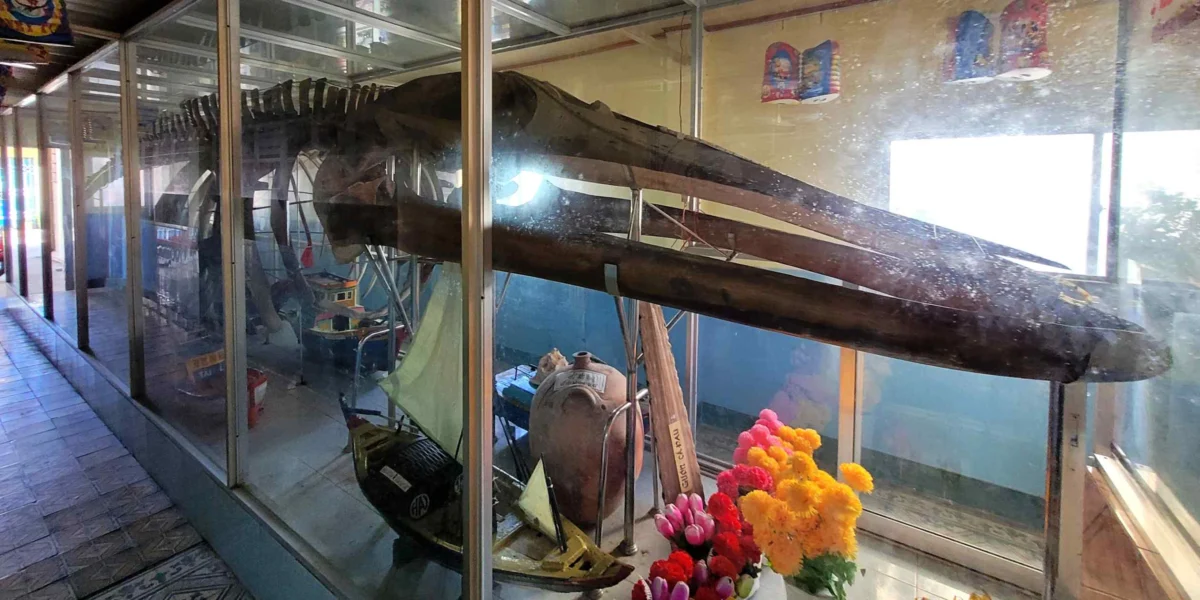
A 20-foot skeleton of an unidentified species of baleen whale is displayed at Lang Ong Thuy Tuong, a whale temple in Ho Chi Minh City’s coastal Can Gio district. Vietnam’s whale temples are part of a centuries-old fishing tradition and offer valuable insights into the country’s marine life.
The skeletal remains of marine giants, meticulously preserved and venerated in coastal temples across Vietnam, are emerging as an unexpected but invaluable resource for modern scientific research. These sacred sites, rooted in a rich tapestry of maritime folklore and fishing traditions, are now providing scientists with critical data on whale populations, biodiversity, and the health of Vietnam’s extensive coastline. The practice, which dates back centuries, involves the ritualistic burial and subsequent exhumation of whale carcasses by fishing communities, who then construct temples to house and honor these marine benefactors. Far from being mere relics of the past, these whale temples, or "Lang Ong" as they are known locally, represent a unique intersection of cultural heritage and scientific discovery, offering a window into the marine ecosystem that has sustained Vietnamese coastal communities for generations.
The Genesis of a Sacred Tradition
The veneration of whales in Vietnam is deeply interwoven with the lives of its coastal dwellers. For centuries, fishermen have relied on the bounty of the sea for their livelihoods. Encounters with beached or deceased whales were not simply tragic events; they were often seen as divine interventions or omens. According to local beliefs, whales were considered guardians of the sea, protectors of fishermen, and bringers of good fortune. When a whale carcass washed ashore, it was a cause for both mourning and celebration. The community would collectively undertake the arduous task of burying the massive creature, a process that often took days. This act of reverence was believed to appease the whale’s spirit and ensure safe passage and abundant catches in the future.
The tradition evolved over time, with elaborate rituals developing around the burial and subsequent exhumation. After a period of several years, typically three to five, the bones would be unearthed, cleaned, and then assembled to form a skeletal display within a dedicated temple. These temples, often built and maintained by the fishing communities themselves, became focal points for local worship and gatherings. The most sacred sites are said to house the remains of whales that were particularly revered for their size, the circumstances of their demise, or the perceived blessings they brought to the community. Lang Ong Thuy Tuong in Ho Chi Minh City’s Can Gio district, housing a 20-foot skeleton of an unidentified baleen whale, is a prime example of such a venerated site.
Bridging Folklore and Science
While the primary purpose of these temples has always been spiritual and cultural, their scientific significance has become increasingly apparent in recent decades. The meticulous preservation of whale skeletons offers a tangible historical record of marine life. For researchers, these ancient remains are a treasure trove of information.
Supporting Data and Scientific Insights:
- Species Identification and Distribution: The skeletons, particularly those of species that are rarely encountered or are locally extinct, can help scientists identify whale species that once inhabited or frequented Vietnamese waters. Detailed osteological analysis can confirm species identification, providing crucial data on historical distribution patterns and the extent of biodiversity in the region. For example, preliminary studies of some skeletons have suggested the presence of species that are now considered rare or have shifted their migratory routes due to environmental changes.
- Population Dynamics: By dating the skeletons and analyzing their age at death, researchers can gain insights into historical population structures and mortality rates. This can inform contemporary conservation efforts by providing a baseline against which current population trends can be compared.
- Health and Environmental Indicators: Whale bones can accumulate environmental contaminants over their lifetimes. Analyzing bone tissue for isotopes and trace elements can reveal information about the diet, health, and environmental conditions that the whales experienced during their lives. This can serve as a proxy for understanding historical pollution levels and the overall health of the marine ecosystem.
- Genetic Material: In well-preserved specimens, it may be possible to extract ancient DNA (aDNA). This genetic material can provide invaluable insights into the evolutionary history of whale populations in the region, their genetic diversity, and their relationships to contemporary whale populations.
The Center for Biodiversity Conservation and Endangered Species, an organization actively involved in collaborating with coastal communities, has been instrumental in documenting and studying these whale temples. Their work involves not only cataloging the skeletal remains but also working with local elders and fishermen to gather oral histories and traditional knowledge related to whale sightings and strandings.
A Chronology of Discovery and Collaboration
The growing recognition of the scientific value of whale temples is a relatively recent phenomenon, gaining momentum in the late 20th and early 21st centuries.
- Pre-20th Century: The tradition of whale veneration and temple construction was primarily a localized cultural practice, passed down through generations within fishing communities. Scientific documentation was minimal.
- Mid-20th Century: With the advent of more systematic marine biology research in Vietnam, some local scientists and foreign researchers began to notice and document the existence of these unique temples. However, the focus was often on the cultural aspects rather than a concerted scientific study.
- Late 20th Century (1980s-1990s): Increased awareness of marine conservation issues globally led to a greater interest in understanding local marine ecosystems. Researchers began to explore the potential of whale temples as sources of historical data. Initial collaborations with fishing communities were established, often on an informal basis.
- Early 21st Century (2000s onwards): Organizations like the Center for Biodiversity Conservation and Endangered Species began to formalize collaborations. This involved systematic cataloging, morphological analysis of skeletons, and the application of modern scientific techniques such as radiocarbon dating. The focus shifted towards understanding the historical ecological context and the role of whales in the Vietnamese marine environment.
- Present Day: The collaboration between traditional communities and scientific institutions is ongoing. Efforts are being made to integrate scientific findings with traditional knowledge, ensuring that the cultural significance of the temples is respected while maximizing their research potential. The goal is to leverage this unique heritage for both scientific advancement and the preservation of marine biodiversity.
Voices from the Community and the Scientific Realm
The integration of scientific research with these age-old traditions has been a process of mutual respect and understanding. Local communities, while initially hesitant to allow scientific intrusion into their sacred sites, have increasingly recognized the benefits of collaboration.
"Our ancestors believed the whales were protectors of the sea," says Mr. Tran Van Minh, a respected elder from a coastal village in Quang Ngai province, home to several prominent whale temples. "When a whale washes ashore, it is a sign from the heavens. We honor them to ensure our safety and prosperity. Now, scientists tell us that by studying these ancient bones, they can learn more about the sea, about how it is changing. This helps us understand our own traditions better and reminds us of our duty to protect the ocean."
Dr. Le Thi Lan, a marine biologist with the Center for Biodiversity Conservation and Endangered Species, emphasizes the symbiotic relationship. "These communities hold invaluable traditional knowledge passed down through generations. Their observations of whale behavior, migration patterns, and environmental changes are often incredibly accurate. By combining this with scientific analysis, we gain a far richer and more complete picture than either could achieve alone. The skeletons are not just religious artifacts; they are living historical documents."
There have been instances where scientific analysis has even led to the re-evaluation or confirmation of traditional beliefs. For example, detailed examination of specific skeletons might reveal the cause of death, which could align with or subtly alter the folklore surrounding a particular whale’s demise.
Broader Impact and Future Implications
The scientific exploration of Vietnam’s whale temples holds significant implications for marine conservation, cultural preservation, and scientific methodology.
- Enhanced Conservation Strategies: By understanding historical population dynamics and environmental conditions, scientists can develop more effective and targeted conservation strategies for whale species in the region. This includes identifying critical habitats, understanding migration corridors, and assessing the long-term impact of climate change on whale populations.
- A Model for Cultural-Scientific Collaboration: The success of this initiative can serve as a model for other regions with similar traditions or cultural practices that intersect with scientific research. It demonstrates that the veneration of natural heritage and scientific inquiry are not mutually exclusive but can be complementary forces.
- Public Awareness and Education: The stories and findings emerging from these temples can be powerful tools for raising public awareness about marine conservation. By highlighting the cultural significance of whales and the scientific insights derived from their remains, these sites can foster a deeper appreciation for marine life among both local communities and the wider public.
- Preservation of Intangible Heritage: The ongoing scientific engagement also contributes to the preservation of the intangible heritage associated with whale temples. The traditions, rituals, and oral histories surrounding these sites are being documented and understood in new ways, ensuring their survival for future generations.
The continued study of these sacred marine remains promises to unlock further secrets of Vietnam’s oceans, reinforcing the profound connection between human culture and the natural world, and offering a unique pathway towards a more sustainable future for both. The silent sentinels in the whale temples, once objects of veneration alone, are now speaking volumes to a new generation of scientists, echoing the ancient wisdom of the sea.