Clara Shinta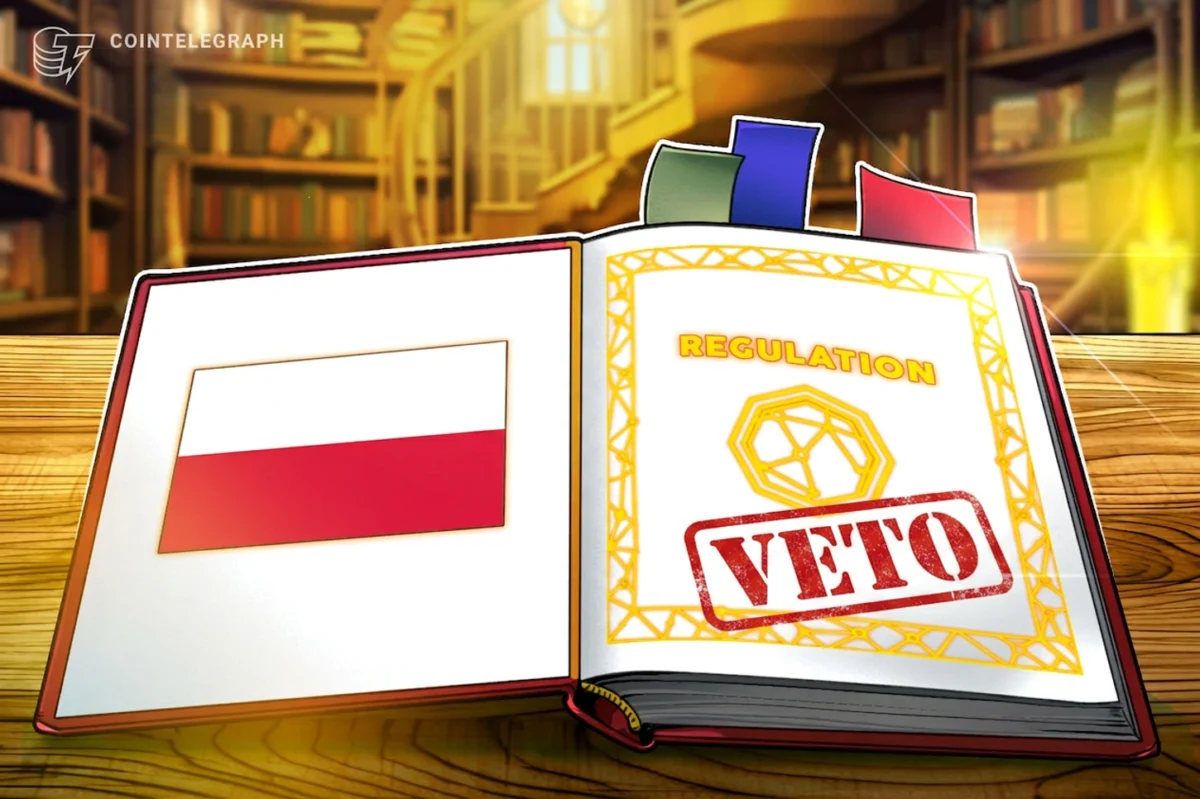
Polish lawmakers have once again failed to garner the necessary three-fifths majority to overturn President Karol Nawrocki’s persistent veto of legislation designed to bolster oversight of the nation’s burgeoning crypto market. The latest parliamentary setback on Friday, which saw the Sejm, Poland’s lower house, vote 241-198 in favor of overriding the veto with three abstentions, fell a critical 25 votes short of the 266 required. This repeated legislative gridlock leaves Poland in a precarious position, struggling to align its domestic regulations with the European Union’s comprehensive Markets in Crypto-Assets Regulation (MiCA) framework, even as a major crypto exchange scandal casts a long shadow over the industry.
The contentious legislative process has seen President Nawrocki veto crypto legislation three times, consistently arguing that the proposed rules would impose an undue burden of overregulation on the nascent industry. This stance places him in direct opposition to Prime Minister Donald Tusk’s government, which has been increasingly vocal about the urgent need for tighter controls, particularly in light of an expanding criminal investigation into the now-defunct crypto exchange Zondacrypto. The deepening scandal, involving the bankruptcy of its Estonian operator and serious allegations of political influence, has injected a fierce urgency into the regulatory debate, highlighting the significant stakes involved for Poland’s financial stability and its digital economy.
The Persistent Presidential Veto and Its Rationale
President Nawrocki’s repeated exercise of his presidential veto power underscores a fundamental disagreement over the appropriate scope and intensity of crypto regulation in Poland. His arguments consistently center on the potential for the proposed rules to stifle innovation and impose excessive costs on businesses operating within the crypto sector. The President has previously cited concerns over the administrative and financial burdens that strict regulations could place on startups and established firms alike, suggesting that an overly prescriptive approach might drive innovation and investment away from Poland. Furthermore, he has expressed reservations about granting authorities broad powers, such as the ability to block websites, viewing these as potentially infringing on digital freedoms and market access.
The Polish political system grants the President significant powers, including the ability to veto legislation passed by the Sejm. Overriding such a veto requires a supermajority of three-fifths of the votes in the presence of at least half of the statutory number of deputies, a threshold that has proven consistently difficult for the current government coalition to achieve. This institutional dynamic highlights the deep political divisions that often characterize Polish governance, with the President and the parliamentary majority frequently representing different political mandates and ideological perspectives. Nawrocki’s consistent stance suggests a strategic effort to protect what he perceives as a delicate balance between fostering technological advancement and ensuring market stability, while the government views the lack of regulation as a significant risk.
Poland’s Regulatory Vacuum Under MiCA
The failure to enact national legislation for crypto oversight has left Poland in a unique and increasingly problematic position within the European Union. The vetoed legislation was specifically designed to establish Poland’s national framework for implementing MiCA, a landmark EU regulation aimed at creating a harmonized legal framework for crypto-assets across all member states. MiCA, which began its phased application with rules for stablecoins in June 2024 and is set for full implementation by December 2024, represents a concerted effort by the EU to bring regulatory clarity, enhance investor protection, combat market manipulation, and ensure financial stability in the rapidly evolving digital asset space.
A critical component of MiCA’s implementation is the designation of a national competent authority responsible for supervising the crypto-asset market. The Polish Financial Supervision Authority (KNF) explicitly stated on Friday that, due to the presidential veto, the country still lacks such a designated body. This regulatory vacuum creates significant uncertainty for crypto businesses operating in Poland and for Polish investors. Without a clear national framework, firms may struggle to understand their compliance obligations, potentially leading to operational difficulties or even a relocation of businesses to other EU member states that have already established their MiCA-compliant regulatory structures. For investors, the absence of a clearly defined supervisor means a lack of institutional recourse and protection, potentially exposing them to greater risks in an unregulated environment.
The implications of this delay extend beyond national borders. As MiCA comes into full effect, Poland risks falling out of sync with its EU partners, potentially hindering cross-border crypto activities and undermining the bloc’s goal of a unified digital single market. While the EU regulation will eventually apply directly, the national implementing legislation is crucial for effective enforcement, the designation of national supervisory bodies, and the tailoring of certain aspects to national contexts. The longer Poland remains without its own designated authority, the greater the potential for a disjointed market and a less secure environment for crypto users.
The Zondacrypto Scandal: A Catalyst for Tighter Controls
The regulatory dispute in Poland is not occurring in a vacuum; it is deeply intertwined with the unfolding scandal surrounding Zondacrypto, formerly known as BitBay, once one of Poland’s largest crypto exchanges. This scandal has provided Prime Minister Donald Tusk’s government with compelling grounds to push for more stringent crypto oversight, framing it as a necessary measure to protect citizens and combat financial crime.
The chronology of the Zondacrypto saga is complex and alarming. The exchange, which operated under the Estonian entity BB Trade Estonia, has been under intense scrutiny for an extended period. The first major red flag emerged in 2022 with the mysterious disappearance of Sylwester Suszek, the founder of BitBay. In July of an unspecified year, Polish prosecutors merged the investigation into Suszek’s disappearance with a broader probe into suspected fraud and money laundering connected to Zondacrypto. By April of an unspecified year, authorities estimated losses linked to Zondacrypto to be no less than 350 million Polish zlotys (approximately $95 million USD), impacting a significant number of investors.
The situation escalated further in August when BB Trade Estonia was officially declared bankrupt by an Estonian court, with the first creditors’ meeting scheduled for September 17. This bankruptcy solidified the financial losses for many investors and intensified the criminal investigations.
The scandal took a dramatic turn ahead of Friday’s parliamentary vote when Prime Minister Tusk publicly disclosed excerpts from what he claimed was testimony from a key witness in the Zondacrypto investigation. These revelations pointed to serious allegations of political influence and corruption linked to Poland’s previous government. Tusk stated that the witness alleged a 2 million Polish zloty (approximately $550,000 USD) payment arrangement involving a foundation connected to former Justice Minister Zbigniew Ziobro. In separate testimony cited by Tusk, the witness further alleged that an unnamed individual had promised to secure a presidential pardon if the witness were convicted. These explosive claims, if proven true, suggest a deeply entrenched network of corruption potentially reaching high levels of political power, directly linking the need for crypto regulation to broader issues of governance and integrity. The ongoing investigation has already seen the charging of prominent figures, including the former Polish Olympic chief, underscoring the gravity and widespread nature of the alleged illicit activities.
Political Stalemate and Divergent Visions
The current situation highlights a profound political stalemate between the executive and legislative branches in Poland. Prime Minister Tusk and his government are leveraging the Zondacrypto scandal as a potent symbol of the dangers posed by an inadequately regulated crypto market. Their stance is rooted in the belief that robust oversight is not merely a matter of EU compliance but an urgent necessity for national security, consumer protection, and the integrity of the financial system. They argue that the lack of clear rules creates fertile ground for illicit activities, money laundering, and investor fraud, as exemplified by the Zondacrypto case.
Conversely, President Nawrocki’s repeated vetoes suggest a different vision for Poland’s digital future. While acknowledging the need for some regulation, he appears to prioritize fostering innovation and ensuring that regulatory burdens do not stifle the growth of the nascent blockchain and crypto industry. His concerns about regulatory costs and the scope of governmental powers reflect a cautious approach, perhaps aiming to strike a balance that allows Poland to become a hub for digital innovation without excessive governmental interference. This philosophical divide between fostering innovation and ensuring stringent oversight is not unique to Poland but resonates across many jurisdictions grappling with how to regulate rapidly evolving technologies.
The parliamentary dynamics further complicate matters. The government coalition’s inability to muster the supermajority required to override the presidential veto underscores the fragility of its legislative power in the face of presidential opposition. This political tug-of-war means that even with the pressing issue of MiCA compliance and a high-profile financial scandal, consensus remains elusive, leaving the crypto market in a state of prolonged uncertainty.
Broader Implications for Poland’s Digital Economy
The ongoing regulatory impasse carries significant implications for Poland’s digital economy and its standing within the European Union.
Firstly, the lack of a clear national regulatory framework creates an environment of profound uncertainty for both domestic and international investors and businesses. Companies operating in the crypto space require clear rules of engagement to plan their operations, attract capital, and expand their services. Without this clarity, Poland risks losing out on potential investment and talent to other EU member states that have already embraced and implemented MiCA. This could hinder the development of a vibrant and competitive Polish digital asset ecosystem.
Secondly, the Zondacrypto scandal, exacerbated by the political allegations, severely damages public trust in the crypto market. When high-profile exchanges collapse and accusations of political corruption surface, it erodes confidence among retail investors and institutional players alike. This erosion of trust can lead to a more conservative approach to crypto adoption, potentially slowing down innovation and mainstream integration of blockchain technologies in Poland.
Thirdly, Poland’s delay in establishing a MiCA-compliant framework could strain its relationship with the European Union. The EU expects its member states to implement common regulations diligently and uniformly to ensure a level playing field and the smooth functioning of the single market. Prolonged non-compliance could lead to criticism from Brussels and potentially even legal challenges, impacting Poland’s reputation as a reliable and compliant member state.
Looking ahead, the path forward remains unclear. The government will likely continue to seek ways to implement MiCA, possibly through revised legislation that attempts to address the President’s concerns without compromising the core objectives of robust oversight. However, without a fundamental shift in political consensus or a willingness from either side to compromise significantly, the stalemate could persist, leaving Poland’s crypto market in a state of prolonged regulatory limbo. The convergence of a critical EU deadline, a major financial scandal, and deep political divisions places Poland at a pivotal juncture regarding its digital asset future.