Reynand Wu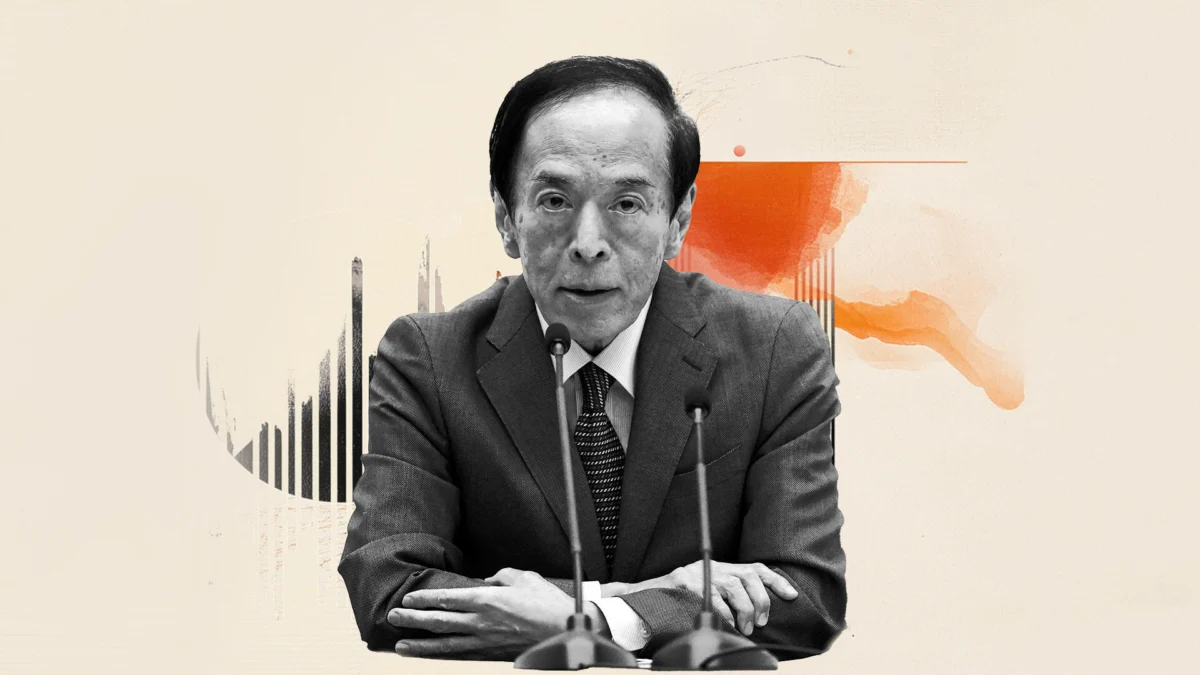
Bank of Japan (BoJ) Governor Kazuo Ueda engaged in crucial discussions on the sidelines of the G20 meetings on Tuesday, underscoring the vital role of enhanced communication among central banks to navigate a rapidly evolving global economic environment. While declining to divulge specifics of his bilateral meeting with US Treasury Secretary Bessent, Ueda highlighted the collective need for clarity in monetary policy messaging to ensure price stability amidst shifting global dynamics. His remarks come as financial markets increasingly price in the likelihood of further policy tightening by the BoJ, a scenario Ueda carefully avoided commenting on directly.
Contextualizing the G20 Dialogue and Bilateral Engagements
The G20 forum, bringing together finance ministers and central bank governors from the world’s largest economies, serves as a critical platform for addressing pressing global economic challenges. Discussions typically span a wide array of issues, including inflation control, global debt sustainability, financial stability, and the macroeconomic implications of geopolitical tensions. Governor Ueda’s participation, particularly his emphasis on improved communication, reflects a recognition that interconnected global economies require synchronized and transparent policy frameworks to prevent unintended spillovers and enhance the effectiveness of national monetary policies.
His private talks with US Treasury Secretary Bessent, though undisclosed in detail, are inherently significant. The economic relationship between the United States and Japan is foundational to global trade and finance. Such high-level bilateral meetings often cover topics ranging from exchange rate stability, trade imbalances, and investment flows to collaborative efforts on international financial regulations. Given the recent volatility in the USD/JPY pair and the differing monetary policy trajectories of the Federal Reserve and the Bank of Japan, it is highly probable that currency dynamics and their broader economic implications were among the key subjects. The US, having aggressively tightened its monetary policy over the past two years to combat persistent inflation, likely holds a keen interest in Japan’s eventual path to full normalization and its potential impact on global capital markets.
BoJ’s Evolving Policy Stance: A Decades-Long Battle and Recent Shifts
For years, the Bank of Japan stood as an outlier among major global central banks, maintaining an ultra-loose monetary policy aimed at extricating the nation from decades of deflation and stagnant growth. This strategy, initiated in 2013, encompassed an ambitious program of Quantitative and Qualitative Easing (QQE), which involved massive asset purchases, primarily government and corporate bonds, to inject liquidity into the economy. The goal was clear: achieve a stable 2% inflation target.
In 2016, the BoJ further intensified its efforts by introducing negative interest rates and implementing a Yield Curve Control (YCC) framework, targeting the yield on 10-year Japanese government bonds to keep long-term borrowing costs low. This prolonged period of unconventional policy was a direct response to Japan’s unique economic challenges, including a rapidly aging population, structural rigidities, and persistent deflationary pressures that had become deeply entrenched in corporate and consumer psychology.
However, the global economic landscape began to shift dramatically in the wake of the COVID-19 pandemic and subsequent supply chain disruptions, coupled with the geopolitical fallout from conflicts such as the one in Ukraine. These factors, particularly surging global energy and commodity prices, finally pushed Japan’s inflation rate above the coveted 2% target in 2022. While initially viewed as largely cost-push and temporary, signs of more durable, demand-driven inflation began to emerge, notably through rising wage growth.
This culminated in a historic pivot by the BoJ in March 2024. After years of resisting, the central bank officially ended its negative interest rate policy, abolished its YCC framework, and ceased new asset purchases. This marked the BoJ’s first interest rate hike in 17 years, signaling a gradual, albeit cautious, retreat from its ultra-loose stance. Governor Ueda, who took the helm in April 2023, has consistently emphasized a data-dependent approach to policy normalization, stressing the need for sustainable inflation driven by robust wage growth rather than transient external factors.
Ueda reiterated this cautious approach, stating that the BoJ’s fundamental stance on monetary policy remains "mostly unchanged since July." This implies a continuity in the central bank’s commitment to carefully assessing economic conditions, prices, and financial developments before making further adjustments. The data observed since the July meeting, according to Ueda, "broadly matches projections in July quarterly report," suggesting that the economic trajectory is largely in line with the BoJ’s internal forecasts, which underpin its current policy framework.
Navigating Inflation and Economic Recovery
Japan’s journey toward sustainable inflation has been complex. The Consumer Price Index (CPI), particularly the core CPI which excludes volatile fresh food prices, has consistently stayed above the 2% target for an extended period. In August 2024, for instance, Japan’s core CPI stood at 2.8% year-on-year, continuing a trend that has persisted for over two years. This elevation has been primarily fueled by imported inflation due to a weaker yen and higher global energy and food prices.
However, a crucial element for the BoJ’s assessment of sustainable inflation is wage growth. For decades, Japanese companies were reluctant to raise wages significantly, contributing to the deflationary spiral. Recent labor negotiations, particularly the "shunto" (spring wage negotiations), have yielded the largest wage increases in decades, with major companies agreeing to hikes averaging over 5% in 2024. This development is seen by the BoJ as critical evidence that inflation is becoming demand-driven and self-sustaining, rather than merely imported. Ueda’s emphasis on assessing if "economy, prices align with our scenario along with risks" and the "increased likelihood of economic scenario and inflation risks to be discussed at next board meeting" directly points to the ongoing evaluation of these underlying inflationary pressures.
Beyond inflation, the broader economic recovery in Japan presents a mixed picture. While export-oriented sectors have benefited from global demand, domestic consumption has faced headwinds from rising living costs. Recent GDP figures have shown periods of modest growth, but the strength and durability of this recovery remain a focus for policymakers. Industrial production, retail sales, and capital expenditure are all closely monitored indicators that inform the BoJ’s outlook. The central bank’s scenario for the economy and prices likely incorporates a gradual strengthening of domestic demand supported by wage growth, alongside a careful watch on external factors.
The Yen’s Volatility and Its Impact
The significant depreciation of the Japanese Yen against major currencies, particularly the US Dollar, has been a defining feature of the financial landscape over the past few years. This trend is largely attributable to the widening interest rate differential between Japan and other major economies. As central banks like the Federal Reserve and the European Central Bank aggressively hiked rates to combat their own inflationary surges, the BoJ’s commitment to ultra-loose policy kept Japanese interest rates near zero, making the yen less attractive to investors seeking higher returns.
At the time of writing, the USD/JPY pair hovered around 160.20, marking a multi-decade low for the yen. While a weaker yen generally benefits Japan’s major exporters by making their goods more competitive abroad and boosting repatriated profits, it also significantly increases the cost of imports, particularly for energy and food. This "bad yen" phenomenon has squeezed household budgets and put pressure on import-dependent businesses. The BoJ is keenly aware of the currency’s impact, with Ueda explicitly stating that the "FX impact on economy and prices" is a key consideration in policy guidance. Excessive currency volatility can disrupt economic planning and create inflationary pressures that are difficult to manage. While the Ministry of Finance is primarily responsible for intervening in currency markets, the BoJ’s monetary policy decisions inherently influence the yen’s value.
Market Speculation vs. BoJ Prudence
Despite Governor Ueda’s non-committal stance, financial markets are increasingly pricing in a "strong chance of a September rate hike." This anticipation stems from several factors: the persistent inflation above target, robust wage growth figures, and the perception that the BoJ is gradually moving towards normalization. Analysts and investors often try to front-run central bank moves, adjusting their positions based on subtle shifts in rhetoric or economic data.
However, central bank governors, especially those from institutions with a history of cautious communication like the BoJ, typically avoid commenting on short-term market movements or specific policy timelines. Ueda’s refusal to comment on "daily moves" or market expectations is standard practice, designed to prevent unintended signals that could trigger excessive volatility. Instead, he emphasized that the BoJ "will discuss suitable policy at next meeting while examining economy, prices, financial conditions." This reiterates the BoJ’s data-driven and forward-looking approach, where decisions are made based on comprehensive assessments rather than market sentiment.
The phrase "Monetary conditions remain loose, so we want to keep hiking rates" and "Policy rate hiked five times, need to carefully assess cumulative impact on economy" from the original quotes are likely general observations about the global monetary tightening cycle. Other major central banks have indeed hiked rates multiple times, and the global environment generally sees central banks trying to normalize conditions. This doesn’t necessarily imply an immediate commitment from the BoJ for multiple further hikes in quick succession, but rather reflects the broader direction of global monetary policy away from ultra-loose settings and the need to assess the effects of such shifts. The BoJ’s own single hike in March 2024 was a significant step, and its ongoing assessment focuses on the cumulative impact of its own and global policy shifts.
Global Monetary Policy Coordination and Challenges
Ueda’s emphasis on improved communication among central banks at the G20 highlights a critical aspect of contemporary global finance. The era of synchronized global monetary tightening, where major central banks aggressively raised rates in response to post-pandemic inflation, has given way to a more nuanced period where policy paths may diverge. This divergence can create challenges, particularly for exchange rates and capital flows, making effective communication even more crucial.
The global environment remains fraught with risks. The "Middle East conflict" is a significant concern, as it has the potential to disrupt global oil supplies, push up energy prices, and exacerbate inflationary pressures worldwide. Such external shocks can complicate domestic monetary policy decisions, requiring central banks to balance inflation control with support for economic growth. Ueda’s acknowledgement of focusing on "Middle East conflict, oil demand, FX impact on economy and prices in policy guidance" underscores the comprehensive nature of the BoJ’s risk assessment.
Looking Ahead: The Path to Normalization
The upcoming BoJ monetary policy meeting will be closely watched for further clues regarding the central bank’s next steps. While a September hike remains a strong possibility in market minds, the BoJ is expected to maintain its cautious, data-dependent stance. Key factors influencing its decision will include the trajectory of inflation, particularly whether it remains sustainably above the 2% target, the strength of wage growth in upcoming reports, and the overall health of the domestic and global economies.
The BoJ will also be assessing "upside price risks in policy deliberations," indicating that while inflation has been the primary concern, the potential for it to accelerate beyond current projections is also on the radar. The path to full monetary policy normalization for Japan is likely to be gradual, aiming to avoid any abrupt shocks to the economy or financial markets. The long-term implications of this shift are profound, marking an end to an extraordinary period in Japanese economic history and signaling a return to more conventional monetary policy tools. This will have significant ramifications for Japanese businesses and consumers, global investors, and the broader stability of the international financial system as Japan navigates its return to a more normalized interest rate environment.