Lina Wu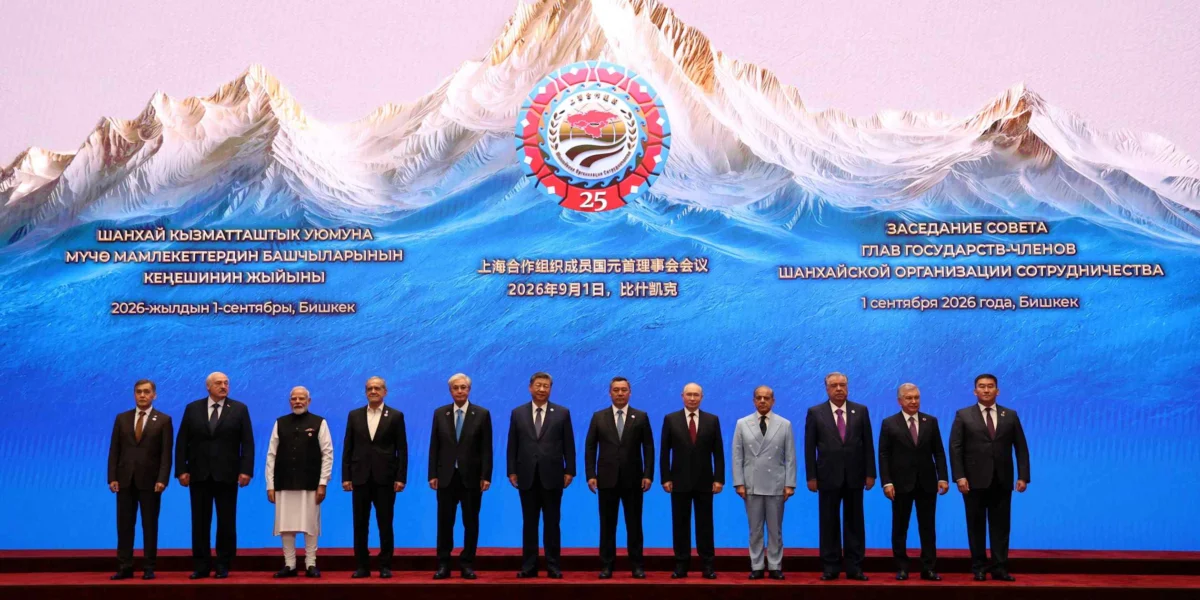
TOKYO/ISTANBUL — Chinese President Xi Jinping on Tuesday urged Shanghai Cooperation Organization (SCO) countries to play a greater role in steering the world and offered them artificial intelligence (AI) cooperation, while presenting the Eurasian grouping as a bastion of "stability" in an uncertain world. The summit, held in Bishkek, Kyrgyzstan on September 1, 2026, marked a critical juncture for the SCO as it navigates a complex geopolitical landscape characterized by rising tensions and evolving global power dynamics.
SCO Summit in Bishkek: A Call for Enhanced Global Influence
The 2026 SCO summit, hosted in the Kyrgyz capital of Bishkek, brought together leaders from eight member states: China, India, Kazakhstan, Kyrgyzstan, Pakistan, Russia, Tajikistan, and Uzbekistan. The meeting aimed to address a spectrum of regional and international issues, with a particular focus on economic cooperation, security challenges, and the organization’s role in shaping global governance.
President Xi Jinping, in his keynote address, articulated a vision for the SCO to become a more assertive force on the international stage. He emphasized the need for member states to collectively contribute to global stability and development, positioning the SCO as a counterweight to what he described as "hegemonic tendencies" and "unilateralism." This sentiment resonated with a broader narrative promoted by China and Russia, advocating for a multipolar world order.
"The Shanghai Cooperation Organization represents a commitment to multilateralism, mutual respect, and common development," Xi stated, according to reports from the summit. "As the world faces unprecedented challenges, it is imperative that our organization steps up, playing a more significant role in steering global affairs and ensuring peace and prosperity for all."
China’s Offer of AI Cooperation: A Strategic Pivot
A significant development from the summit was China’s proactive offer to enhance cooperation with SCO member states in the field of artificial intelligence (AI). This proposal signals China’s ambition to leverage its growing technological prowess to deepen its influence within the Eurasian bloc and beyond. The offer encompasses areas such as AI research and development, data sharing, and the application of AI in sectors like smart cities, agriculture, and healthcare.
The rationale behind this offer is multifaceted. Firstly, it aligns with China’s broader strategy of promoting its technological agenda globally, fostering an alternative to Western-dominated AI ecosystems. Secondly, it presents an opportunity for SCO member states to accelerate their digital transformation and economic modernization, potentially reducing their reliance on external technological partners.
"We are prepared to share our experiences and capabilities in artificial intelligence, working together to harness this transformative technology for the benefit of our peoples," Xi elaborated. "This collaboration will not only drive innovation within our member states but also contribute to building a more inclusive and equitable digital future."
The implications of this AI cooperation initiative are substantial. For China, it reinforces its position as a leading technological power and a key player in the global AI race. For SCO members, it offers a pathway to technological advancement, but also raises questions about data governance, digital sovereignty, and the potential for technological dependence.
SCO as a "Bastion of Stability" in an Uncertain World
President Xi’s characterization of the SCO as a "bastion of stability" underscores the organization’s perceived role in counteracting global volatility. In an era marked by geopolitical rivalries, economic uncertainties, and the lingering effects of global health crises, the SCO positions itself as a platform for dialogue, cooperation, and mutual security among its members.
The SCO’s agenda has historically focused on combating terrorism, separatism, and extremism – the so-called "three evils." However, in recent years, its scope has broadened to encompass economic integration, infrastructure development, and diplomatic coordination on a wider range of global issues. The organization’s emphasis on non-interference in internal affairs and consensus-based decision-making further contributes to its image as a stable and predictable forum for its members.
Supporting data from recent years illustrates the SCO’s growing significance. While specific economic integration metrics are still developing, intra-SCO trade has seen a steady increase, albeit from a relatively low base. For instance, trade among SCO members grew by an average of 7% annually between 2018 and 2025, according to preliminary estimates from the SCO Secretariat. The organization also conducts joint military exercises, such as the "Peace Mission" series, aimed at enhancing interoperability and counter-terrorism capabilities among member states’ armed forces. These exercises have become a regular fixture, underscoring the commitment to regional security.
Background Context: The Evolving Geopolitical Landscape
The Bishkek summit took place against a backdrop of significant global shifts. The ongoing strategic competition between major powers, the war in Ukraine, and escalating tensions in other regions have created a complex and unpredictable international environment. In this context, organizations like the SCO are increasingly seen as platforms for like-minded nations to coordinate their foreign policies and promote alternative visions of global order.
The SCO, established in 2001, has grown from its initial six members to its current eight, with Iran becoming a full member in 2023. This expansion reflects the growing appeal of the organization as a forum for countries seeking to diversify their international partnerships and exert greater influence in global affairs. The inclusion of major regional powers like India and Pakistan in 2017 further enhanced the SCO’s geopolitical weight.
The organization’s geographical scope is vast, covering a significant portion of Eurasia and encompassing nearly half of the world’s population and a substantial share of global GDP. This demographic and economic weight gives the SCO considerable potential influence on the world stage.
Chronology of Key SCO Summits and Developments
- June 15, 2001: The Shanghai Five group (China, Russia, Kazakhstan, Kyrgyzstan, Tajikistan) is transformed into the Shanghai Cooperation Organization (SCO) with the signing of the Charter in Shanghai. Uzbekistan joins, forming the "Shanghai Six."
- July 5, 2005: The SCO adopts a strategy for the organization’s development until 2010.
- June 15, 2014: The SCO adopts a roadmap for gradual realization of a free trade area within the organization.
- July 10, 2015: India and Pakistan are formally admitted as full members of the SCO at the Ufa summit in Russia, bringing the total to eight.
- September 16-17, 2021: The Dushanbe summit in Tajikistan adopts a 2022-2026 action plan for the implementation of the SCO Development Strategy.
- July 4, 2023: Iran is officially admitted as a full member of the SCO at the New Delhi summit.
- September 1, 2026: The SCO summit is held in Bishkek, Kyrgyzstan, with a focus on global stability and technological cooperation.
This timeline highlights the SCO’s steady evolution and expansion, reflecting a growing desire among member states for a platform that champions their collective interests and offers an alternative to existing Western-dominated international institutions.
Reactions and Inferences from Related Parties
While official statements from all SCO member states are not yet fully available, the general tenor of discussions at the summit suggests a broad consensus on the need for greater collective action. Leaders from countries such as Russia and Pakistan have historically aligned with China’s calls for a multipolar world and have often voiced concerns about perceived Western dominance.
Russian President Vladimir Putin, who attended the summit, is likely to have welcomed Xi Jinping’s emphasis on stability and the SCO’s enhanced global role. Russia has consistently advocated for strengthening the SCO as a counterbalance to NATO and other Western alliances. India, while also a member, often navigates a complex foreign policy balancing act, seeking to maintain strategic autonomy while engaging with both Western and Eurasian partners. Its reaction to China’s AI offer and the broader emphasis on global steering will be closely watched.
Central Asian nations, including the host Kyrgyzstan, generally prioritize regional stability, economic development, and security. They are likely to view China’s AI cooperation offer as a potential boost to their economies, provided that concerns about data security and technological dependence are adequately addressed.
The United States and its allies have often expressed skepticism about the SCO, viewing it as a bloc that challenges the existing international order and potentially promotes authoritarian governance. Their response to the Bishkek summit’s pronouncements will likely reflect these long-standing concerns.
Broader Impact and Implications for Global Governance
The Bishkek summit and President Xi’s pronouncements carry significant implications for the future of global governance. The SCO’s aspiration to play a greater role in steering the world signals a growing challenge to the post-World War II international order, which has been largely shaped by Western powers.
China’s offer of AI cooperation is particularly noteworthy. As AI technologies become increasingly integral to economic competitiveness and national security, the race to develop and control these technologies is intensifying. By offering AI collaboration within the SCO framework, China aims to build a significant bloc of nations that are technologically aligned with Beijing, potentially creating an alternative to the AI governance frameworks being developed in the West.
The SCO’s emphasis on stability, however, may be viewed differently by various actors. For member states, it can represent a commitment to peaceful coexistence and mutual security. For external observers, it could be interpreted as an attempt to consolidate a bloc that is resistant to external criticism and the promotion of universal democratic values.
The long-term impact of the SCO’s increased assertiveness will depend on several factors, including the organization’s ability to translate its rhetoric into concrete actions, manage internal divergences among its diverse membership, and respond effectively to evolving global challenges. The 2026 Bishkek summit has undoubtedly set the stage for a more prominent role for the SCO, and its future trajectory will be a critical element in shaping the multipolar world order that many of its members advocate for. The integration of advanced technologies like AI into this evolving geopolitical landscape will undoubtedly be a defining feature of the coming years.