Gilang Muhammad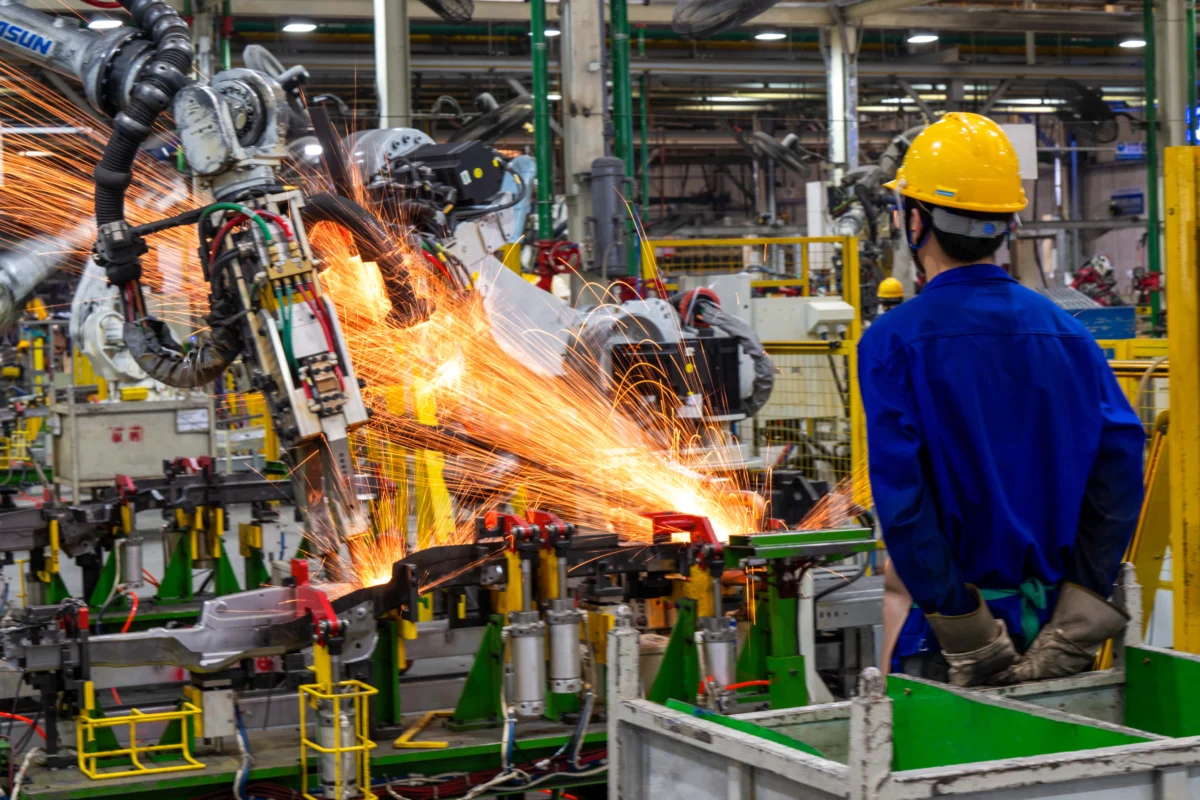
LIUZHOU, CHINA – China’s manufacturing activity experienced a contraction for the second consecutive month in August, signaling persistent economic challenges despite the downturn being less severe than market expectations. The official Purchasing Managers’ Index (PMI) registered 49.8, an improvement from July’s 49.2, according to data released Monday by the National Bureau of Statistics. While this figure surpassed Reuters-polled economists’ forecast of 49.6, it remains below the critical 50-point threshold, which separates expansion from contraction, intensifying pressure on Beijing to implement more robust economic support measures as growth momentum continues to wane.
The reading underscores a broader narrative of an economy grappling with significant headwinds. China’s economic growth decelerated to 4.3% in the second quarter, marking its weakest pace since late 2022. This slowdown is primarily attributed to a confluence of factors, including soft domestic demand, a prolonged and deepening property market slump, and cautious consumer sentiment, all of which continue to weigh heavily on overall economic activity. The second half of the year has seen these economic challenges deepen, characterized by stalled consumer spending, a faster pace of contraction in urban fixed-asset investment, and an uptick in unemployment rates across various demographics.
Persistent Economic Headwinds and the Property Sector Drag
The economic malaise extends beyond manufacturing. Retail sales and industrial output both showed signs of deceleration in July, indicating a broader cooling trend across key sectors. Furthermore, growth in industrial profits cooled to its weakest pace this year, highlighting reduced profitability for businesses amid a challenging operating environment. Historically, China’s economic model has relied heavily on investment and exports. However, the current landscape presents a complex picture where traditional growth drivers are facing unprecedented pressures.
The property sector, a cornerstone of China’s economy and a significant contributor to GDP, has been in a prolonged downturn since 2020. Strict regulatory measures aimed at curbing speculative lending, coupled with a crisis of confidence among homebuyers and investors, have led to widespread developer defaults, stalled construction projects, and a significant drop in property sales. This crisis has ripple effects across various industries, from steel and cement production to household appliances and financial services, and has severely impacted local government finances, which heavily rely on land sales. The ongoing struggles in this sector contribute significantly to the erosion of consumer and investor confidence, thereby dampening overall domestic demand.
Consumer spending, which Beijing aims to rebalance the economy towards, has also struggled to rebound robustly post-pandemic. Despite initial optimism following the lifting of stringent zero-COVID policies, a combination of job insecurity, declining household wealth (partly due to the property market slump), and a general sense of caution has led consumers to save more and spend less on discretionary items. This reluctance to spend is evident in the slowing retail sales figures and is a major impediment to a sustained economic recovery.
A Glimmer of Hope: Sub-Indices Show Modest Improvement
Despite the overall contraction in the headline PMI, a closer look at the sub-indices offers some glimmers of nascent recovery. The National Bureau of Statistics reported improvements in both supply and demand dynamics in August. The sub-index tracking production expanded to 50.4, up from 49.3 in July, indicating that factories were slightly more active in their output. Similarly, the new orders sub-index, a proxy for demand, rose to 50.6 from 49.5, suggesting a modest pickup in both domestic and international orders.
Notably, new export orders rebounded to 50.1 in August from 49.6 in the previous month. This recovery in overseas demand is particularly significant, especially as the global economy navigates various external shocks, including the prolonged Middle East turmoil and inflationary pressures in major economies. Exports have been one of the few pillars propping up China’s growth this year, cushioning some of the drag from domestic weakness. A global boom in AI infrastructure spending has notably lifted demand for Chinese-made tech goods, leading to double-digit growth in outbound shipments for most of the year. This trend suggests that certain segments of China’s manufacturing sector remain competitive and responsive to specific global demands.
However, not all sub-indices painted a positive picture. The sub-indexes for raw materials inventory and employment both remained in contractionary territory, falling below the 50-mark threshold. This indicates that businesses are still cautious about accumulating inputs and are not yet significantly expanding their workforce, reflecting ongoing uncertainties about the sustainability of demand and future growth prospects. The employment sub-index, in particular, remains a critical concern, given the government’s focus on job creation to maintain social stability and boost consumer confidence.
Government Stimulus Measures and Their Gradual Impact
In response to the mounting economic pressures, Beijing has incrementally rolled out a series of stimulus measures, though their impact has been described as "trickling in" rather than providing an immediate surge. Economists anticipate better growth for the remainder of the year, contingent on adverse weather conditions fading and local governments accelerating fiscal spending.
Policymakers have expressed increasing concern over the collapse in urban investment, a key component of overall fixed-asset investment. Tianchen Xu, a senior economist at the Economist Intelligence Unit, suggested that Beijing is likely to further accelerate fiscal spending to counter this trend. "This should fast-track project approval and fund disbursement," Xu noted, indicating a potential shift towards more aggressive infrastructure spending and investment in key strategic sectors. However, Xu cautioned that the full effect of such policy expansion would likely become more prominent in the coming month and particularly in the fourth quarter, as implementation takes time to translate into tangible economic activity.
The People’s Bank of China (PBOC) has also played its part, implementing targeted monetary easing measures, including cuts to benchmark interest rates and reductions in the reserve requirement ratio for banks. These measures aim to lower borrowing costs for businesses and consumers, thereby encouraging investment and consumption. However, the effectiveness of these monetary policies has been somewhat constrained by weak demand and banks’ reluctance to lend aggressively in a high-risk environment. Fiscal measures, such as tax breaks for small and medium-sized enterprises and increased investment in infrastructure projects, are seen as more direct levers to stimulate the economy.
Sectoral Divergence: High-Tech Resilience Amid Consumer Weakness
A significant divergence in performance was observed across different manufacturing sectors in August. High-tech equipment manufacturing notably outpaced the broader factory sector, showcasing resilience and growth potential. The production and new orders readings for the electronic machinery and equipment and computer communication devices sectors topped 53, indicating robust expansion. This performance aligns with the strong export data for tech goods, driven by global demand for AI infrastructure and digital transformation technologies. China’s established manufacturing prowess in electronics and its position within global supply chains for these critical components are clearly yielding benefits in this specific segment.
In contrast, consumer goods production lagged significantly, registering a sub-index reading of 49. This further underscores the persistent weakness in domestic consumption. While high-tech sectors benefit from targeted global demand and industrial upgrades, sectors catering directly to the Chinese consumer market continue to struggle, reflecting cautious household spending and perhaps an oversupply in certain categories. This dichotomy highlights the challenges in achieving a balanced economic recovery, where both industrial strength and domestic consumption contribute robustly to growth.
Non-Manufacturing Sector Stagnates as Services Face Challenges
The non-manufacturing gauge, which encompasses construction and services activity, remained unchanged at 49% in August, indicating continued contraction in these vital sectors. Within this, the sub-index for the construction industry fell by 0.1 percentage point to 46.9%. The ongoing property slump directly impacts the construction sector, leading to fewer new projects, delays in existing ones, and significant financial strain on construction firms. This contraction has broader implications for employment and investment in related industries.
Within the services category, specific segments such as wholesale, retail, and capital markets services activity also experienced contraction. The retail sector’s struggles mirror the overall weakness in consumer spending, while challenges in wholesale and capital markets suggest subdued business activity and investor caution. Services are a crucial component of China’s modern economy, and their stagnation indicates that the economic recovery is not broad-based and faces significant structural hurdles.
Economists’ Perspectives and the Path Ahead
Economists largely agree that while the August PMI figures showed a slight improvement, significant challenges remain. Nguyen Hoang Nam, China economist at Capital Economics, noted that overall, firms appeared to be anticipating "a boost to economic activity as local governments step up spending over the rest of the year." This sentiment, while cautiously optimistic, hinges heavily on the effective and timely implementation of fiscal stimulus.
The improvement in the factory-gate price sub-indexes also pointed to renewed inflationary pressures, partly due to higher global crude and metal prices. Zhiwei Zhang, president at Pinpoint Asset Management, commented that "the rise of commodity prices may have benefited some firms in the upstream manufacturing sector," but he cautioned that these price gains were primarily driven by supply constraints rather than a robust resurgence in demand, indicating a fragile underlying economic environment.
Looking ahead, the private RatingDog manufacturing PMI survey, which typically captures smaller and more export-oriented firms and has historically presented a more optimistic outlook than the official PMI, is estimated to show factory activity climbing to 51. The results, due Tuesday, will offer another perspective on the state of China’s industrial base, particularly for those firms more exposed to international markets.
Global Repercussions of China’s Economic Trajectory
China’s economic trajectory holds significant global implications. As the world’s second-largest economy and a major manufacturing hub, a sustained slowdown in China can ripple through global supply chains, commodity markets, and international trade. Reduced demand from China can depress global commodity prices, impacting resource-rich nations. A slowdown in its industrial output can affect multinational corporations relying on Chinese factories for production or on the Chinese market for sales.
Conversely, a robust recovery in China would provide a significant boost to the global economy, particularly for its Asian trading partners and countries that export raw materials and luxury goods to the Chinese market. The current situation necessitates close monitoring from international businesses and policymakers, as Beijing navigates these complex economic waters, attempting to re-ignite growth while managing structural imbalances and geopolitical tensions. The balancing act between stimulating growth and addressing long-term structural issues, such as debt and property market risks, will define China’s economic performance in the coming quarters and its role in the global economy.