Farhan Pambudi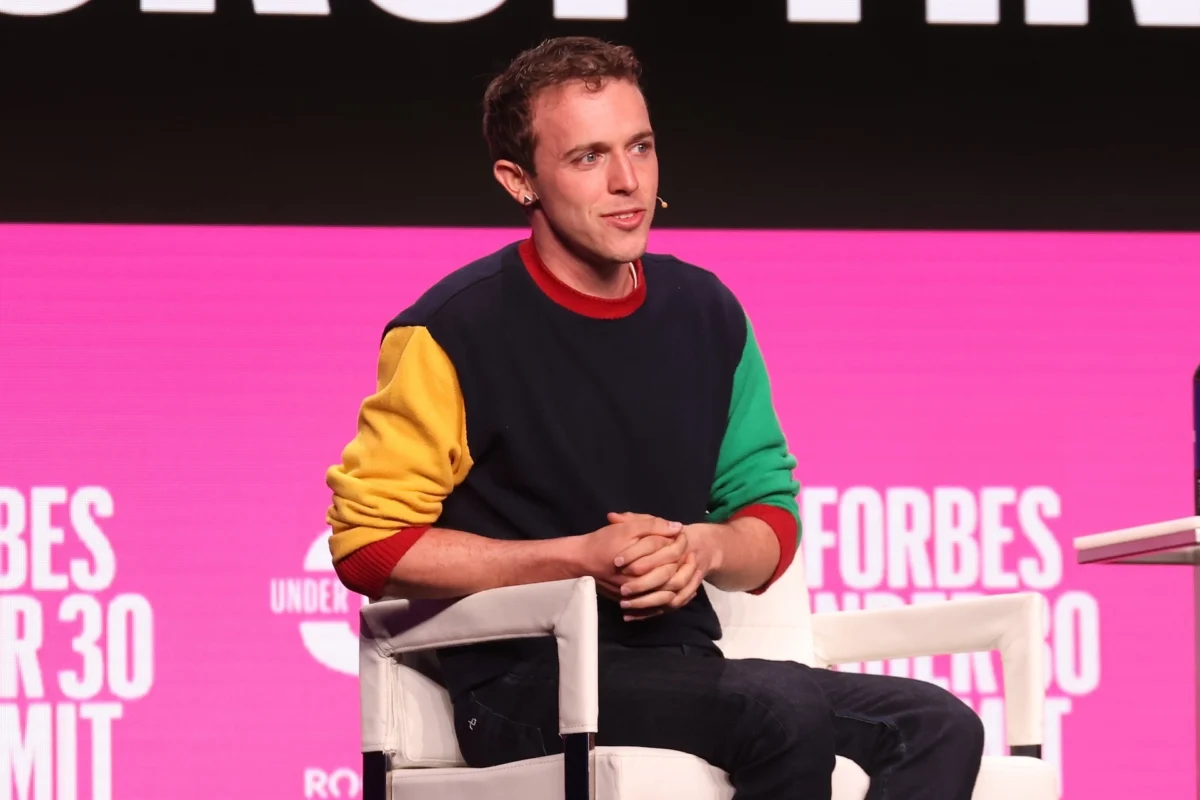
Ryan Breslow, the co-founder and reinstated CEO of the checkout technology startup Bolt, is launching a final-effort capital raise to stabilize the company following a tumultuous period marked by legal disputes, investor revolts, and a staggering 97% decline in valuation. The entrepreneur, who founded the company in 2014 after dropping out of Stanford University, is currently seeking a bridge round of up to $27 million. This financing is designed to provide the necessary liquidity to sustain operations as the company attempts to restructure its debt and transition toward a larger Series E2 funding round.
The bridge round is structured as a convertible note, a common debt instrument in the startup ecosystem that converts into equity at a predetermined discount during a subsequent financing event. However, this particular round carries a punitive "pay-to-play" provision. Such clauses are typically utilized by companies in distressed situations to compel existing investors to contribute additional capital. Under these terms, investors who choose not to participate in the round risk seeing their existing equity stakes significantly diluted or converted into a less favorable class of shares.
Breslow has personally committed $5 million to the round, an act intended to signal his continued confidence in the company’s long-term viability. Despite this gesture, the path forward remains fraught with challenges as Bolt attempts to distance itself from the controversies that have defined its recent history.
The Rise and Volatile Decline of an $11 Billion Unicorn
To understand the gravity of Bolt’s current financial position, one must examine its meteoric rise during the venture capital frenzy of the early 2020s. In early 2022, Bolt reached a peak valuation of $11 billion, positioning it as a formidable challenger to industry giants like Stripe and PayPal. At the time, the company was aggressively expanding, bolstered by the "one-click checkout" promise that aimed to revolutionize the e-commerce experience for independent retailers.
However, the shift in the global macroeconomic environment, characterized by rising interest rates and a cooling of the tech sector, exposed underlying vulnerabilities within the company. By late 2024, Bolt’s valuation had plummeted to approximately $300 million. This decline was exacerbated by internal friction between Breslow and his board of directors, as well as external scrutiny from regulatory bodies.
The company’s struggles were further complicated by a series of high-profile legal battles. In 2023, Breslow became the subject of an SEC probe related to the company’s fundraising practices. Simultaneously, major institutional investors, including BlackRock and Hedosophia, grew increasingly disillusioned with Breslow’s leadership style and his public criticisms of the venture capital industry. Breslow famously authored a series of social media posts accusing prominent Silicon Valley firms of operating like a "mob," a move that alienated many of the very backers he required to sustain the business.
The Mechanics of the Bridge Round and Pay-to-Play Dynamics
The current $27 million bridge round serves as a critical lifeline. In the venture capital landscape, bridge rounds are generally viewed through two lenses: as a "bridge to a sale" or a "bridge to profitability." Breslow maintains that Bolt is pursuing the latter, asserting that the company is nearing profitability after years of shrinking revenue and operational inefficiencies.
The inclusion of the "pay-to-play" provision is a clear indicator of the strained relationship between the company and its broader investor base. Bolt currently has approximately 100 investors on its cap table. Breslow estimates that participation will total at least $15 million from this group, though he acknowledged that a significant portion of the existing backers may opt to abstain, effectively forfeiting their influence and equity value.
Industry analysts suggest that "pay-to-play" rounds are often a last-ditch effort to "clean up" a cap table by removing passive or unsupportive investors. For Bolt, this round is not merely about cash flow; it is an attempt to consolidate control and align the company’s remaining backers with Breslow’s vision for a turnaround. The CEO has stated that the capital will be used to "clear legacy obligations," a term that likely refers to outstanding debts, legal settlements, or deferred payments to vendors and former employees.
A Chronology of Conflict: From the $450 Million Collapse to Reinstatement
The current fundraising effort follows a disastrous attempt in 2022 to raise $450 million at a $14 billion valuation. That deal collapsed under extraordinary circumstances. It was later revealed that one of the purported lead investors denied any involvement in the round, while another offered "marketing credits" rather than liquid capital. This revelation led to a lawsuit from BlackRock and Hedosophia, who sought to block the deal and protect their interests.
Although the lawsuit was eventually dismissed voluntarily by all parties, the damage to Bolt’s reputation was significant. Breslow stepped down as CEO in early 2022, transitioning to an executive chairman role, only to return to the helm in March 2025. Upon his return, Breslow claimed that the company’s decline during his absence was a result of poor management by his successors, arguing that Bolt lost key customers and momentum without his direct leadership.
Breslow’s reinstatement was met with mixed reactions from the tech community. While some viewed him as the only person with enough "founder energy" to save the company, others saw it as a sign of a governance breakdown. Breslow has remained defiant, stating that he believes Bolt is "worth saving" and that he has turned down offers to start new ventures with fresh capital in order to see this turnaround through.
Operational Restructuring and the "Super App" Pivot
In an effort to achieve profitability, Bolt has undergone a radical transformation of its workforce. At its peak in 2021, the company employed over 900 people. Today, that number has been slashed to approximately 60 employees. This 93% reduction in headcount is part of what Breslow describes as a shift toward an AI-centric operational model.
Breslow claims that the company is now "shipping 10 times faster" than it did with a larger staff, attributing this efficiency to the integration of generative AI tools in software development and customer support. While these claims are difficult to verify independently, they reflect a broader trend in the startup world where founders are attempting to do more with significantly less human capital.
The company’s product strategy has also evolved. Bolt is no longer just a checkout button; it is now positioning itself as a "Super App." This new platform integrates several financial services, including:
- Peer-to-Peer (P2P) Payments: Directly competing with services like Zelle and Venmo.
- Cryptocurrency Integration: Allowing users to hold and transact in digital assets.
- Credit Card Management: Centralizing consumer financial data to streamline the "one-click" experience.
Breslow has characterized Bolt’s market position as the "Lyft to Stripe’s Uber." By framing Bolt as the scrappy, alternative player in a market dominated by a giant, he hopes to capture a niche of retailers and consumers who desire a more integrated, multi-functional financial tool.
Market Implications and the Road Ahead
The success of Bolt’s bridge round will serve as a bellwether for the broader "fallen unicorn" category. Many startups that achieved astronomical valuations in 2021 are now facing similar "reckonings," where they must either prove their business models are sustainable or face liquidation.
For the fintech industry, Bolt’s survival would demonstrate that even a company with significant "legacy baggage" can pivot if the founder remains committed and can secure enough internal support. However, if the bridge round fails to reach its $27 million target, it could signal the beginning of the end for the startup. The "pay-to-play" nature of the round creates a binary outcome: either the investors double down on Breslow, or they walk away and allow the company to be restructured through more drastic means.
Breslow’s personal $5 million commitment is a high-stakes gamble. If Bolt recovers, he stands to regain a significant portion of his lost fortune and reputation. If it fails, he will have lost not only his company but also a substantial amount of his personal liquidity.
As of the current reporting, the board and a majority of preferred shareholders have reportedly signed off on the new financing structure. At least one anonymous angel investor has confirmed participation, suggesting that there is still some appetite for the "Bolt story" among early-stage backers. Whether this will be enough to clear the "nightmare of a situation," as Breslow himself described it, remains a question that only the closing of the Series E2 round will answer.
The coming months will be decisive. Bolt must demonstrate that its "Super App" can gain traction in a crowded market and that its lean, AI-driven team can maintain the infrastructure required for a global payments platform. For now, Ryan Breslow remains at the center of one of the most watched turnaround attempts in Silicon Valley history, refusing to throw in the towel on a vision he began over a decade ago.