Clara Shinta
Solana validators have overwhelmingly approved a pivotal governance proposal, SGP-0002, to significantly alter the network’s tokenomics by doubling its annual disinflation rate from 15% to 30%. This monumental decision, ratified through Solana’s inaugural binding governance process, is set to accelerate the reduction of future SOL issuance, bringing the high-performance blockchain closer to its long-term target inflation rate of 1.5% nearly twice as fast as previously scheduled. The move underscores the growing maturity of Solana’s decentralized governance framework and signals a strategic shift towards enhancing the scarcity and potential long-term value of the SOL token, albeit with anticipated adjustments to staking rewards for network participants.
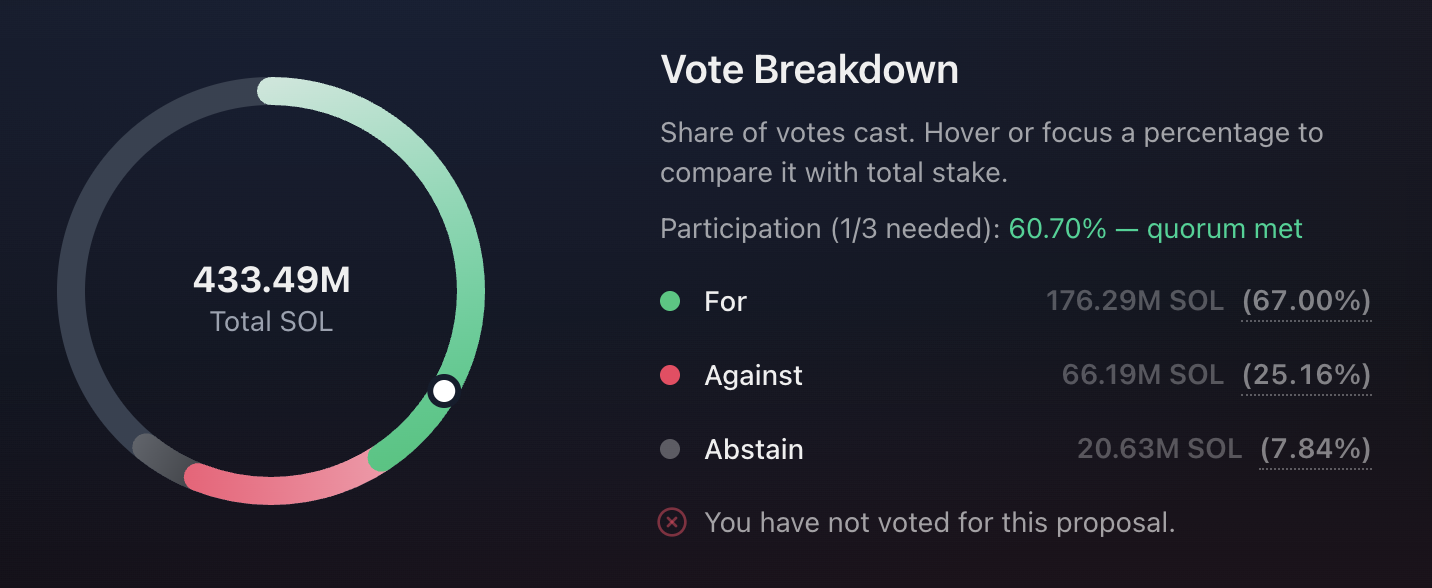
The final voting results, publicly available on the Solana Governance portal, demonstrated robust community engagement, with 67% of participating stake voting in favor of the proposal, known colloquially as "Double Disinflation." A quarter of the votes, 25.16%, were cast against the measure, while 7.84% abstained. Overall, the participation rate reached a significant 60.7% of the total eligible staked SOL, highlighting the widespread interest and critical importance placed on this economic adjustment by the network’s stakeholders. This high level of engagement in a binding vote establishes a precedent for future decentralized decision-making on the Solana network, reinforcing its commitment to community-led evolution.
Understanding SGP-0002: A Shift in Solana’s Economic Policy
The core of SGP-0002 lies in its direct impact on Solana’s inflationary schedule. Prior to this approval, Solana’s annual disinflation rate stood at 15%, meaning the rate at which new SOL tokens are issued was reduced by 15% each year. With the passage of SGP-0002, this rate is now accelerated to 30% annually. It is crucial to distinguish disinflation from deflation; disinflation implies a slowing down of the rate of inflation, while deflation signifies a negative inflation rate, meaning the total supply of tokens is actively decreasing. Solana’s long-term economic model has always aimed for a sustainable terminal inflation rate, designed to incentivize network security through staking rewards, rather than a purely deflationary model.
Under the newly adopted schedule, projections by Solana Compass indicate that the network is expected to reach its 1.5% terminal inflation rate in approximately 2.8 years. This is a substantial acceleration compared to the previous schedule, which would have seen the network achieve this target in roughly 5.7 years. The immediate and quantifiable outcome of this accelerated disinflation is a significant reduction in the total supply of SOL tokens entering circulation over the coming years. Specifically, it is estimated that approximately 18.9 million fewer SOL will be issued over the next six years than would have been under the old policy. This reduction in supply has dual implications: it lessens the dilution effect for existing SOL holders, potentially increasing the scarcity value of their holdings, but concurrently reduces the staking rewards distributed to validators and delegators who secure the network.

The economic rationale behind such a proposal often revolves around enhancing the long-term value proposition of the native asset. By reducing the rate at which new tokens are introduced, the supply-side pressure on the token’s price is mitigated. In a growing ecosystem like Solana, where demand for blockspace and, consequently, the native token (SOL) is increasing, a tighter supply schedule can theoretically contribute to upward price pressure and greater perceived value. This approach mirrors similar tokenomics adjustments seen in other major blockchain networks, such as Ethereum’s EIP-1559 upgrade, which introduced a burning mechanism for transaction fees, or Bitcoin’s periodic halving events, both designed to control supply and foster scarcity.
A Landmark in Solana’s Decentralized Governance Journey
The approval of SGP-0002 represents more than just an economic policy change; it marks a significant milestone in Solana’s journey towards truly decentralized governance. This was the first instance of a binding governance process on the network, a critical step for a blockchain that has often faced scrutiny regarding its centralization aspects in its earlier stages. The successful execution of such a pivotal vote demonstrates the operational efficacy of its governance mechanisms and the community’s readiness to actively shape the network’s future.
Beyond SGP-0002, the inaugural binding governance process also addressed other crucial proposals. Notably, a proposed Solana Constitution was approved, laying foundational principles for the network’s future development and operational ethos. Conversely, a separate proposal concerning resource and inclusion fees was rejected, indicating that the community is not merely rubber-stamping proposals but is actively deliberating and making nuanced decisions that reflect diverse interests within the ecosystem. This selective approval and rejection process underscores the robustness of the governance model.
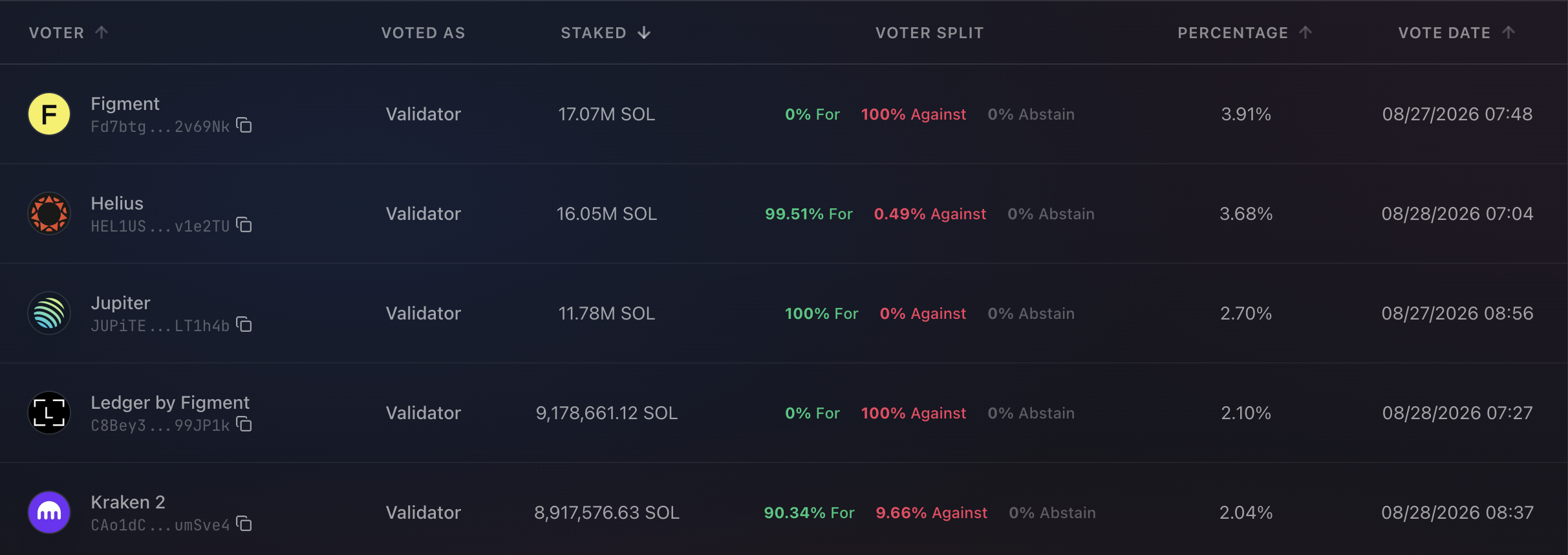
The voting dynamics for SGP-0002 revealed a nuanced landscape of opinions among major stakeholders. Figment, identified as the largest voter in the finalized governance data with an impressive 17.1 million SOL staked, notably cast its votes entirely against the measure. The likely motivation for such a large institutional staker to oppose the proposal could stem from concerns over the immediate reduction in staking rewards. Validators and delegators earn a percentage of newly issued SOL as compensation for their role in securing the network. A higher disinflation rate directly translates to fewer SOL being minted and thus, lower rewards over time, potentially impacting their business model or short-term profitability.
In contrast, prominent ecosystem participants like Helius and Jupiter overwhelmingly backed the proposal. Their support likely reflects a long-term strategic view, prioritizing the potential for increased SOL scarcity and asset appreciation over immediate staking yield. Projects deeply integrated into the Solana ecosystem, particularly those building applications and services, often have a vested interest in the sustained health and perceived value of the underlying token, as it can attract more users, developers, and capital to the platform.
A particularly intriguing aspect of the voting process was the dynamic shift in position by Kraken, a major US-based cryptocurrency exchange. Initial reports from Solana Compass indicated that Kraken initially voted against SGP-0002 at 12:33 UTC, a move that temporarily pushed the overall support below the required threshold for passage. This momentary dip highlighted the critical role of large institutional voters and the finely balanced nature of the decision. However, by the close of the voting period, Kraken significantly reversed its stance, with over 90% of its approximately 8.9 million SOL voting stake ultimately backing the proposal. This shift could be attributed to various factors, including internal re-evaluation of the proposal’s long-term benefits, engagement with community feedback, or a strategic alignment with the broader consensus that emerged over the voting period. Such fluidity in voting by major entities underscores the deliberative and sometimes unpredictable nature of decentralized governance.
Broader Implications for the Solana Ecosystem and Beyond
The decision to accelerate disinflation has multifaceted implications across the Solana ecosystem:
- For SOL Holders: The most direct benefit for existing SOL holders is the reduced token dilution. With fewer new tokens entering circulation, the ownership percentage of existing holders is preserved more effectively. This increased scarcity, especially if coupled with sustained or growing demand for the network, could contribute positively to SOL’s market value over the long term. It signals a network that is proactive in managing its supply-side economics.
- For Validators and Delegators: While the long-term value proposition for SOL may strengthen, the immediate impact on validators and delegators is a reduction in staking rewards. This presents a trade-off: lower immediate yield versus potentially higher asset appreciation. Validators are critical for network security and decentralization, and their economic incentives must remain robust enough to attract and retain participation. The Solana Foundation and community will need to monitor if this change impacts the decentralization or security posture of the network, although the 1.5% terminal inflation rate is still designed to provide a baseline reward.
- Network Security and Decentralization: Staking rewards are a fundamental mechanism to incentivize honest participation and secure proof-of-stake networks. While lower rewards might, in theory, slightly reduce the incentive for some, the overall strengthening of SOL’s economic model could attract more capital into staking due to perceived higher asset value, potentially offsetting any negative impact on security. The large participation rate in the vote itself demonstrates a healthy level of decentralized engagement.
- Developer Activity and Ecosystem Growth: A stronger, more stable native asset can be a significant draw for developers and projects considering building on Solana. Confidence in the underlying token’s economics can translate into greater investment, innovation, and user adoption within the ecosystem, fostering a virtuous cycle of growth. This move positions Solana as a network committed to sound economic principles and long-term sustainability, which can be attractive for serious builders.
- Market Perception: The successful execution of a binding governance vote on such a critical economic parameter enhances Solana’s credibility as a decentralized and community-driven blockchain. It showcases the network’s ability to adapt and evolve through collective decision-making, which is a key differentiator in the competitive Layer 1 landscape. This positive market perception can attract institutional and retail investors alike.
Solana’s Ascending Trajectory: ETFs and Network Activity
The governance vote arrives at a time when Solana is experiencing significant positive momentum in the broader cryptocurrency market, particularly concerning institutional adoption. US-listed Solana investment products have continued to attract substantial investor capital, signaling robust and sustained institutional interest despite periods of market volatility and SOL’s "weaker performance" earlier in the year. This resilience in attracting capital underscores a foundational belief in Solana’s long-term potential.
A notable achievement on this front was Bitwise’s Solana ETF surpassing $1 billion in assets under management (AUM), as reported by Bloomberg ETF analyst Eric Balchunas. This milestone makes it the first Solana-specific exchange-traded fund to reach such a valuation, placing it in an elite category of crypto investment vehicles. The success of Bitwise’s offering is indicative of a broader trend: cumulative net inflows into US Solana ETFs have reached approximately $1.7 billion, with Balchunas noting "little sustained outflow" since their respective launches. This steady influx of capital, contrasting with more volatile flows often seen in emerging asset classes, highlights a strong institutional appetite for diversified crypto exposure beyond just Bitcoin and Ethereum. It suggests that institutional investors are increasingly recognizing Solana as a viable and valuable long-term asset within their portfolios, further legitimizing its position in the digital asset landscape.
Moreover, the underlying Solana network itself has been demonstrating remarkable growth and activity. Recent reports indicate that Solana transactions have hit a record 4.2 billion, coinciding with a notable 40% rally in SOL’s price. This surge in network utilization points to increasing adoption of Solana for various decentralized applications (dApps), DeFi protocols, and emerging use cases like Real World Assets (RWAs). The integration of RWAs onto blockchain platforms is a significant trend, aiming to bring traditional financial assets like real estate, commodities, or bonds onto the blockchain, thereby enhancing liquidity, transparency, and accessibility. Solana’s high throughput, low transaction costs, and robust infrastructure make it an attractive platform for such innovative applications, further driving demand for its native token.
Future Outlook and Strategic Positioning
The approval of SGP-0002 is a strategic move that positions Solana for sustained growth and enhanced economic stability. By proactively managing its token supply, Solana is attempting to create a more attractive long-term asset for investors, while simultaneously proving its commitment to decentralized governance. This is particularly important in an environment where Layer 1 blockchains are constantly competing for developer talent, user adoption, and institutional capital.
Looking ahead, the success of this binding governance vote paves the way for future community-driven decisions on critical network parameters. It establishes a robust precedent for how Solana will evolve, emphasizing a collaborative and decentralized approach to development and policy-making. While the immediate effects on staking rewards will be closely monitored, the long-term benefits of increased scarcity and a clearer path to target inflation are expected to bolster Solana’s standing as a leading blockchain platform. Analysts will be keenly observing how these tokenomics adjustments interact with the network’s continued growth in transaction volume, dApp development, and institutional investment, collectively shaping the trajectory of the SOL ecosystem in the coming years.