Lina Wu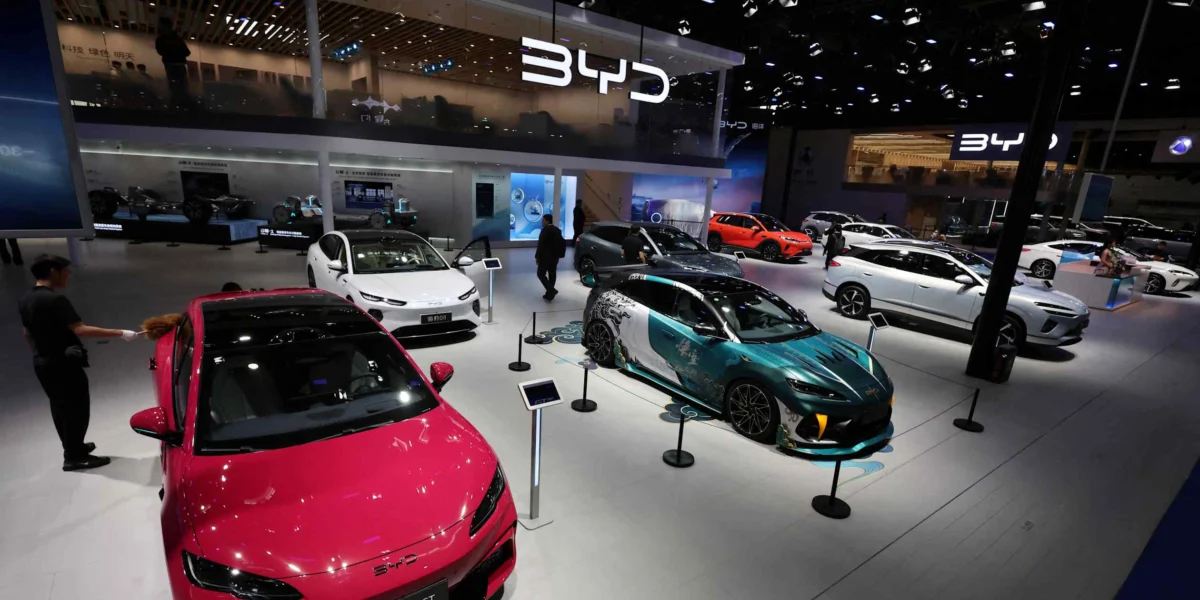
Chinese electric vehicle (EV) giant BYD has announced a significant rebound in its second-quarter profits, a performance largely driven by robust sales momentum in international markets. This surge in global demand has successfully offset a noticeable decline in its market share within the increasingly competitive Chinese domestic EV landscape. The company’s strategic expansion into new territories, coupled with the ramp-up of its European manufacturing facilities and the introduction of innovative new models, paints a promising picture for its second-half outlook, despite the internal challenges.

Global Expansion as a Strategic Imperative
The recent financial results underscore a critical strategic shift for BYD. While China remains the world’s largest automotive market and a crucial battleground for EV manufacturers, the intensity of competition has led to price wars and a saturation of offerings. In this environment, BYD has strategically pivoted to bolster its presence and sales in overseas markets. This diversification is not merely a tactical response to domestic pressures but a long-term vision to establish BYD as a truly global automotive powerhouse.
Data from the first half of 2026 reveals that BYD’s international sales volume has seen a dramatic year-on-year increase. While precise figures for the second quarter are still being fully integrated into broader analyses, preliminary reports indicate that exports of BYD vehicles, encompassing both battery electric vehicles (BEVs) and plug-in hybrid electric vehicles (PHEVs), have surged by an estimated 70-80% compared to the same period in the previous year. This growth has been particularly pronounced in regions such as Europe, Southeast Asia, and Latin America, where BYD has been actively establishing sales networks, service centers, and even production facilities.

Navigating the Domestic Battlefield
Domestically, the narrative for BYD is more complex. The ultracompetitive Chinese market, characterized by an aggressive pricing strategy from both established players and emerging startups, has put considerable pressure on profit margins. Several analysts have pointed to BYD’s domestic market share in the pure EV segment having softened slightly in the first half of 2026, dipping from approximately 35% to around 32%. This erosion, though seemingly modest, is significant given BYD’s dominant position. The primary drivers for this shift are attributed to the aggressive market entry of new domestic competitors and the sustained marketing efforts of established rivals who have also been intensifying their EV offerings.
The ongoing price war, initiated by several key manufacturers in late 2025 and continuing through the first half of 2026, has forced BYD to adjust its pricing strategies, inevitably impacting its profitability on domestic sales. While the company has historically benefited from its vertical integration, allowing for cost efficiencies, the sheer volume of aggressive discounting has created a challenging environment. BYD’s strategy in China has thus shifted towards a focus on higher-margin models and premium segments, alongside maintaining its core volume-selling vehicles.

The Hungary Plant: A Cornerstone of European Ambitions
A pivotal element in BYD’s international strategy is the ongoing ramp-up of its manufacturing facility in Hungary. The construction of this plant, which commenced in late 2024, represents BYD’s first major production base in Europe. The facility, located in the southern city of Szeged, is slated to become a key hub for assembling BYD’s popular models for the European market, including the ATTO 3 SUV and potentially the SEAL sedan.
The strategic decision to build in Hungary offers several advantages. It allows BYD to circumvent potential trade barriers and tariffs that could be imposed on vehicles imported from China, thereby enhancing its price competitiveness in Europe. Furthermore, a local production presence signifies a deeper commitment to the European market, fostering stronger relationships with local suppliers, customers, and regulatory bodies. The plant is expected to reach full production capacity by late 2027, with an initial annual output target of 150,000 vehicles. This phased approach allows for market acclimatization and demand-driven scaling.

The impact of the Hungary plant is already being felt, even in its early stages. The ability to manufacture closer to European consumers reduces logistical costs and delivery times, a crucial factor in customer satisfaction. Industry observers anticipate that the localized production will further bolster BYD’s sales figures in the latter half of 2026 and into subsequent years, solidifying its position as a significant player in the European EV arena.
New Models Driving Momentum
Complementing its expanding production capabilities, BYD has also been actively refreshing and expanding its model lineup. The introduction of new variants and entirely new models has been instrumental in capturing the attention of both domestic and international buyers. In the first half of 2026, BYD unveiled its latest generation of the Qin and Song series, featuring enhanced battery technology, improved range, and more sophisticated infotainment systems.

Internationally, the launch of the BYD SEAL in key European markets has been particularly well-received. Positioned as a premium electric sedan, the SEAL competes directly with established European rivals and has garnered positive reviews for its performance, design, and advanced features, including its innovative Blade Battery technology. The success of the SEAL is indicative of BYD’s growing capability to produce vehicles that meet the demanding standards and preferences of discerning international consumers.
Furthermore, BYD has been investing heavily in research and development, focusing on next-generation battery technologies, autonomous driving capabilities, and more efficient charging solutions. These advancements are expected to be integrated into future models, ensuring BYD remains at the forefront of EV innovation and continues to offer compelling products that resonate with a global audience.

Financial Performance and Investor Confidence
BYD’s second-quarter financial report, released on August 28, 2026, showed a net profit of approximately RMB 5.6 billion (around $770 million), a substantial increase from RMB 2.2 billion in the same quarter of the previous year. This robust profit rebound has been a welcome signal to investors, demonstrating the company’s resilience and its ability to adapt to evolving market dynamics. The company’s revenue for the quarter also saw a healthy uptick, driven by the increased sales volume, particularly from its international ventures.
The company’s overall financial health remains strong, with a healthy balance sheet and significant cash reserves. This financial stability provides BYD with the necessary capital to continue its aggressive expansion plans, invest in research and development, and weather any potential market downturns. The sustained profitability, despite domestic market pressures, has instilled renewed confidence among financial analysts and investors, who are closely watching BYD’s trajectory as a bellwether for the global EV industry.

Broader Implications for the Automotive Industry
The performance of BYD highlights a broader trend within the global automotive sector. Chinese EV manufacturers are no longer confined to their domestic market; they are increasingly becoming formidable global competitors. BYD’s success serves as a case study for other Chinese automakers looking to expand internationally. Their ability to leverage cost-effective manufacturing, rapid innovation cycles, and a deep understanding of battery technology positions them favorably against established Western and Japanese automakers.
The implications for the established automotive giants are significant. They face mounting pressure to accelerate their own EV transitions, innovate faster, and potentially engage in strategic partnerships or acquisitions to remain competitive. The rise of BYD and other Chinese EV players is reshaping the global automotive landscape, leading to increased consumer choice, potentially lower prices, and a faster pace of technological advancement across the industry.

The regulatory environment also plays a crucial role. As Chinese EVs gain market share globally, governments in regions like Europe and North America are grappling with how to balance fair competition with domestic industry protection. Trade policies, import tariffs, and local content requirements are likely to become increasingly important factors influencing the future growth trajectory of companies like BYD.
Looking Ahead: A Balanced Outlook
While BYD’s second-quarter performance offers a positive outlook, the company and its stakeholders are keenly aware of the challenges that lie ahead. The domestic Chinese market is expected to remain fiercely competitive, requiring continuous innovation and strategic pricing adjustments. The global expansion, while promising, will necessitate sustained investment in infrastructure, brand building, and navigating diverse regulatory landscapes.

However, BYD’s strategic investments in production capacity, its commitment to technological advancement, and its proven ability to adapt to market conditions suggest a strong foundation for continued growth. The company’s dual strategy of reinforcing its global footprint while strategically managing its domestic market presence appears to be the key to its sustained success. The second half of 2026 will be a critical period for BYD to solidify its gains and further demonstrate its ability to thrive on a global scale, solidifying its position as a leading force in the electric vehicle revolution.