Farhan Pambudi
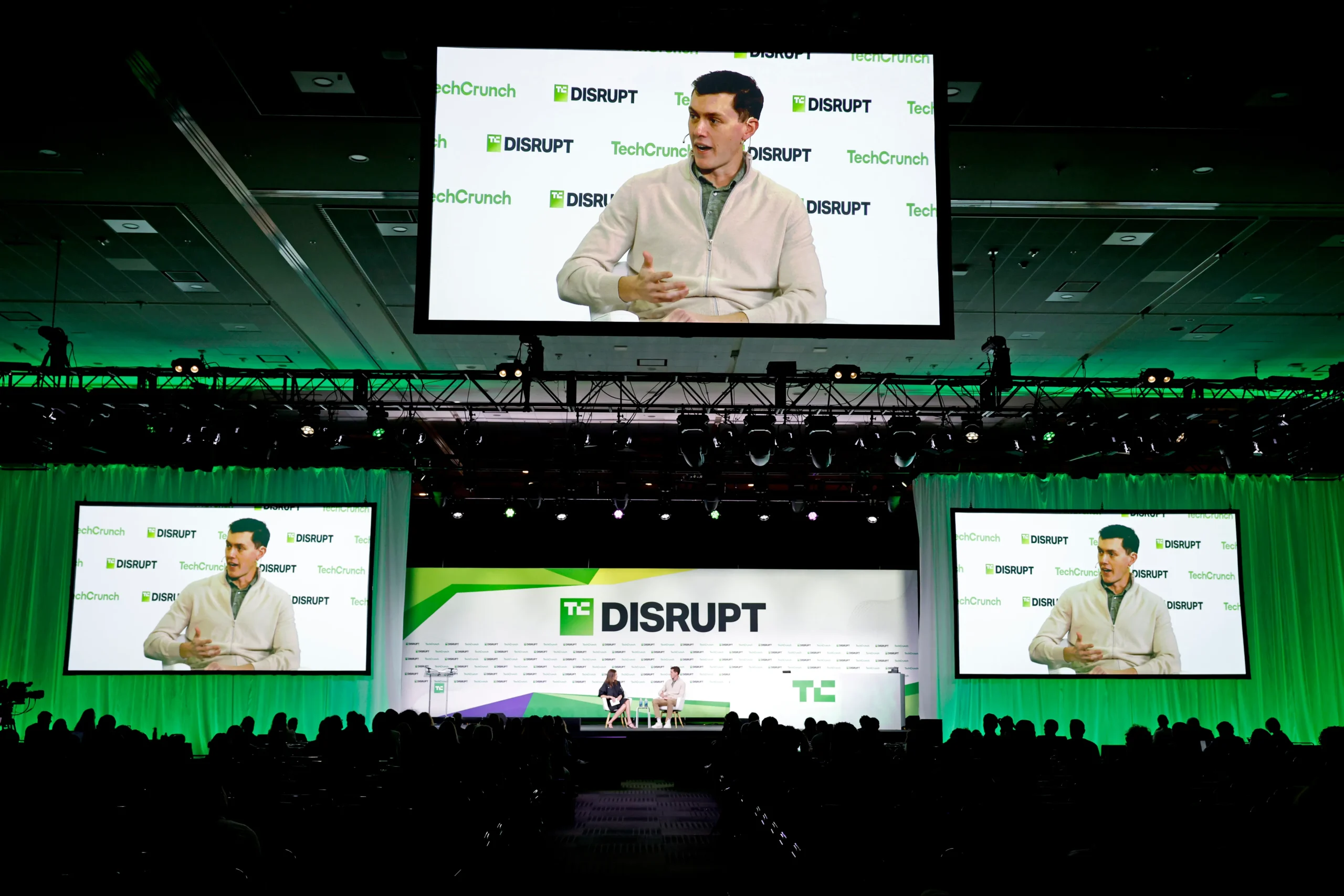
The Builders Stage is officially set to return to TechCrunch Disrupt 2026, scheduled to take place at the Moscone Center in San Francisco from October 13-15. This year’s programming is specifically engineered to address the evolving complexities of the global technology ecosystem, focusing on the practicalities of building, scaling, and sustaining high-growth companies in an era dominated by artificial intelligence and shifting venture capital dynamics. The event is expected to draw more than 10,000 participants, including early-stage founders, veteran startup operators, institutional investors, and technology leaders.
As the tech industry moves further into the late 2020s, the Builders Stage serves as a critical forum for candid, high-stakes conversations regarding the operational decisions that determine a startup’s trajectory. The 2026 agenda features a high-caliber roster of speakers, including Grant Lee, CEO and co-founder of Gamma; Leah Solivan, founder and general partner at Precedent.vc; and Robby Stein, Vice President of Product at Google. Through a series of case studies and fireside chats, these leaders will dissect the core pillars of modern entrepreneurship: fundraising, talent acquisition, go-to-market (GTM) strategies, and the integration of AI into core business functions.
Historical Context and the Evolution of TechCrunch Disrupt
Since its inception, TechCrunch Disrupt has served as a primary launchpad for the world’s most influential technology companies. The event’s hallmark competition, the Startup Battlefield, has seen alumni such as Dropbox, Mint, and Cloudflare grow into multibillion-dollar entities. Historically, the conference has shifted its focus to reflect the macroeconomic climate. While previous iterations during the mid-2010s emphasized "growth at all costs" and consumer-facing mobile applications, the 2026 event arrives at a time when efficiency, unit economics, and AI-native architecture are the primary benchmarks for success.
The Builders Stage was introduced to bridge the gap between the visionary "big picture" discussions of the Main Stage and the granular, technical deep dives of industry-specific tracks. In 2026, this stage remains one of six industry-focused environments at Disrupt, providing a dedicated space for the "builders"—those tasked with the day-to-day execution of a company’s mission.
Navigating the AI-Dominated Landscape
A central theme of the 2026 Builders Stage is the pervasive influence of artificial intelligence on every facet of the startup lifecycle. Several sessions are dedicated to helping founders navigate the "platform risk" associated with building in an environment where giants like OpenAI and Anthropic can render entire product roadmaps obsolete with a single update.
One notable session, "What Happens When OpenAI Ships Your Roadmap," features Michel Tricot of Airbyte, Rob Toews of Radical Ventures, and Linda Tong of Webflow. The panel will explore the concept of defensibility in the AI age, offering strategies for founders to build "moats" that go beyond simple API wrappers. This discussion is particularly relevant as venture capitalists increasingly scrutinize the long-term viability of AI startups that lack proprietary data or unique distribution channels.
Furthermore, the agenda addresses the technical shifts in AI development. The session "The Real Tokenmaxxing: How the Best AI Companies Navigate a Multi-Model World" will examine how leading teams are moving away from single-model dependency. Experts from Capital G and Pathway will discuss the orchestration of multiple Large Language Models (LLMs) to optimize for cost, latency, and reliability—a critical operational hurdle for scaling AI applications.

The 2027 Fundraising Environment and Economic Data
The fundraising landscape has undergone a significant transformation, and the 2026 event will provide a forward-looking analysis of what founders can expect in the coming year. According to recent venture data, the "Series A crunch" remains a significant obstacle, with investors demanding higher revenue benchmarks and clearer paths to profitability than in previous cycles.
The session titled "The Series A in 2027," featuring partners from Index Ventures, Peak XV, and Bessemer Venture Partners, is designed to prepare seed-stage founders for this reality. The discussion will likely touch upon the fact that the median revenue for a Series A candidate has climbed steadily, with many investors now looking for $1.5 million to $3 million in Annual Recurring Revenue (ARR) as a baseline.
Simultaneously, the Builders Stage will address the earliest stages of the funnel. "Winning Pre-Seed Without a Product" will feature insights from True Ventures and Slauson and Co. on how founders can secure initial capital based on conviction and market-fit narrative before a Minimum Viable Product (MVP) is even deployed. This reflects a broader trend where the "pedigree" and "story" of a founder have become paramount in a crowded market.
Operational Excellence and the New GTM Baseline
In the 2026 tech economy, the speed of distribution is as important as the quality of the code. The Builders Stage agenda includes a provocative session titled "The 90-Day GTM: Why $0–$10M ARR Is the New Baseline." Featuring Ryan Meadows of Lovable and Tomasz Tunguz of Theory Ventures, this session analyzes how AI-enabled tools and automated sales cycles have compressed the time it takes to reach significant revenue milestones.
Supporting data suggests that startups using AI-integrated sales and marketing stacks are reaching their first $1 million in ARR up to 40% faster than those using traditional methods. The Builders Stage will provide a tactical playbook for founders to leverage these efficiencies in the first 90 days of their go-to-market push.
Scaling also requires a fundamental shift in product philosophy. Google’s Robby Stein will lead a fireside chat on the transition from an MVP to serving billions of users. This session is expected to highlight the "reliability vs. innovation" paradox that large-scale organizations face—a crucial lesson for founders hoping to transition from a small team to a global platform.
Human Capital and the Hybrid Workforce
The definition of a "startup team" is being rewritten in 2026. The session "Hiring When AI Is a Co-Founder," featuring Gusto CEO Josh Reeves, explores the emergence of the hybrid human-AI workforce. As AI agents take over routine engineering, customer support, and operational tasks, founders must decide which roles remain human-centric.
This shift has profound implications for hiring and culture. Data from the 2025-2026 hiring cycles indicates a massive surge in demand for "AI-augmented" talent, leading to a highly competitive market. A dedicated panel on compensation and culture will feature experts from Redpoint Ventures and Wylder.co, who will discuss how startups can compete with Big Tech for elite talent through creative equity structures and mission-driven cultures.

Furthermore, the Builders Stage will address a often-ignored aspect of the startup journey: mental health. "Yes, It’s Hard to Be a Founder: An Honest Conversation" will bring together mental performance experts and founders to discuss burnout and decision fatigue. This inclusion signals a maturing industry that recognizes the psychological toll of high-growth environments as a legitimate business risk.
M&A as an Early-Stage Strategy
With the IPO window remaining selective, Mergers and Acquisitions (M&A) have become a primary exit strategy for many early-stage companies. The Builders Stage will host a session featuring Aklil Ibssa, Head of Corporate Development at Coinbase, and Karl Alomar of M13, titled "M&A Is Now an Early-Stage Strategy."
The panel will argue that the smartest founders build with acquisition in mind from day one, focusing on strategic partnerships and product interoperability that make them attractive targets for larger tech conglomerates. This reflects a shift in the "exit landscape," where smaller, high-velocity acquisitions are becoming more common than the "mega-mergers" of the past decade.
Startup Battlefield and the "High-Conviction Filter"
A unique addition to the 2026 Builders Stage is a candid debrief titled "The High-Conviction Filter: What We Learned From the Battlefield." Judges from the Startup Battlefield, including Alexa von Tobel of Inspired Capital and Chi-Hua Chien of Goodwater Capital, will provide a "behind-the-scenes" look at the selection process.
This session aims to demystify what investors are actually looking for during a pitch. By analyzing the 2026 Battlefield participants in real-time, the judges will provide actionable feedback on storytelling, metric presentation, and the intangible qualities that signal a "breakout" founder.
Registration and Event Logistics
TechCrunch Disrupt 2026 is positioned as a pivotal gathering for the global startup community. The event will take place over three days at the Moscone Center, a venue that has become synonymous with major technological breakthroughs.
Organizers have structured the event to maximize networking opportunities, including "Braindate" sessions and industry-specific meetups. For those planning to attend, early registration offers significant financial incentives. Current ticket prices are discounted by up to $330, with rates expected to increase as the October event approaches.
The Builders Stage agenda represents a comprehensive map for the modern founder. By focusing on the intersection of AI, efficient scaling, and human-centric leadership, TechCrunch Disrupt 2026 aims to provide the community with the tools necessary to navigate one of the most volatile yet opportunistic periods in the history of the technology industry. As the tech world gathers in San Francisco this October, the conversations held on the Builders Stage will likely set the tone for the startup ecosystem heading into 2027 and beyond.