Lina Wu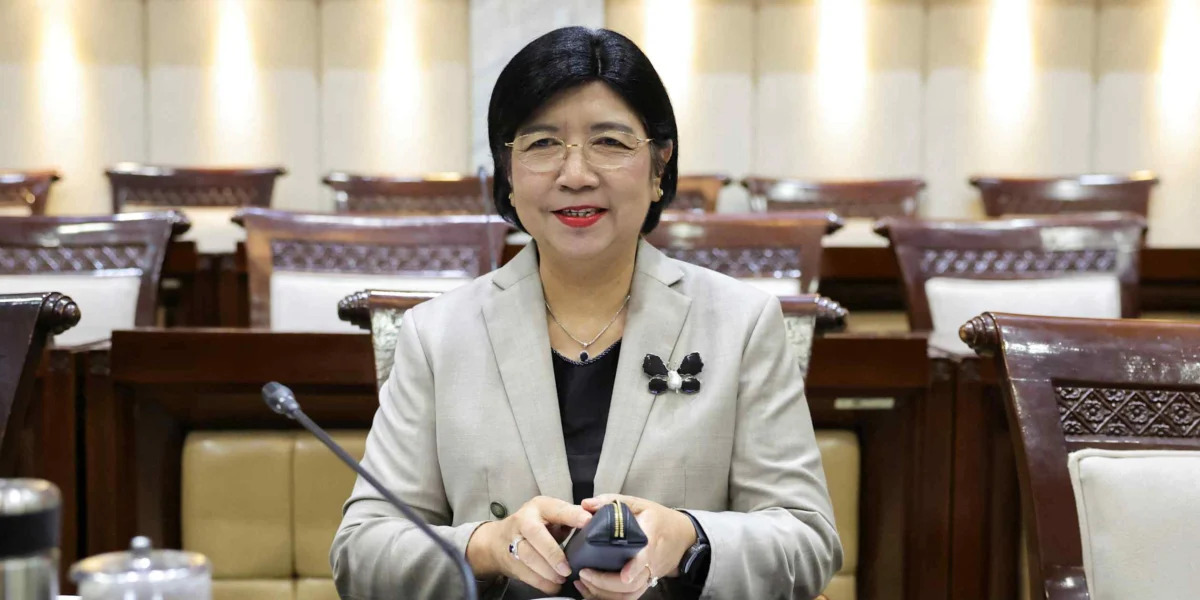
JAKARTA – Destry Damayanti, the singular nominee for the governorship of Bank Indonesia, presented a comprehensive "pro-growth" policy framework on Wednesday, emphasizing a collaborative approach with the government and parliament while unequivocally upholding the central bank’s institutional independence. The presentation, delivered during a crucial "fit and proper" parliamentary hearing, marked a significant step in her anticipated ascension to lead Indonesia’s monetary authority.
A Singular Path to Leadership
The nomination of Destry Damayanti as the sole candidate for Bank Indonesia governor is a noteworthy development, underscoring a perceived consensus or a deliberate selection process that has presented a clear frontrunner. This singular candidacy simplifies the immediate political calculus for the parliamentary confirmation, shifting the focus from a competitive selection to a detailed examination of her suitability and proposed policies. Her background as the acting governor since her appointment in 2018, following the tenure of Agus Martowardojo, has provided her with an intimate understanding of the central bank’s operations and the prevailing economic landscape of Southeast Asia’s largest economy.
The "fit and proper" hearing, a standard procedure for high-level appointments within Indonesia’s financial regulatory bodies, serves as a critical vetting mechanism. It allows lawmakers to scrutinize the candidate’s qualifications, leadership style, ethical standing, and, crucially in this instance, their economic philosophy and strategic vision for the institution. Damayanti’s performance in this hearing is thus pivotal, not only for her confirmation but also for signaling the future direction of Indonesia’s monetary policy and financial stability framework.
Core Pillars of a Pro-Growth Strategy
Damayanti’s proposed policy agenda is built upon several interconnected pillars designed to foster sustainable economic expansion while mitigating potential risks. At its core, the "pro-growth" strategy signifies a commitment to leveraging monetary and macroprudential tools to stimulate investment, boost consumption, and enhance the competitiveness of Indonesian businesses in the global arena. This approach acknowledges the persistent need for economic dynamism in a developing nation like Indonesia, which is striving to achieve higher income status and improve living standards for its large population.
A key element of her plan involves close coordination with the executive and legislative branches of government. Damayanti articulated a vision of enhanced synergy between Bank Indonesia and the ministries of finance and economic affairs, as well as with the parliament. This collaboration, she stressed, would be crucial for the effective implementation of fiscal and monetary policies that are mutually reinforcing. For instance, coordinated efforts in managing public debt, fostering a stable investment climate, and promoting structural reforms could amplify the impact of monetary policy measures.
However, this emphasis on collaboration is carefully balanced with a strong assertion of Bank Indonesia’s independence. Damayanti reiterated that while cooperation is essential, the central bank’s mandate to maintain price stability and ensure financial system integrity will remain paramount. This dual commitment – to partnership and autonomy – is a delicate act that has historically defined the effectiveness of central banks globally. The ability to act decisively in the national interest, free from short-term political pressures, is often seen as a prerequisite for successful inflation management and financial system stability.
Supporting Data and Economic Context
Indonesia’s economic performance in recent years has been a complex tapestry of resilience and ongoing challenges. The nation, with its vast natural resources and a burgeoning domestic market, has demonstrated a capacity to weather global economic storms. However, it has also faced headwinds from global inflation, supply chain disruptions, and geopolitical uncertainties.
Inflationary Pressures and Monetary Policy: In the period leading up to Damayanti’s hearing, Bank Indonesia has been actively engaged in managing inflationary pressures. For instance, in the fiscal year ending December 2025, Indonesia’s consumer price index (CPI) saw fluctuations. While initial forecasts projected a moderation, global commodity price volatility and domestic demand dynamics led to periods of elevated inflation. Bank Indonesia’s policy rate adjustments, which Damayanti has overseen in her acting capacity, have been instrumental in anchoring inflation expectations. Data from the Central Statistics Agency (BPS) indicated that inflation rates, while remaining within the central bank’s target range for much of 2025, experienced a notable uptick in the third quarter, prompting a hawkish stance. Damayanti’s commitment to price stability as a foundational element for growth is thus directly informed by these recent experiences.
Economic Growth Trajectory: Indonesia’s gross domestic product (GDP) growth has been a subject of consistent analysis. In 2025, the economy was projected to grow at a rate of approximately 5.2%, driven by robust domestic consumption and a rebound in investment. However, this growth trajectory has been sensitive to external factors, including global demand for Indonesian exports and foreign direct investment inflows. Damayanti’s "pro-growth" stance suggests a strategic focus on policies that can further unlock Indonesia’s economic potential, potentially through measures that encourage capital expenditure, support micro, small, and medium-sized enterprises (MSMEs), and enhance export competitiveness.
Financial System Stability: The health of Indonesia’s banking sector is another critical area. As of the third quarter of 2026, the Non-Performing Loan (NPL) ratio remained at a healthy level, below 2.5%, indicating the resilience of financial institutions. Bank Indonesia’s prudential regulations and its role as a lender of last resort are vital in maintaining this stability. Damayanti’s proposed policies would likely include a continued focus on strengthening the regulatory framework, promoting digitalization within the financial sector, and ensuring adequate capital buffers for banks to withstand potential shocks.
Chronology of the Nomination and Hearing Process
The path to Destry Damayanti’s potential governorship has been unfolding over several months, culminating in the August 26th parliamentary session.
- Early 2026: Speculation begins regarding the succession for the Bank Indonesia governorship as the incumbent’s term approaches its conclusion.
- Mid-2026: President Joko Widodo initiates the nomination process, undertaking consultations with relevant stakeholders.
- Late July 2026: President Widodo officially submits Destry Damayanti’s name as the sole candidate for the governorship to the House of Representatives (DPR).
- August 2026 (Weeks Prior to Hearing): Damayanti engages in informal briefings and consultations with parliamentary commission members to provide an overview of her policy priorities.
- August 26, 2026: Destry Damayanti undergoes the formal "fit and proper" hearing with the DPR’s Commission XI, which oversees finance and banking. This session includes her policy presentation and a rigorous Q&A with lawmakers.
- Post-Hearing: Following the hearing, Commission XI will deliberate and issue a recommendation to the plenary session of the DPR for final approval.
This structured process ensures a thorough review of the candidate and her proposed leadership.
Statements and Reactions from Related Parties (Inferred)
While direct quotes from all parties are not available in the initial brief, the context of such a significant appointment allows for logical inferences regarding potential reactions.
- Government: The executive branch, led by President Widodo, would have put forward Damayanti’s name with confidence, signaling their support for her leadership and policy direction. A successful confirmation would represent a continuity of experienced leadership within a key economic institution.
- Parliamentary Commission XI: Lawmakers are expected to engage in robust questioning, seeking clarity on specific policy proposals, risk management strategies, and Damayanti’s approach to balancing growth objectives with price and financial stability. Their ultimate approval will depend on the persuasiveness of her arguments and their assessment of her capabilities.
- Financial Industry: Indonesia’s banking and financial sector stakeholders would likely view Damayanti’s proposed "pro-growth" agenda with cautious optimism. They would be particularly interested in how this agenda translates into concrete policies affecting credit availability, regulatory frameworks, and the overall investment climate. Continuity in leadership with a known figure like Damayanti is often favored for its predictability.
- Academic and Economic Analysts: Economists and academics would be dissecting Damayanti’s proposals for their theoretical soundness and practical implications. They would be evaluating the potential impact on inflation, exchange rates, and long-term economic development, offering independent assessments of her proposed strategies.
Broader Impact and Implications
The confirmation of Destry Damayanti as the next governor of Bank Indonesia carries significant implications for the nation’s economic trajectory and its standing in the global financial community.
Monetary Policy Continuity and Evolution: Damayanti’s "pro-growth" stance, while emphasizing collaboration, suggests a continuation of Bank Indonesia’s efforts to foster economic expansion. However, the specific nuances of her policy implementation will be closely watched. Her ability to navigate the delicate balance between stimulating growth and taming inflation will be crucial in shaping Indonesia’s macroeconomic stability. A proactive approach to managing potential future inflationary pressures, informed by lessons learned in recent years, will be a key determinant of her success.
Strengthening Financial System Resilience: In an increasingly interconnected global economy, maintaining a robust financial system is paramount. Damayanti’s focus on independence, coupled with collaboration, implies a continued commitment to prudent regulation and supervision. This could involve further digitalization initiatives, enhanced cybersecurity measures for financial institutions, and a proactive approach to identifying and mitigating systemic risks.
Enhancing Investor Confidence: A clear and consistent policy direction from Bank Indonesia is vital for attracting and retaining foreign and domestic investment. Damayanti’s emphasis on a "pro-growth" agenda, presented with a clear articulation of how independence will be maintained, is likely aimed at bolstering investor confidence. The predictable application of monetary policy and a stable financial environment are key ingredients for long-term capital inflows, which are essential for Indonesia’s development goals.
Indonesia’s Role in Regional and Global Finance: As a key player in Southeast Asia and a member of the G20, Indonesia’s monetary policy decisions have regional and global ramifications. Damayanti’s leadership will influence not only domestic economic conditions but also contribute to the broader discourse on global economic management, particularly concerning emerging market economies. Her approach to navigating global economic volatility and promoting inclusive growth will be closely observed by international financial institutions and policymakers.
In conclusion, Destry Damayanti’s presentation during her "fit and proper" hearing marks a pivotal moment in the leadership transition at Bank Indonesia. Her outlined "pro-growth" agenda, framed within a commitment to collaboration and institutional independence, sets the stage for the central bank’s future policy direction. The coming months will reveal how these principles translate into tangible actions that shape Indonesia’s economic landscape and its position in the global financial arena.