Lina Wu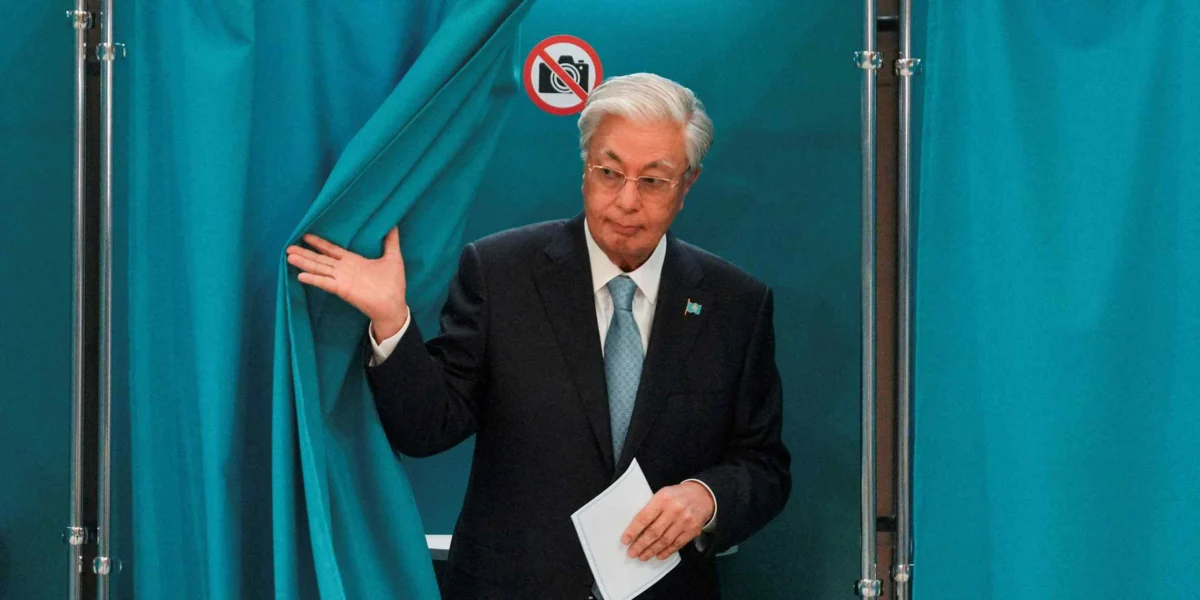
ALMATY, Kazakhstan — Kazakhstan on Sunday elected members to a significantly streamlined parliament, marking the first electoral test under a new constitution and effectively consolidating power for Adilet, a newly formed party representing the nation’s established political forces. The snap parliamentary election, called by President Kassym-Jomart Tokayev, saw a substantial shift in the legislative landscape, with the Adilet party emerging as the dominant political entity, securing a significant majority in the lower house of parliament. This outcome signals a deliberate move by the Kazakh leadership to centralize political authority and streamline decision-making processes in the Central Asian nation, a strategy that has been building momentum since the widespread unrest of January 2022.
The election results, announced by the Central Election Commission of Kazakhstan on Monday, indicate that Adilet secured over 70% of the seats in the Mazhilis, the lower chamber of parliament. This landslide victory for Adilet, a party whose platform emphasizes continuity, stability, and accelerated economic reforms, positions it to enact President Tokayev’s agenda with considerable legislative backing. The party’s leadership, comprised of seasoned politicians and figures with deep ties to the previous administrative structures, has been vocal about their commitment to modernization and economic diversification, while also underscoring the importance of maintaining social order and national security.
This electoral exercise was not merely a procedural event but a significant inflection point in Kazakhstan’s post-Soviet political evolution. The constitutional amendments, ratified by a national referendum in June 2022, were designed to usher in a "new Kazakhstan," a vision articulated by President Tokayev in the wake of the deadly January 2022 protests that shook the country. These protests, initially sparked by fuel price hikes, quickly escalated into widespread demonstrations against corruption, inequality, and the lingering influence of the former ruling elite. The constitutional reforms aimed to address some of the underlying grievances by limiting presidential powers, enhancing the role of parliament, and promoting greater political competition. However, the emergence and swift success of Adilet suggest a carefully managed transition, where established political networks have adapted to the new framework, rather than being fundamentally disrupted.
A New Constitutional Framework and its Electoral Manifestation
The election on August 23rd was conducted under a revised electoral code that reduced the number of parliamentary seats from 107 to 98, with a significant portion now elected through a proportional representation system. This streamlining was part of President Tokayev’s broader reform agenda aimed at creating a more efficient and responsive government. The introduction of a mixed electoral system, combining proportional representation with single-mandate constituencies, was intended to foster broader political representation. However, the overwhelming success of Adilet under this new system has led some observers to question the extent of genuine political pluralism.
Adilet, which translates to "Justice" in Kazakh, was formed by a coalition of political groups and individuals aligned with the current administration. Its campaign focused on themes of national unity, economic resilience in the face of global challenges, and the continuation of reforms initiated by President Tokayev. The party’s messaging resonated with a segment of the electorate that prioritizes stability and predictable governance, particularly in the aftermath of the January 2022 events. Official statements from Adilet leaders have emphasized their readiness to shoulder the responsibility of governing and to implement the president’s vision for a modern and prosperous Kazakhstan.
Chronology of Political Transition
The path to Sunday’s election has been a deliberate and strategic one, initiated by President Tokayev in response to the January 2022 unrest.
- January 2022: Widespread protests erupt across Kazakhstan, initially over fuel prices, but quickly morphing into broader discontent with socio-economic issues and perceived authoritarianism. The protests lead to significant violence and loss of life.
- February 2022: President Tokayev announces a series of political and economic reforms aimed at addressing the root causes of the unrest and building a "New Kazakhstan." This includes a pledge to curb corruption and reduce the concentration of power.
- June 2022: A nationwide referendum approves a package of constitutional amendments. These amendments significantly reduce the powers of the president, strengthen the role of parliament, re-establish the Constitutional Court, and introduce a ban on relatives of the president holding senior government positions. The referendum is seen as a crucial step in Tokayev’s reform agenda.
- September 2022: President Tokayev announces his intention to hold early presidential elections, which he subsequently wins. He also signals the need for early parliamentary elections to align the legislative mandate with the new constitutional order.
- March 2023: The Constitutional Law on Parliament and the status of its deputies is amended, reducing the number of seats in the Mazhilis. The electoral code is also revised to implement a mixed electoral system.
- August 23, 2026: Snap parliamentary elections are held under the new constitutional and electoral framework.
- August 24, 2026: Preliminary results are announced, indicating a decisive victory for the Adilet party.
Supporting Data and Electoral Landscape
The election saw participation from a total of seven political parties, a number significantly reduced from previous parliamentary contests, reflecting a consolidation of the political field. Beyond Adilet, other parties that secured representation, albeit with considerably smaller mandates, include the People’s Party of Kazakhstan (formerly the Communist People’s Party of Kazakhstan), the Ak Zhol Democratic Party, and the Respublica Party. These parties, generally considered to be within the established political spectrum, are expected to play a role in parliamentary debates, but their influence will be significantly curtailed by Adilet’s commanding majority.
Data from the Central Election Commission indicates a voter turnout of approximately 65%, a figure considered respectable for a snap election. International observers, including delegations from the Commonwealth of Independent States (CIS) and the Shanghai Cooperation Organisation (SCO), were present to monitor the electoral process. Initial reports from these observer missions have generally described the election as orderly and transparent, though some have noted the need for further enhancements to ensure a truly competitive political environment.
The economic backdrop against which these elections were held is also significant. Kazakhstan, a major producer of oil, gas, and other raw materials, has been navigating a complex global economic environment marked by fluctuating commodity prices and geopolitical uncertainties. The government’s focus on economic diversification, attracting foreign investment, and improving the business climate has been a central theme in its policy discourse. The composition of the new parliament, with a strong mandate for Adilet, suggests a public desire for continuity and a focus on pragmatic economic management.
Official Responses and Inferred Reactions
President Tokayev, in his post-election address from a polling station in Astana, described the election as a significant step towards building a more effective and responsive government. He emphasized that the new parliament would be tasked with accelerating the implementation of crucial reforms and addressing the socio-economic challenges facing the nation. "Today, the people of Kazakhstan have made their choice," President Tokayev stated. "They have chosen stability, progress, and a commitment to the reforms that will build a strong and prosperous future for our country."
Leaders of the Adilet party have expressed gratitude for the public’s trust and have pledged to work diligently to fulfill their electoral promises. "We understand the immense responsibility that has been placed upon us," said a spokesperson for Adilet. "Our priority is to translate the mandate given to us by the people into concrete actions that will improve the lives of every citizen and further strengthen our nation on the global stage."
While official statements from opposition parties are still being consolidated, there is an expectation of cautious engagement. Parties that secured representation are likely to acknowledge the election results while simultaneously seeking to carve out their roles as constructive critics and advocates for specific policy areas. The broader spectrum of political opinion, however, may express concerns about the dominance of a single party and the potential for limited public discourse on critical issues.
Broader Impact and Implications
The outcome of this election has several key implications for Kazakhstan and the wider region.
Firstly, it solidifies President Tokayev’s reform agenda, providing him with a strong legislative base to implement his vision for a "New Kazakhstan." This includes potentially accelerating economic liberalization, strengthening institutions, and enhancing the rule of law, all while maintaining a firm grip on political power.
Secondly, the consolidation of power within a single, dominant party like Adilet raises questions about the future of political pluralism and dissent in Kazakhstan. While the new constitution aimed to foster greater competition, the electoral success of a party closely aligned with the executive branch suggests a controlled evolution of the political landscape. Future legislative sessions will be closely watched for signs of genuine debate and the extent to which diverse perspectives are accommodated.
Thirdly, the election results will undoubtedly influence Kazakhstan’s foreign policy. With a stable and unified legislative body, the government is likely to pursue its established foreign policy objectives with greater confidence, balancing its relationships with major global powers such as Russia, China, and Western nations. The emphasis on economic stability and security will likely remain paramount.
Finally, the election serves as a case study in post-authoritarian transition. Kazakhstan’s journey, marked by significant popular unrest followed by deliberate constitutional and electoral reforms, offers insights into the challenges and complexities of navigating political change. The success of Adilet underscores the enduring influence of established political networks and the intricate interplay between reform and continuity in shaping a nation’s political trajectory. The coming years will reveal whether this streamlined parliamentary structure truly ushers in an era of enhanced democratic governance or represents a strategic recalibration of power within the existing framework.