Lina Wu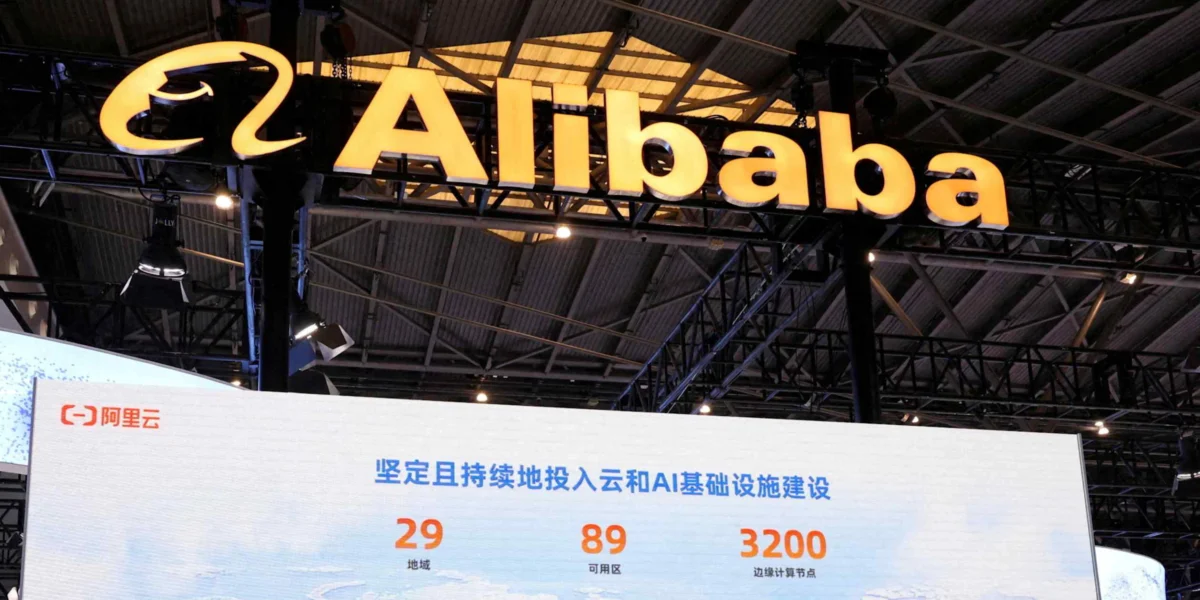
HONG KONG – Alibaba Group announced on Sunday its intention to raise approximately 80 billion Hong Kong dollars, equivalent to $10.2 billion, through a new share placement targeting investors outside the United States. The e-commerce and technology giant revealed that all proceeds from this significant capital infusion will be strategically directed towards bolstering its comprehensive artificial intelligence capabilities, often referred to as "full-stack AI." This move underscores Alibaba’s commitment to accelerating its development in the rapidly evolving AI landscape, a sector currently witnessing an unprecedented surge in investment and innovation globally.
Strategic Pivot Amidst a Global AI Arms Race
The timing of Alibaba’s announcement is particularly noteworthy. The technology sector, both in China and across the Western world, is engaged in an intense competition to develop and deploy cutting-edge AI models, commonly known as frontier models. These advanced AI systems, capable of performing a wide range of complex tasks, require immense computational power and sophisticated infrastructure. Alibaba’s substantial investment signals its intent to not only keep pace but to potentially lead in this critical technological frontier.
The global AI race is characterized by rapid advancements in areas such as large language models (LLMs), generative AI, and specialized AI for scientific research and industrial applications. Major tech players, including Google, Microsoft, Meta, and OpenAI in the West, and Baidu, Tencent, and Huawei in China, are all pouring billions into AI research and development. This competition extends beyond model development to encompass the crucial underlying infrastructure: advanced semiconductors, high-performance computing clusters, and efficient data centers. Alibaba’s decision to focus on "full-stack AI" suggests a holistic approach, aiming to strengthen every layer of its AI ecosystem, from foundational research and model training to the deployment of AI-powered services and applications.
A Deep Dive into Alibaba’s AI Ambitions
Alibaba’s investment strategy appears designed to fortify its position across the entire AI value chain. "Full-stack AI" typically encompasses several key components:
- AI Chip Development: The creation of specialized hardware, such as AI accelerators (GPUs, TPUs, NPUs), is crucial for efficient AI model training and inference. Companies investing in full-stack AI often aim to reduce reliance on external chip suppliers and tailor hardware to their specific AI workloads.
- AI Frameworks and Software: This includes the development of proprietary AI operating systems, machine learning frameworks (like TensorFlow or PyTorch, or their own versions), and libraries that streamline AI development and deployment.
- Model Development: The core of AI innovation lies in building and training sophisticated AI models. This involves significant investment in research and development for large language models, computer vision models, and other specialized AI architectures.
- Cloud Infrastructure: Scalable and robust cloud computing platforms are essential for hosting AI workloads, managing massive datasets, and providing AI-as-a-service to enterprises and developers. Alibaba Cloud is already a significant player in this space.
- AI Applications and Services: Ultimately, AI capabilities need to be translated into tangible products and services that address real-world problems across various industries, from e-commerce and logistics to cloud computing and entertainment.
By focusing on all these facets, Alibaba aims to achieve greater synergy, optimize performance, and potentially lower costs associated with AI development and deployment. This integrated approach can also provide a competitive advantage by enabling faster iteration cycles and more customized AI solutions.
Historical Context and Previous AI Investments
This latest capital raise is not Alibaba’s first foray into substantial AI investments. The company has been progressively integrating AI into its vast array of services for years. Its e-commerce platforms leverage AI for personalized recommendations, fraud detection, and logistics optimization. Alibaba Cloud has been a key platform for numerous AI startups and enterprises, offering AI-as-a-service solutions. Furthermore, Alibaba has actively invested in AI research through its DAMO Academy (Discovery, Adventure, Momentum, Outlook), established in 2017 with a significant initial investment to foster fundamental research in areas including AI, data science, and quantum computing.
In recent years, as the generative AI revolution gained momentum, Alibaba, like many of its peers, accelerated its efforts. The company unveiled its own large language model, Tongyi Qianwen, in April 2023, positioning it as a foundational model for a wide range of applications. The development and refinement of such models require continuous investment in computing power and data. This new share placement signifies a doubling down on this strategic direction, potentially to accelerate the development of next-generation Tongyi Qianwen models and their integration across Alibaba’s ecosystem.
The Significance of the Share Placement
The decision to raise funds through a share placement specifically targeting investors outside the U.S. is also noteworthy. It suggests a strategy to diversify its investor base and potentially tap into capital markets that are more amenable to long-term technology investments. The exclusion of U.S. investors might also be influenced by the complex geopolitical and regulatory landscape surrounding technology investments between the U.S. and China. This move aims to secure substantial capital without diluting existing ownership significantly or incurring the complexities of U.S. capital markets.
The 80 billion Hong Kong dollar figure represents a significant commitment, indicating the scale of Alibaba’s AI ambitions. This capital is expected to be deployed over a defined period to fund research, talent acquisition, infrastructure expansion, and potential acquisitions of AI-focused companies.
Market Reactions and Analyst Perspectives
While official statements from Alibaba are typically measured, the market’s reaction to such a significant strategic announcement is usually swift. Investors and analysts will be closely scrutinizing the details of the share placement and Alibaba’s projected timeline for AI development.
- Potential for Increased Competition: This investment is likely to intensify competition within China’s AI sector, pushing domestic rivals to further accelerate their own AI development and infrastructure build-outs.
- Impact on Cloud Computing: Alibaba Cloud could see a significant boost, as it will be the primary beneficiary of the enhanced AI capabilities and infrastructure. This could lead to more competitive pricing and advanced AI services for its clients.
- Global AI Landscape: On a global scale, Alibaba’s move reinforces the trend of major tech companies making massive, long-term commitments to AI. It signals that China remains a formidable force in the global AI race, despite geopolitical headwinds.
- Talent War: The demand for skilled AI researchers, engineers, and data scientists is at an all-time high. Alibaba’s investment will likely fuel its efforts to attract and retain top talent, further intensifying the global talent war in AI.
Analysts are likely to focus on how Alibaba plans to leverage its existing strengths in e-commerce, cloud computing, and digital media to monetize its AI investments. The company’s ability to translate its cutting-edge AI research into commercially viable products and services will be a key determinant of its success.
Broader Implications for the Technology Sector
Alibaba’s substantial investment in full-stack AI has far-reaching implications for the broader technology sector:
- Democratization of AI: By investing in infrastructure and frameworks, Alibaba could make advanced AI tools more accessible to a wider range of businesses and developers, potentially accelerating innovation across various industries.
- Shift in Computing Paradigms: The demand for AI-specific computing power is driving innovation in chip design and data center architecture. Alibaba’s investment will contribute to this ongoing evolution.
- Ethical AI Considerations: As AI capabilities advance, so too do the discussions around ethics, bias, and responsible deployment. Alibaba, like other major AI players, will face increasing scrutiny regarding these issues as it develops and deploys more powerful AI systems.
- Economic Impact: Significant investments in high-tech sectors like AI can have a ripple effect on economies, creating jobs, fostering new industries, and driving economic growth.
The coming years will undoubtedly see intensified efforts from Alibaba and its competitors to push the boundaries of artificial intelligence. This $10.2 billion investment is a clear signal that Alibaba is positioning itself to be a major player in shaping the future of AI, both within China and on the global stage. The company’s success will depend on its ability to execute its ambitious strategy, navigate the complex technological and geopolitical landscape, and ultimately deliver on the promise of advanced AI for a wide range of applications. The race for AI dominance is far from over, and Alibaba’s latest move has just raised the stakes considerably.