Gilang Muhammad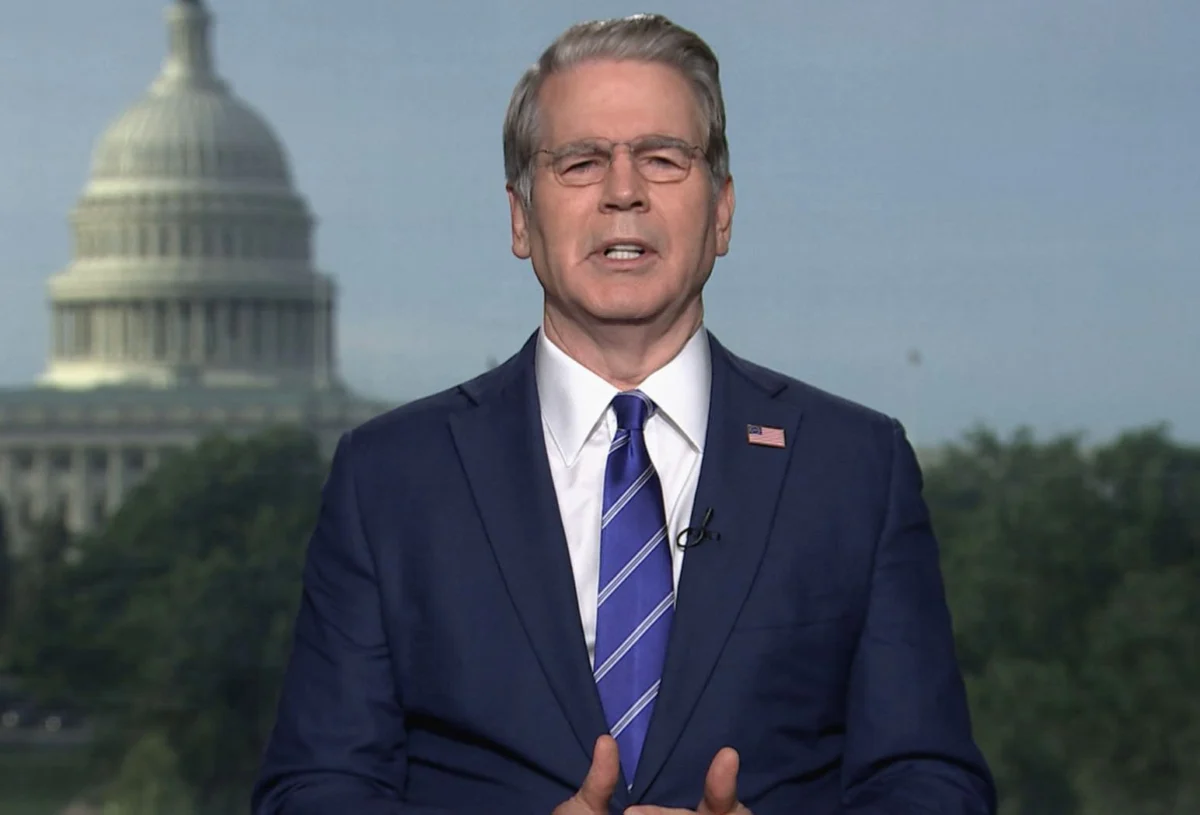
Treasury Secretary Scott Bessent on Thursday expressed a "very good chance" that the U.S. budget deficit under President Donald Trump has likely reached its zenith, a significant declaration made during an exclusive interview with CNBC’s Sara Eisen on August 4th, 2026. This optimistic outlook emerged just a day after the Treasury Department’s announcement of an extraordinary debt buyback operation, signaling a concentrated effort by the administration to regain control over the nation’s fiscal trajectory amidst escalating financial challenges.
Context of the Announcement and the Extraordinary Debt Buyback
Bessent’s remarks came during a period of intense scrutiny over the nation’s finances. The interview, conducted from Washington D.C., served as a platform for the Treasury Secretary to elaborate on the administration’s fiscal strategy following a series of alarming economic indicators. The "extraordinary debt buyback announcement" referenced by Bessent represents a proactive, albeit unusual, move by the Treasury to manage its vast outstanding debt. This operation, reportedly projected to exceed $4 billion, aims to repurchase older, higher-yielding government bonds, thereby potentially reducing future interest payments and improving the overall efficiency of the Treasury’s debt portfolio. Such buybacks are typically employed during periods of declining interest rates or ample cash reserves to smooth out maturity profiles or enhance market liquidity, making its timing noteworthy given the current fiscal landscape. Bessent emphasized the administration’s "laser focus" on fiscal responsibility, signaling a concerted drive to stabilize the nation’s financial health.
Deep Dive into Recent Deficit Figures and National Debt Milestone
The urgency of the administration’s focus is underscored by recent data illustrating the rapid expansion of the U.S. budget deficit. Last week, the Treasury Department reported that the monthly U.S. budget deficit surged to $432 billion in July 2026, marking its highest level in over five years, specifically since March 2021. This substantial monthly gap pushed the fiscal year-to-date deficit to nearly $1.8 trillion, surpassing the deficit recorded at the same point in the previous fiscal year by a considerable margin. For context, the fiscal year-to-date deficit at this point in 2025 stood at approximately $1.65 trillion, indicating a persistent upward trend in government spending relative to revenue.
Compounding these concerns, the nation’s total government debt pile recently crossed an unprecedented threshold, surpassing the $40 trillion mark for the first time in history. This staggering figure represents more than a doubling of the national debt over the last decade, a trajectory that has fueled widespread apprehension among economists, policymakers, and international observers regarding the country’s long-term financial stability and its capacity to manage future economic shocks. The interest payments alone on this colossal debt represent a significant and growing portion of the federal budget, diverting funds that could otherwise be allocated to critical public services or investment in national growth.
Administration’s Strategy: Fiscal Consolidation and Savings
In response to these escalating figures, Secretary Bessent outlined a multi-pronged approach to fiscal consolidation. He highlighted collaborative efforts among key federal government leaders, including himself, President Trump, and Russell Vought, the director of the Office of Management and Budget (OMB). Their joint objective is to identify and implement measures capable of generating "several hundreds of billions of dollars" in savings. While specific details of these measures were not fully disclosed during the interview, they are understood to encompass a combination of targeted spending cuts across various federal agencies, efficiency improvements in government operations, and potentially a review of certain federal programs. The administration’s rhetoric suggests a commitment to streamline government expenditures without hindering essential services or economic growth initiatives.
The Tariff Conundrum: Revenue Hopes Versus Legal Hurdles
A significant component of the Trump administration’s revenue strategy has historically been its ambitious plan for broad and steep tariffs on trading partners. These levies were initially envisioned not only as tools to rebalance trade relationships and protect domestic industries but also as a substantial driver of federal revenue, intended to help shrink the national debt. However, this strategy has encountered considerable headwinds, most notably from repeated legal challenges.
A pivotal moment occurred with the Supreme Court’s decision in February 2026, which struck down many of the administration’s key tariff implementations. The ruling, widely seen as a setback for the White House’s trade policy, hinged on complex interpretations of presidential authority and international trade agreements. This judicial intervention significantly curtailed the anticipated revenue stream from tariffs and necessitated a re-evaluation of the administration’s approach. Despite these challenges, Bessent expressed confidence that this year’s tariff revenue is expected to align with levels seen in 2025, following the re-implementation of revised levies designed to withstand legal scrutiny. Crucially, he noted that these revenues should not be subject to refunds to companies this time, implying a more robust legal framework or a more narrowly tailored application of the tariffs in their current iteration. In 2025, tariff revenues contributed approximately $85 billion to federal coffers, and matching this figure in 2026, even after legal battles, would be seen by the administration as a testament to the resilience of its trade policy.
Bessent’s Growth Optimism: "Growing Our Way Out"
Amidst the daunting figures of deficit and debt, Secretary Bessent articulated a fundamental belief in the nation’s economic potential: "There’s nothing magic about the 40-trillion number. We can grow our way out of that." This statement encapsulates an economic philosophy prevalent within the administration, which posits that robust economic growth, driven by pro-business policies, deregulation, and strategic investments, can naturally increase tax revenues and make the national debt more manageable relative to the size of the economy.
Proponents of this view argue that a thriving economy generates higher corporate profits, increased individual incomes, and greater consumer spending, all of which translate into higher tax receipts without necessarily requiring direct tax rate increases. They point to potential benefits from infrastructure projects, technological innovation, and a competitive tax environment as catalysts for sustained GDP expansion. However, critics often counter that relying solely on growth to outpace debt accumulation is overly optimistic, especially given the historical rates of growth required to significantly alter the debt-to-GDP ratio. They emphasize the need for direct fiscal reforms, including a combination of spending cuts and revenue increases, to address the structural components of the deficit.
Expert Reactions and Economic Perspectives
Economists and financial analysts offered a range of reactions to Bessent’s pronouncements. Dr. Evelyn Reed, chief economist at Global Financial Insights, commented, "Secretary Bessent’s optimism about the deficit peaking is welcome, but the underlying trend of spending and debt accumulation remains a serious concern. While economic growth is vital, it must be coupled with concrete fiscal discipline to truly stabilize the nation’s balance sheet." Reed highlighted the persistent challenge of entitlement spending and rising interest rates as critical factors that could undermine even strong economic growth.
Conversely, Dr. Marcus Thorne, a senior fellow at the American Enterprise Institute, expressed more agreement with Bessent’s sentiment. "The administration’s focus on supply-side growth and targeted fiscal consolidation could indeed shift the deficit trajectory," Thorne stated. "The extraordinary debt buyback, if executed effectively, could signal a more sophisticated approach to debt management than we’ve seen in previous cycles. However, the success hinges on the details of the ‘hundreds of billions’ in savings and the sustained impact of the re-implemented tariffs."
Political Ramifications and Opposition Views
The political implications of Bessent’s statement are significant, particularly in the lead-up to the 2026 midterm elections. Opposition lawmakers were quick to challenge the administration’s narrative. Senator Maria Rodriguez, a leading voice on the Senate Finance Committee, issued a statement condemning the administration’s fiscal record. "To claim the deficit is peaking after adding trillions to the national debt and overseeing a surge in monthly deficits is disingenuous," Rodriguez asserted. "This administration has prioritized tax cuts for the wealthy and increased spending without a clear plan for long-term fiscal responsibility. The American people deserve a credible strategy, not optimistic pronouncements." Critics frequently point to the cumulative effect of tax reforms enacted early in the Trump presidency and increased discretionary spending as primary drivers of the expanded deficit and national debt.
Market Implications
Financial markets typically react to signals regarding fiscal health and debt management. Bessent’s statement, coupled with the debt buyback announcement, could be interpreted by investors as an attempt to instill confidence in the government’s ability to manage its finances. A perceived commitment to fiscal consolidation might contribute to greater stability in the U.S. Treasury bond market, potentially easing concerns about future inflation or credit rating downgrades. However, persistent high deficits and debt levels could continue to exert upward pressure on long-term interest rates, making it more expensive for the government to borrow and potentially crowding out private investment. Analysts will closely watch for concrete actions and legislative proposals that underpin Bessent’s optimistic outlook.
Challenges and the Path Forward
For Bessent’s prediction to materialize, several critical conditions must be met. The administration must successfully implement and sustain its fiscal consolidation measures, delivering the promised "hundreds of billions" in savings. The re-implemented tariffs must prove legally robust and generate consistent revenue without triggering retaliatory measures that could harm the U.S. economy. Furthermore, the "grow our way out" strategy requires sustained and robust economic expansion, which is subject to global economic conditions, geopolitical stability, and domestic policy effectiveness.
The $40 trillion debt milestone serves as a stark reminder of the long-term fiscal challenges facing the United States. While Secretary Bessent’s declaration of a "very good chance" that the deficit has peaked offers a glimmer of hope, the path to fiscal sustainability remains arduous and demands unwavering commitment to prudent economic management. The coming months will be crucial in determining whether the administration’s strategies can indeed steer the nation towards a more sustainable fiscal future, moving beyond record deficits and debt to a period of more balanced growth and financial stability.