Lina Wu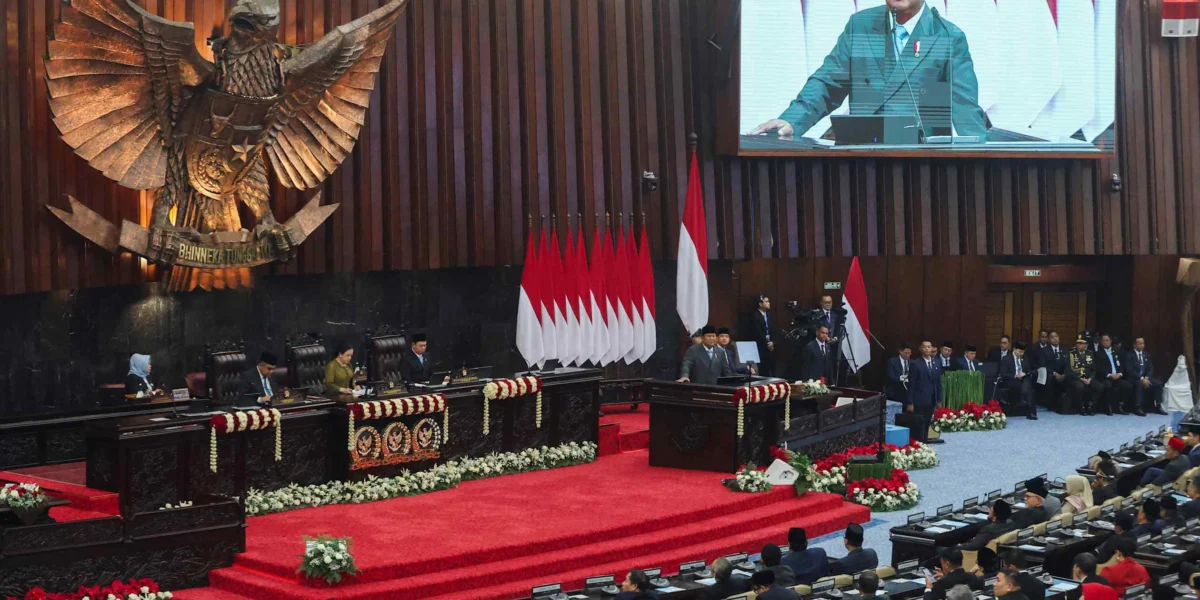
JAKARTA – Indonesian President Prabowo Subianto has unveiled a robust economic agenda for the upcoming fiscal year, projecting a near 7% surge in state revenue to Rp 3,426 trillion (approximately $192 billion) and targeting an impressive 6% economic growth rate. This ambitious outlook, presented during his annual state of the nation address on August 14, 2026, is underpinned by a series of strategic initiatives aimed at bolstering national finances, including enhanced commodity exchange operations and attracting significant foreign investment. The President also emphasized a commitment to fiscal discipline, signaling a continued effort to manage the budget deficit.
State of the Nation Address: A Vision for Economic Acceleration
President Prabowo’s address, delivered to a packed assembly of parliamentarians in Jakarta, provided a comprehensive overview of his administration’s economic priorities. The projected increase in state revenue is not merely an incremental adjustment but a reflection of a broader strategy to leverage Indonesia’s vast natural resources and growing economic potential. The target of 6% economic growth, if achieved, would represent a significant acceleration from recent performance and align with Indonesia’s aspirations to become a major global economic player.
The President’s pronouncements highlighted two key pillars of his revenue enhancement strategy: the optimization of commodity exchanges and the aggressive pursuit of foreign company purchases, which likely refers to foreign direct investment and strategic acquisitions. These initiatives are expected to generate substantial inflows of capital and stimulate economic activity across various sectors.
Boosting State Revenue Through Commodity Exchange Enhancement
A significant component of President Prabowo’s economic blueprint involves the revitalization and expansion of Indonesia’s commodity exchanges. The nation, rich in natural resources ranging from palm oil and coal to nickel and various agricultural products, has historically faced challenges in maximizing the value derived from these commodities. The administration’s plan aims to address this by fostering more transparent, efficient, and globally integrated commodity trading platforms.
Sources close to the Ministry of Trade suggest that this enhancement will involve several key strategies. Firstly, there is a concerted effort to modernize the infrastructure of existing exchanges, incorporating advanced trading technologies and robust regulatory frameworks to ensure market integrity. Secondly, the government is exploring the introduction of new derivative products and hedging instruments to allow producers and traders to better manage price volatility, thereby attracting more sophisticated market participants.
Furthermore, the government is reportedly working to streamline the listing process for commodities and to promote the participation of both domestic and international players. This includes efforts to enhance the depth and liquidity of the market, making Indonesian commodity exchanges more attractive for investment and trade. The ultimate goal is to ensure that a greater portion of the value generated from Indonesia’s commodity exports remains within the country, contributing directly to state revenue and economic development.
The potential impact of these measures is substantial. By improving the efficiency and attractiveness of commodity trading, Indonesia could see a significant increase in transaction volumes and a reduction in illicit trade or under-invoicing, which often deprives the state of legitimate tax revenue. Expert analysis suggests that a well-functioning commodity exchange can also act as a price discovery mechanism, providing valuable market signals that inform production and investment decisions, leading to more sustainable and profitable resource management.
Attracting Foreign Investment and Strategic Acquisitions
The second major thrust of President Prabowo’s revenue strategy involves actively encouraging foreign company purchases, a term that broadly encompasses foreign direct investment (FDI) and potentially strategic mergers and acquisitions. Indonesia has long sought to attract foreign capital to fuel its industrial development, create jobs, and transfer technology and expertise. The current administration appears poised to intensify these efforts with a more targeted and proactive approach.
This could involve a review and simplification of foreign investment regulations, making it easier for international companies to establish operations or acquire stakes in Indonesian businesses. The government may also be looking at offering specific incentives, such as tax holidays or preferential treatment in certain strategic sectors, to attract high-value investments. The focus is likely to be on sectors that align with Indonesia’s long-term development goals, such as renewable energy, advanced manufacturing, digital economy, and critical minerals processing.
The mention of "foreign company purchases" also suggests a potential focus on encouraging foreign entities to acquire stakes in existing Indonesian companies, which could inject much-needed capital, facilitate technology transfer, and improve the competitiveness of those businesses on the global stage. Such acquisitions, when structured appropriately, can lead to immediate revenue gains for the government through transaction taxes and increased corporate tax revenues in the long run.
The success of this strategy hinges on Indonesia’s ability to present itself as a stable, predictable, and attractive investment destination. Factors such as the rule of law, ease of doing business, availability of skilled labor, and the overall economic and political climate will be crucial in attracting and retaining foreign investment. Global economic conditions and the investment appetites of major economies will also play a significant role.
Economic Growth and Fiscal Discipline: A Delicate Balancing Act
The overarching goal of these revenue-generating initiatives is to fuel President Prabowo’s target of 6% economic growth. This growth rate is ambitious, particularly in a global economic environment that is often characterized by uncertainty and slower expansion in major economies. Achieving such a target will require not only increased investment but also sustained domestic demand and robust export performance.
The President’s commitment to a lower budget deficit signals a recognition of the need for fiscal prudence even as the government pursues ambitious growth objectives. A lower deficit means that the government will rely less on borrowing, which can help to keep interest rates down, reduce the burden of debt servicing, and enhance macroeconomic stability. This approach suggests a strategy of balancing expansionary policies with responsible fiscal management.
The projected state revenue of Rp 3,426 trillion is a significant sum, and its achievement will depend on the effective implementation of the outlined strategies. Supporting data from previous years, while not provided in the initial brief, would typically show the breakdown of revenue sources such as tax revenues (income tax, value-added tax, excise duties), non-tax revenues (from natural resources, state-owned enterprises, and other government services), and grants. An increase of nearly 7% would likely necessitate robust performance across all these categories.
For context, Indonesia’s GDP in 2025 was estimated to be around $1.5 trillion. A 6% growth rate would add approximately $90 billion to the economy, a substantial expansion. The state revenue target of $192 billion represents a significant portion of the projected GDP, indicating the government’s intention to increase its fiscal capacity to fund public services, infrastructure development, and social programs.
Broader Implications and Expert Analysis
The economic vision articulated by President Prabowo carries significant implications for both domestic stakeholders and the international community. For Indonesian citizens, the promise of higher economic growth and increased state revenue could translate into improved public services, more job opportunities, and potentially higher wages. However, the effectiveness of these benefits will depend on how the increased revenues are allocated and managed.
For businesses, both domestic and foreign, the focus on enhancing commodity exchanges and attracting investment signals a more dynamic and potentially lucrative operating environment. The success of these initiatives could lead to greater market access, improved supply chains, and new avenues for growth.
From an international perspective, Indonesia’s proactive economic agenda could position it as an increasingly important destination for global capital. A growing and stable Indonesian economy can contribute to regional and global economic stability. However, the success of these plans will be closely watched by international investors and financial institutions, who will assess the government’s ability to execute its policies effectively and maintain a favorable investment climate.
Economists note that achieving a 6% growth rate requires sustained momentum and a supportive global economic environment. Factors such as global demand for commodities, geopolitical stability, and the effectiveness of monetary and fiscal policies by major economies will all play a role. Furthermore, the Indonesian government’s ability to navigate potential challenges, such as inflation, currency fluctuations, and global supply chain disruptions, will be critical.
The commitment to fiscal discipline, while commendable, also means that the government will need to carefully manage its spending to avoid exacerbating inflationary pressures or creating unsustainable fiscal imbalances. The balance between stimulating growth and controlling inflation is a perennial challenge for policymakers, and Indonesia will be no exception.
The state of the nation address serves as a roadmap for the coming year, and the specifics of how President Prabowo’s ambitious plans will be implemented will be the subject of intense scrutiny in the months ahead. The coming year will be a crucial test of Indonesia’s economic resilience and its capacity to translate ambitious goals into tangible progress. The nation’s economic future, as outlined by its leader, hinges on the successful execution of these strategic initiatives.