Farhan Pambudi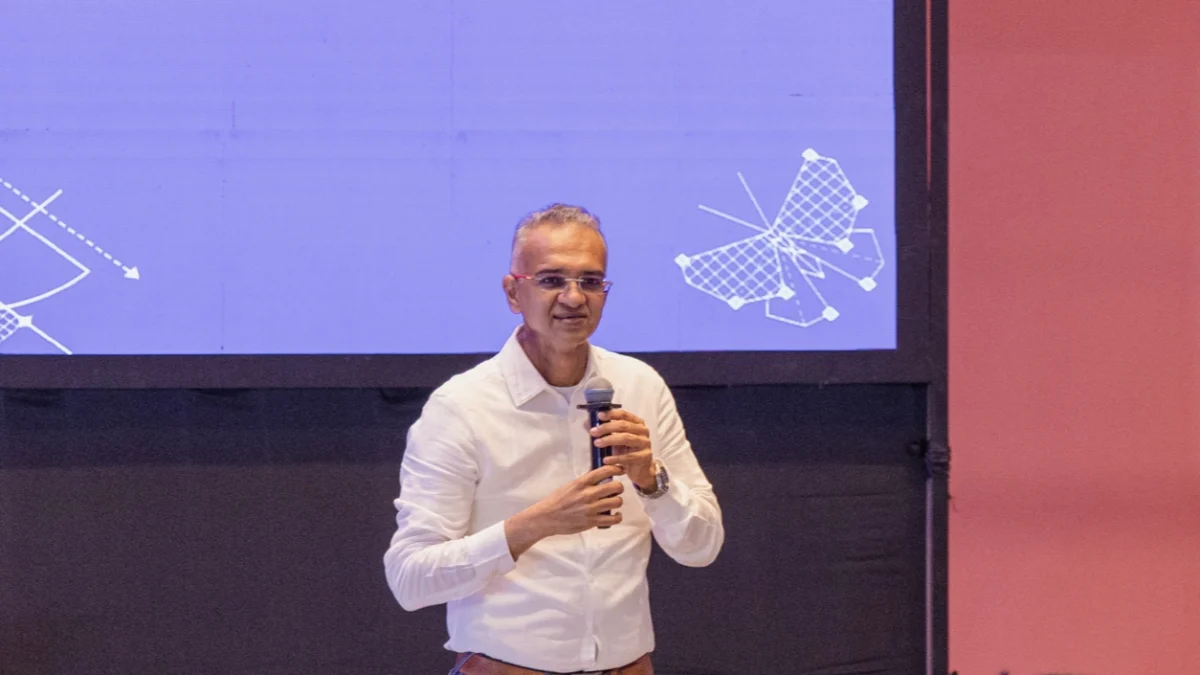
The National Payments Corporation of India (NPCI) is positioning artificial intelligence at the core of its next developmental phase as it seeks to scale the Unified Payments Interface (UPI) from its current 750 million daily transactions to a milestone of over one billion. During an extensive dialogue at Mumbai Tech Week 2026, Dilip Asbe, the Managing Director and CEO of NPCI, detailed a strategic vision where AI serves as the primary catalyst for user acquisition, fraud mitigation, and the democratization of credit. This transition marks a shift from UPI’s identity as a mere transactional rail to a sophisticated, intelligent financial ecosystem capable of supporting India’s diverse and expanding digital population.
Asbe emphasized that the collaboration between NPCI, the Reserve Bank of India (RBI), and the Union Government will be instrumental in onboarding the next 500 million users. To achieve this, the organization plans to leverage AI across three critical pillars: security, accessibility, and financial services integration. Specifically, AI will be deployed to identify fraudulent patterns and "mule" accounts with higher precision, while also utilizing the digital footprints of merchants and consumers to facilitate credit distribution. Furthermore, AI-driven voice and multilingual interfaces are expected to lower the barrier to entry for non-technical users, particularly in rural and semi-urban regions where linguistic diversity remains a challenge for digital adoption.
The Evolution of UPI: A Decade of Digital Transformation
To understand the magnitude of the projected growth, it is essential to contextualize UPI’s trajectory since its inception in 2016. Launched by the NPCI under the guidance of the RBI, UPI revolutionized the Indian financial landscape by allowing peer-to-peer (P2P) and peer-to-merchant (P2M) transactions to occur instantly via mobile devices, bypassing the complexities of traditional NEFT or RTGS transfers.
The timeline of UPI’s growth reflects a rapid adoption curve:
- 2016: Launch of UPI with a handful of banks; initial adoption was modest.
- 2017–2018: Demonetization and the entry of private players like Google Pay and PhonePe catalyzed volume.
- 2020–2021: The COVID-19 pandemic accelerated the shift toward contactless payments, pushing UPI into the mainstream for daily essentials.
- 2023: NPCI introduced "Hello! UPI," a voice assistant-based system designed to allow users to make payments through conversational AI.
- 2024: The launch of FIMI, an AI-driven language model tailored for resolving user disputes and automating mandate cancellations.
- 2026: UPI reaches 750 million daily transactions, with NPCI pivoting toward "Agentic Finance" and Small Language Models (SLMs).
The current objective of one billion transactions per day is not merely a numerical target but a benchmark for total financial inclusion. Asbe noted that reaching this goal requires addressing the "last mile" of the population, which necessitates tools that go beyond standard smartphone interfaces.
AI as a Safeguard and Enabler for Credit
One of the most significant challenges facing a high-volume payment system is the proliferation of financial crime. As transaction volumes grow, so does the sophistication of cyber-attacks and the use of "mule accounts"—legitimate bank accounts used by criminals to launder money. Asbe highlighted that AI would be used "very effectively" to protect citizens by analyzing transaction metadata in real-time to flag suspicious behavior before funds leave the ecosystem.
Beyond security, the NPCI is eyeing the credit market. Traditionally, credit in India has been reserved for those with formal credit scores. However, the "digital footprint" generated by years of UPI transactions provides a wealth of data that AI can analyze to determine creditworthiness. By integrating AI-driven credit scoring, NPCI aims to provide merchants and individual users with access to formal credit, effectively bridging the gap between digital payments and digital lending.
This move aligns with the RBI’s broader goals of increasing the credit-to-GDP ratio in India. By using AI to analyze cash flow patterns of small street vendors, the system can offer micro-loans that were previously unavailable through traditional banking channels.
The Shift Toward Small Language Models (SLMs)
While global tech giants like OpenAI and Google focus on Large Language Models (LLMs) like GPT-4 and Gemini, Asbe proposed a different path for the Indian financial sector: Small Language Models (SLMs). He argued that the Indian fintech ecosystem possesses a uniquely rich and diverse dataset that can be used to train models that are "sharp, specific, and as deterministic as possible."
The rationale for SLMs in finance is twofold: accuracy and cost-efficiency. In financial transactions, hallucination—a common issue where AI generates false information—can lead to catastrophic errors. SLMs, trained on narrower, high-quality financial datasets, are less prone to such errors and require significantly less computational power, making them more sustainable for the high-frequency environment of UPI.
NPCI’s FIMI model is a prime example of this strategy. Currently serving over a million users, FIMI handles complex tasks such as resolving transaction disputes and managing recurring payment mandates. By automating these processes, NPCI reduces the operational burden on banks and improves the overall user experience.
Voice Interfaces and the Linguistic Challenge
Despite the launch of voice-based systems in 2023, adoption has been slower than anticipated. Asbe acknowledged that voice models need to become more accurate to handle the nuances of India’s 22 official languages and thousands of dialects. However, he remains optimistic that voice will eventually become a critical component of the payment ecosystem.
The vision is to allow a user in a rural village to speak to their phone in their native dialect to initiate a payment or check a balance, removing the need for literacy or familiarity with complex app menus. This "conversational banking" model is seen as the ultimate tool for onboarding the next half-billion users who may be currently excluded from the digital economy due to linguistic or educational barriers.
Addressing Market Concentration and Regulatory Deadlines
A recurring point of discussion in the Indian fintech space is the dominance of two major players: PhonePe (owned by Walmart) and Google Pay. Together, these apps command over 80% of the UPI market share. This concentration has raised concerns regarding systemic risk and the lack of competition.
NPCI has previously proposed a 30% market share cap for third-party app providers (TPAPs) to ensure a more balanced ecosystem. The deadline for compliance with this cap is currently set for December 31, 2026. Asbe noted that the low switching costs of UPI—where users can easily move from one app to another without changing their underlying bank account—should theoretically encourage competition. However, he admitted that the lack of a "viable commercial model" for newer players has hindered their ability to invest and gain ground.
To provide a sovereign alternative, NPCI recently spun off the BHIM (Bharat Interface for Money) app into a separate subsidiary. While BHIM currently holds only about 1% of the market share, Asbe emphasized that the goal is not necessarily to compete for dominance but to provide a secure, government-backed alternative that ensures the resilience of the national payment infrastructure.
Comparative Analysis: India vs. Global Trends
The integration of AI into finance is a global phenomenon, but India’s approach differs from Western models. In the United States, companies like Coinbase and Robinhood are exploring AI agents for automated trading and financial advice. OpenAI’s integration with personal financial data represents a move toward personalized AI wealth management.
In contrast, India’s focus remains on infrastructure and inclusion. While "agentic commerce"—where AI agents can negotiate and execute payments on behalf of users—is being piloted (as seen in NPCI’s work with Razorpay), the immediate priority is using AI to make the basic act of moving money safer and more accessible.
Industry analysts suggest that India’s regulatory framework, led by the RBI, is more cautious than those in some Western markets. Asbe supported this stance, stating that robust regulations and frameworks are necessary to protect users. He noted that if an AI agent makes a mistake, the system must be able to audit the instructions and consent given by the human user, ensuring a clear chain of accountability.
Implications for the Future of the Digital Economy
The push toward one billion daily transactions and the heavy integration of AI have profound implications for India’s economy. First, it solidifies India’s position as a global leader in Digital Public Infrastructure (DPI). Nations across the Middle East, Southeast Asia, and Europe are already looking to adopt the UPI model, and the addition of AI layers could make the system even more attractive for export.
Second, the move toward AI-driven credit could trigger a surge in entrepreneurship. By providing small merchants with the tools to prove their creditworthiness through their transaction history, the NPCI is effectively unlocking capital for the "unbanked" or "underbanked" segments of society.
Finally, the focus on SLMs and local datasets ensures data sovereignty. By building models tailored to the Indian context, the country reduces its reliance on foreign AI infrastructure and ensures that the benefits of the AI revolution are distributed across its own fintech ecosystem.
As December 31, 2026, approaches—the deadline for the market share cap—the industry will be watching closely to see if newer players can leverage AI to disrupt the current duopoly. For Dilip Asbe and the NPCI, the path forward is clear: the next phase of UPI will not just be about moving money, but about moving it with intelligence, security, and universal accessibility.