Farhan Pambudi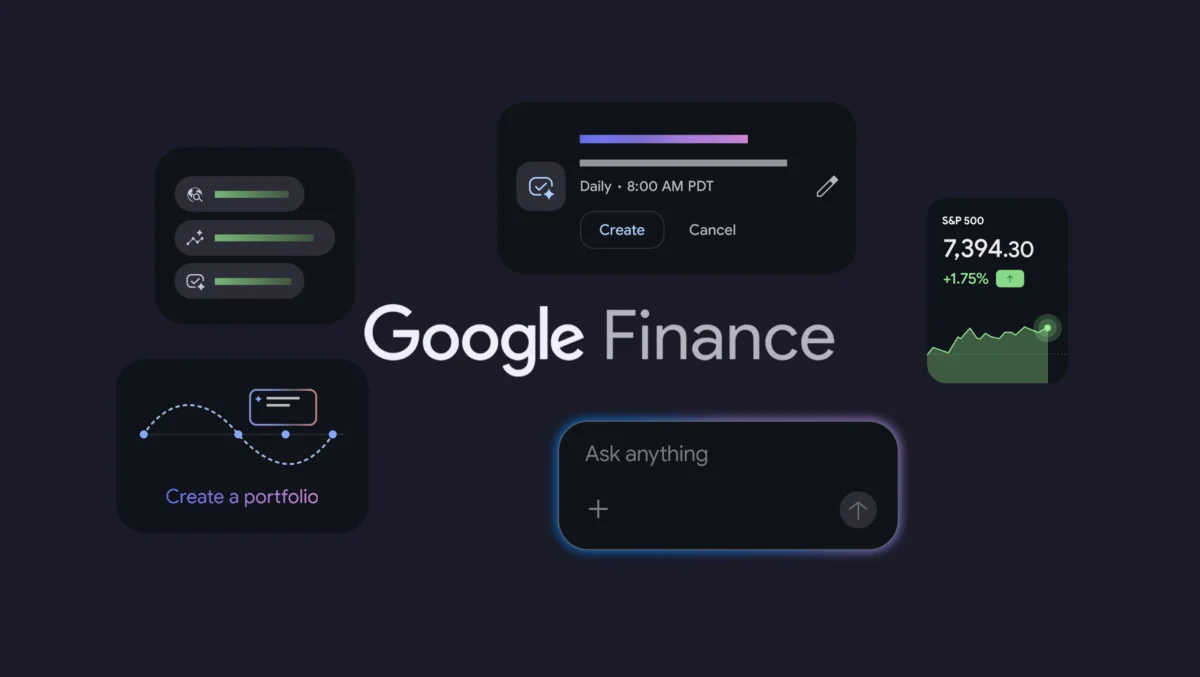
Google has officially expanded its financial services ecosystem with the launch of a dedicated mobile application for Google Finance, marking a significant shift in the company’s strategy to capture the growing retail investor market. The new application, which debuted on the Android platform this Thursday, serves as a centralized hub for users to manage watchlists, access real-time market data, and consume live financial news. Central to this launch is the integration of Google’s proprietary artificial intelligence, specifically the "Key Moments" feature, which utilizes large language models to analyze market volatility and provide users with concise explanations regarding stock price fluctuations. While the initial rollout is exclusive to Android users, Google has confirmed that an iOS version is currently in development and is expected to reach the Apple App Store in the coming months.
The introduction of a standalone application represents a pivot from Google’s previous approach, which largely relegated financial tracking to a sub-section of its search results or a mobile-optimized web experience. By transitioning to a native app, Google is positioning itself to compete directly with entrenched market leaders such as Yahoo Finance, as well as modern brokerage platforms like Robinhood and SoFi. This move is not merely a technical update but a strategic play to maintain user engagement within the Google ecosystem as financial literacy and retail trading continue to see high levels of participation globally.
Advanced AI Integration and the "Key Moments" Feature
The centerpiece of the new Google Finance app is the "Key Moments" functionality. In an era where market-moving news breaks across social media, press releases, and traditional news outlets simultaneously, retail investors often struggle to identify the specific catalyst behind a stock’s movement. Google’s AI aims to solve this by scanning vast amounts of data in real-time to pinpoint the "why" behind the numbers. For instance, if a tech giant’s stock suddenly drops by 4% mid-day, the AI identifies whether the cause was a regulatory filing, a competitor’s product launch, or a broader macroeconomic shift, presenting a summary to the user.
In addition to market summaries, the app is set to receive several high-utility features in the near future. Among these is the capability to listen to live earnings calls directly within the interface. Historically, accessing earnings calls required navigating cumbersome investor relations websites or using specialized third-party software. By integrating these calls into the app, Google is lowering the barrier to entry for individual investors who wish to perform deeper due diligence.
Transitioning from Beta: The New Web Experience and Global Portfolios
The launch of the mobile app coincides with the conclusion of the beta testing phase for the revamped Google Finance web experience, which was first unveiled in late 2025. This updated web interface is now being rolled out globally, bringing with it a suite of sophisticated portfolio management tools. Users can now view their investments through a unified dashboard that tracks holdings, historical performance, and real-time gains or losses.

One of the more innovative aspects of this rollout is the method by which users can build and update their portfolios. While traditional manual entry remains an option, Google has introduced a natural-language interface. Users can describe their investments to a chatbot—for example, stating, "I bought 50 shares of Apple at $180 and 20 shares of Tesla at $210"—and the system will automatically populate the dashboard. Furthermore, users can upload financial files to sync their data, and any existing portfolios previously stored within Google Finance will be automatically migrated to the new system.
Natural Language Tasks and Personalized Briefings
Google is leveraging its advancements in generative AI to offer personalized financial assistant services. A new feature allows users to set up recurring tasks using natural-language prompts. An investor might instruct the AI to "Provide a weekly briefing analyzing how my portfolio is affected by changes in interest rates" or "Summarize the performance of my energy sector holdings every Friday."
Once these tasks are established, the Google Finance AI works in the background, synthesizing news, market data, and the user’s specific portfolio composition to deliver tailored insights. This level of personalization was previously reserved for clients of high-end wealth management firms or users of expensive professional terminals like Bloomberg. By democratizing access to these insights, Google is attempting to redefine the role of a financial information provider from a passive data source to an active analytical partner.
A Chronological Evolution of Google Finance
To understand the significance of this launch, it is necessary to look at the timeline of Google Finance’s development.
- 2006: Google Finance launches as a competitor to Yahoo Finance and MSN Money, offering charts and news aggregation.
- 2017: In a controversial move, Google removes many of the advanced features of the Finance site (such as portfolios and historical data downloads), integrating a simplified version into Google Search.
- 2020-2021: Recognizing the surge in retail trading during the pandemic, Google begins a slow process of rebuilding the Finance brand, reintroducing portfolios and improving the mobile web interface.
- 2025: Google begins testing an AI-augmented web experience in beta, introducing early versions of "Key Moments" and live news feeds.
- June 2026: The official launch of the standalone Android app and the global rollout of AI-powered portfolio tools marks the full restoration and modernization of the platform.
Market Analysis and Competitive Positioning
The financial information market is currently undergoing a period of intense fragmentation. On one side are the legacy providers like Yahoo Finance, which remains the most visited financial news site in the world. On the other are "super-apps" and trading platforms like Robinhood and Public.com, which combine news with the ability to execute trades.
Google’s entry into this space with a dedicated app suggests a "middle-path" strategy. While Google has not yet integrated direct trading capabilities—likely to avoid the heavy regulatory burden associated with being a registered broker-dealer—it is positioning itself as the premier "pre-trade" and "post-trade" analysis tool. By staying out of the brokerage side, Google can maintain its reputation for objective data aggregation while using AI to provide better analysis than its competitors.

Industry analysts suggest that Google’s primary advantage is its massive existing data moat. Because Google already indexes the world’s news and has a dominant position in search, its AI has a faster and more comprehensive "view" of the world than almost any other consumer-facing financial tool. The challenge for Google will be navigating privacy concerns, as users may be hesitant to share their full investment portfolios with a company that already possesses vast amounts of their personal data.
Supporting Data: The Rise of the Retail Investor
The timing of this launch is bolstered by data showing a permanent shift in market participation. According to recent market surveys, retail investors now account for approximately 20% to 25% of daily stock market trading volume, a figure that has nearly doubled over the last decade. Furthermore, the "Gen Z" and "Millennial" demographics show a strong preference for mobile-first financial management and AI-driven insights.
Research from the FINRA Investor Education Foundation indicates that younger investors are more likely to use social media and digital platforms for investment research than traditional financial advisors. By launching a native app with AI features, Google is directly targeting this demographic, which values speed, accessibility, and automated synthesis of information.
Future Outlook and Broader Implications
The rollout of these features is far from complete. Google has stated that the portfolio and task-setting features currently available on the web will be integrated into the mobile app in the coming months. The company is also exploring ways to integrate these financial insights into other parts of its ecosystem, such as Google Workspace or Gemini (its primary AI assistant).
The broader implication of this launch is the further "AI-ification" of personal finance. As Google proves that AI can accurately summarize market movements and provide portfolio advice, other tech giants are likely to follow suit. Apple, which already has a successful "Stocks" app integrated into iOS and macOS, may feel pressured to enhance its own AI capabilities to match Google’s "Key Moments."
Ultimately, Google’s move signals that the next frontier in fintech is not just about the ability to buy and sell assets, but the ability to understand them. As the complexity of global markets grows, the tools used to navigate them must become more sophisticated. With its new dedicated app and AI research tools, Google is betting that the most valuable asset in an investor’s toolkit is no longer just capital, but actionable intelligence.