Gilang Muhammad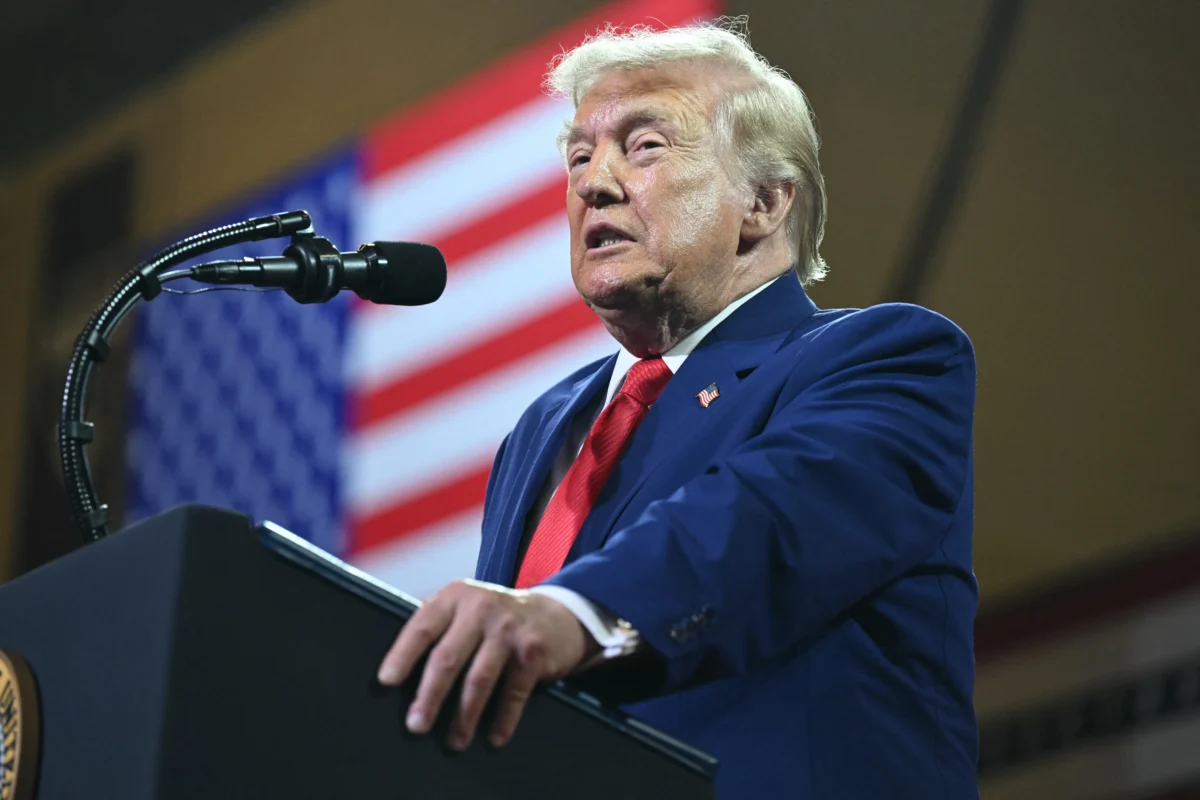
The United States has initiated a sweeping new tariff regime, imposing duties on 60 of its top trading partners under the guise of combating forced labor. This move, announced by President Donald Trump’s administration, has triggered widespread international condemnation, with nations from Australia to Brazil rejecting the premise of the tariffs as "unjustified" and "arbitrary." Despite the strong objections, most affected countries have indicated a preference for continued diplomatic engagement rather than immediate retaliatory measures, signaling a cautious approach to navigating the latest escalation in global trade tensions.
On Thursday, July 22, 2026, the Office of the U.S. Trade Representative (USTR) formally enacted measures under Section 301 of the Trade Act of 1974. These tariffs target countries deemed by Washington to have failed in implementing and enforcing bans on goods produced with forced labor. The duties are tiered: a 10% levy for partners that have adopted or committed to import prohibitions, and a steeper 12.5% for those that have not. This extensive net covers virtually all U.S. imports, impacting 99.4% of American inbound goods from its largest trade partners. President Trump had spoken earlier that day at Wheeler High School in Marietta, Georgia, where he alluded to the administration’s determination to protect American values and workers through robust trade enforcement.
This new policy replaces a temporary 10% global tariff previously imposed under Section 122 of the Trade Act, which is set to expire on July 24. The Section 122 tariffs, initially implemented as a stopgap measure, were ultimately ruled unlawful by the U.S. Supreme Court in February 2026, challenging the President’s use of emergency powers in trade matters. The administration’s pivot to Section 301, with its specific focus on forced labor, is widely seen as an attempt to establish a more legally durable foundation for a baseline tariff regime that courts had previously questioned. The shift reflects a strategic effort by the Trump administration to solidify its protectionist trade agenda within a framework perceived to be more robust against judicial review.
The Legal Framework: Section 301 and its Predecessors
The invocation of Section 301 of the Trade Act of 1974 represents a significant legal and policy maneuver by the Trump administration. Unlike Section 122, which grants the President broad authority to impose temporary import restrictions in times of emergency, Section 301 allows the USTR to investigate and respond to unfair trade practices by foreign countries. While traditionally used to address specific trade barriers or intellectual property violations, its application here to a broad "failure to ban forced labor" marks an expansive interpretation.
The Supreme Court’s February ruling against the Section 122 emergency-powers tariffs sent a clear message regarding the limits of presidential authority in trade. The ruling, which stemmed from challenges by various industry groups and international partners, underscored concerns about the executive branch bypassing congressional oversight on trade policy. The administration’s subsequent move to Section 301, a provision that allows for more detailed investigations and justifications, appears to be a direct response to this judicial setback, aiming to insulate its tariff strategy from further legal challenges by grounding it in a different statutory authority. This legal recalibration is crucial for the administration, which has consistently prioritized tariffs as a tool to reshape global trade dynamics.
The "Forced Labor" Rationale: A Source of Contention
The U.S. administration’s stated rationale for these tariffs – the failure of 60 economies to impose and enforce bans on goods made with forced labor – has been met with considerable skepticism from international trade experts and affected nations alike. The Peterson Institute for International Economics (PIIE), a prominent Washington D.C.-based think tank, articulated this skepticism forcefully earlier in the week, stating that the investigation is "not a labor-standards exercise but a mechanism for exporting America’s import ban on Chinese goods, as well as an attempt to recreate the tariff regime struck down by the Supreme Court."
This assessment aligns with a broader perception that while combating forced labor is a legitimate and important goal, its broad application as a basis for global tariffs may serve as a pretext for protectionist measures. Critics argue that the U.S. approach risks conflating genuine human rights concerns with economic objectives, potentially undermining international cooperation on both fronts. The U.S. has a long history of addressing forced labor in its trade policy, notably through the Tariff Act of 1930, which prohibits the importation of goods made with forced labor, and more recently with the Uyghur Forced Labor Prevention Act (UFLPA). However, the scale and scope of the current Section 301 action are unprecedented in their global reach, raising questions about the uniformity of evidence and enforcement across 60 diverse economies.
Immediate International Rejection and Appeals for Dialogue
The unveiling of the new tariffs immediately elicited strong reactions from capitals worldwide, largely characterized by rejection of the U.S. rationale but a willingness to engage in negotiations.
Australia, a key U.S. ally and one of the nations hit with the higher 12.5% tariff, voiced its strong disapproval. Australian Trade Minister Don Farrell stated unequivocally, "These tariffs are unjustified, inconsistent with our free trade agreement, and should be removed." He emphasized Australia’s robust framework for combating forced labor and modern slavery, asserting that the country is "recognized globally, including in the U.S., for our leadership" in this area. Australia, alongside China (including Hong Kong), Singapore, and South Korea, faces the 12.5% duty, a classification that implies a greater perceived deficiency in their efforts to prevent forced labor goods from entering the American market.
In Brazil, which also faces a 12.5% tariff, President Luiz Inácio Lula da Silva denounced the duties as "arbitrary" and "unjustified." The measure adds to an existing 25% Section 301 tariff imposed on Brazilian goods earlier this month, creating a cumulative 37.5% barrier. This combined rate approaches the 50% duty that was previously struck down as unlawful last year, highlighting a persistent pattern of escalating tariffs on Brazilian exports. While President Lula signaled openness to negotiations, he also cautioned that Brazil would actively seek alternative markets if its access to the U.S. market remained constrained.
Chile’s government, through its trade undersecretariat in Santiago, issued a statement asserting that the U.S. measure was inconsistent with the country’s labor standards and the extensive technical, political, and legal evidence it had submitted during the investigation. Crucially, Chile noted that the U.S. resolution does not allege that Chile itself exports goods made with forced labor, indicating a potential misapplication of the criteria. Santiago pledged to press for specific exclusions covering its key export products, a common strategy for nations seeking to mitigate the impact of broad tariff actions.

Canada, typically a close U.S. economic partner, was placed in the lower 10% tier, with an important exemption for goods compliant with the United States-Mexico-Canada Agreement (USMCA). Minister for Canada-U.S. Trade Dominic LeBlanc adopted a milder tone, calling the move "not unexpected." LeBlanc affirmed Ottawa’s shared objective with Washington on combating forced labor and committed to "continue engaging constructively" in the weeks ahead. This measured response reflects Canada’s strategic interest in preserving the integrity of the USMCA and its crucial trade relationship with its southern neighbor.
New Zealand’s foreign ministry released a market report indicating that its trade minister had clearly communicated Wellington’s disagreement with the investigation’s findings. The report confirmed that New Zealand would continue to register its position with the U.S. government. Fortunately for New Zealand, existing exemptions covering approximately 30% of its U.S.-bound exports, including significant agricultural products like beef and kiwifruit, remain unchanged, offering some buffer against the new tariffs.
Asian Economies: Mixed Impact and Strategic Exemptions
Several major Asian economies are also significantly affected. China, including Hong Kong, Singapore, and South Korea, faces the 12.5% tariff. Meanwhile, Malaysia, Taiwan, Indonesia, and India are subject to the 10% additional duties.
Despite the broad application, the immediate economic impact on major Asian economies is projected to be limited, according to Tianchen Xu, a senior economist at the Economist Intelligence Unit (EIU). Speaking to CNBC on Friday, Xu highlighted that "Asia will continue to benefit from tariff carve-outs, which include most types of electronics from consumer devices to chips." He further noted that "these goods have consistently been exempt under U.S. tariffs under the second Trump administration." This strategic exemption for critical electronics components and finished products underscores the U.S.’s continued reliance on global supply chains for technology, even amidst broader trade disputes. The implication is that while the tariffs are globally applied, their economic bite may be selectively softened to avoid disrupting key sectors vital to American consumers and industries. This nuanced approach suggests an awareness of the delicate balance between protectionism and maintaining access to essential goods.
Economic Implications and Broader Analysis
The PIIE’s critique that the forced labor case is "not about forced labor" for countries like Brazil, but rather a mechanism to re-establish a challenged tariff regime, highlights a core tension. If the primary motivation is protectionism rather than genuine human rights enforcement, the effectiveness of these tariffs in achieving their stated goal of combating forced labor is questionable. Instead, they could primarily function as a new layer of import taxes, potentially raising costs for American businesses and consumers who rely on imported goods.
The sheer scale of the tariffs, covering 99.4% of American imports from 60 economies, suggests a profound shift in global trade dynamics. While specific carve-outs for electronics may mitigate some immediate shocks, industries not covered by these exemptions could face increased production costs, leading to higher consumer prices or reduced competitiveness. For instance, sectors like textiles, agriculture, and manufacturing, which often have complex global supply chains, could be particularly vulnerable to these new duties.
The absence of immediate countermeasures from major trading partners indicates a cautious, wait-and-see approach. Nations are likely weighing the economic costs of retaliation against the potential benefits of negotiation. Retaliatory tariffs could escalate into full-blown trade wars, harming global economic recovery and further fragmenting supply chains. The preference for engagement suggests a hope that specific exemptions can be secured, or that the U.S. administration can be persuaded to revisit its broad application of the tariffs.
A Chronology of Escalating Trade Tensions
The current tariff episode is part of a longer, evolving chronology of trade actions under President Trump’s administrations:
- 2018-2019 (First Trump Administration): Imposition of Section 232 tariffs on steel and aluminum imports, and Section 301 tariffs on a wide range of Chinese goods, igniting a major trade war.
- Early 2020s: Continued use of tariffs and trade pressure, often justified by national security or unfair trade practices.
- Last Year (2025): A 50% tariff rate on Brazilian goods was struck down as unlawful, highlighting judicial scrutiny of the administration’s trade measures.
- February 2026: The U.S. Supreme Court rules President Trump’s emergency-powers tariffs under Section 122 unlawful, necessitating a new legal basis for broad tariffs.
- Earlier July 2026: A separate 25% Section 301 tariff imposed on Brazilian goods, signaling renewed pressure.
- July 22, 2026: President Trump speaks in Marietta, Georgia, preceding the formal announcement of the new global tariffs.
- July 22, 2026 (Thursday): USTR announces new global tariffs under Section 301 on 60 economies, citing forced labor.
- July 24, 2026: The temporary Section 122 tariffs are set to expire, making way for the new Section 301 regime.
This timeline illustrates a consistent pattern of the Trump administration leveraging tariffs as a primary foreign policy and economic tool, often pushing the boundaries of existing trade law and facing repeated challenges both domestically and internationally.
The Path Forward: Negotiations, Global Trade Order, and Geopolitical Implications
The immediate future will likely be dominated by intense bilateral and multilateral negotiations. Trading partners will seek to present their cases, clarify their forced labor policies, and lobby for exemptions for specific products or entire sectors. The U.S. administration, in turn, will face the challenge of consistently applying its "forced labor" criteria across 60 diverse economies while attempting to avoid undue economic disruption to its own industries.
The absence of immediate countermeasures from major partners suggests a desire to avoid escalating trade wars, especially given the precarious state of the global economy. However, if negotiations prove fruitless, or if the economic impact becomes too severe, the prospect of retaliation remains a significant threat. The World Trade Organization (WTO), though often sidelined by the Trump administration, could also become a forum for dispute resolution, should countries formally challenge the legality of these Section 301 tariffs.
Beyond the immediate economic impact, these tariffs carry significant geopolitical implications. They reflect a continued U.S. policy of unilateral action in trade, potentially straining alliances and fostering resentment. While the stated goal is to uphold human rights, the broad application and the skepticism surrounding the rationale risk alienating partners who might otherwise be willing collaborators in combating forced labor. The move could also accelerate efforts by some nations to diversify their supply chains away from reliance on the U.S. market, further fragmenting the global trading system. Ultimately, the success of this new tariff regime, both in achieving its stated human rights objectives and in shaping global trade, will hinge on the administration’s ability to navigate the complex interplay of economic interests, legal frameworks, and international diplomacy.