Farhan Pambudi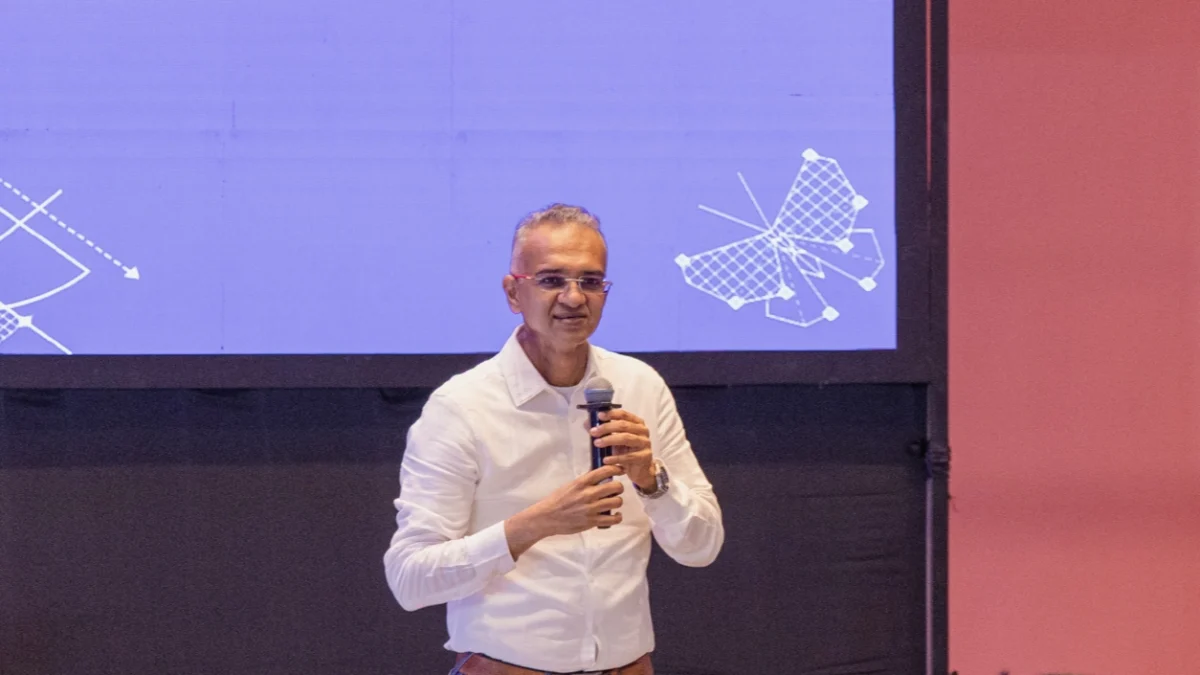
The National Payments Corporation of India (NPCI) is charting a transformative course for the Unified Payments Interface (UPI), positioning artificial intelligence (AI) as the primary catalyst for the next phase of India’s digital financial evolution. As the platform currently processes over 750 million daily transactions, the leadership at NPCI has set an ambitious target of exceeding one billion transactions per day. To bridge this gap, Dilip Asbe, the Managing Director and CEO of NPCI, has outlined a comprehensive strategy that integrates AI into user onboarding, fraud mitigation, and the democratization of credit. Speaking at Mumbai Tech Week (MTW) 2026, Asbe emphasized that the synergy between the NPCI, the Reserve Bank of India (RBI), and the central government will be pivotal in bringing the next 500 million users into the digital fold.
The AI Revolution in Digital Finance: Security and Credit Distribution
Artificial intelligence is no longer a peripheral technology in the fintech sector; it has become the bedrock upon which future scalability rests. According to Asbe, the next wave of UPI growth will be defined by how effectively AI is deployed to protect the ecosystem. A primary concern for the NPCI is the identification and prevention of "mule" accounts—bank accounts used by criminals to launder illicit funds. By employing sophisticated machine learning algorithms, the NPCI aims to detect anomalous transaction patterns in real-time, thereby safeguarding the financial integrity of hundreds of millions of citizens.
Beyond security, AI is slated to play a critical role in credit distribution. Despite the massive success of UPI, a significant portion of the Indian population remains underserved by traditional credit institutions. The digital footprint generated by millions of small-scale merchants and individual users provides a rich dataset that AI can analyze to determine creditworthiness. This approach moves away from traditional collateral-based lending toward data-driven credit, allowing merchants with consistent digital transaction histories to access capital more easily. This shift is expected to fuel the growth of the Micro, Small, and Medium Enterprises (MSME) sector, which is the backbone of the Indian economy.
Enhancing User Accessibility through Voice and Multilingual Solutions
One of the most significant barriers to the universal adoption of digital payments in India is the linguistic and literacy divide. While smartphone penetration is at an all-time high, navigating complex app interfaces remains a challenge for many users in rural areas. To address this, the NPCI is doubling down on voice-as-an-interface. Although the organization launched a voice assistant-based interactive system in 2023, adoption has been gradual.
Asbe noted that for voice to become a dominant mode of transaction, the underlying AI models must achieve a higher degree of accuracy and reliability. The vision includes a multilingual system capable of understanding diverse Indian dialects, allowing users to initiate and authorize payments through simple verbal commands. This "conversational banking" model is expected to simplify the onboarding process for the next half-billion users, many of whom may prefer speaking to their devices rather than typing.
The Strategic Shift Toward Small Language Models
While global tech giants are focused on Large Language Models (LLMs) like GPT-4 or Gemini, Asbe suggested that the Indian financial ecosystem has a unique opportunity to pioneer "Small Language Models" (SLMs). These models are designed to be more specialized, deterministic, and efficient, focusing on specific datasets rather than general-purpose information.
The rationale behind this strategy is the richness of the dataset available within the Indian fintech ecosystem. Banks and fintech companies possess granular data on transaction behaviors, dispute patterns, and consumer preferences. By training SLMs on this localized data, the industry can create tools that are sharper and more effective at resolving specific financial issues. An early success in this domain is "FIMI," an AI model launched by NPCI last year to handle user disputes. FIMI is currently serving over a million users, assisting in the cancellation of mandates and the resolution of transaction failures, proving that specialized AI can scale rapidly in a high-volume environment.
Addressing Market Concentration and the 30% Market Share Cap
A persistent challenge for the NPCI is the high level of market concentration within the UPI ecosystem. Currently, two major players—Walmart-owned PhonePe and Google Pay—control more than 80% of the market share. This duopoly has raised concerns regarding systemic risk and the lack of competition. To foster a more diverse ecosystem, the NPCI has proposed a 30% market share cap for third-party app providers (TPAPs).
This regulation, which has seen several delays, is currently slated to take effect on December 31, 2026. Asbe acknowledged that the dominance of the current leaders is a result of significant capital investment and early-mover advantages. However, he argued that the low switching costs for users mean that the market remains contestable. The primary hurdle for new entrants is the lack of a viable commercial model, as UPI transactions currently operate on a zero-merchant discount rate (MDR) policy, meaning apps do not earn fees from basic transactions. Asbe suggested that as the ecosystem evolves to include more value-added services—such as insurance, investment products, and credit—newer players will find the commercial incentive to invest and grow their market share.
The Spinoff of BHIM and the Quest for a Sovereign Alternative
In an effort to lead by example and provide a robust alternative to private sector apps, the NPCI recently spun off the BHIM (Bharat Interface for Money) app into a wholly-owned subsidiary. While BHIM was the original flagship app for UPI, its market share has dwindled to approximately 1% in the face of aggressive marketing by private competitors.
The restructuring of BHIM is intended to make the app more agile and competitive. Asbe clarified that the goal is not necessarily to achieve a specific market share percentage but to ensure that India has a "sovereign and secure" digital payment option that is not beholden to the corporate strategies of foreign-owned entities. By operating as a separate unit, BHIM can focus on innovation and user experience, potentially serving as a benchmark for security and transparency in the industry.
Comparative Analysis: India vs. Global AI Fintech Trends
The push for AI in Indian finance mirrors global trends but with a distinct regulatory flavor. In the United States, companies like Coinbase and Robinhood are experimenting with "agentic" finance, where AI agents can trade assets or manage portfolios on behalf of users. Similarly, OpenAI has enabled users to integrate financial data into ChatGPT for personalized advice.
India is also exploring "agentic commerce." Last year, NPCI demonstrated pilot projects with Razorpay involving AI-led e-commerce transactions using models like ChatGPT, Gemini, and Claude. However, the rollout of these features in India is being handled with greater regulatory caution. Asbe emphasized that any move toward autonomous AI agents in finance must be backed by a robust framework that ensures user protection. He stressed that in the event of an error or a fraudulent transaction initiated by an AI agent, there must be a clear "audit trail" of the instructions and consent provided by the human user. This focus on accountability and risk mitigation is a hallmark of the Indian regulatory approach, which prioritizes financial stability alongside innovation.
Chronology of UPI’s Evolution and Future Milestones
The journey of UPI from a niche project to a global benchmark has been marked by several key milestones:
- 2016: Launch of UPI by the NPCI with 21 member banks.
- 2020: Implementation of the zero-MDR policy to encourage digital adoption.
- 2022: NPCI announces the initial plan for a 30% market share cap for TPAPs.
- 2023: Launch of "Hello UPI" (voice assistant) and the "FIMI" AI model for dispute resolution.
- 2024: Spinoff of BHIM UPI into a separate subsidiary to enhance competitiveness.
- 2025: Pilot programs for agentic commerce and AI-driven credit distribution.
- December 31, 2026: Deadline for the implementation of the 30% market share cap.
Implications for the Global Digital Economy
India’s success with UPI has already caught the attention of the world, with countries like Singapore, the UAE, France, and several African nations seeking to integrate or replicate the system. The integration of AI into this infrastructure is expected to further cement India’s position as a leader in the global digital economy.
For investors, the Indian fintech landscape presents a unique proposition. The regulatory environment, while stringent, provides a level of predictability and safety that is attractive for long-term capital. The focus on building indigenous AI models and specialized financial tools suggests that India is moving toward "technological sovereignty," reducing its dependence on global tech stacks.
As the NPCI pushes toward the one-billion-transaction milestone, the lessons learned in India regarding AI ethics, data privacy, and market competition will likely serve as a blueprint for other emerging economies. The transition from a transaction-led system to an intelligence-led ecosystem marks the beginning of a new chapter in the history of money, where the interface is not just a screen, but a voice, and the intermediary is not just a bank, but an intelligent algorithm.