Gilang Muhammad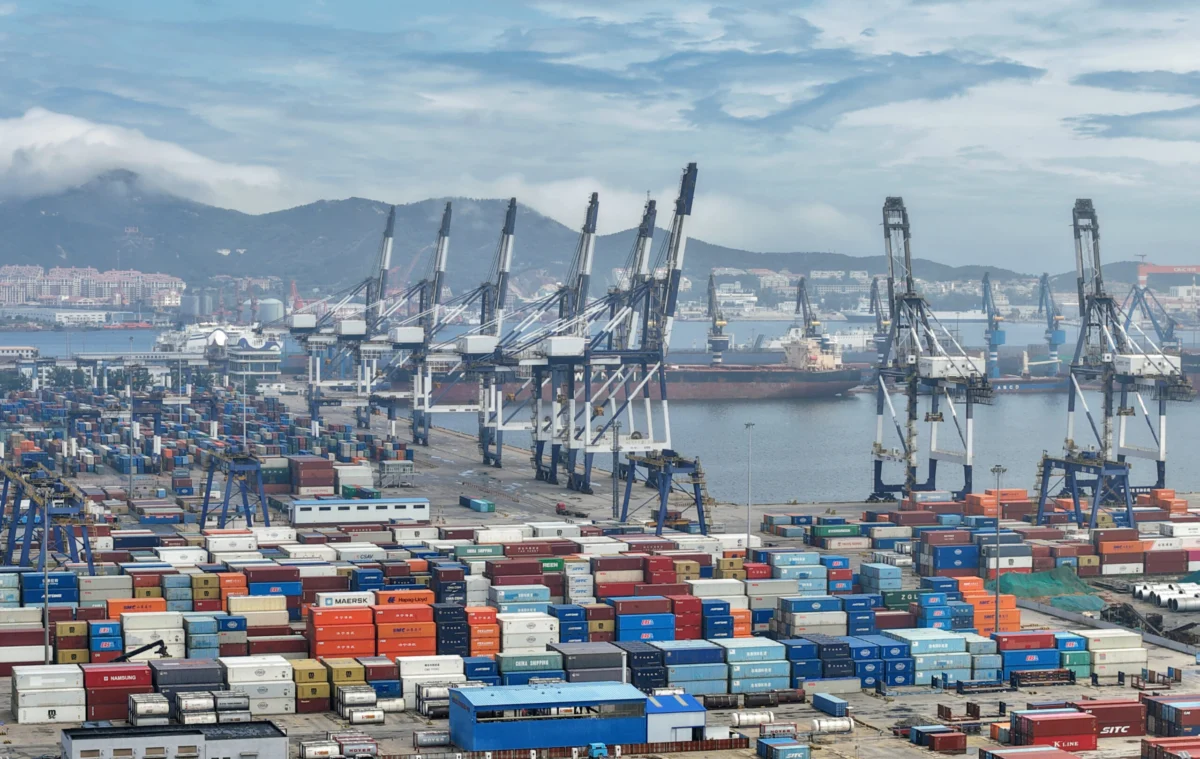
China’s economy experienced its weakest expansion since the fourth quarter of 2022 during the second quarter of 2026, registering a 4.3% increase in Gross Domestic Product (GDP). This figure, released by the National Statistics Bureau on Wednesday, July 17, 2026, fell short of economists’ expectations for 4.5% growth in a Reuters poll and marked a notable deceleration from the 5% growth recorded in the first quarter. The disappointing performance has amplified calls for more aggressive policy stimulus as a deepening slide in investments and persistently subdued consumption continue to strain the nation’s growth trajectory.
The 4.3% growth rate for the April-June period also placed China’s economy below Beijing’s full-year growth target range of 4.5% to 5%—a goal already considered the least ambitious in decades. This cautious target reflects ongoing challenges, including escalating tensions with key trade partners such as the United States and the European Union, alongside persistent weakness in domestic demand. The economic headwinds underscore a critical juncture for policymakers grappling with a complex interplay of internal structural issues and external geopolitical pressures.
A Deeper Dive into the Economic Landscape
The slowdown is not merely a statistical blip but a reflection of entrenched challenges within China’s economic model. For years, China relied heavily on investment and exports to fuel its rapid growth. However, this model is showing increasing signs of strain, necessitating a rebalance towards domestic consumption and high-quality, innovation-driven development. The latest data reveals the difficulties in achieving this transition smoothly.
The Investment Conundrum: A Primary Drag on Growth
Perhaps the most alarming indicator in the recent data is the precipitous decline in fixed-asset investment, a traditional engine of China’s economic expansion. Urban fixed-asset investment, which encompasses crucial sectors like real estate development and infrastructure projects, declined by 5.7% in the first six months of the year compared to the same period a year earlier. This performance was significantly worse than the 4.9% drop anticipated by economists in a Reuters poll, signaling a deeper malaise than previously estimated.
Tianchen Xu, a senior economist at Economist Intelligence Unit, highlighted the severity of the investment slump, attributing it primarily to local governments channeling an increasing share of their resources into debt restructuring efforts. This redirection of funds leaves fewer resources available for new projects. Additionally, a shortage of eligible, high-quality projects in the pipeline further constrains investment. "Boosting infrastructure investment will be a key focus for stabilizing growth," Xu stated, underscoring the urgent need for a policy pivot.
The detailed breakdown of investment figures paints a stark picture: investment in real estate plunged by a staggering 18%, infrastructure by 2.4%, and manufacturing by 1.2%. The real estate sector, once a pillar of economic prosperity, remains mired in a prolonged downturn characterized by developer defaults, unfinished projects, and dwindling buyer confidence. This has had a cascading effect on local government finances, which traditionally relied heavily on land sales for revenue, further exacerbating the debt restructuring challenge.
Beijing’s ongoing campaign to rein in excess industrial capacity and put an end to bruising price wars, while intended to foster healthier market competition and higher-quality growth, is also exerting near-term pressure on private investment, according to Sarah Tan, an economist at Moody’s Analytics. While necessary for long-term structural adjustments, these policies inherently create short-term headwinds by discouraging new capital deployment in certain sectors.
Chronology of Economic Indicators: A Mixed Bag
A closer look at monthly data for June 2026 reveals a mixed performance, with some sectors showing tentative signs of stabilization while others continue to struggle:
-
June 2026:
- Retail Sales: Grew by 1%, rebounding from a 0.6% drop in May and exceeding economists’ forecast for a 0.1% fall. This marked a welcome, albeit modest, improvement after May’s data indicated the first monthly decline in retail sales since late 2022, dragged down by tepid demand and aggressive merchant discounting.
- Industrial Output: Expanded by 5.3% from a year ago, stronger than the forecasted 4.7% growth and gaining pace from a 4.5% expansion in May. This resilience in industrial production is largely attributed to external demand, particularly from the global artificial intelligence (AI) investment boom.
- Exports: Registered their strongest rise since late 2021, fueled by demand for chips, computers, parts, and power equipment related to the AI buildout.
- Urban Unemployment Rate: Remained steady at 5%.
-
May 2026:
- Retail Sales: Dropped 0.6%, the first monthly decline since late 2022.
- Industrial Output: Expanded 4.5%.
- Youth Unemployment Rate: Fell to 15.6%, the lowest level in nearly a year.
-
First Half of 2026:
- Urban Fixed-Asset Investment: Declined 5.7% year-on-year.
- China’s Trade Surplus with the European Union: Widened by 24%, primarily driven by machinery and vehicle shipments.
-
Q1 2026: China’s GDP grew by 5%.
-
2023: Urban investment slumped 3.8% from a year earlier. The youth unemployment rate was briefly discontinued before being reinstated under a new methodology.
The Supply-Demand Imbalance: A Core Structural Issue
The Chinese economy continues to grapple with a deepening supply-demand imbalance. While robust industrial production and exports, significantly bolstered by the global AI investment boom, power headline growth, consumption and private investment remain weak. This dichotomy is particularly evident in the property downturn, which has eroded household wealth and confidence, and volatile energy prices impacting business costs.

The National Statistics Bureau explicitly noted this "acute" imbalance between excess supply and sluggish demand, urging policymakers to step up "counter- and cross-cyclical adjustments." This call reflects a recognition that the current economic challenges require not just short-term demand-side stimulus but also structural reforms to address underlying imbalances.
The intensity of the pullback in investment has been "unprecedented," according to Li Daokui, a professor of economics at Tsinghua University and former China central bank advisor. Speaking at a macroeconomics seminar earlier this week, Li advocated for a substantial expansion in government borrowing, suggesting that this year’s planned 12 trillion yuan ($1.7 trillion) in new debt issuance should be more than doubled. This highlights the growing pressure on fiscal policy to step in and fill the void left by weakening private sector investment and local government financial constraints.
The Stimulus Debate: Navigating Policy Choices
Economists are divided on whether the current slowdown will compel Beijing to implement aggressive stimulus measures. Tianchen Xu of Economist Intelligence Unit anticipates ramped-up stimulus in the third quarter, including a policy rate cut to stimulate investment demand. Such a move by the People’s Bank of China (PBoC) would aim to lower borrowing costs for businesses and consumers, encouraging investment and spending.
However, not all analysts expect an immediate, significant policy shift. Zhiwei Zhang, president and chief economist at Pinpoint Asset Management, suggests that the weaker headline growth is unlikely to prompt a meaningful policy shift in the coming months. He points to a strong first quarter and resilient exports as factors that might keep the annual growth target within reach, affording policymakers more time before unleashing a large-scale stimulus package.
Conversely, David Chao, global market strategist at Invesco, believes that the better-than-expected retail sales and industrial output figures in June could provide policymakers with "more wiggle room" on near-term stimulus. This perspective suggests that positive indicators might alleviate some immediate pressure, allowing for more targeted and incremental adjustments rather than a broad-based stimulus. The delicate balance for Beijing lies in stimulating demand without exacerbating existing debt risks or distorting market signals.
Exports: A Double-Edged Sword
Exports have emerged as a notable bright spot in an otherwise cooling economy. The global AI buildout has provided a significant boost, helping to offset headwinds stemming from geopolitical tensions, including the Middle East conflict. China’s export growth in June beat expectations, recording its strongest rise since late 2021, primarily powered by robust demand for chips, computers, parts, and power equipment essential for AI infrastructure.
Surging tech-related imports also point to a deepening AI infrastructure cycle within China itself, according to Chao, with autos and consumer goods further contributing to the export momentum. This strong export performance showcases China’s continued prowess in manufacturing and its integration into global technology supply chains.
However, this export strength is simultaneously straining ties with key trade partners. China’s surplus with the European Union, for instance, widened by 24% in the first half of the year, driven largely by increased shipments of machinery and vehicles. Larry Hu, chief China economist at Macquarie, warned that "despite a three-month trade truce, the growing surplus keeps the risk of a China-EU trade conflict elevated." The EU has expressed concerns about perceived unfair trade practices and overcapacity in certain Chinese industries, leading to potential anti-subsidy investigations and tariffs, particularly in sectors like electric vehicles. This dynamic highlights the precarious position China finds itself in: relying on exports for growth while facing protectionist pressures from its major trading partners.
The Income Squeeze and Labor Market Challenges
The economic slowdown has had tangible impacts on the labor market and household incomes, reflecting a "two-speed growth" phenomenon. A survey by Morgan Stanley indicates that workers in companies with significant overseas revenue are more optimistic about their job prospects compared to those employed by domestically focused firms. This divergence underscores the uneven distribution of economic benefits and risks across different sectors.
Pay cuts remain a top concern for Chinese households, according to Morgan Stanley’s estimates, leading to a downward revision of income growth over the next 12 months to approximately 5% from a previous forecast of 5.8%. This income uncertainty directly impacts consumer confidence and willingness to spend, contributing to the subdued consumption observed in the retail sales data.
The official urban unemployment rate, which excludes those who have left cities for rural areas, held steady at 5% in June, remaining within the leadership’s target of less than 5.5% over the next five-year period. However, a separate survey conducted by Li Daokui’s team, which includes individuals jobless for the past two years and no longer covered by official labor force surveys, presented a much higher "broad unemployment rate" of 10.2%. This survey identified roughly 24 million long-term unemployed individuals, with more than half aged between 16 and 24.
Youth joblessness has been a particularly sensitive issue for official statistics. Beijing controversially discontinued the publication of the youth unemployment rate in 2023 after it surged to a record 21.3%, before reinstating it months later under a new methodology. The latest official figure for youth unemployment in May showed a decrease to 15.6%, the lowest level in nearly a year. While this decline offers some relief, the underlying challenges of structural unemployment among young people, including a mismatch between skills and available jobs, remain significant and pose long-term social and economic risks.
Broader Implications and Outlook
The Q2 2026 economic data underscores the multifaceted challenges facing China’s economy. The traditional growth drivers—investment and exports—are facing diminishing returns and increasing external pressures, while the much-anticipated pivot to domestic consumption is proving difficult amid lingering confidence issues and income uncertainties.
The calls for "counter- and cross-cyclical adjustments" from the National Statistics Bureau suggest a recognition that a comprehensive policy response is needed. This could involve a combination of monetary easing (interest rate cuts, reserve requirement ratio reductions), targeted fiscal spending (infrastructure projects, subsidies for green industries), and structural reforms aimed at boosting private sector confidence, improving the business environment, and strengthening social safety nets to encourage consumption.
The path forward for Beijing is fraught with difficult choices. Aggressive stimulus could risk exacerbating the national debt burden and potentially reigniting inflationary pressures, while insufficient action could lead to a deeper and more prolonged slowdown. The interplay of domestic structural reforms, geopolitical dynamics, and global economic trends will ultimately shape China’s economic trajectory in the coming quarters. The world will be watching closely as China navigates these turbulent waters, seeking to maintain stability while striving for sustainable, high-quality growth.