Farhan Pambudi
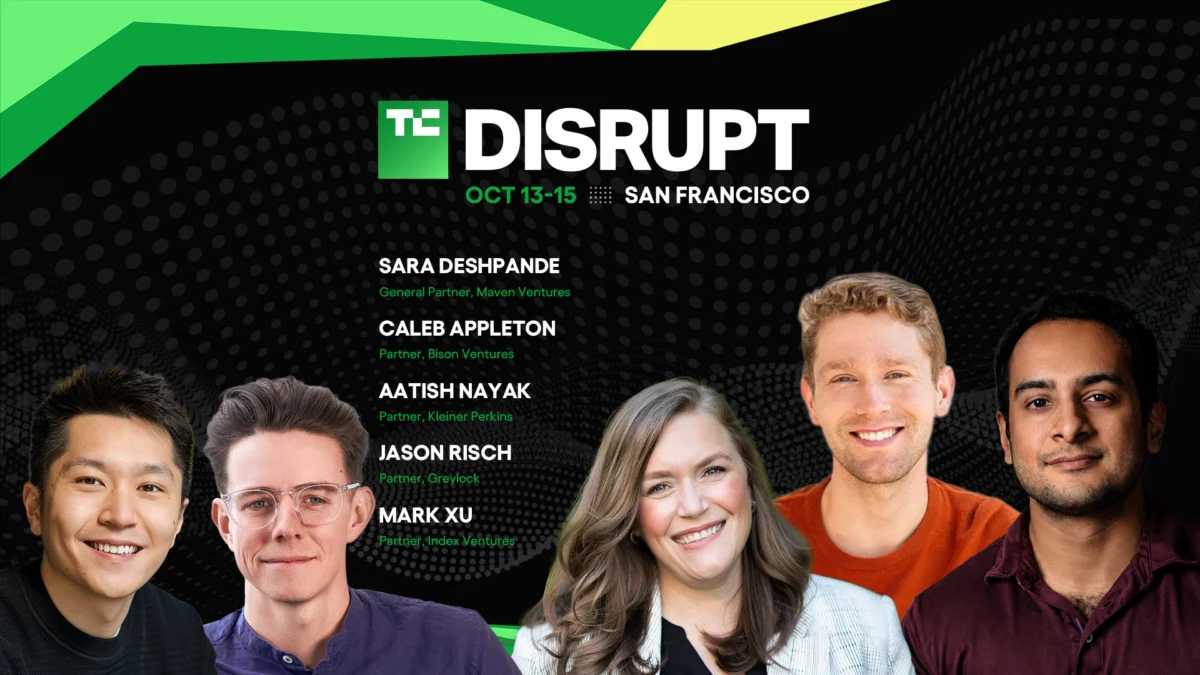
The landscape of global finance is undergoing a fundamental transformation as traditional monetary systems converge with decentralized protocols and autonomous intelligence. To address this shift, TechCrunch Disrupt 2026 has announced the debut of the Smart Money Stage, a dedicated programming track focused on the evolution of fintech, payment rails, and the integration of artificial intelligence within the financial services sector. Scheduled to take place from October 13 to 15 at the Moscone Center in San Francisco, the event serves as a critical junction for industry leaders, founders, and investors to dissect the technological and regulatory forces redefining the concept of value.
The 2026 edition of Disrupt arrives at a time when the financial technology sector is transitioning from a period of rapid experimentation to one of institutional maturation. The Smart Money Stage will feature a curated lineup of executives from high-valuation firms, including Circle, Robinhood, American Express, Plaid, and Airwallex. These discussions are expected to move beyond theoretical applications, focusing instead on the implementation of stablecoins, the adoption of instant payment networks like FedNow, and the deployment of agentic AI—autonomous systems capable of making financial decisions with minimal human intervention.
The Chronological Evolution of TechCrunch Disrupt and the Fintech Cycle
TechCrunch Disrupt has historically functioned as a barometer for the startup ecosystem. Since its inception, the conference has been the launchpad for companies that would go on to redefine their respective industries, such as Dropbox, Mint, and Trello. However, the focus of the event has shifted in tandem with broader technological cycles. In the early 2010s, the emphasis was on mobile-first consumer apps; by the early 2020s, the narrative shifted toward decentralized finance (DeFi) and the initial waves of generative AI.
As the industry approaches late 2026, the focus has narrowed toward "Smart Money"—a term that encompasses not just digital currency, but the entire stack of automated, regulated, and high-speed infrastructure required for global commerce. This evolution reflects a broader trend in the venture capital landscape. Following the market corrections of 2022 and 2023, fintech investment has become more disciplined, prioritizing companies that provide essential infrastructure over those offering purely speculative services. The introduction of a dedicated stage for these topics signifies that fintech is no longer a sub-vertical of tech, but the very foundation upon which modern digital economies are built.
Stablecoins and the Architecture of Instant Payments
One of the primary pillars of the Smart Money Stage is the future of money movement. The traditional banking system, which often relies on aging SWIFT protocols and multi-day settlement periods, is increasingly at odds with the demands of a 24/7 digital economy. The programming will feature Nikhil Chandhok, Chief Product and Technology Officer at Circle, alongside Rodney Robinson of TabaPay and Lotti Siniscalco of Emergence, to discuss how stablecoins and instant payment rails are closing this efficiency gap.
Data from the past several years indicates a massive surge in stablecoin utility. As of 2024, the total market capitalization of stablecoins exceeded $160 billion, with transaction volumes often rivaling traditional payment processors like Visa in specific corridors. The discussion at Disrupt 2026 will likely center on the "institutionalization" of these assets. With the implementation of clearer regulatory frameworks in the U.S. and the European Union’s MiCA (Markets in Crypto-Assets) regulation, stablecoins are moving from the fringes of crypto-native trading into the core of cross-border B2B payments.
Furthermore, the integration of FedNow—the U.S. Federal Reserve’s instant payment service—remains a focal point. Panelists will analyze how private-sector innovations can coexist with government-backed rails to provide a seamless, real-time experience for both consumers and enterprises. The challenge remains in the "last mile" of connectivity: ensuring that instant payments are not only fast but also secure and compliant with global Anti-Money Laundering (AML) standards.
The Transformation of the Modern Financial Consumer
The shift in how money moves is mirrored by a shift in how it is managed. Robinhood, a company that became synonymous with the retail investing boom of the early 2020s, has undergone a significant transformation. Now boasting a market capitalization exceeding $90 billion, the platform has expanded its scope far beyond simple equity trading. Abhishek Fatehpuria, Robinhood’s Head of Product, is slated to discuss the company’s evolution into a comprehensive financial "super-app" that includes banking, credit, cryptocurrency, and prediction markets.
This evolution is supported by shifting consumer demographics. Gen Z and Millennial users increasingly expect financial services to be embedded, social, and accessible. According to industry reports, nearly 75% of consumers under the age of 40 now prefer managing their finances through a single integrated platform rather than through multiple disparate banking institutions. The Smart Money Stage will explore the technical hurdles of scaling such platforms, particularly the need to maintain trust and system stability during periods of extreme market volatility. The discussion will serve as a case study in how technology companies are successfully challenging the dominance of traditional retail banks by prioritizing user experience and product agility.
AI Trust and Verification in an Agentic Economy
Perhaps the most significant technological frontier to be explored at Disrupt 2026 is the role of Artificial Intelligence in financial workflows. The industry is moving past "Chatbot 1.0" and into the era of Agentic AI—systems that do not just provide information but execute transactions. This shift introduces profound questions regarding security, identity, and liability.
Hannah Bozian of American Express, Pedro Sanzovo of Plaid, and Victoria Zuo of QED Investors will lead a session on AI, trust, and verification. As AI agents gain the ability to move funds and manage portfolios, the surface area for fraud expands exponentially. Deepfake technology and automated social engineering pose new threats to identity verification systems. Plaid, which sits at the center of the open banking ecosystem, is uniquely positioned to discuss how data transparency can be leveraged to combat these risks.
The broader implication for the industry is a move toward "Zero Trust" financial architectures. In this model, every transaction and identity claim is verified through multi-factor cryptographic methods and real-time AI monitoring. The challenge for companies like American Express is to implement these rigorous security measures without introducing friction into the consumer experience. Analysts suggest that the winners in the AI-fintech space will be those who can provide "invisible security"—robust protection that operates seamlessly in the background.
Building the Infrastructure for Global Commerce
The final core theme of the Smart Money Stage is the construction of a financial operating system designed for global business. Traditional financial systems were built for a world of localized markets and physical borders. Today’s businesses, however, are global from day one. Airwallex, valued at $11 billion, represents the new guard of infrastructure providers attempting to solve the complexities of cross-border commerce.
Jack Zhang, Founder and CEO of Airwallex, will provide insights into the development of AI-native financial operating systems. For global businesses, the pain points are numerous: fluctuating exchange rates, varying regulatory requirements in different jurisdictions, and the high cost of international transfers. By embedding financial products directly into business platforms, companies like Airwallex allow merchants to accept payments, manage treasury, and pay employees worldwide without ever leaving their primary workflow.
This "embedded finance" trend is projected to be a multi-trillion-dollar market by the end of the decade. The Smart Money Stage will analyze the technical requirements for building regulated infrastructure that can support this level of scale. This includes the use of AI to automate compliance checks across hundreds of different legal jurisdictions—a task that was previously labor-intensive and prone to error.
Broader Economic Impact and Industry Implications
The discussions at TechCrunch Disrupt 2026 are expected to resonate far beyond the confines of the Moscone Center. The convergence of AI and fintech has the potential to democratize access to sophisticated financial tools that were previously reserved for institutional investors or high-net-worth individuals. Automated wealth management, real-time credit scoring, and instant global liquidity could significantly reduce the cost of capital for small businesses and individuals in emerging markets.
However, this transition is not without its risks. Regulators worldwide are closely watching the development of AI in finance, concerned about the potential for algorithmic bias and the systemic risks posed by autonomous trading systems. The Smart Money Stage will serve as a forum for these critical debates, providing a space where developers and policymakers can find common ground.
As the pricing window for Disrupt 2026 approaches its close, the high level of interest in the Smart Money Stage highlights a fundamental truth: in 2026, every company is, to some extent, a fintech company. Whether a startup is building a new marketplace, a SaaS platform, or a hardware product, its success depends on its ability to move and manage money efficiently. By bringing together the architects of the new financial system, TechCrunch Disrupt 2026 aims to provide the "signal" necessary for operators to navigate an increasingly complex and automated economic future.
The three-day event will conclude with a series of networking sessions and side events designed to foster collaboration between the speakers and the broader startup community. For founders and operators, the Smart Money Stage is more than just a series of presentations; it is a roadmap for the next phase of global economic innovation. In a world where money is becoming smarter, faster, and more autonomous, the insights shared at Disrupt 2026 will likely define the market leaders of the next decade.