Lina Wu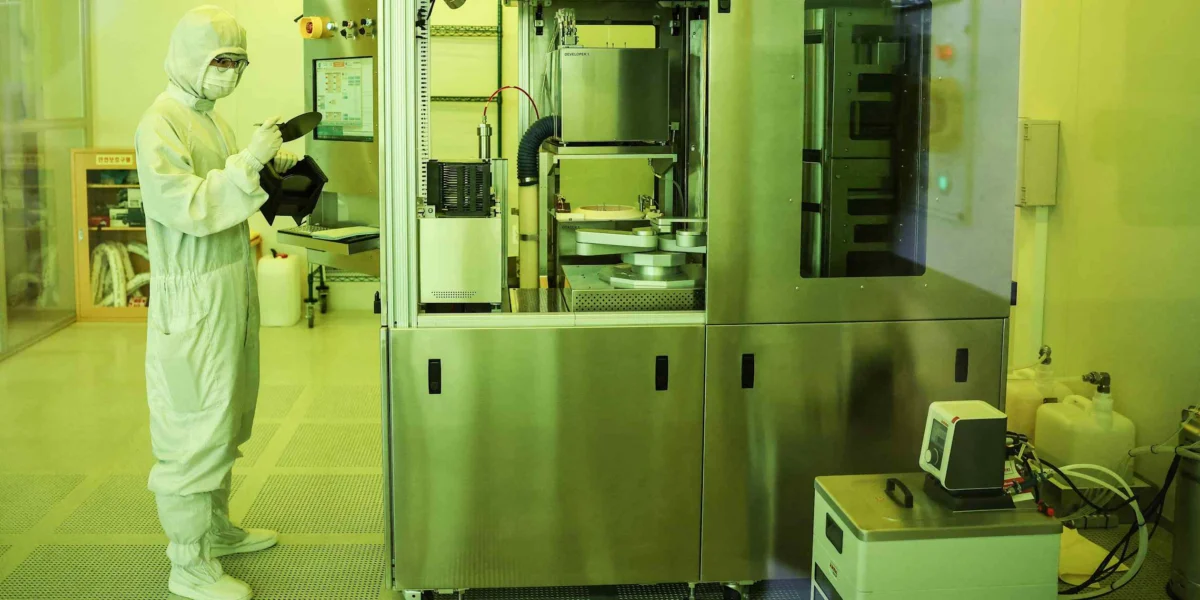
SOUTH KOREA’s economy expanded at a robust pace in the second quarter of 2026, largely propelled by an unprecedented surge in semiconductor exports and broader strength in information technology (IT) product shipments. Preliminary data released by the Bank of Korea indicates a Gross Domestic Product (GDP) growth of 0.6% quarter-on-quarter, a figure that significantly outpaced many analysts’ expectations and signals a potent, albeit concentrated, recovery in Asia’s fourth-largest economy. However, a deeper examination of the economic landscape reveals that this headline growth, while impressive, masks a more nuanced picture of uneven progress across various sectors.
Semiconductor Surge Fuels National Output
The primary engine behind this quarterly expansion was the booming semiconductor industry, a sector where South Korea holds a dominant global position. For months, the nation’s leading chip manufacturers, notably Samsung Electronics and SK Hynix, have been reporting record-breaking sales, driven by a confluence of factors including resurgent demand for artificial intelligence (AI) chips, a recovery in the personal computer (PC) and smartphone markets, and strategic inventory rebuilding by global clients.
Official trade statistics corroborate this trend. In June 2026, semiconductor exports alone accounted for a substantial portion of South Korea’s total export revenue, a critical component of the nation’s GDP. The Bank of Korea’s report highlighted that the value of semiconductor shipments reached an all-time high in the second quarter, contributing directly to the positive GDP figure. This surge in chip sales not only boosted the country’s trade balance but also had a ripple effect on related industries, including materials, components, and equipment suppliers.
The global demand for high-performance semiconductors, particularly those used in AI data centers and advanced mobile devices, has been a key driver. South Korean companies have been at the forefront of producing memory chips (DRAM and NAND flash) and are increasingly making inroads into the lucrative logic chip market, including AI accelerators. This technological prowess, coupled with significant investments in research and development and production capacity, has positioned them to capitalize on this sustained demand.
Broader IT Exports Show Resilience
Beyond semiconductors, the broader IT sector also contributed positively to the GDP growth. Exports of other IT products, such as displays, mobile phones, and consumer electronics, demonstrated a significant rebound after a period of softer demand. This resurgence can be attributed to the release of new flagship smartphone models, increased consumer spending on durable goods as economic confidence gradually returns, and the ongoing digital transformation initiatives across various industries globally.
The export-oriented nature of the South Korean economy means that its GDP performance is intrinsically linked to global trade dynamics. The strong showing in IT exports in Q2 2026 indicates a healthy appetite for South Korean technological innovation on the international stage, reinforcing its position as a global manufacturing powerhouse.
Uneven Gains Across the Economic Spectrum
Despite the headline-grabbing GDP growth, the economic recovery remains uneven, with certain sectors lagging behind. While the export-driven IT sector is thriving, domestic consumption and investment in other areas have shown more muted growth. This divergence highlights a persistent challenge for the South Korean economy: its heavy reliance on external demand, particularly from China and the United States, which can be subject to geopolitical shifts and global economic volatility.
Data from the Bank of Korea suggests that private consumption, a significant contributor to GDP, experienced only a modest increase. Factors such as persistent inflation in certain goods and services, coupled with a relatively stable but not rapidly growing employment market in non-export-oriented sectors, may be tempering consumer spending. While there have been efforts to stimulate domestic demand, the strong performance of exports appears to be overshadowing a more gradual recovery in household spending.
Similarly, private investment outside of the high-tech manufacturing sector has not kept pace with the export boom. While significant capital is being injected into semiconductor fabrication plants and R&D facilities, investment in other industries, such as construction, services, and traditional manufacturing, has been more subdued. This can be partly explained by the differing economic outlooks for these sectors and the capital-intensive nature of the semiconductor industry’s expansion.
Context and Chronology of the Boom
The current semiconductor boom has been building momentum for several quarters. Following a period of market correction and inventory adjustments in 2023, the global semiconductor market began to show signs of recovery in early 2024. By the latter half of 2024 and into 2025, the demand for advanced AI chips, driven by the rapid development and deployment of generative AI technologies, became a powerful catalyst.
South Korean companies, with their established leadership in memory chip production and their aggressive investment in next-generation technologies, were strategically positioned to seize this opportunity. Samsung Electronics, for instance, announced record profits in the first half of 2026, with its semiconductor division leading the charge. SK Hynix, particularly its focus on high-bandwidth memory (HBM) for AI applications, also reported stellar financial results, underscoring its crucial role in the AI supply chain.
The South Korean government has been actively supporting the semiconductor industry through various policies, including tax incentives, R&D funding, and infrastructure development. The "K-Semiconductor Belt" initiative, launched in recent years, aims to create a comprehensive ecosystem for chip production, from design and manufacturing to packaging and testing. The success of this initiative is now evident in the strong export figures and the significant GDP contribution from the sector.
Official Responses and Future Outlook
In response to the Q2 GDP figures, government officials and economic policymakers have expressed cautious optimism. The Ministry of Economy and Finance acknowledged the positive impact of strong exports, particularly in the IT sector, on overall economic growth. However, they also emphasized the need to address the unevenness of the recovery and to foster broader-based growth.
"The robust performance of our semiconductor and IT exports is a testament to the competitiveness of our industries and the dedication of our workforce," stated a spokesperson for the Ministry. "We are committed to policies that support continued innovation in these critical sectors while also focusing on stimulating domestic demand and creating jobs across the entire economy."
The Bank of Korea, while noting the positive GDP expansion, will likely continue to monitor inflation pressures and the sustainability of the export-led growth. Their monetary policy decisions will be influenced by the need to balance economic growth with price stability and to manage potential risks associated with global economic uncertainties.
Broader Implications and Challenges
The sustained strength of the semiconductor sector has significant implications for South Korea’s economic future. It reinforces the nation’s role as a critical node in the global technology supply chain and attracts substantial foreign investment. The continued success in this high-value industry is crucial for maintaining South Korea’s economic competitiveness on the global stage.
However, the reliance on a single sector also presents vulnerabilities. Geopolitical tensions, particularly between major global powers that are key markets for South Korean chips, could disrupt supply chains or impact export demand. Furthermore, the cyclical nature of the semiconductor industry means that periods of rapid growth are often followed by downturns, necessitating a proactive approach to economic diversification.
The challenge for South Korea moving forward will be to leverage the current boom to foster more inclusive growth. This involves:
- Diversifying Export Markets: Reducing over-reliance on any single trading partner.
- Strengthening Domestic Demand: Implementing policies that boost private consumption and encourage domestic investment.
- Supporting Emerging Industries: Investing in sectors beyond semiconductors to create new engines of growth.
- Addressing Labor Market Imbalances: Ensuring that job creation and wage growth are more broadly distributed across the economy.
The Q2 2026 GDP growth provides a strong positive signal, demonstrating the resilience and adaptability of the South Korean economy. The semiconductor industry’s exceptional performance has once again proven its capacity to drive national output. However, sustained prosperity will depend on the nation’s ability to navigate the complexities of global trade and to build a more balanced and resilient economic structure that benefits all segments of its society. The ongoing focus on technological innovation, coupled with strategic efforts to foster domestic economic health, will be critical in shaping South Korea’s trajectory in the years to come.