Reynand Wu
Singapore – Strategists at OCBC Bank, Sim Moh Siong and Christopher Wong, project that the USD/SGD exchange rate will primarily be influenced by the broader direction of the US Dollar (USD) and prevailing global risk sentiment. This outlook follows a period of range-bound trading for the pair, which has recently hovered around the low 1.29s mark. The financial market’s attention is now firmly fixed on upcoming key economic indicators and policy decisions, notably Singapore’s Consumer Price Index (CPI) report, slated for release on July 23, and the subsequent Monetary Authority of Singapore (MAS) policy review, which is anticipated to occur in the week of July 27-31. OCBC’s house view suggests that the MAS is likely to maintain its current monetary policy stance, opting to closely monitor inflation dynamics against a backdrop of persistently elevated global energy prices.
Navigating the Currents: USD/SGD Dynamics and Global Influences
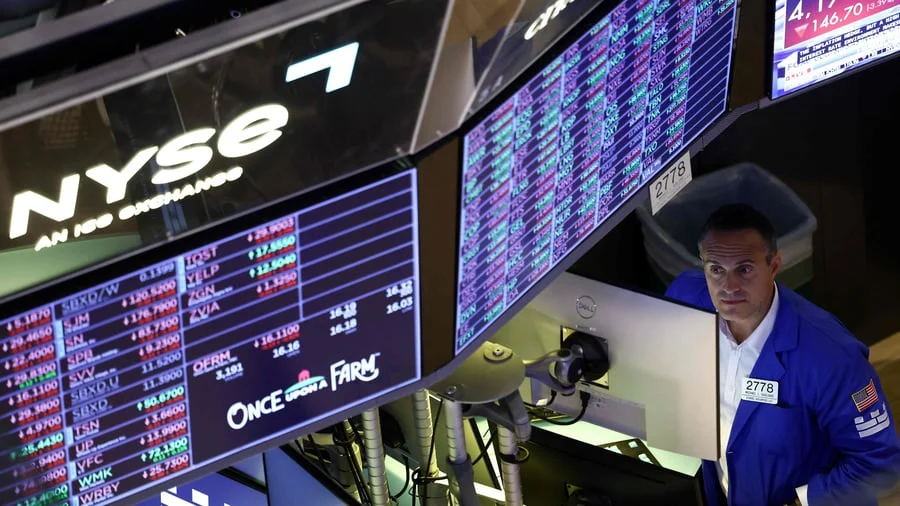
The recent trading behavior of the USD/SGD pair has been characterized by a notable stability around the 1.29 handle. This range-bound activity persisted despite a temporary pullback in the US Dollar, which followed the release of the latest US CPI data. The initial relief from potentially moderating US inflation, however, proved to be short-lived. Global sentiment quickly deteriorated due to a confluence of factors, including a re-escalation of geopolitical tensions in various hotspots around the world and a significant sell-off in artificial intelligence (AI)-related stocks, which had previously been a driving force in equity markets. These developments collectively crimped investor appetite for risk, underpinning the US Dollar’s safe-haven appeal and preventing a more pronounced depreciation against regional currencies like the Singapore Dollar.
The inherent resilience of the US Dollar, even in the face of domestic inflation signals, underscores its enduring role as the world’s primary reserve currency and a haven asset during periods of global uncertainty. Factors such as the Federal Reserve’s still-hawkish stance, robust US labor market data, and the relative strength of the US economy compared to other major blocs continue to provide a floor for the greenback. For the USD/SGD, this means that even minor shifts in global risk perception or significant developments in US economic data can exert disproportionate influence on its trajectory, often overshadowing local Singaporean economic fundamentals in the short term.
Crucial Week Ahead: Singapore CPI and MAS Policy Review
The immediate focus for market participants will undoubtedly shift to Singapore’s domestic economic calendar. The release of the Consumer Price Index (CPI) on July 23 is a pivotal event. This report will provide the most current snapshot of inflationary pressures within the city-state, offering crucial insights into the effectiveness of past monetary policy adjustments and the potential need for future action. Analysts will scrutinize both the headline and core inflation figures for any signs of acceleration or deceleration, particularly in components sensitive to energy prices and supply chain dynamics.
Following closely on the heels of the CPI data will be the biannual monetary policy review by the Monetary Authority of Singapore (MAS), expected in the week spanning July 27-31. Unlike conventional central banks that manage interest rates, the MAS conducts monetary policy by managing the Singapore Dollar Nominal Effective Exchange Rate (S$NEER). It does so by adjusting the slope, width, and center of the policy band within which the S$NEER is allowed to fluctuate. The MAS typically convenes in April and October, but also conducts unscheduled reviews if circumstances warrant. The upcoming review, however, falls outside the typical bi-annual schedule, indicating the ongoing need for vigilant monitoring of economic conditions. This timing suggests the MAS might be responding to evolving global and domestic pressures that necessitate a reassessment of its stance, even if the eventual decision is to maintain the status quo.
The MAS Stance: A Hold Amidst Persistent Inflationary Concerns
OCBC strategists’ house view is for the MAS to maintain its current policy settings. This decision would follow a period of "modest tightening" implemented during the April review. In April, the MAS opted to slightly increase the slope of the S$NEER policy band, allowing for a gradual appreciation of the Singapore Dollar against a basket of currencies of its major trading partners. This move was aimed at curbing imported inflation and ensuring medium-term price stability. The current expectation for a "hold" suggests that while inflationary pressures remain a concern, the MAS believes its previous actions, combined with existing economic conditions, are sufficient for now, and further immediate tightening may not be warranted.
However, the MAS will not be complacent. The OCBC analysis specifically highlights that "inflation developments are likely to be closely watched amid still-elevated energy prices." Energy prices, particularly crude oil, have a pervasive impact on Singapore’s economy, a net importer of energy. Fluctuations in global oil benchmarks like Brent and WTI directly influence transportation costs, utility bills, and the cost of production for various goods and services, ultimately feeding into the overall CPI. Geopolitical events, supply disruptions, and decisions by major oil-producing cartels like OPEC+ continue to introduce volatility and upward pressure on these critical commodities, posing a persistent challenge to inflation management.
Historical Context and MAS Policy Tools
To fully appreciate the MAS’s likely decision, it’s important to understand its unique policy framework and recent history. The S$NEER policy band is a forward-looking tool designed to manage imported inflation and support sustainable economic growth. A steeper slope implies a faster pace of appreciation for the Singapore Dollar, making imports cheaper and thus dampening inflationary pressures. Conversely, a flatter slope or a re-centering of the band could signal a more accommodative stance.
In recent years, the MAS has actively used its policy levers to combat rising inflation. From October 2021 to April 2023, the MAS tightened policy five times consecutively, reflecting a proactive approach to address surging price pressures driven by global supply chain disruptions, robust demand recovery, and the ripple effects of the Russia-Ukraine conflict. The "modest tightening" in April represented a continuation of this stance, albeit at a potentially slower pace, signaling that the central bank was still vigilant but perhaps saw some moderation in the immediate need for aggressive action. A "hold" now would imply a period of assessment, allowing previous policy adjustments to filter through the economy and for incoming data, like the upcoming CPI, to provide clearer direction.
Broader Economic Landscape and Implications
Beyond domestic considerations, the global economic landscape continues to cast a long shadow. The initial post-US CPI dollar pullback, mentioned by OCBC strategists, underscores the sensitivity of currency markets to major economic data releases. While US inflation showed some signs of cooling, it remained above the Federal Reserve’s target, keeping the door open for potential further rate hikes later in the year. The anticipation of future Fed actions continues to bolster the US Dollar, particularly against currencies whose central banks might be nearing the end of their tightening cycles.
The "geopolitical re-escalation" refers to renewed tensions in various global flashpoints, which invariably increase investor uncertainty and drive demand for safe-haven assets. This can include anything from heightened military activities to diplomatic standoffs or trade disputes, each capable of sending ripples through financial markets. Similarly, the "AI-selloff" points to a correction in the technology sector, specifically in companies linked to artificial intelligence. After a period of extraordinary growth and valuation surges, profit-taking and concerns about overextension in this sector led to a significant market adjustment, further contributing to a general retreat from riskier assets and a pivot towards the relative safety of the US Dollar.
For Singapore, a small, open economy highly dependent on international trade and capital flows, these global developments are not mere background noise; they are direct drivers of its economic performance. A strong US Dollar can make Singaporean exports less competitive and increase the cost of servicing foreign debt denominated in USD. Conversely, a stable Singapore Dollar, managed effectively by the MAS, is crucial for maintaining price stability and investor confidence.
Potential Scenarios and Market Reactions
Should the MAS indeed stay on hold, as OCBC predicts, it would likely signal the central bank’s confidence that current policy settings are adequate to manage inflation while supporting growth. This could provide a degree of stability for the Singapore Dollar, preventing sharp movements against the USD unless major external shocks occur. Investors would then shift their focus to the trajectory of global energy prices and the evolving geopolitical landscape, as these factors are expected to remain primary determinants of risk sentiment and, consequently, the broader USD direction.
If the Singapore CPI report on July 23 reveals unexpectedly strong inflationary pressures, exceeding market forecasts, it could potentially pressure the MAS to reconsider a hold. Such a scenario might lead to speculation about an off-cycle tightening or a more hawkish stance in the October review. Conversely, a significant drop in inflation could alleviate some pressure, though the persistence of high energy prices would likely keep the MAS vigilant.
The current momentum for USD/SGD is described as "mild bearish" while the Relative Strength Index (RSI) "rose." This technical analysis suggests that while there might be some underlying selling pressure on the pair (implying SGD strength), the recent rise in RSI indicates that this momentum might be losing steam or that the pair is approaching oversold conditions, potentially hinting at a rebound. The pair was last observed at 1.2917, reinforcing its position within the low 1.29s range.
Conclusion
In conclusion, the coming weeks are set to be pivotal for the Singaporean financial landscape. OCBC strategists Sim Moh Siong and Christopher Wong have laid out a clear expectation: the USD/SGD will remain largely tethered to broader US Dollar movements and global risk appetite. The impending Singapore CPI data and the subsequent MAS policy review will serve as critical touchstones, providing fresh data points for policymakers and market participants alike. While the prevailing house view points to a MAS decision to stay on hold, the central bank’s unwavering vigilance against inflation, especially in the context of persistent global energy price volatility, will remain paramount. The interplay of domestic economic data with intricate global dynamics, from geopolitical tensions to shifts in major currency valuations, will continue to define the trading environment for the Singapore Dollar.