Clara Shinta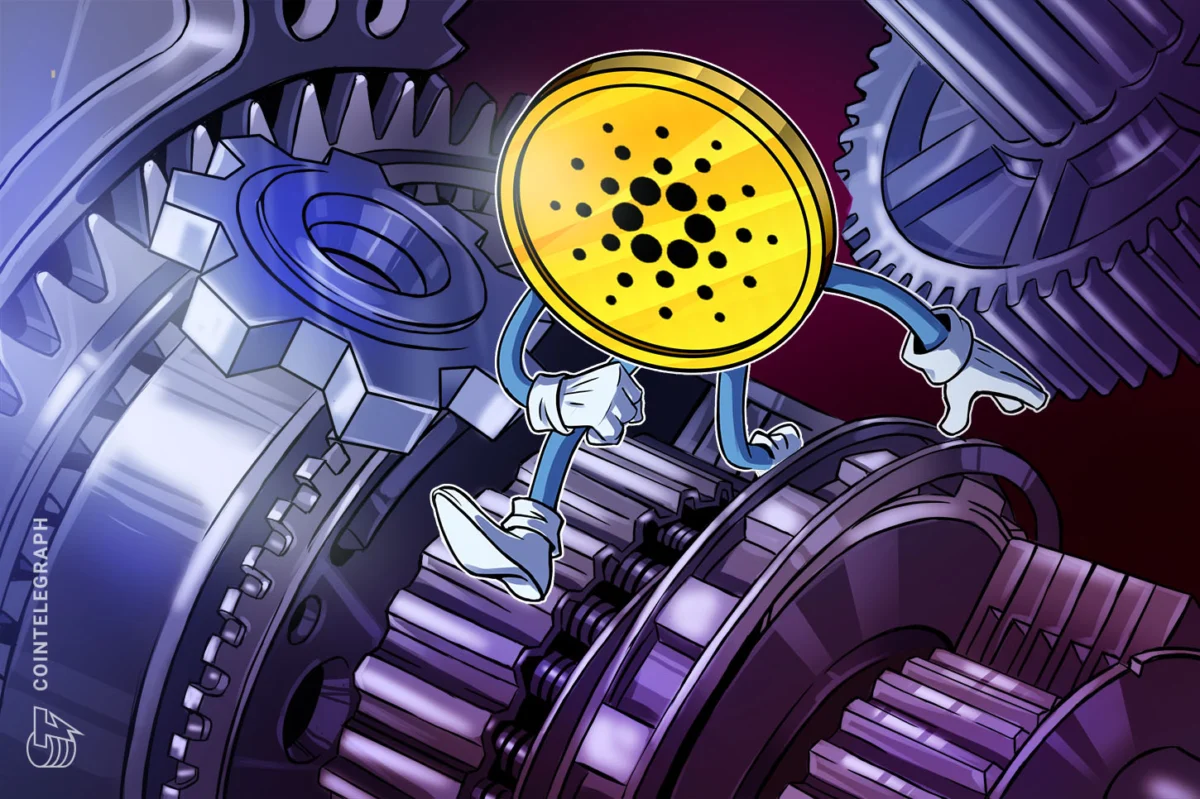
Cardano, a prominent proof-of-stake blockchain platform, successfully activated its van Rossem hard fork on Saturday, marking a significant milestone in its ongoing development trajectory. This upgrade, which advanced the Cardano mainnet to Protocol Version 11, is designed to deliver immediate benefits by lowering smart contract execution costs and concurrently establishing critical foundational elements for Ouroboros Leios, a forthcoming major scalability enhancement slated for the protocol. The transition from Protocol Version 10 in epoch 643 to Version 11 in epoch 644 was confirmed by on-chain data verifiable via Cardanoscan, underscoring the seamless implementation of this pivotal network evolution.
The van Rossem hard fork is not merely a technical update but also represents a historic shift in Cardano’s operational governance. It stands as the first governance-driven hard fork in the protocol’s history, a stark departure from previous upgrades which were primarily coordinated and implemented by Input Output Global (IOG), the engineering company responsible for designing and building the Cardano blockchain. This transition highlights Cardano’s steady progression towards a fully decentralized governance model, empowering its community to play a more direct role in shaping the network’s future.
The Dawn of a New Era: van Rossem’s Immediate Impact
The immediate benefits of the van Rossem hard fork are primarily centered around the optimization of Cardano’s smart contract platform, Plutus. According to Input Output Global’s weekly development report issued on Friday, the upgrade includes "Plutus improvements and Plutus Cost Model enhancements." These improvements are crucial for the practical utility and adoption of decentralized applications (dApps) on the Cardano network. Plutus, designed to be a highly secure and formally verifiable smart contract language, benefits immensely from these updates.
Specifically, the Plutus Cost Model enhancements are expected to reduce the computational resources required for executing smart contracts. This translates directly into lower transaction fees for users interacting with dApps and more efficient operations for developers building complex applications. For a blockchain ecosystem striving for widespread adoption, the cost of interaction is a critical factor. By making smart contract execution more economical, Cardano aims to foster a more vibrant and accessible dApp environment, attracting both developers seeking efficient platforms and users looking for cost-effective services. This optimization also indirectly enhances the network’s throughput capacity by allowing more operations to be processed within existing block limits due to reduced individual resource consumption.
A Pillar of Decentralization: The Significance of Governance-Driven Upgrades
Perhaps the most profound aspect of the van Rossem hard fork is its unprecedented nature as a governance-driven upgrade. Historically, major protocol upgrades on Cardano, like Shelley for decentralization or Goguen for smart contracts, were primarily orchestrated and rolled out by IOG. While IOG’s expertise was instrumental in the initial design and robust development of the blockchain, the long-term vision for Cardano, as outlined in its "Voltaire era," is one of complete community governance.
The van Rossem hard fork represents a tangible step towards realizing this vision. Its activation through a community-led governance action demonstrates the growing maturity of Cardano’s on-chain governance mechanisms. This process typically involves Cardano Improvement Proposals (CIPs), community discussions, and ultimately, on-chain voting by ADA holders. The successful execution of van Rossem through this decentralized process signals a robust and active community capable of steering the protocol’s evolution independently. It validates the efficacy of Cardano’s burgeoning governance framework, building confidence in the network’s ability to self-amend and adapt without central authority. This move not only decentralizes the technical upgrade process but also strengthens the overall resilience and censorship resistance of the protocol, aligning with the core tenets of blockchain technology.
Unpacking the Technical Enhancements: Plutus and Cost Model Optimization
The Plutus platform is the backbone of Cardano’s decentralized application layer, allowing developers to write and deploy smart contracts. The "Plutus improvements" introduced by van Rossem likely encompass a range of optimizations to the Plutus scripting language itself, its runtime environment, or the tools used for development. These could include enhancements to specific built-in functions, improvements in script execution logic, or even minor bug fixes that collectively contribute to a more stable and efficient development experience.
The "Plutus Cost Model enhancements" are particularly significant. In a blockchain, every operation consumes computational resources, and these resources are assigned a "cost" or "fee." For smart contracts, these costs can accumulate, making complex dApps expensive to run. By refining the cost model, Cardano is effectively re-evaluating the resource consumption of various Plutus operations and adjusting their associated fees. This is typically achieved through detailed profiling and optimization, ensuring that the costs accurately reflect the actual computational load and are as low as possible without compromising network security or performance. Lower costs encourage greater experimentation and innovation from developers, as the financial barrier to deploying and testing dApps is reduced. This also makes existing dApps more competitive and accessible for end-users, potentially increasing overall network activity and transaction volume.
Paving the Way for Hyper-Scalability: Ouroboros Leios and the Dijkstra Era
Beyond the immediate benefits, van Rossem plays a crucial role as a preparatory step for future, more ambitious upgrades. Input Output Global explicitly stated that "this upgrade lays the foundation for the next upgrade, the Dijkstra era hard fork, which will introduce Ouroboros Leios to Cardano." This statement positions van Rossem as a critical prerequisite, ensuring the underlying protocol is ready to integrate the advanced features of Dijkstra and Leios.
The Promise of Ouroboros Leios
Ouroboros Leios is a groundbreaking scalability proposal designed for Cardano’s Ouroboros proof-of-stake consensus mechanism. It represents a significant leap forward in addressing the "blockchain trilemma" – the inherent challenge of simultaneously achieving high levels of decentralization, security, and scalability. Leios aims to drastically increase the transactions per second (TPS) that the Cardano network can handle, all while rigorously maintaining Ouroboros’s robust security guarantees.
The current Ouroboros protocol, known for its academic rigor and peer-reviewed design, already provides a secure and decentralized foundation. However, to compete with centralized systems and accommodate mass adoption, blockchain networks require significantly higher throughput. Ouroboros Leios proposes innovative techniques such as pipelining, input endorsers, and enhanced block propagation mechanisms to achieve this. Pipelining, for instance, allows for the processing of transactions in a continuous flow, overlapping block production and validation, thereby reducing latency and increasing overall transaction capacity. Input endorsers could potentially validate transaction inputs prior to block production, further streamlining the block building process. The goal is to move towards a state where Cardano can support millions of users and high-frequency applications without compromising the fundamental principles of security and decentralization that define the protocol. The expected launch of Ouroboros Leios in late 2026 underscores the long-term, research-driven approach characteristic of Cardano’s development.
The Dijkstra Hard Fork: A Critical Bridge
The Dijkstra era hard fork is the direct successor to van Rossem and is specifically tasked with integrating Ouroboros Leios into the Cardano mainnet. While van Rossem laid the groundwork by refining the Plutus platform and improving cost models, Dijkstra will be the hard fork that introduces the core Leios scaling primitives. This modular approach to upgrades allows for incremental improvements and thorough testing at each stage, minimizing risks associated with large-scale protocol changes. The naming convention, often referencing renowned scientists and mathematicians, reflects Cardano’s commitment to scientific methodology and engineering excellence. Dijkstra, a pioneer in computer science, is a fitting namesake for an upgrade focused on fundamental improvements to protocol efficiency and scalability.
A Chronology of Progress: Cardano’s Development Journey
Cardano’s development has been structured around distinct "eras," each focusing on a specific set of features:
- Byron (Foundation): The initial bootstrapping phase, establishing the network and its core functionalities.
- Shelley (Decentralization): Focused on making Cardano a fully decentralized network through staking pools and community-driven block production.
- Goguen (Smart Contracts): Introduced the Plutus smart contract platform, enabling the creation of dApps.
- Basho (Scalability): The current era, dedicated to optimizing the network’s performance and scalability. Van Rossem is a key component of this era, and Dijkstra/Leios are its culmination.
- Voltaire (Governance): The final era, aiming for complete on-chain governance, allowing the community to propose, vote on, and implement all future network upgrades.
The activation of van Rossem on Saturday, transitioning from Epoch 643 to Epoch 644, marks a significant checkpoint within the Basho era, directly contributing to its scalability goals while simultaneously advancing the principles of the Voltaire era through its governance-driven nature. This methodical, phased approach, with clear roadmaps and transparent development cycles, has been a hallmark of Cardano’s strategy, aiming to build a resilient and future-proof blockchain infrastructure. The journey from the initial research papers to the activation of such complex upgrades like van Rossem exemplifies a commitment to robust engineering and long-term vision.
Reactions and Community Sentiment
While official statements from individual community members or dApp developers are not provided in the original text, the successful activation of a governance-driven hard fork is inherently a positive signal for the Cardano ecosystem.
- From Input Output Global (IOG): Their development report confirms the upgrade’s purpose and its foundational role for Dijkstra and Ouroboros Leios. This indicates IOG’s continued commitment to the roadmap and their satisfaction with the progress. Their role shifts from sole coordinator to a key contributor and supporter of community-led initiatives, demonstrating a healthy transition towards decentralization.
- From Developers: The reduction in Plutus execution costs is likely to be met with enthusiasm by developers. Lower costs mean more flexibility in dApp design, reduced operational overhead, and potentially a more competitive environment for dApps built on Cardano. This could lead to an influx of new projects or the expansion of existing ones, bolstering the overall utility and vibrancy of the ecosystem.
- From the Wider Cardano Community (ADA Holders and Stakers): The successful execution of the first governance-driven hard fork validates their participation and the efficacy of the voting mechanisms. This reinforces trust in the protocol’s decentralized future and empowers them as active stakeholders. The anticipation for Ouroboros Leios, a major scaling solution, also contributes to a positive outlook on the network’s long-term potential.
Broader Implications: For Developers, Users, and the Blockchain Landscape
The van Rossem hard fork carries significant implications across various facets of the Cardano ecosystem and the broader blockchain industry.
- For Developers: The immediate benefit of lower smart contract costs directly addresses a common pain point in blockchain development. This can significantly reduce the barrier to entry for new projects and enable existing dApps to operate more efficiently, offering better services at potentially lower costs to their users. Enhanced Plutus capabilities also open doors for more complex and sophisticated applications, fostering innovation within the Cardano developer community. This move positions Cardano as an increasingly attractive platform for dApp deployment, potentially drawing talent and projects from other ecosystems.
- For Users: Users of Cardano-based dApps will experience tangible benefits through reduced transaction fees, making everyday interactions with decentralized finance (DeFi), NFTs, and other applications more affordable and accessible. While the scalability improvements of Ouroboros Leios are still some time away, the foundational work laid by van Rossem ensures that future user experiences will be significantly enhanced, with faster and more reliable transaction processing.
- For the Cardano Protocol: The successful implementation of van Rossem strengthens Cardano’s competitive standing in the crowded blockchain landscape. It demonstrates the protocol’s ability to consistently deliver on its roadmap, integrate advanced features, and transition towards full decentralization. The emphasis on robust, peer-reviewed engineering combined with a methodical approach to scalability and governance reinforces Cardano’s reputation as a secure and sustainable blockchain platform. This sustained development is crucial for maintaining relevance and attracting long-term investment and adoption.
- For the Blockchain Landscape: Cardano’s approach to scalability with Ouroboros Leios, aiming for high TPS without compromising decentralization or security, offers a compelling model for the industry. Many blockchains grapple with the trilemma, often making trade-offs. Cardano’s commitment to solving this holistically, through rigorous research and phased implementation, provides valuable insights and potential solutions for the entire sector. The successful governance-driven hard fork also serves as a proof-of-concept for truly decentralized network evolution, an ideal that many blockchain projects aspire to achieve.
The Road Ahead: Challenges and Cardano’s Vision
While the van Rossem hard fork marks a significant achievement, the journey towards Cardano’s ultimate vision is ongoing. The implementation of Ouroboros Leios in late 2026, followed by the full realization of the Voltaire era’s on-chain governance and treasury system, represents complex engineering and community coordination challenges. Ensuring the seamless integration of these advanced features, maintaining network stability, and fostering continued community engagement in governance will be paramount.
However, the van Rossem upgrade stands as a powerful testament to Cardano’s methodical development strategy and its unwavering commitment to building a secure, scalable, and truly decentralized blockchain. By lowering costs, enhancing smart contract capabilities, and, most importantly, demonstrating the efficacy of its decentralized governance, van Rossem has not only improved the present state of the network but also firmly cemented the path towards a future of hyper-scalability and complete community control. The successful activation signals a robust and maturing ecosystem poised for its next phase of exponential growth and broader adoption.